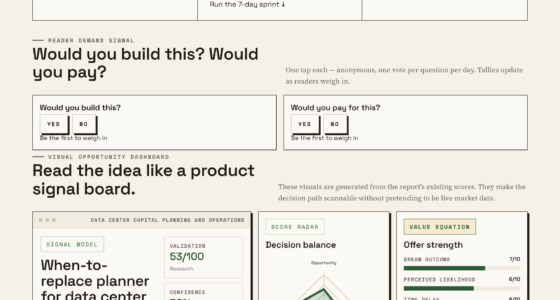

📊 Full opportunity report: When a Content Network Starts Publishing to Itself on ThorstenMeyerAI.com — validation score, market gap, and execution plan.

Get business pricing on monitors, keyboards and dev gear
- Business-only prices and quantity discounts
- Tax-exempt purchasing
- Multiple users, one account, clear invoices
TL;DR
Content networks are shifting from external distribution to internal publishing, creating self-sustaining ecosystems. This enhances audience ownership but introduces new risks. The trend signals a major evolution in digital publishing.
Multiple content networks are now increasingly focusing on publishing content directly to their own websites, newsletters, and platforms instead of relying solely on external distribution channels. This shift aims to create interconnected ecosystems that enhance audience engagement, control, and monetization. The trend represents a significant evolution in digital publishing, driven by technological and economic factors.
Recent observations indicate that several media and content organizations are adopting strategies that emphasize internal publishing. Instead of distributing content primarily through third-party platforms or social media, these networks are cross-linking, cross-posting, and promoting content within their own properties. This approach aims to strengthen audience loyalty, improve data collection, and increase revenue control.
Experts note that this movement is facilitated by advances in automation, analytics, and content management systems, making it easier to coordinate multiple properties. The strategy leverages network effects, where each piece of content or property enhances the overall value of the ecosystem, leading to increased traffic, engagement, and monetization potential. However, managing such ecosystems requires sophisticated governance and quality control measures, as the risk of brand inconsistency rises.
Impacts of Self-Publishing Content Networks on Digital Ecosystems
This shift allows content creators and networks to gain greater control over their audiences, data, and revenue streams, reducing dependence on external platforms that may change policies or algorithms unpredictably. Building interconnected properties enables more personalized content experiences, fostering higher engagement and loyalty. Additionally, the network effects can lead to exponential growth, making these ecosystems more resilient and competitive in a crowded digital landscape.
However, the move also introduces operational risks, including maintaining brand consistency and managing quality across multiple properties. The ability to effectively coordinate and govern these ecosystems will determine their long-term success and influence the future of digital publishing strategies.
content management system for publishers
As an affiliate, we earn on qualifying purchases.
As an affiliate, we earn on qualifying purchases.
Technological and Economic Drivers Behind Internal Publishing
The trend toward publishing to itself is driven by several factors. Platforms like Substack and Ghost have lowered barriers for creators to build their own ecosystems, shifting power away from traditional gatekeepers. Creators now prioritize owning their digital spaces to safeguard against platform policy changes that could impact reach and income.
Advances in automation, analytics, and content management tools enable more efficient coordination of multiple properties. This technological evolution makes internal publishing more feasible and attractive, aligning with broader trends toward decentralization and ownership in the digital economy. The cultural shift toward audience ownership emphasizes control over data and revenue, further fueling this movement.
“Publishing to itself transforms a collection of sites into a connected ecosystem where each piece of content fuels the next, creating a more resilient and engaged audience.”
— Thorsten Meyer, AI Content Strategist
As an affiliate, we earn on qualifying purchases.
Uncertainties Around Ecosystem Management and Long-Term Viability
It is not yet clear how sustainable or scalable these self-publishing ecosystems will be over the long term. Challenges include maintaining brand consistency, managing quality control, and preventing audience fatigue or fragmentation. The impact of AI-driven content creation tools on maintaining authenticity and trust within these ecosystems remains uncertain.
As an affiliate, we earn on qualifying purchases.
Future Developments in Internal Publishing Strategies
Expect more content networks to experiment with internal publishing, integrating AI tools for content management and personalization. Monitoring how these ecosystems evolve and how they impact revenue models and audience loyalty will be key. Industry observers anticipate that successful implementations could reshape digital publishing norms, encouraging more creators to build self-sustaining ecosystems.
As an affiliate, we earn on qualifying purchases.
Key Questions
What does publishing to itself mean for content creators?
It means focusing on internal links, cross-posting, and engaging audiences within a network of properties, rather than relying solely on external platforms or social media for distribution.
Why are content networks shifting to internal publishing now?
This shift is driven by technological advances, economic factors favoring ownership, and concerns over platform dependency and policy risks.
What are the main benefits of publishing to its own properties?
Benefits include greater audience control, improved data collection, enhanced engagement, and potential for exponential growth through network effects.
What risks come with internal publishing ecosystems?
Risks include brand inconsistency, quality management challenges, and operational complexity, which require careful governance.
How might AI influence the future of internal publishing networks?
AI can help automate content management, personalize user experiences, and optimize cross-property engagement, but maintaining authenticity remains a challenge.
Source: ThorstenMeyerAI.com
Fall Picks
fall essentials
As an affiliate, we earn on qualifying purchases.