The best bookshelf speakers for home theater balance clear dialogue, convincing effects, and a practical fit with your receiver and room. I’d put the Polk Audio Signature Elite ES20 first for its stronger home-theater focus, while the Polk Monitor XT15 is a versatile choice for compact surround setups and the Klipsch R-51M suits listeners who want a more forward presentation. The main tradeoffs are passive speakers that need an AV receiver versus powered models that connect more simply but offer less flexibility for a full surround system. Size, placement, and whether you can add a matching center channel also shape the choice. Read on for how these 15 options compare and which fits your setup.

Get business pricing on monitors, keyboards and dev gear
- Business-only prices and quantity discounts
- Tax-exempt purchasing
- Multiple users, one account, clear invoices
Key Takeaways
- The Polk ES20 is the strongest all-around fit in this lineup for buyers building a home-theater system who want a substantial passive pair with room to grow.
- The Polk Monitor XT15 favors flexibility in smaller spaces; its compact form and surround use make it a more practical choice than larger bookshelf models when placement is tight.
- The XT20 and ES20 represent a step up in scale from compact picks such as the XT15 and Klipsch R-41M, but their larger cabinets need more shelf or stand space.
- Powered Edifier and Saiyin models simplify two-channel TV or desktop audio, while passive Polk, Klipsch, and Sony pairs are better suited to receiver-based theater systems.
- The Klipsch R-41M bundle addresses dialogue-channel planning by including a matching center speaker; most individual pairs in this roundup leave that next purchase to the buyer.
| Sony SS-CS5M2 3-Way 3-Driver Hi-Res Compact Bookshelf Speakers (Pair) | 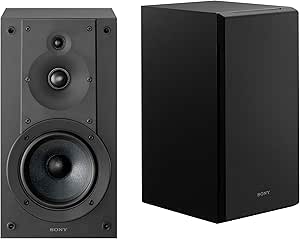 | Best for a Spacious Soundstage in a Compact Setup | Speaker type: Bookshelf | Driver configuration: 3-way, 3-driver | Woofer diameter: 5.12 inches | VIEW ON AMAZON | See Our Full Breakdown |
| Klipsch R-51M Bookshelf Speaker (Pair), Black |  | Best for Dynamic Movie Sound | Tweeter type: 1-inch aluminum LTS | Woofer size: Dual 5.25-inch spun-copper IMG | Horn: 90 × 90 Square Tractrix | VIEW ON AMAZON | See Our Full Breakdown |
| RIOWOIS Passive Bookshelf Speakers, Home Stereo Speakers for Record Player |  | Best Compact Passive Pick | Speaker type: Passive bookshelf speakers | Woofer diameter: 4 inches | Tweeter: Silk-dome horn | VIEW ON AMAZON | See Our Full Breakdown |
| Polk Monitor XT15 Pair of Bookshelf or Surround Sound Speakers – Hi-Res Audio Certified, Dolby Atmos & DTS:X Compatible |  | Best for Building a Surround System | Speaker type: Bookshelf | Woofer diameter: 5.25 inches | Tweeter diameter: 25.4 mm | VIEW ON AMAZON | See Our Full Breakdown |
| Saiyin Powered Bluetooth Bookshelf Speakers |  | Best for Simple TV Connections | Speaker type: Active powered bookshelf | Woofer size: 3.75 inches | Tweeter size: 0.5 inches | VIEW ON AMAZON | See Our Full Breakdown |
| Edifier R1280T Powered Bookshelf Speakers |  | Best for Simple TV and Stereo Setups | Configuration: 2.0 powered stereo | Maximum output power: 42 watts RMS | Woofer diameter: 4 inches | VIEW ON AMAZON | See Our Full Breakdown |
| RIOWOIS Passive Bookshelf Speakers for Home Theater Surround Sound, Satellite Stereo Speakers with Crisper Sound and Classic Wood Grain for Record Player/Computer/TV, Wall Mountable, One Pair |  | Best Compact Wall-Mount Surround Pair | Configuration: Passive bookshelf speaker pair | Woofer: 2.75 inches | Tweeter: 2 inches | VIEW ON AMAZON | See Our Full Breakdown |
| Saiyin Powered Bluetooth Bookshelf Speakers |  | Best for Flexible TV Connections | Configuration: Powered stereo pair | Power output: 40 watts × 2 | Woofer diameter: 4 inches | VIEW ON AMAZON | See Our Full Breakdown |
| Polk Audio Signature Elite ES20 Bookshelf Speaker Pair, Contemporary Walnut |  | Best Premium Front or Surround Pair | Configuration: Bookshelf speaker pair | Woofer: 6.5 inches | Tweeter: 1-inch Terylene | VIEW ON AMAZON | See Our Full Breakdown |
| Polk Audio T15 Home Theater Bookshelf Speakers, Black (1 Pair) |  | Best Entry-Level Receiver Pair | Configuration: Wired bookshelf speaker pair | Power output: 100 watts | Woofer diameter: 5.25 inches | VIEW ON AMAZON | See Our Full Breakdown |
| Klipsch R-41M Reference Bookshelf Speakers (Pair), Black |  | Best Compact, Efficient Pick | Speaker type: Passive bookshelf | Woofer: 4-inch spun-copper IMG | Tweeter: 1-inch aluminum LTS with Tractrix Horn | VIEW ON AMAZON | See Our Full Breakdown |
| Acoustic Audio AA321B Mountable Indoor Speakers 400 Watts Black Bookshelf Pair |  | Best for Tight Spaces and Secondary Channels | Model: AA321B | Speaker type: Bookshelf / center channel | Driver: 2.5-inch polypropylene woofer | VIEW ON AMAZON | See Our Full Breakdown |
| Polk Audio Monitor XT20 Bookshelf Surround Speakers (Midnight Black, Pair) |  | Best for Flexible Surround Systems | Speaker type: Passive bookshelf | Woofer: 6.5 inches | Tweeter: 1 inch | VIEW ON AMAZON | See Our Full Breakdown |
| Pyle 6.5″ Wired Bookshelf Speakers Pair (PHQBS62BK) |  | Best for Shelf-or-Wall Placement | Model: PHQBS62BK | Speaker type: Passive bookshelf | Woofer: 6.5-inch paper cone | VIEW ON AMAZON | See Our Full Breakdown |
| Klipsch R-41M Bookshelf Speakers (Pair) and R-52C Center Channel Home Theater Bundle |  | Best Starter Front Stage | Included speakers: Two R-41M bookshelf speakers and one R-52C center channel | Audio channels: 3 | Bookshelf woofer: 4 inches | VIEW ON AMAZON | See Our Full Breakdown |
| bookshelf speakers for home theater | Impedance | Speaker type | Frequency response | Dimensions |
|---|---|---|---|---|
| Sony SS-CS5M2 3-Way 3-Driver H | 6 ohms | Bookshelf | 53 Hz–50,000 Hz | 8.7 × 7 × 13.2 inches |
| Klipsch R-51M Bookshelf Speake | 8 ohms | — | 62 Hz lower limit listed | 13.3 × 7 × 8.5 inches |
| RIOWOIS Passive Bookshelf Spea | 4 ohms | Passive bookshelf speakers | 20 kHz listed | — |
| Polk Monitor XT15 Pair of Book | 8 ohms | Bookshelf | 40 kHz listed | — |
| Saiyin Powered Bluetooth Books | — | Active powered bookshelf | — | 6.5 × 10.6 × 8.5 inches |
| Edifier R1280T Powered Bookshe | — | — | 80 Hz | — |
| RIOWOIS Passive Bookshelf Spea | 6 ohms | — | — | 9.69 × 7.6 × 6.22 inches |
| Saiyin Powered Bluetooth Books | — | — | — | 150 × 170 × 240 mm |
| Polk Audio Signature Elite ES2 | — | — | — | — |
| Polk Audio T15 Home Theater Bo | 8 ohms | — | Up to 24,000 Hz | — |
| Klipsch R-41M Reference Booksh | 8 ohms | Passive bookshelf | 68 Hz–21 kHz | 11.3 × 5.75 × 7.9 inches (H × W × D) |
| Acoustic Audio AA321B Mountabl | 8 ohms | Bookshelf / center channel | 150 Hz–20 kHz | 3.5 × 3.5 × 4.5 inches (H × W × D) |
| Polk Audio Monitor XT20 Booksh | — | Passive bookshelf | — | 7.18 × 6.5 × 10.6 inches (D × W × H) |
| Pyle 6.5" Wired Bookshelf Spea | 6 ohms | Passive bookshelf | — | — |
| Klipsch R-41M Bookshelf Speake | — | — | — | — |
More Details on Our Top Picks
Sony SS-CS5M2 3-Way 3-Driver Hi-Res Compact Bookshelf Speakers (Pair)
The Sony SS-CS5M2 suits a TV room where speakers need to stay compact without making movie dialogue feel boxed in. Its three-driver design adds a super tweeter to the conventional woofer-and-tweeter arrangement, aiming for a broader sense of space than the two-way Klipsch R-51M. The listed 53 Hz low-frequency response gives it more stated bass reach than the Polk Monitor XT15, though neither replaces a subwoofer for weighty film effects. Sony’s wired design also makes it a straightforward match for an AV receiver, not a one-box wireless TV setup. I’d shortlist it for smaller rooms and stereo fronts where soundstage and clear vocals matter more than deep bass or easy wireless streaming. Its main tradeoff is that the product data lists no wireless input, and the compact cabinet still needs suitable placement.
Pros:- Three-driver layout with a super tweeter is designed to broaden the soundstage.
- Compact cabinet is easier to fit on shelves than larger home-theater speakers.
- Listed 53 Hz frequency-response lower limit reaches lower than the Polk Monitor XT15’s stated 40 kHz upper limit data alone can establish.
- Wired design suits conventional receiver-based home-theater systems.
Cons:- No wireless or Bluetooth connection is listed.
- Compact woofer and cabinet are not a substitute for a subwoofer on demanding movie effects.
- The listed 6-ohm impedance means buyers should check receiver compatibility.
Best for: Home-theater listeners in small or medium rooms who want compact wired front speakers with an emphasis on dialogue clarity and a broad stereo presentation.
Not ideal for: Buyers seeking deep standalone bass, Bluetooth streaming, or a powered speaker pair that connects directly to a TV without an AV receiver.
- Speaker type:Bookshelf
- Driver configuration:3-way, 3-driver
- Woofer diameter:5.12 inches
- Tweeter diameter:0.98 inches
- Frequency response:53 Hz–50,000 Hz
- Impedance:6 ohms
- Power output:100 watts
- Dimensions:8.7 × 7 × 13.2 inches
- Connectivity:Wired
Our verdict“Choose the Sony if you want compact, receiver-driven speakers with a wide presentation, and plan to add a subwoofer for cinematic bass.”
Klipsch R-51M Bookshelf Speaker (Pair), Black
For movie nights that benefit from lively impact, the Klipsch R-51M is the most assertive pick in this group. Its Tractrix horn and aluminum LTS tweeter are built to project treble clearly, while the dual 5.25-inch woofers and rear bass-reflex ports give it a more forceful presentation than the smaller, 4-inch-woofer RIOWOIS passive pair. That character can help effects and dialogue cut through, but it is not the gentlest choice for listeners who prefer a restrained, warm sound. Unlike the powered Saiyin, the Klipsch is aimed at a receiver-based system, and its rear ports need breathing room behind the speakers. The provided data lists RCA and Bluetooth, but buyers should confirm how those inputs apply to this passive pair before relying on them for direct TV connection.
Pros:- Tractrix horn and aluminum LTS tweeter are designed for clear, projecting high frequencies.
- Dual 5.25-inch woofers provide a larger driver area than the RIOWOIS passive model’s 4-inch woofer.
- Rear bass-reflex ports support a more substantial presentation from a bookshelf cabinet.
- 8-ohm impedance is a common match for many AV receivers.
Cons:- Rear-firing ports need clearance, limiting placement close to a wall.
- At 11 pounds per speaker, shelves or stands need to be sturdy.
- The lively treble emphasis may not suit listeners who prefer a softer presentation.
Best for: Home-theater owners with an AV receiver, sturdy shelves, and enough space behind the speakers who prefer energetic, forward sound for films and games.
Not ideal for: Listeners who need a compact placement right against a wall, a subdued treble balance, or a clearly documented all-in-one powered connection for their TV.
- Tweeter type:1-inch aluminum LTS
- Woofer size:Dual 5.25-inch spun-copper IMG
- Horn:90 × 90 Square Tractrix
- Impedance:8 ohms
- Frequency response:62 Hz lower limit listed
- Maximum output power:340 watts
- Dimensions:13.3 × 7 × 8.5 inches
- Weight:11 pounds per speaker
- Enclosure:MDF
Our verdict“Pick the Klipsch for energetic receiver-based movie playback if you can give its rear ports room and prefer a lively sound.”
RIOWOIS Passive Bookshelf Speakers, Home Stereo Speakers for Record Player
The RIOWOIS passive bookshelf speakers make the most sense when a small cabinet and flexible placement matter more than room-filling output. Their 4-inch woofer is smaller than the 5.25-inch units in the Klipsch R-51M and Polk Monitor XT15, so I’d expect less headroom for loud action scenes and bass-heavy soundtracks. A rear reflex port and silk-dome horn tweeter aim to keep the compact pair from sounding thin, while the built-in wall-mount bracket gives them placement options the tabletop-oriented Sony SS-CS5M2 data does not list. They are passive, so an external amplifier or receiver is required; speaker wire is not included. The 4-ohm impedance also calls for checking amplifier support before purchase. Treat the frequency-response figure supplied as incomplete rather than a useful bass-extension specification.
Pros:- Built-in wall-mount bracket allows more placement flexibility than a tabletop-only setup.
- Compact 4-inch woofer cabinet can suit small rooms and tight spaces.
- Silk-dome horn tweeter is designed to deliver crisp high frequencies.
- Gold-plated terminals are intended to resist corrosion at the connections.
Cons:- Requires a separate amplifier or AV receiver and speaker wire is not included.
- 4-ohm impedance may rule it out for some amplifiers or receivers.
- Smaller woofer is less suited to high-volume movie playback and strong bass effects.
Best for: Apartment or secondary-room buyers building a compact receiver-based setup who need wall-mount flexibility and can verify their amplifier supports 4-ohm speakers.
Not ideal for: Buyers who want loud, full-range movie playback, a direct TV connection, included speaker wire, or reliable published frequency-response limits.
- Speaker type:Passive bookshelf speakers
- Woofer diameter:4 inches
- Tweeter:Silk-dome horn
- Impedance:4 ohms
- Frequency response:20 kHz listed
- Signal-to-noise ratio:82 dB
- Audio output mode:Stereo
- Enclosure material:ABS, metal, and MDF
- Mounting:Tabletop; built-in wall-mount bracket described
Our verdict“Choose the RIOWOIS pair for a compact, mountable receiver setup, provided your amplifier supports 4-ohm speakers and you do not expect deep bass.”
Polk Monitor XT15 Pair of Bookshelf or Surround Sound Speakers – Hi-Res Audio Certified, Dolby Atmos & DTS:X Compatible
The Polk Monitor XT15 earns its place for buyers assembling a multi-speaker system rather than shopping for a standalone stereo pair. Its stated compatibility with Dolby Atmos and DTS:X, plus use as front, rear, or surround speakers, makes it more adaptable to changing layouts than the Sony SS-CS5M2, which is presented primarily as a compact stereo bookshelf option. The 5.25-inch woofer gives it a larger driver than the RIOWOIS passive model, while the wired connection fits a conventional AV receiver. One caution: the supplied frequency-response figure is 40 kHz, which does not provide a lower bass limit for comparing movie impact. Placement also needs planning, since stands or mounting hardware may be needed. I’d choose these for surround-channel flexibility, not on the assumption that they deliver deep bass without a subwoofer.
Pros:- Flexible use as front, rear, or surround speakers supports different system layouts.
- Listed Dolby Atmos and DTS:X compatibility suits modern receiver-based theaters.
- 5.25-inch woofer is larger than the RIOWOIS passive model’s 4-inch woofer.
- Wired design fits conventional AV receiver setups.
Cons:- No wireless connectivity is listed.
- Stands or mounting hardware may be needed for suitable placement.
- The supplied 40 kHz frequency-response figure gives no lower bass limit for judging movie impact.
Best for: Home-theater builders who want a wired pair that can serve as front, rear, or surround channels in a Dolby Atmos- or DTS:X-compatible system.
Not ideal for: Listeners wanting powered speakers for direct TV connection, wireless playback, verified low-bass extension, or a complete surround package in one purchase.
- Speaker type:Bookshelf
- Woofer diameter:5.25 inches
- Tweeter diameter:25.4 mm
- Frequency response:40 kHz listed
- Impedance:8 ohms
- Connectivity:Wired
- Mounting:Wall mount
- Enclosure material:Plastic
- Surround formats:Dolby Atmos and DTS:X compatible
Our verdict“Choose the Polk XT15 when surround-channel flexibility matters more than a powered setup or clearly specified deep-bass performance.”
Saiyin Powered Bluetooth Bookshelf Speakers
The Saiyin powered Bluetooth bookshelf speakers are the easiest fit here for someone who wants sound from a TV without adding an AV receiver. The built-in amplifier and Optical, Coaxial, RCA, and 3.5 mm inputs offer more direct connection choices than the passive Polk Monitor XT15 or Klipsch R-51M, while Bluetooth 5.3 handles compatible wireless sources. That convenience comes with a home-theater compromise: this is a powered stereo pair, not a receiver-driven surround solution, and its 3.75-inch woofers are smaller than the drivers in the Sony SS-CS5M2. The source also needs PCM or stereo output to avoid silence or noise, so setup is less plug-and-play than the input list suggests. It makes most sense for TV dialogue, casual viewing, and small spaces rather than a full cinematic system.
Pros:- Built-in amplifier avoids the need for a separate receiver.
- Optical and Coaxial inputs offer direct wired connection options for compatible TVs.
- Bluetooth 5.3 and RCA and 3.5 mm inputs accommodate a range of sources.
- Included remote supports volume and input changes from the listening position.
Cons:- Stereo powered design is not a substitute for an AV receiver-based surround system.
- 3.75-inch woofers offer less driver area than the Sony SS-CS5M2’s 5.12-inch woofer.
- Sources must be set to PCM or stereo to avoid audio problems, and PHONO-only turntables need a preamp.
Best for: Apartment dwellers and casual TV viewers who want a self-powered stereo pair with direct digital TV inputs and no separate receiver.
Not ideal for: Buyers planning a multi-channel surround system, seeking strong movie bass, or using a source that cannot output PCM or stereo audio.
- Speaker type:Active powered bookshelf
- Woofer size:3.75 inches
- Tweeter size:0.5 inches
- Connectivity:Bluetooth 5.3, Optical, Coaxial, RCA, and 3.5 mm AUX
- Power source:Corded electric
- Dimensions:6.5 × 10.6 × 8.5 inches
- Weight:8.5 pounds
- Control:Remote control and buttons
- Materials:ABS, MDF, and metal
Our verdict“Pick the Saiyin pair for straightforward stereo TV audio without a receiver, but choose passive speakers and an AV receiver for surround sound.”
Edifier R1280T Powered Bookshelf Speakers
The Edifier R1280T suits buyers who want a compact stereo pair without adding an AV receiver. Its 42-watt RMS powered design, remote, and separate bass and treble controls make everyday TV and music playback straightforward, while dual AUX inputs let two wired sources stay connected. Compared with the Saiyin Powered Bluetooth Bookshelf Speakers, the R1280T gives up wireless and optical connections but offers a similarly self-contained setup with a classic MDF wood finish. Its 4-inch drivers are better suited to modest rooms and near-field listening than filling a large home theater, and the listed 80 Hz frequency response leaves the deepest movie effects to a subwoofer. Choose it for uncomplicated stereo sound; skip it if you need receiver-based surround expansion or wireless streaming.
Pros:- Powered stereo design avoids the need for a separate amplifier
- Dual AUX inputs allow two wired sources to remain connected
- Remote and adjustable bass and treble simplify everyday listening
- MDF wood enclosure and classic finish suit living-room placement
Cons:- No Bluetooth or Wi-Fi connectivity
- Stereo-only setup does not provide receiver-based surround expansion
- The 4-inch drivers and listed 80 Hz response limit deep bass without a subwoofer
Best for: TV and computer owners who want powered stereo speakers, simple wired connections, and convenient remote volume control without an AV receiver.
Not ideal for: Home theater builders planning a multi-channel receiver system or buyers who need Bluetooth, Wi-Fi, or deep standalone movie bass.
- Configuration:2.0 powered stereo
- Maximum output power:42 watts RMS
- Woofer diameter:4 inches
- Tweeter diameter:13 mm silk dome
- Frequency response:80 Hz
- Connectivity:3.5 mm and RCA auxiliary inputs
- Enclosure material:MDF wood
- Warranty:2 years
Our verdict“Choose the R1280T for convenient wired stereo in a modest room, but pick the Saiyin if Bluetooth and optical inputs matter more.”
RIOWOIS Passive Bookshelf Speakers for Home Theater Surround Sound, Satellite Stereo Speakers with Crisper Sound and Classic Wood Grain for Record Player/Computer/TV, Wall Mountable, One Pair
The RIOWOIS passive pair is aimed at buyers who need small, wall-mountable speakers for surround or secondary-room duty rather than full-range front-channel impact. At 4.3 by 6.6 inches according to the description, the compact cabinets and included mounting hardware make placement easier than with larger options such as the Polk Audio Signature Elite ES20. A separate 2.75-inch woofer and 2-inch tweeter provide a more defined division of work than a single small driver, but the 30-watt peak rating and small drivers point to limited output and bass for action-heavy movies. Unlike the powered Edifier R1280T, these need an amplifier or receiver, and speaker wire is not included. They make sense as space-conscious satellites; skip them if you want an all-in-one setup or substantial room-filling sound.
Pros:- Compact cabinet dimensions suit tight shelf and wall locations
- Included wall-mount kit and hooks offer placement flexibility
- Separate woofer and tweeter divide low and high frequencies
- Six-ohm impedance supports use with a range of amplifiers
Cons:- Requires a separate amplifier or AV receiver
- Speaker wire is not included
- Small drivers and 30-watt peak rating limit bass and output for larger rooms
Best for: Buyers adding compact, wall-mounted rear or surround speakers to an existing receiver-based home theater in a small room.
Not ideal for: Shoppers who need powered speakers, included speaker wire, strong bass, or front speakers for a large listening space.
- Configuration:Passive bookshelf speaker pair
- Woofer:2.75 inches
- Tweeter:2 inches
- Impedance:6 ohms
- Peak power:30 watts
- Dimensions:9.69 × 7.6 × 6.22 inches
- Enclosure materials:ABS, metal, and MDF
- Mounting:Wall mount; wall-mount kit included
Our verdict“Choose this RIOWOIS pair for compact receiver-powered surround placement, not as a substitute for larger front speakers like the Polk ES20.”
Saiyin Powered Bluetooth Bookshelf Speakers
The Saiyin powered speakers stand out for connection flexibility: Bluetooth sits alongside optical, coaxial, RCA, and auxiliary inputs, giving buyers several ways to connect a TV and other sources without a receiver. Their 40 watts per channel and 4-inch woofers suit everyday stereo playback, while the sub-out makes it easier to add low-frequency support for films. Compared with the Edifier R1280T, Saiyin adds wireless streaming and digital TV inputs, but takes up more tabletop space and may be less convenient on a compact shelf. It is also not a replacement for a receiver-based surround system: the supplied details describe a powered stereo pair, not multi-channel speakers. Buyers with turntables should check their setup, since the product notes require a Bluetooth transmitter and do not support built-in receivers.
Pros:- Bluetooth plus optical, coaxial, RCA, and auxiliary connections
- Sub-out supports adding an external subwoofer for movie effects
- Powered design needs no separate amplifier or receiver
- Remote control and top-panel buttons provide convenient operation
Cons:- Larger footprint may not suit compact shelves
- A turntable setup may require a Bluetooth transmitter; built-in receivers are not supported
- Stereo speakers do not replace a multi-channel home theater system
Best for: TV and music listeners who want powered stereo speakers with digital inputs, Bluetooth, remote control, and the option to add a subwoofer.
Not ideal for: Buyers building receiver-based surround sound, working with very limited shelf space, or connecting a turntable with a built-in receiver without an appropriate transmitter.
- Configuration:Powered stereo pair
- Power output:40 watts × 2
- Woofer diameter:4 inches
- Tweeter diameter:12.7 mm
- Connectivity:Bluetooth, optical, coaxial, RCA, and auxiliary
- Bluetooth range:10 meters
- Subwoofer connection:Sub-out jack
- Dimensions:150 × 170 × 240 mm
Our verdict“Pick Saiyin for an adaptable powered stereo setup with TV-friendly inputs, but choose passive receiver-driven speakers for a true surround system.”
Polk Audio Signature Elite ES20 Bookshelf Speaker Pair, Contemporary Walnut
The Polk Audio Signature Elite ES20 is the most substantial passive home theater choice in this group, with a 6.5-inch woofer and Power Port Technology aimed at fuller bass than the smaller-driver RIOWOIS and Polk T15 pairs can provide. That larger presentation makes the ES20 more suited to front-channel or surround duties in a room where compact powered speakers like the Saiyin would be out of their depth. Its stated 4- and 8-ohm compatibility gives buyers more receiver-pairing flexibility, and the walnut finish offers a more prominent furniture-style look. The tradeoff is size and system cost beyond the speaker pair: stands are separate, and an Atmos or DTS:X setup needs a compatible AVR. Choose it for a more capable passive theater build, not a minimal plug-and-play stereo setup.
Pros:- 6.5-inch woofer offers more low-frequency capability than the smaller-driver options here
- Power Port Technology is designed to provide deeper bass with reduced distortion
- Listed 4- and 8-ohm compatibility allows flexible receiver pairing
- Can serve as side, rear, or elevation surround speakers
Cons:- Speaker stands are sold separately for floor placement
- Requires an AV receiver and compatible equipment for Atmos or DTS:X elevation use
- Larger cabinets are less suited to small shelves than the RIOWOIS pair
Best for: Home theater owners with an AV receiver who want larger passive bookshelf speakers for front, side, rear, or elevation-channel placement.
Not ideal for: Buyers seeking small, powered speakers, a complete surround package, or a setup that avoids separate stands and receiver compatibility checks.
- Configuration:Bookshelf speaker pair
- Woofer:6.5 inches
- Tweeter:1-inch Terylene
- Impedance compatibility:4 ohms and 8 ohms
- Bass technology:Power Port Technology
- Finish:Contemporary walnut
- Suggested placement:Side, rear, or elevation surrounds
Our verdict“Choose the ES20 for a receiver-based theater that needs fuller passive speakers, and skip it if you want a compact powered pair like the Saiyin.”
Polk Audio T15 Home Theater Bookshelf Speakers, Black (1 Pair)
The Polk Audio T15 makes the most sense for a first receiver-based home theater, especially when wall placement is more useful than a larger cabinet. Its 5.25-inch driver, 0.75-inch tweeter, and integrated keyhole slot give buyers a straightforward wired pair for front, rear, or surround roles. Compared with the Polk Signature Elite ES20, the T15 is the simpler, more compact choice, but its smaller woofer and lack of the ES20’s stated Power Port design make it less suited to listeners seeking fuller bass or stronger output in a larger room. The listed 100-watt power figure does not mean deep bass is built in; a subwoofer may still be needed for movie effects. Unlike the powered Saiyin, the T15 needs an AV receiver and speaker wire, with no wireless connection.
Pros:- Integrated keyhole slot supports wall mounting
- 5.25-inch driver is larger than the drivers in the compact RIOWOIS pair
- Wired connection suits standard AV receiver setups
- Can be placed as front, rear, or surround speakers
Cons:- Requires an AV receiver and speaker wire
- No Bluetooth or other wireless connectivity
- No built-in subwoofer, limiting low-frequency impact for movie sound
Best for: First-time home theater buyers with an AV receiver who need a straightforward wired pair for wall-mounted front, rear, or surround placement.
Not ideal for: Listeners seeking wireless playback, receiver-free operation, or strong low-frequency effects from the speakers alone in a large room.
- Configuration:Wired bookshelf speaker pair
- Power output:100 watts
- Woofer diameter:5.25 inches
- Tweeter size:0.75 inch
- Impedance:8 ohms
- Frequency response:Up to 24,000 Hz
- Mounting:Integrated keyhole wall-mount slot
- Enclosure material:Wood
Our verdict“Choose the T15 as a simple wall-mountable receiver pair for an entry-level theater, but consider the ES20 for greater bass capability.”
Klipsch R-41M Reference Bookshelf Speakers (Pair), Black
The Klipsch R-41M suits a home theater where space is tight but clear effects and dialogue still matter. Its 90 dB sensitivity helps it play efficiently with a compatible receiver, while the Tractrix Horn tweeter is designed to keep high-frequency detail clear. Compared with the larger Polk Audio Monitor XT20, the R-41M is easier to fit on a narrow shelf, but its 4-inch woofer and 68 Hz lower frequency limit leave less low-end weight for movie impact. I’d pair it with a subwoofer for action films and choose the XT20 if fuller output from the main speakers matters more than cabinet size. These are passive speakers, so a receiver or amplifier is required; they also lack wireless playback.
Pros:- 90 dB sensitivity supports efficient operation with a compatible receiver.
- Tractrix Horn tweeter is designed to deliver clear high-frequency detail.
- Compact cabinet is easier to place than the Polk Audio Monitor XT20.
- Reinforced MDF cabinet helps limit unwanted vibration.
Cons:- The 4-inch woofer offers less low-frequency weight than larger bookshelf models.
- Passive design requires a separate amplifier or AV receiver.
- No built-in wireless connectivity or streaming.
Best for: Home theater owners with narrow shelves who want efficient passive speakers for front or surround duty and already have an AV receiver.
Not ideal for: Viewers seeking strong bass from bookshelf speakers alone or wanting built-in wireless streaming.
- Speaker type:Passive bookshelf
- Woofer:4-inch spun-copper IMG
- Tweeter:1-inch aluminum LTS with Tractrix Horn
- Frequency response:68 Hz–21 kHz
- Sensitivity:90 dB
- Impedance:8 ohms
- Power handling:50 W continuous / 200 W peak
- Dimensions:11.3 × 5.75 × 7.9 inches (H × W × D)
Our verdict“Choose the R-41M for space-conscious, efficient surround or front channels, and plan on a subwoofer if you want more cinematic bass.”
Acoustic Audio AA321B Mountable Indoor Speakers 400 Watts Black Bookshelf Pair
The Acoustic Audio AA321B is the space-saving choice here, with a cabinet only 3.5 inches high and wide and included spring-loaded mounting brackets. That makes it more practical for a cramped shelf or a secondary surround position than the much larger Pyle PHQBS62BK. Its 2.5-inch driver and 150 Hz lower frequency limit also define its role: these are better suited to modest background or effects duties than to front channels expected to carry full-bodied movie sound. The Polk Audio Monitor XT20 is a stronger fit for a room-filling main-channel setup, while the AA321B prioritizes easy placement. It is wired and needs an amplifier or receiver, and its indoor-only construction is not intended for damp spaces.
Pros:- Very small enclosure fits locations too tight for the Klipsch R-41M or Pyle PHQBS62BK.
- Included spring-loaded brackets simplify shelf mounting.
- ABS enclosure offers a durable alternative to wood cabinets.
- 8-ohm impedance is compatible with many standard receivers.
Cons:- The 2.5-inch driver and 150 Hz lower limit restrict bass and movie impact.
- Wired passive design requires an amplifier or AV receiver.
- Not waterproof, so placement is limited to dry indoor areas.
Best for: People building a compact secondary surround or small-room system who need speakers that can mount in a tight indoor location.
Not ideal for: Home theater buyers seeking substantial bass, full-range front-channel output, or outdoor-capable speakers.
- Model:AA321B
- Speaker type:Bookshelf / center channel
- Driver:2.5-inch polypropylene woofer
- Frequency response:150 Hz–20 kHz
- Power handling:100 W RMS / 200 W maximum
- Impedance:8 ohms
- Dimensions:3.5 × 3.5 × 4.5 inches (H × W × D)
- Enclosure and mounting:ABS enclosure; shelf-mount brackets included
Our verdict“Pick the AA321B for discreet, compact secondary channels, not as the main speakers in a system expected to deliver substantial movie bass.”
Polk Audio Monitor XT20 Bookshelf Surround Speakers (Midnight Black, Pair)
The Polk Audio Monitor XT20 is the most adaptable standalone pair in this group for a growing home theater. Polk lists Dolby Atmos and DTS:X compatibility, and the speakers can serve as front, surround, or rear channels; timbre matching also makes them a natural fit alongside other Polk speakers. Compared with the smaller Klipsch R-41M, the XT20’s 6.5-inch woofer points toward fuller output, though the larger cabinet needs more shelf or stand space. The Pyle PHQBS62BK also uses a 6.5-inch woofer, but the XT20’s stated multi-channel role and Polk-system integration make its setup purpose clearer. It remains passive, requires a receiver, and may still need a subwoofer for deep effects.
Pros:- Can serve as front, surround, or rear channels in a flexible theater layout.
- Dolby Atmos and DTS:X compatibility suits immersive-format systems.
- 6.5-inch woofer offers a larger driver than the Klipsch R-41M.
- Timbre-matched design simplifies integration with other Polk speakers.
Cons:- Larger than the Klipsch R-41M and may need stands or a wider shelf.
- Passive speakers require an external amplifier or AV receiver.
- No built-in subwoofer, so deep movie bass may call for separate bass support.
Best for: Home theater builders who want one bookshelf pair that can move between front, rear, and surround roles, especially in a Polk-based system.
Not ideal for: Buyers with very limited shelf space, no AV receiver, or expectations of deep bass without a subwoofer.
- Speaker type:Passive bookshelf
- Woofer:6.5 inches
- Tweeter:1 inch
- Dimensions:7.18 × 6.5 × 10.6 inches (D × W × H)
- Weight:12 pounds
- Enclosure material:Wood
- Impedance compatibility:4-ohm and 8-ohm
- Supported formats:Dolby Atmos and DTS:X compatible
Our verdict“Choose the XT20 if you want a versatile, larger-driver pair for a Polk-friendly surround system and have room for its cabinets.”
Pyle 6.5″ Wired Bookshelf Speakers Pair (PHQBS62BK)
The Pyle PHQBS62BK makes sense for a home theater where mounting flexibility matters: it supports shelf or wall placement and uses binding posts for a wired amplifier connection. Its 6.5-inch paper-cone woofer gives it a larger driver than the Klipsch R-41M, which uses a 4-inch woofer, while the soft-dome tweeter handles the high frequencies. The Polk Audio Monitor XT20 is the more clearly specified choice for Dolby Atmos and DTS:X system roles; Pyle’s appeal is its installation flexibility and substantial MDF enclosure rather than documented format compatibility. At 18.5 pounds per pair, it needs sturdy support, and the listed frequency-response entry only gives 20 kHz, so the supplied data does not establish its bass extension. It is passive, not a wireless speaker.
Pros:- Shelf or wall mounting offers more placement options than shelf-only models.
- 6.5-inch woofer is larger than the Klipsch R-41M’s 4-inch driver.
- 12 mm MDF cabinet provides a substantial enclosure.
- Binding posts support a conventional wired receiver connection.
Cons:- At 18.5 pounds per pair, wall placement calls for secure, weight-appropriate support.
- Passive wired operation requires an external amplifier or AV receiver.
- The supplied frequency-response specification lists only 20 kHz and does not clarify bass extension.
Best for: Home theater owners who need a wired pair that can sit on a shelf or be wall-mounted and have sturdy mounting support.
Not ideal for: Buyers who need verified low-frequency specifications, a lightweight wall-mount option, or wireless playback.
- Model:PHQBS62BK
- Speaker type:Passive bookshelf
- Woofer:6.5-inch paper cone
- Tweeter:1-inch soft dome
- Maximum output power:240 W
- Impedance:6 ohms
- Enclosure:12 mm MDF with wood-grain finish
- Dimensions and weight:11.5 × 8.5 × 9.5 inches; 18.5 pounds per pair
- Mounting and connection:Shelf or wall mount; binding posts
Our verdict“Choose the Pyle pair when shelf-or-wall placement and a larger woofer matter more than light weight or complete published response details.”
Klipsch R-41M Bookshelf Speakers (Pair) and R-52C Center Channel Home Theater Bundle
This Klipsch bundle is the most direct route in this group to a coordinated three-channel front stage: it pairs two R-41M bookshelf speakers with a dedicated R-52C center channel. That center is the key difference from buying the standalone R-41M pair; a separate center channel gives dialogue its own speaker rather than relying on a stereo pair. The smaller R-41M cabinets are easier to place than the Polk Audio Monitor XT20, but their 4-inch woofers are less suited to deep bass, so a subwoofer may be needed for movie impact. The bundle is passive and requires an AV receiver, and it offers no wireless playback. Buyers planning a larger, expandable system should check channel and matching-speaker needs before choosing this three-channel package.
Pros:- Dedicated R-52C center channel gives dialogue a separate speaker.
- Matched Klipsch front speakers provide a coordinated three-channel starting point.
- Compact R-41M pair is easier to place than the Polk Audio Monitor XT20.
- MDF cabinets with brushed polymer veneer provide a consistent finish.
Cons:- The R-41M’s 4-inch woofers may lack deep bass without a subwoofer.
- Passive speakers require a compatible AV receiver or amplifier.
- The bundle does not include wireless connectivity, a subwoofer, or surround speakers.
Best for: First-time home theater builders who want matched left, right, and center speakers for clearer dialogue and already plan to use an AV receiver.
Not ideal for: Buyers seeking deep bass without a subwoofer, wireless operation, or a package that includes a subwoofer and surround speakers.
- Included speakers:Two R-41M bookshelf speakers and one R-52C center channel
- Audio channels:3
- Bookshelf woofer:4 inches
- Center-channel woofer:Dual 5.25-inch IMG woofers
- Bookshelf dimensions:7.9 × 5.75 × 11.3 inches (D × W × H) each
- Maximum output power:100 W
- Mounting:Shelf mount
- Enclosure:MDF with brushed polymer veneer finish
Our verdict“Choose this bundle to start with matched left, center, and right channels, then add a subwoofer and surrounds as your system grows.”
How We Picked
I ranked these speakers by how well they fit home-theater use, not by broad claims about sound quality. I weighed passive or powered connection type, likely ease of integration with an AV receiver or television, cabinet size, mounting and placement options, and whether the product supports a practical route to a multichannel system. I also looked at the lineup as a whole: a speaker that works well for a compact surround role has a different advantage from a powered pair intended for simpler stereo listening.
The order favors options with a clearer path to a flexible theater setup, useful system-building potential, and a sensible balance of performance and placement demands. That puts the Polk ES20 ahead as the most capable all-around passive choice, with the Monitor XT15 offering a more compact alternative. Powered models and entry-oriented passive pairs rank lower for a full theater because they can limit expansion or system matching, not because they have no place in a small or simpler setup. Repeated product listings are treated as the same model rather than separate recommendations.
| bookshelf speakers for home theater | Speaker type |
|---|---|
| Sony SS-CS5M2 3-Way 3-Driver H | Bookshelf |
| Klipsch R-51M Bookshelf Speake | — |
| RIOWOIS Passive Bookshelf Spea | Passive bookshelf speakers |
| Polk Monitor XT15 Pair of Book | Bookshelf |
| Saiyin Powered Bluetooth Books | Active powered bookshelf |
| Edifier R1280T Powered Bookshe | — |
| RIOWOIS Passive Bookshelf Spea | — |
| Saiyin Powered Bluetooth Books | — |
| Polk Audio Signature Elite ES2 | — |
| Polk Audio T15 Home Theater Bo | — |
| Klipsch R-41M Reference Booksh | Passive bookshelf |
| Acoustic Audio AA321B Mountabl | Bookshelf / center channel |
| Polk Audio Monitor XT20 Booksh | Passive bookshelf |
| Pyle 6.5" Wired Bookshelf Spea | Passive bookshelf |
| Klipsch R-41M Bookshelf Speake | — |
Factors to Consider When Choosing Bookshelf Speakers For Home Theater
Before choosing a pair, I’d map the speakers to the system you actually plan to build. Home-theater performance depends on connections, room layout, and matching speakers—not just the size of the woofer or a manufacturer’s power claim. These checks can prevent buying a pair that sounds promising on paper but does not fit your receiver, television, or upgrade plans.
Check whether you need passive or powered speakers
Passive speakers need amplification, usually from an AV receiver, while powered speakers contain their own amplifier and often suit direct stereo connections. A powered pair can be an easy way to improve TV sound without assembling a full system, but it may not connect or expand like a conventional receiver-based setup. Before buying, check the exact inputs on both the speaker and your source; Bluetooth alone does not provide the same connection options as a wired receiver system. Avoid assuming that a pair labeled for home audio will work as a surround set without the right receiver and channels. If you expect to add a subwoofer, center, or rear speakers later, choose around that plan now.
Plan for dialogue and a matching center channel
In a multichannel theater, the center speaker carries much of the dialogue, so a bookshelf pair is not the entire front stage. A center from the same product family is often a sensible match for consistent tonal balance, although room correction and careful setup also affect the result. Buyers who watch a lot of films should leave shelf or cabinet space for a center rather than spending the full setup budget on left and right speakers. A bundled center can simplify matching, but check its dimensions and placement requirements before choosing the bundle. If you will use only two speakers, confirm that your receiver offers a dialogue-focused or center-mix mode suited to stereo playback.
Match speaker size to the room and listening distance
A larger cabinet can support a fuller presentation, but it is not automatically the better choice in a small room or on a narrow shelf. Larger speakers need stable support and may be harder to position with enough space around them; cramped placement can undermine the result. Compact models are easier to fit as surrounds or in apartments, though they may need a subwoofer to reproduce deep bass convincingly. Think about how far you sit from the speakers and whether they will be near a wall before choosing by size alone. Leave room in the budget for stands or secure wall mounts if the furniture you have is not a suitable listening-height location.
Confirm receiver compatibility before connecting passive speakers
For passive speakers, check your receiver’s supported speaker impedance and power guidance against the speaker’s specifications. This is more useful than treating a high wattage figure as a direct measure of loudness or quality. Use speaker wire of a suitable gauge for the run, keep polarity consistent, and avoid wiring changes while equipment is on. A receiver with room calibration can help integrate speakers, but it cannot fix every issue caused by poor placement or mismatched components. If you do not already own a receiver, count that purchase and the extra setup steps as part of the total system commitment.
Choose the right connection path for your TV
Check how your television sends audio before choosing powered speakers or planning a receiver setup. Depending on the TV and speaker, you may need an optical connection, an analog output, HDMI ARC through compatible equipment, or another supported method. Bluetooth can be convenient, but wireless audio may add latency or complicate control compared with a wired connection. Do not assume that a speaker’s Bluetooth feature means it can act as a complete home-theater system. Match the connection to the way you use the TV, including whether you need one remote to control volume and whether your sources feed the TV or receiver.
Spend on system fit before chasing specifications
It is easy to prioritize maximum power, driver count, or a broad frequency range, but those numbers do not tell you how well a speaker will suit your room or system. For theater use, useful spending often goes toward a receiver that supports your intended channels, a center speaker, a subwoofer, and solid placement. Pay more for a larger or more capable pair when your room, listening distance, and expansion plan can make use of it. Choose a simpler or compact option if the setup is a bedroom, desktop, or small TV area with limited space. The best purchase is the one that fits the complete system rather than the most ambitious single specification.
Frequently Asked Questions
Can I use powered bookshelf speakers as the front pair in a surround-sound system?
Sometimes, but it depends on the speakers’ inputs and the receiver’s available outputs. Many AV receivers are designed to drive passive speakers, so connecting a powered pair may require compatible pre-outs or another supported signal path. A powered stereo pair is usually simpler for two-channel TV audio than for a conventional multichannel setup. Check the manuals for both devices before buying cables or assuming the receiver can connect directly. If you want an easy expansion path to a center and surrounds, a passive system built around an AV receiver is usually the more straightforward route.
Do I need a center speaker if I buy a bookshelf speaker pair?
No, a pair can run as a stereo system, and some receivers can create a phantom center so dialogue appears between the left and right speakers. That can work well when you sit near the middle, but listeners spread across a sofa may hear dialogue shift toward one side. A dedicated center gives a multichannel system a separate dialogue channel and can improve consistency across seats. Before choosing a pair, check whether a compatible center exists and whether you have a safe place to put it. If your priority is films and shared viewing, plan for the center from the start.
Can I mount bookshelf speakers on a wall for surround sound?
Only if the specific speaker has a suitable mounting point or the manufacturer approves a compatible bracket. Speaker weight, cabinet shape, and connector clearance all affect whether a mount is secure and practical. A model described as wall-mountable may be easier to place as a surround, but that does not mean every wall anchor or bracket will support it. Check the mounting instructions and wall construction, and keep the speaker positioned so cables are not strained. If mounting is uncertain, a stable stand or shelf is a safer choice.
Will bookshelf speakers produce enough bass without a subwoofer?
They can deliver satisfying midrange and upper bass, but most compact bookshelf speakers cannot reproduce the deepest movie effects as strongly as a dedicated subwoofer. The difference is more apparent in action films and larger rooms than in casual TV viewing. A receiver’s bass management can redirect low frequencies to a subwoofer and reduce the load on smaller speakers. If you are building a system gradually, check that the receiver supports a subwoofer connection and plan where the sub could go. Do not choose a larger bookshelf model solely to avoid a subwoofer if deep cinematic bass is a priority.
Is a bundled bookshelf-and-center set a better choice than buying a pair first?
A bundle can simplify matching the front speakers and center, which is useful when you want a dialogue-focused system without researching separate models. It may also be less convenient if the center does not fit your furniture or if you intended to choose a different speaker family. Compare cabinet dimensions, connection requirements, and the receiver channels needed before deciding. Buying a pair first can make sense when you are starting with stereo and have a clear upgrade plan, but check center availability ahead of time. The right choice depends on whether immediate system completeness or flexibility matters more to you.
Conclusion
For most receiver-based home theaters, I’d choose the Polk Audio Signature Elite ES20 as the best overall pick, while the Polk Monitor XT15 is my best value-style choice for buyers who need a smaller, surround-friendly pair. The Polk Monitor XT20 is the better fit for listeners who want a larger bookshelf option and have room for its cabinet. For beginners who want a straightforward stereo setup rather than a full AV system, I’d look at the Edifier R1280T or a Saiyin powered pair, after checking the connections their TV requires. For a specific need, choose the Klipsch R-41M bundle if having a matching center included helps you build a dialogue-focused system. In short: start with the receiver and room you have, then pick the speaker role that matches your next upgrade—not just the pair that looks most capable on a spec sheet.