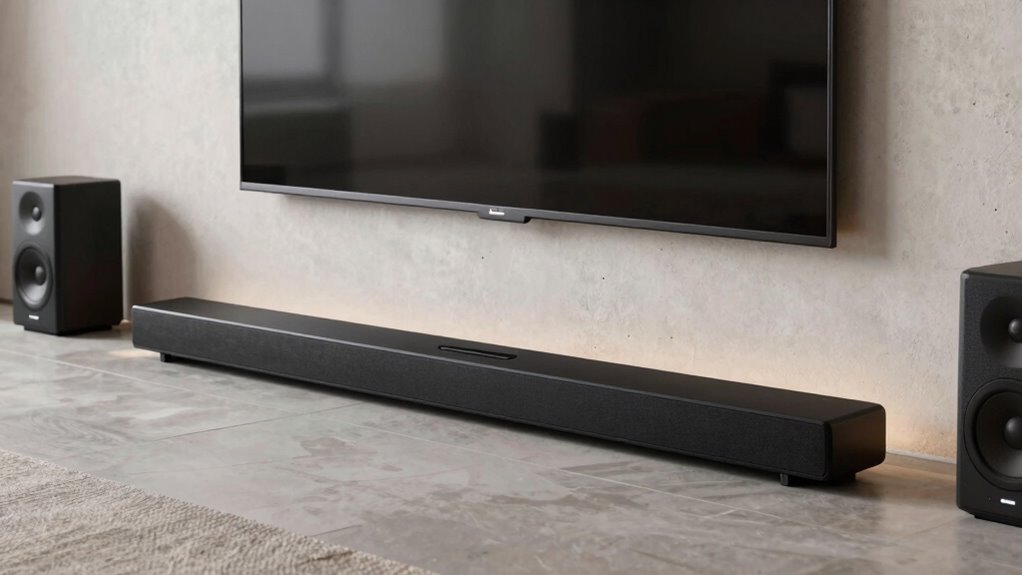

The best soundbars with Dolby Atmos balance convincing height effects, clear dialogue, and an easy fit with your TV and room. My best overall pick is the Sonos Arc Ultra for buyers seeking a premium, immersive all-in-one system, while the Polk Audio Signa S4 stands out as a practical option with a wireless subwoofer and the Fire TV Soundbar Plus suits viewers who want built-in bass. The main tradeoff is between compact simplicity and a more expansive speaker layout, with room shape, connection support, and bass needs all affecting the result. Atmos support alone does not guarantee overhead sound, especially in rooms with high or sloped ceilings. Read on for the full comparison and guidance on choosing the right setup.

Get business pricing on monitors, keyboards and dev gear
- Business-only prices and quantity discounts
- Tax-exempt purchasing
- Multiple users, one account, clear invoices
Key Takeaways
- The Sonos Arc Ultra leads for premium all-in-one use: it is the strongest fit for buyers prioritizing an immersive soundbar without starting with a separate subwoofer-and-speaker kit.
- Subwoofers shape the value comparison: the Polk Signa S4, TCL S55H, TCL S65K, and Fire TV Soundbar Plus bundle bass hardware, while compact all-in-one picks favor fewer components.
- Atmos labels cover very different layouts: the ULTIMEA 5.1.2 and 5.1 systems aim for a broader surround setup than the 2.0 TCL S45H or all-in-one models.
- Small-room simplicity favors compact bars: the Sonos Beam Gen 2 and Samsung S60D are easier to place than multi-piece systems, though their room-filling potential differs.
- TV ecosystem and connectivity can outweigh channel counts: Samsung Q-Symphony, Fire TV integration, and HDMI eARC support matter most when they match the buyer’s existing equipment and habits.



| soundbars with dolby atmo | Connectivity | Dimensions |
|---|---|---|
| Sonos Beam Gen 2 | HDMI, Wi-Fi, Ethernet | — |
| TCL S55H 2.1 Sound Bar with Wi | HDMI eARC/ARC, Bluetooth | 31.89 × 2.36 × 3.86 inches |
| TCL S45H 2.0 Sound Bar with Do | HDMI eARC/ARC, optical, Bluetooth, AUX | 31.89 × 2.36 × 3.86 inches |
| Polk Audio Signa S4 Dolby Atmo | HDMI eARC, Bluetooth | 41.2 × 2.4 × 3.7 inches |
| Bose Smart Ultra Dolby Atmos S | HDMI eARC, optical, Bluetooth, Wi-Fi | — |
| Sonos Arc Ultra Soundbar with | HDMI eARC, Wi-Fi, Bluetooth | — |
| ULTIMEA 5.1CH Surround Sound B | HDMI eARC, Bluetooth 5.4, app control | — |
| ULTIMEA 5.1.2ch Sound Bar with | HDMI eARC | 31.5 x 1.81 x 3.54 inches (listed) |
| Fire TV Soundbar Plus with Bui | — | 37 x 5.2 x 2.5 inches |
| TCL S65K S Series 5.1 Channel | Bluetooth, USB, Wi-Fi, HDMI, wireless | — |
| Samsung S60D 5.0-Channel Sound | — | 26.3 × 4.1 × 2.4 inches |
More Details on Our Top Picks
Sonos Beam Gen 2 – Black – Soundbar with Dolby Atmos
The Sonos Beam Gen 2 suits buyers who want Dolby Atmos in a compact bar that can also serve as a music and multiroom speaker. Its Trueplay tuning adapts the sound to the room, while app, remote, AirPlay 2, and voice control give it more day-to-day flexibility than the remote-focused TCL S55H. The expandable Sonos system is a further advantage if you may add speakers later. Its Atmos presentation comes from a 2-channel bar, though, rather than the Polk Signa S4’s specified 3.1.2 layout with up-firing drivers and a wireless subwoofer. That makes the Beam a better fit for smaller spaces and mixed listening than for buyers chasing stronger bass or a more explicitly height-focused setup. It also needs corded power and is intended for indoor use.
Pros:- Dolby Atmos support in a compact soundbar
- Trueplay room tuning can adapt the sound to its placement
- App, remote, voice, and AirPlay 2 control options
- Can join an expandable Sonos multiroom system
Cons:- No separate subwoofer is listed, unlike the TCL S55H and Polk Signa S4
- Its 2-channel configuration offers less specified speaker separation than the Polk Signa S4’s 3.1.2 layout
- Requires corded power and is not water resistant
Best for: Listeners who want a compact Dolby Atmos bar for TV, music, and multiroom audio, with the option to expand a Sonos setup later.
Not ideal for: Movie fans prioritizing powerful bass or a dedicated wireless subwoofer; the Beam’s listed configuration is 2-channel and has no separate subwoofer.
- Audio channels:2
- Audio output mode:Surround
- Power output:200 watts
- Connectivity:HDMI, Wi-Fi, Ethernet
- Wireless features:AirPlay, NFC, Wi-Fi
- Control methods:App, remote, voice
- Mounting type:Shelf mount
- Enclosure material:Polycarbonate (PC)
Our verdict“Choose the Beam Gen 2 for a compact, connected Atmos bar that can grow into a Sonos system, not for subwoofer-driven impact.”
TCL S55H 2.1 Sound Bar with Wireless Subwoofer for Smart TV, Dolby Atmos, DTS:X, 220W, App & Remote Control
The TCL S55H is the more convincing pick than the S45H for buyers who want Dolby Atmos alongside fuller low-end sound: its 2.1 setup includes a wireless subwoofer, so bass does not have to come from the bar alone. It also supports DTS:X and uses AI Sonic room calibration, features that help tailor playback to a TV room without adding rear speakers. Compared with the Polk Signa S4, however, the TCL’s listed setup does not specify the Polk’s 3.1.2 up-firing speaker arrangement or its dialogue-focused VoiceAdjust feature. The S55H is aimed at small and medium rooms, not buyers trying to fill a large open space. Its wireless subwoofer reduces the cable run between speakers, but the bar and subwoofer still need power, and the product is not water resistant.
Pros:- Dolby Atmos and DTS:X support
- Wireless subwoofer adds dedicated bass
- AI Sonic auto room calibration
- HDMI eARC/ARC and Bluetooth connectivity
Cons:- Designed primarily for small to medium rooms
- No rear surround speakers are specified
- Requires corded power and is not water resistant
Best for: TV owners in small or medium rooms who want Dolby Atmos, DTS:X, and a wireless subwoofer without adding separate surround speakers.
Not ideal for: Buyers with a large open-plan room or those who want a specified height-speaker layout and dedicated dialogue adjustment, as offered by the Polk Signa S4.
- Audio configuration:2.1
- Audio formats:Dolby Atmos, DTS:X, DTS Virtual:X
- Power:220W (product title)
- Subwoofer:Wireless, 5.5-inch woofer
- Dimensions:31.89 × 2.36 × 3.86 inches
- Connectivity:HDMI eARC/ARC, Bluetooth
- Room calibration:AI Sonic auto room calibration
- Control method:Remote
Our verdict“Pick the S55H if a wireless subwoofer and format support matter more than a larger, explicitly height-channel setup.”
TCL S45H 2.0 Sound Bar with Dolby Atmos and DTS:X, 100W Wireless Bluetooth Home Theater Audio
The TCL S45H keeps the setup simple: a compact 2.0 bar offers Dolby Atmos and DTS:X decoding without a separate subwoofer taking up floor space. Its 31.89-inch width and HDMI eARC/ARC, optical, Bluetooth, and AUX connections make it an easy match for a modest TV setup. AI Sonic room calibration is a useful extra, though the listed description says app setup is needed, which adds a step for buyers who want plug-and-play operation. Compared with the TCL S55H, the S45H gives up the wireless subwoofer and the extra bass that comes with it; compared with the Polk Signa S4, it also lacks a specified 3.1.2 speaker layout. Treat Atmos here as format support in a compact bar, not a substitute for dedicated surround or height speakers.
Pros:- Compact 2.0 design fits neatly under a TV
- Dolby Atmos and DTS:X support
- HDMI eARC/ARC, optical, Bluetooth, and AUX inputs
- AI Sonic auto room calibration
Cons:- No dedicated subwoofer, unlike the TCL S55H
- 2.0 configuration does not include separate surround speakers
- App-based calibration may add setup friction
Best for: Apartment dwellers and first-time soundbar buyers who want a compact, straightforward TV upgrade with Atmos support and several wired input options.
Not ideal for: Viewers seeking strong bass or a more enveloping speaker layout; the S45H is 2.0 and has no dedicated subwoofer.
- Audio configuration:2.0
- Power:100W
- Audio formats:Dolby Atmos, DTS:X
- Dimensions:31.89 × 2.36 × 3.86 inches
- Connectivity:HDMI eARC/ARC, optical, Bluetooth, AUX
- Room calibration:AI Sonic auto room calibration
- Controls:App and remote
Our verdict“Choose the S45H when compact size and connection flexibility matter more than dedicated bass or a multi-speaker Atmos layout.”
Polk Audio Signa S4 Dolby Atmos 3D Sound Bar System with 5.9″ Wireless Sub
The Polk Audio Signa S4 makes the strongest case here for a more explicitly height-oriented Atmos presentation: its 3.1.2 layout includes up-firing speakers, and a wireless 5.9-inch subwoofer handles bass. VoiceAdjust is a practical point of difference, letting viewers raise dialogue without lifting music and effects along with it. Compared with the compact Sonos Beam Gen 2, the Polk adds a separate subwoofer and specified height channels, but it is wider at 41.2 inches and weighs 19 pounds. The TCL S55H also includes a wireless subwoofer, yet its listed specs do not specify the Signa’s 3.1.2 layout or dialogue adjustment. The Polk has a relatively focused connection set, with HDMI eARC noted, so buyers needing many inputs should check their TV and source-device setup.
Pros:- 3.1.2 configuration with up-firing speakers for height effects
- Wireless 5.9-inch subwoofer adds dedicated bass
- VoiceAdjust lets listeners raise dialogue independently
- Slim bar can be wall-mounted or placed beneath a TV
Cons:- At 41.2 inches wide and 19 pounds, it takes more room than the Sonos Beam Gen 2
- The listed connection details emphasize a single HDMI eARC output, limiting input flexibility
- Not water resistant
Best for: Movie and TV viewers who want defined dialogue, a wireless subwoofer, and specified up-firing Atmos channels in one soundbar system.
Not ideal for: Buyers with limited space, multiple wired sources, or a preference for a smaller all-in-one bar without a separate subwoofer.
- Audio configuration:3.1.2 Dolby Atmos
- Dimensions:41.2 × 2.4 × 3.7 inches
- Weight:19 pounds
- Subwoofer:Wireless, 5.9-inch woofer
- Tweeter diameter:1 inch
- Connectivity:HDMI eARC, Bluetooth
- Mounting type:Wall mount
- Dialogue feature:Polk VoiceAdjust
Our verdict“Choose the Signa S4 for its specified height channels, separate subwoofer, and dialogue controls, provided its size and connection options suit your setup.”
Bose Smart Ultra Dolby Atmos Soundbar – All-in-One Surround System with Alexa & Google Voice Control, HDMI eARC
The Bose Smart Ultra is for buyers who want a feature-rich Atmos bar without placing a separate subwoofer in the room. Its six full-range transducers include upward-firing dipole speakers, while AI Dialogue Mode targets clearer vocals and built-in Alexa and Google voice control add hands-free convenience. That combination gives it a different appeal from the Polk Signa S4: Bose keeps the system in one bar, while Polk supplies a separate wireless subwoofer and a specified 3.1.2 layout. The tradeoff is that the Bose’s bass relies on internal drivers, so listeners who want a dedicated subwoofer may prefer the Polk or TCL S55H. Setup is flexible through HDMI eARC, optical, or Bose SimpleSync, but the listed wireless range is limited to about 9 meters.
Pros:- Six full-range transducers include upward-firing dipole speakers
- AI Dialogue Mode is designed to improve vocal clarity
- Built-in Alexa and Google voice control
- HDMI eARC, optical, and Bose SimpleSync setup options
Cons:- No separate subwoofer is included, unlike the Polk Signa S4 and TCL S55H
- Wireless range is listed at about 9 meters
- Not water resistant
Best for: Buyers seeking a premium, uncluttered Atmos setup with upward-firing drivers, voice assistants, and dialogue-focused processing in a single bar.
Not ideal for: Bass-focused movie watchers who want a separate subwoofer, or households that do not want built-in voice-assistant features.
- Audio format:Dolby Atmos
- Transducers:Six full-range transducers, including upward-firing dipole speakers
- Connectivity:HDMI eARC, optical, Bluetooth, Wi-Fi
- Voice control:Alexa and Google voice control
- Dialogue feature:AI Dialogue Mode
- Mounting type:Tabletop
- Wireless range:9 meters
- Water resistance:Not water resistant
Our verdict“Pick the Bose Smart Ultra for a voice-controlled, single-bar Atmos setup, and choose the Polk Signa S4 instead if a dedicated wireless subwoofer matters more.”
Sonos Arc Ultra Soundbar with Dolby Atmos – Black
The Sonos Arc Ultra is the premium pick here for buyers who want Dolby Atmos presentation from a single, polished soundbar. Its stated 9.1.4-channel layout and Sound Motion technology aim to create a broad, height-aware soundstage, while clear dialogue helps keep voices legible amid busy movie effects. Compared with the ULTIMEA 5.1.2ch Sound Bar, the Arc Ultra offers a more upscale, expandable Sonos ecosystem, but does not include a separate subwoofer or rear speakers in this listing. A single HDMI eARC connection keeps initial wiring simple; adding Sonos speakers later can build out a fuller system. The tradeoff is that buyers pay for the premium design and platform, and the strongest surround effect may call for extra components.
Pros:- Stated 9.1.4 channels and Dolby Atmos support target an enveloping, height-aware presentation.
- Sound Motion technology and clear-dialogue focus suit action films and dialogue-heavy shows.
- HDMI eARC, app, voice, and remote controls provide several ways to manage playback.
- Sonos speaker expansion supports a larger home-theater or multiroom setup.
Cons:- No separate subwoofer or rear speakers are listed, so a fuller system requires additional components.
- Premium positioning makes it a substantial commitment compared with the ULTIMEA systems.
- Its 46.18-inch size may be a poor fit for narrow TV stands.
Best for: Movie-focused buyers who want a premium Atmos soundbar now and the option to expand into a Sonos multiroom or surround setup later.
Not ideal for: Shoppers seeking a complete subwoofer-and-rear-speaker package in one purchase, or those who want the simplest low-cost upgrade for a small TV room.
- Channels:9.1.4
- Audio format:Dolby Atmos
- Audio output mode:Surround
- Connectivity:HDMI eARC, Wi-Fi, Bluetooth
- Controls:App, voice, remote
- Speaker size:46.18 inches
- Enclosure material:Metal
Our verdict“Choose the Arc Ultra for a premium, expandable Dolby Atmos centerpiece, but skip it if you want separate bass and surround speakers included from the start.”
ULTIMEA 5.1CH Surround Sound Bar System with Dolby Atmos, Poseidon M60
The ULTIMEA Poseidon M60 suits buyers who want a more complete-feeling 5.1 package without turning installation into a project. Its advertised setup time is less than one minute, and VoiceMX is designed to bring speech forward when movie mixes bury dialogue. A wired wooden subwoofer and 300W output add a dedicated bass component, unlike the all-in-one Fire TV Soundbar Plus, whose subwoofer is built into the bar. The Fire TV model is simpler to place, while the Poseidon gives bass its own enclosure. Dolby Atmos support is part of the appeal, but the stated 5.1 layout is less height-specific than the ULTIMEA 5.1.2 model’s two height channels. The subwoofer cable also limits placement freedom, and app sound tuning may be more involved than a basic plug-and-play setup.
Pros:- Quick setup is suited to buyers who want a straightforward TV audio upgrade.
- VoiceMX dialogue enhancement targets speech clarity in films and television.
- Wired wooden subwoofer provides a dedicated bass enclosure.
- HDMI eARC, Bluetooth 5.4, and app control offer useful connection and tuning choices.
Cons:- The subwoofer requires a cable, restricting where it can be placed.
- Its 5.1 layout lacks the stated two height channels of the ULTIMEA 5.1.2 model.
- App customization may take more effort than using the basic sound modes on the Fire TV Soundbar Plus.
Best for: TV owners who want dedicated subwoofer bass, clearer dialogue, and a fast setup without assembling a larger speaker system.
Not ideal for: Buyers who need a wireless subwoofer, a clearly specified 5.1.2 height-channel layout, or rear speakers for a more enveloping surround field.
- Channels:5.1
- Audio format:Dolby Atmos
- Power output:300W
- Maximum SPL:99 dB
- Frequency response:45 Hz–18 kHz
- Subwoofer:Wired wooden enclosure with 18 mm high-excursion driver
- Connectivity:HDMI eARC, Bluetooth 5.4, app control
- Voice clarity technology:VoiceMX
Our verdict“Pick the Poseidon M60 if fast setup, dialogue help, and a separate wired subwoofer matter more than wireless placement or dedicated height channels.”
ULTIMEA 5.1.2ch Sound Bar with Dolby Atmos, Surround Sound System for TV
The ULTIMEA 5.1.2ch stands out for buyers who want a clearly stated height-channel configuration without stepping up to the premium Sonos Arc Ultra. Its up-firing speakers are intended to add overhead cues to Dolby Atmos tracks, while HDMI eARC supports lossless audio transmission from a compatible TV. App-based equalizer and bass, midrange, and treble adjustments give listeners more control than the simpler mode selection on the Fire TV Soundbar Plus. Wall or tabletop placement also makes it easier to adapt to different rooms. The tradeoff is that Atmos depends on compatible source material and TV connections, and this model does not support DTS audio. Its listed subwoofer driver is 5.25 inches, so buyers seeking a particularly forceful low end may prefer a system with a larger specified driver.
Pros:- 5.1.2-channel configuration and up-firing speakers target height effects from Dolby Atmos content.
- HDMI eARC supports lossless audio transmission from compatible equipment.
- App equalizer and tone adjustments allow more sound tailoring than basic preset-only control.
- Tabletop and wall-mount options suit different room layouts.
Cons:- DTS audio format is not supported.
- Atmos playback depends on compatible TV connections and source content.
- The listed 5.25-inch subwoofer driver may not satisfy buyers seeking especially weighty bass.
Best for: Viewers seeking an affordable-style route to a stated 5.1.2 Dolby Atmos layout, with app tuning and flexible mounting for a home theater.
Not ideal for: People with DTS-focused libraries, incompatible TV connections, or a priority for the strongest possible bass output.
- Channels:5.1.2
- Audio format:Dolby Atmos
- Audio output mode:Surround
- Subwoofer diameter:5.25 inches
- Connectivity:HDMI eARC
- Control method:App
- Mounting:Tabletop or wall mount
- Dimensions:31.5 x 1.81 x 3.54 inches (listed)
Our verdict“Choose this ULTIMEA if height-channel Atmos and app tuning are priorities, but look elsewhere if DTS support or bigger specified bass hardware matters more.”
Fire TV Soundbar Plus with Built-in Subwoofer, 3.1 Channel, Dolby Atmos, DTS:X
The Fire TV Soundbar Plus is the easiest fit for someone upgrading a TV without adding a separate subwoofer or several speaker boxes. Its 3.1-channel design combines the bar and bass hardware in one unit, and support for both Dolby Atmos and DTS:X gives it broader format coverage than the DTS-incompatible ULTIMEA 5.1.2ch. Movie, Music, Sports, and Night modes offer a quick way to adapt sound without spending time in an equalizer. Bluetooth adds a simple route for music playback. The compromise is physical: compared with the TCL S65K, which is described as having wireless subwoofer and surround speakers, this Fire TV model keeps everything in the bar and cannot offer the same separate-speaker layout. It is a sensible convenience pick, not the choice for buyers chasing a full room-filling surround system.
Pros:- All-in-one 3.1 design avoids placing and wiring a separate subwoofer.
- Dolby Atmos and DTS:X support cover two major surround formats.
- Movie, Music, Sports, and Night modes simplify sound adjustments for different uses.
- HDMI, optical, and Bluetooth connections accommodate a range of TVs and devices.
Cons:- The 3.1-channel layout is less expansive than the 5.1 and 5.1.2 systems in this group.
- Built-in bass hardware cannot be placed separately like the TCL S65K’s wireless subwoofer.
- Optimal connection depends on the ports available on the TV.
Best for: First-time soundbar buyers and streaming-TV households that want Atmos and DTS:X support, built-in bass, and straightforward connections in one unit.
Not ideal for: Home-theater listeners who want separate rear speakers, a more expanded channel layout, or a dedicated subwoofer positioned away from the TV.
- Channels:3.1 with built-in subwoofer
- Supported surround formats:Dolby Atmos, DTS:X
- Dimensions:37 x 5.2 x 2.5 inches
- Weight:8.8 lb
- EQ modes:Movie, Music, Sports, Night
- Ports:HDMI, optical, AC, USB-A
- Bluetooth:Supported
- Warranty:1-year limited
Our verdict“Choose the Fire TV Soundbar Plus for simple all-in-one Atmos and DTS:X playback, but opt for a separate-speaker system if surround coverage is your priority.”
TCL S65K S Series 5.1 Channel Soundbar System with Dolby Atmos, DTS:X, Wireless Subwoofer, and Bluetooth
The TCL S65K S Series is the lineup’s choice for buyers drawn to separate bass and surround components rather than an all-in-one bar. Its wireless subwoofer and surround speakers allow more flexible placement than the wired subwoofer in the ULTIMEA Poseidon M60, while Dolby Atmos and DTS:X support cover two key immersive formats. AI Sonic Auto Room Calibration is intended to adjust playback to the room, a useful feature when furniture or speaker positions make setup less predictable. Bluetooth handles music streaming, and the stated 5.1 layout provides more channels than the Fire TV Soundbar Plus. This system involves more pieces and connections, so setup is less minimal than with an all-in-one bar. The product data also gives limited detail about non-TCL TV compatibility, making connection checks sensible before choosing it.
Pros:- Wireless subwoofer and surround speakers allow more flexible placement than the wired-subwoofer Poseidon M60.
- 5.1 channels provide a more expanded speaker layout than the Fire TV Soundbar Plus.
- Dolby Atmos and DTS:X support suit a range of immersive movie soundtracks.
- AI Sonic Auto Room Calibration is designed to adapt sound to the room.
Cons:- Separate components and connections add setup work compared with the all-in-one Fire TV Soundbar Plus.
- The supplied details provide limited information about compatibility with non-TCL TVs.
- The listed maximum output figure does not by itself clarify typical listening performance or room coverage.
Best for: Buyers who want a 5.1 system with separately placeable wireless bass and surround components, plus Dolby Atmos and DTS:X support.
Not ideal for: People who need a single compact bar, want minimal setup, or need clearly specified compatibility details for a non-TCL television.
- Channels:5.1
- Supported surround formats:Dolby Atmos, DTS:X
- Subwoofer diameter:6.5 inches
- Maximum output power:630W
- Connectivity:Bluetooth, USB, Wi-Fi, HDMI, wireless
- Control method:Remote
- Mounting:Wall mount
- Power source:Corded electric
Our verdict“Pick the TCL S65K if flexible placement of wireless surround components matters more than a compact, low-setup all-in-one bar.”
Samsung S60D 5.0-Channel Soundbar with Wireless Dolby Atmos, All-In-One Design, Q-Symphony, SpaceFit Sound Pro, Adaptive Sound, Game Mode Pro, Alexa Built-in (HW-S60D/ZA)
The Samsung S60D suits buyers who want Dolby Atmos in a single, tidy bar rather than a separate wireless subwoofer. Its built-in subwoofers keep setup simple and free up floor space, while wireless Dolby Atmos can reduce cable clutter when paired with compatible equipment. Compared with the TCL S65K, which includes a separate subwoofer and rear-channel setup, the S60D is easier to place but offers less physical separation between bass and the soundbar. Its Q-Symphony feature can combine the bar’s output with compatible Samsung TV speakers, though that benefit is limited to supported Samsung models. Adaptive Sound and Game Mode Pro add useful automatic tuning for dialogue and gaming. Choose it for a compact, TV-friendly setup; skip it if you want a dedicated subwoofer or broader speaker placement.
Pros:- All-in-one design with built-in subwoofers avoids placing a separate bass unit.
- Wireless Dolby Atmos can help reduce cable clutter with compatible equipment.
- Q-Symphony adds a reason to pair it with a compatible Samsung TV.
- Adaptive Sound and Game Mode Pro tailor audio for dialogue and gaming.
Cons:- No separate subwoofer, so bass placement and impact are more limited than with systems such as the TCL S65K.
- Q-Symphony requires a compatible Samsung TV, limiting the appeal for other television owners.
- Smart features such as Alexa depend on device and regional support.
Best for: Samsung TV owners who want Dolby Atmos and a simple, compact soundbar without adding a separate subwoofer.
Not ideal for: Buyers seeking stronger, separately placed bass or a multi-speaker surround setup; the S60D keeps everything in one bar.
- Audio output mode:Surround
- Design:All-in-one soundbar with built-in subwoofers
- Dolby Atmos:Wireless Dolby Atmos
- Dimensions:26.3 × 4.1 × 2.4 inches
- Weight:6 pounds
- Mounting:Wall mount
- Connectivity and compatibility:Television and gaming console
- Voice control:Amazon Alexa built in
Our verdict“Choose the S60D for a compact Dolby Atmos setup and Samsung TV integration, but pick a system with a separate subwoofer if bass is your priority.”

How We Picked
I compared these 11 Dolby Atmos soundbars by the things that change the buying decision: speaker configuration, whether a subwoofer is included, likely room fit, dialogue and surround ambitions, and the connections and controls each system offers. I gave weight to how much a buyer gets without needing extra components, while recognizing that a larger channel layout may suit a movie-focused room better than a compact bar. Atmos branding was treated as a format feature, not proof that every room will produce convincing overhead effects.
The ranking favors versatility and a clear use case over a single headline specification. The Sonos Arc Ultra leads as a premium all-in-one choice; bundled-subwoofer models rise for buyers seeking a more complete setup from the box; and compact or simpler bars are ranked for ease and placement rather than maximum surround ambition. Products with distinct layouts or ecosystem features earn their place when those strengths solve a specific need, but no model is a universal fit.
Factors to Consider When Choosing Soundbars With Dolby Atmos
Choosing among Dolby Atmos soundbars means matching the system to your room, TV, and listening priorities—not just choosing the largest channel number. These broader checks can prevent paying for hardware your space cannot use or buying a bar that leaves a key need unmet.
Room Shape Can Limit Height Effects
Many soundbars create Atmos height cues by directing sound upward or using processing to suggest sounds above the listener. Those effects depend on room surfaces and seating position, so ceiling height, angle, and nearby open spaces can change what you hear. A flat ceiling and a reasonably centered seat generally give upward-firing designs a better chance than a vaulted or open-plan room. Before paying extra for Atmos, check whether the manufacturer describes physical up-firing drivers or relies mainly on virtualization. If your room is irregular, clear dialogue and broad front-stage sound may matter more than simulated overhead effects.
Count the Components, Not Just the Channels
A 5.1.2 label describes a channel arrangement, but it does not by itself tell you whether rear speakers or a subwoofer are included. Read the box contents carefully and check whether the surround channels come from separate speakers or are produced by the soundbar. A bundled wireless sub can add low-frequency impact, though it still needs a suitable place near a power outlet. Separate rear speakers may create a more enveloping movie setup, but they add placement and cable or power considerations. Choose the system you can actually install and live with, not the biggest number on the listing.
Check TV Connections Before Comparing Features
HDMI eARC is the most straightforward way to pass higher-quality audio formats from a compatible TV to a soundbar, while ARC support can impose format limits. Confirm which HDMI port on the TV supports eARC and whether your streaming device or game console connects through the TV or directly to the bar. Some models rely on the TV for video switching, so connection plans matter if your set has few HDMI ports. Optical audio can work for basic sound but may not carry every Atmos format. Matching the connection path to your actual sources prevents a capable bar from being held back by the rest of the setup.
Set a Realistic Bass and Placement Plan
A separate subwoofer can make action scenes and music feel fuller, but bass travels through walls and floors more readily than dialogue. In an apartment or shared home, a soundbar with less emphasis on a separate sub may be easier to manage at night. Measure the space below or in front of your TV: a tall bar can block the screen or an infrared sensor, and a sub needs somewhere it can connect to power. Wall mounting can also affect soundbar positioning and cable routing. Think about everyday volume and furniture layout before choosing a system around bass output alone.
Prioritize the Features You Will Use
Voice assistants, app controls, room calibration, and TV-brand audio features can make daily use easier, but they add value only when they fit your habits. A Samsung TV owner may appreciate Q-Symphony, while someone who prefers a simple remote may not benefit from extra app settings. Check whether the soundbar supports the streaming services and voice controls you already use rather than assuming every smart feature works the same way. Also look for clear dialogue or night-listening modes if television speech is a recurring problem. A well-matched everyday feature can matter more than a rarely used format badge.
Decide Whether Expandability Is Worth the Setup
Some buyers want one bar and a quick connection; others may want to add a subwoofer or rear speakers later. Confirm which add-ons are compatible, whether they are sold separately, and whether the system allows the intended configuration. Expansion can spread the cost of a home theater setup over time, but it may create brand lock-in and extra setup work. An all-in-one model avoids separate speaker placement but cannot be assumed to match a system with physical rear channels. Pick based on the setup you expect to keep, not on upgrade plans you may never follow through on.
Frequently Asked Questions
Will a Dolby Atmos soundbar work with a TV that only has HDMI ARC?
It can still play sound, but the formats available may depend on the TV, the soundbar, and the source device. HDMI eARC generally supports a wider range of high-bitrate audio than standard ARC, while some streaming Atmos formats may work over ARC on compatible equipment. Check the manuals for both devices and confirm the audio format used by your streaming service or player. If the TV cannot pass the format you want, connecting a source directly to the soundbar may be an option when the bar supports video passthrough. Do not assume that an Atmos logo on the soundbar means every connection route will deliver Atmos.
Do I need rear speakers to get Dolby Atmos?
No. A soundbar can process Atmos without separate rear speakers, using its built-in drivers and audio processing to create a wider or taller impression. Rear speakers can add more distinct sound from behind the seating position, which is useful for films and games, but they also require space and setup. Channel labels can be confusing, so check whether rear speakers are included or whether the listed channels are virtualized. If a tidy installation matters most, an all-in-one bar may be the better fit. If you want a more room-filling surround effect, compare complete systems with physical rear speakers.
Is a bundled subwoofer necessary for better movie sound?
A subwoofer can add weight to explosions, music, and other low-frequency effects, but it is not required for dialogue clarity or Atmos playback. Whether it is a good fit depends on your room, neighbors, listening volume, and how much space you have for another component. In a shared building, a powerful sub may need frequent volume adjustments or careful placement. Soundbars without a separate subwoofer keep the setup simpler, while bundled-sub models provide bass hardware without a separate purchase. Compare the whole system and your listening conditions rather than treating a subwoofer as an automatic upgrade.
Will a Dolby Atmos soundbar make every movie sound like Atmos?
No. The soundbar needs an Atmos soundtrack from a compatible streaming service, disc, game, or other source to reproduce Atmos content. Some bars can process non-Atmos audio to create a wider or more spacious presentation, but that is not the same as receiving an Atmos mix. The TV and connection also need to pass the format correctly. Check the audio settings on the TV and source device if Atmos content plays in a different format. A good soundbar can improve ordinary TV audio, but its height effects depend on both the source material and the room.
Should I choose a compact all-in-one bar or a larger multi-piece system?
Choose an all-in-one bar if you have limited floor space, want fewer cables, or prefer a quick setup. A multi-piece system may suit a dedicated viewing area where you can place a subwoofer and, if included, rear speakers around the seating position. Physical components can create a more convincing surround arrangement, but only when they are installed in useful positions. Also check whether the bar will fit beneath your TV and whether the room has accessible power outlets for each component. Your room and willingness to manage extra hardware should guide the choice more than channel count alone.
Conclusion
For a single premium recommendation, I would choose the Sonos Arc Ultra as the best overall fit for buyers who want an immersive all-in-one bar. The TCL S55H is my best-value-style pick for shoppers who want a wireless subwoofer included, while the Bose Smart Ultra is the best premium alternative for buyers drawn to its smart features and standalone design. For beginners, the Sonos Beam Gen 2 offers a more compact entry point than a multi-piece surround kit. Choose the ULTIMEA 5.1.2 if a larger channel layout is your priority, or the Samsung S60D if its Samsung TV integration suits your setup. Match the pick to your room, connections, and appetite for extra components; Atmos support alone does not settle the decision.
Halloween Picks

15-Foot Halloween Pumpkin Inflatable with LED Lights and Air Blower

HOPOCO Halloween Pumpkin Fog Machine with 12 LED Colors and 4 Light Modes

Vexalify 11-Inch Halloween Pumpkin Fog Machine with 12-Color Lights
As an affiliate, we earn on qualifying purchases.