
Searching for the best software testing automation tools in 2026? The top picks include Selenium for its flexibility and community support, and TestComplete for its ease of use and comprehensive features. The main challenge in this category is balancing power with usability, as some tools offer extensive automation but require steep learning curves, while others prioritize simplicity at the expense of advanced capabilities. Budget constraints and integration needs further complicate the decision. Keep reading for a detailed breakdown of the best options to help you find the perfect fit for your testing needs.

Get business pricing on monitors, keyboards and dev gear
- Business-only prices and quantity discounts
- Tax-exempt purchasing
- Multiple users, one account, clear invoices
Key Takeaways
- AI-powered testing tools are increasingly shaping the future, with automation becoming more intelligent and adaptive.
- Ease of integration with CI/CD pipelines remains a critical factor for selecting a testing tool, especially for agile teams.
- While premium tools offer extensive features, many organizations find open-source options like Selenium to be more cost-effective.
- Tools with strong community support tend to evolve faster and provide better troubleshooting resources.
- Choosing a tool that balances automation depth with user-friendliness is key for maximizing productivity without steep learning curves.




More Details on Our Top Picks
Full Stack Testing: A Practical Guide for Delivering High Quality Software
This book stands out for its practical focus on full stack testing methodologies, making it ideal for developers and testers who want actionable strategies for comprehensive quality assurance. Compared to the more theoretical approach in Software Testing and Quality Assurance, it offers step-by-step guidance but falls short on real-world case studies, which could limit its application in complex scenarios. Its emphasis on end-to-end testing helps teams build confidence across the entire development pipeline, though it may lack depth for highly advanced testing environments. This makes it a strong choice for teams seeking practical, implementation-oriented advice rather than theoretical concepts.
Pros:- Focuses on practical, actionable full stack testing strategies
- Covers comprehensive quality assurance approaches from development to deployment
- Suitable for teams looking for implementation guidance
Cons:- Lacks detailed real-world case studies to illustrate complex scenarios
- May not provide sufficient depth for highly specialized or advanced testing environments
Best for: QA teams and developers seeking practical, end-to-end testing methodologies for real-world projects
Not ideal for: Advanced testing professionals requiring in-depth technical analysis or extensive case studies
- Format:Book
Bottom line: This guide is best for practitioners who want straightforward, comprehensive testing strategies for real-world software delivery.
Continuous Delivery: Reliable Software Releases through Build, Test, and Deployment Automation (Addison-Wesley Signature Series)
This book by Martin Fowler is a definitive resource for teams aiming to implement continuous delivery practices, especially in environments where automation reliability is critical. Compared to Software Testing and Quality Assurance, it emphasizes automation pipelines and deployment strategies, making it ideal for DevOps-focused teams. Its depth can be challenging for beginners, but it offers invaluable insights for those with some experience in software development. If your goal is to streamline release processes and reduce manual intervention, this book provides the strategic foundation you need, though it presumes a certain level of technical familiarity.
Pros:- Comprehensive coverage of continuous delivery principles and practices
- Authored by renowned expert Martin Fowler, adding credibility
- Focuses on reliable automation across build, test, and deployment
Cons:- Requires prior knowledge of software development and automation concepts
- Technical density may overwhelm newcomers
Best for: DevOps teams and software engineers with some experience seeking to automate and stabilize release cycles
Not ideal for: Beginners or teams new to automation who need more foundational guidance
- ASIN:0321601912
Bottom line: This book is ideal for experienced teams looking to perfect automated release pipelines and deployment reliability.
Software Testing and Quality Assurance: Exploring testing levels, test tools, automation, and quality metrics for improved software quality
This comprehensive guide covers a broad spectrum of testing levels, automation tools, and quality metrics, making it suitable for professionals who want a well-rounded understanding of modern QA practices. When compared with AI-Powered Software Testing Tool, which emphasizes automation via AI, this book offers a broader view including testing fundamentals and metrics, but it may lack the latest AI-driven techniques. Its coverage of measurable quality metrics helps teams track improvements effectively, though it doesn’t include real-world case studies, which could limit practical applicability. It appeals most to those seeking a strategic overview rather than a purely technical manual.
Pros:- Provides a well-rounded overview of testing levels and quality metrics
- Includes practical guidance on selecting and using automation tools
- Focuses on measurable outcomes for quality improvement
Cons:- Lacks real-world case studies to demonstrate practical implementation
- Does not focus extensively on the latest AI-driven automation techniques
Best for: QA managers and testers seeking a broad, strategic understanding of testing levels and quality metrics
Not ideal for: Teams looking primarily for cutting-edge automation techniques driven by AI or ML
- ASIN:B0F1Z59N6M
Bottom line: This book suits QA professionals aiming for a comprehensive, strategic approach to testing and quality metrics, rather than cutting-edge automation tools.
AI-Powered Software Testing Tool
This AI-powered testing tool leverages advanced artificial intelligence to generate test cases and improve testing accuracy. Unlike the more strategic books like Continuous Delivery, it focuses on automating specific testing tasks through AI, which can drastically reduce manual effort. However, the product details are limited, making it difficult to assess implementation complexity or integration ease. While promising for teams ready to incorporate AI into their testing workflows, it may not be suitable for those needing a detailed technical overview or with limited AI experience. Its success depends heavily on how well the AI capabilities are integrated into existing processes.
Pros:- Utilizes cutting-edge AI for smarter, faster test case creation
- Potentially reduces manual testing efforts significantly
- Automates complex testing tasks that are hard to perform manually
Cons:- Limited detailed product information and integration details
- Implementation complexity unknown, which could pose setup challenges
Best for: QA teams looking to incorporate AI for smarter test case generation and defect detection
Not ideal for: Organizations requiring detailed technical documentation or with limited AI expertise
- ASIN:B0DVNS8K3D
Bottom line: This tool is best suited for teams eager to leverage AI for testing automation but prepared for potential setup and integration challenges.
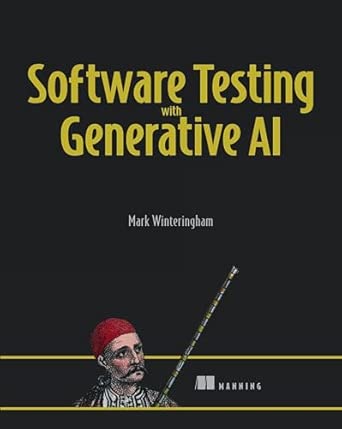
Software Testing with Generative AI
This comprehensive 320-page guide explores how generative AI techniques can revolutionize testing processes, from AI-driven test case creation to defect detection and environment management. Compared with AI-Powered Software Testing Tool, it offers deeper insights into implementing generative AI strategies with practical examples. The coverage of test automation is extensive, but the book assumes readers have foundational AI or machine learning knowledge, which could be a barrier for some teams. Overall, it provides a detailed roadmap for integrating the latest AI techniques into testing workflows, making it ideal for those already familiar with AI concepts who want to push testing automation further.
Pros:- Covers the latest in AI-driven test automation and defect detection
- Includes practical implementation examples for real-world use
- Extensive coverage of AI techniques for testing environments
Cons:- Requires prior AI/ML knowledge for full understanding
- Limited focus on traditional testing methods, which might not suit all teams
Best for: Technical teams with AI/ML background seeking to adopt advanced, generative AI testing techniques
Not ideal for: Practitioners new to AI or testing who need foundational guidance before diving into generative AI
- Format:Book
- Pages:320 pages
Bottom line: This book is perfect for AI-savvy testing professionals aiming to implement advanced generative AI strategies for automation.
AI for Quality Assurance and Software Testing: The Practitioner’s Complete Guide to AI-Powered Testing, Tools, and Transformation
This comprehensive guide stands out for practitioners aiming to integrate AI into their testing workflows. Unlike the more technical Generative AI for Software Testing, which focuses on specific AI applications, this book provides a broad overview of AI-driven testing methodologies and transformation strategies, making it ideal for teams planning to overhaul their QA processes. The lack of detailed implementation examples might limit immediate practical use, but it offers valuable conceptual frameworks. It’s best suited for QA managers and senior developers seeking strategic guidance rather than hands-on coding.
Pros:- Covers a wide range of AI-powered testing tools and methodologies
- Provides practitioner-focused transformation strategies
- Helps organizations plan AI integration into existing workflows
- Addresses future trends and AI adoption challenges
Cons:- Lacks specific practical implementation examples
- No detailed pricing or tool recommendations provided
Best for: QA leads and software architects wanting to incorporate AI at a strategic level
Not ideal for: Developers looking for step-by-step coding tutorials or hands-on AI implementation
- Target Audience:QA managers, software architects
- Content Focus:AI methodologies, transformation strategies
- Approach:Practitioner-focused, strategic
- Coverage:AI tools, testing strategies
- Format:Book
Bottom line: This guide is ideal for those seeking a strategic overview of AI testing transformation, rather than immediate technical implementation.
The Complete API Testing Handbook: A Practical Guide to REST API Validation, Automation, and Security Using Python
This handbook excels for developers and QA engineers focusing on REST API validation, offering clear, step-by-step Python examples that make automation accessible. Compared to AI-Integrated Software Automation Testing with Selenium and Java, which emphasizes test automation with Java, this book emphasizes API-specific techniques, making it more suitable for API-centric projects. However, it assumes a basic programming background, which can be a barrier for absolute beginners. Its detailed coverage of security protocols also makes it a valuable resource for teams prioritizing API security alongside automation.
Pros:- Comprehensive coverage of REST API validation techniques
- Includes automation and security testing methodologies
- Step-by-step Python examples facilitate learning
- Part of a reputable professional series
Cons:- Requires prior programming knowledge
- Potentially too technical for complete beginners
Best for: Developers and QA engineers working on API validation and automation with Python
Not ideal for: Non-programmers or QA teams unfamiliar with Python scripting
- Target Audience:Developers, QA engineers
- Language:Python
- Coverage:API validation, automation, security
- Series:Hands-On Tech Professional Series
- Format:Book
Bottom line: This book makes the most sense for API-focused teams comfortable with Python who need thorough validation and security strategies.
Generative AI for Software Testing: Improve QA with AI-Powered Automation
This book targets teams interested in leveraging generative AI to enhance test case creation and automate QA processes. In comparison to AI for Quality Assurance and Software Testing, which offers a broad strategic overview, this title zeroes in on generative AI’s capabilities for testing automation, making it more suitable for teams seeking to implement AI-driven test generation tools. Its focus on practical automation techniques is helpful, but the limited coding examples may pose a challenge for teams needing detailed implementation guidance. It’s ideal for AI-savvy QA professionals eager to explore new automation frontiers.
Pros:- Focuses on innovative generative AI applications in testing
- Provides practical techniques for automating test case creation
- Emphasizes future-proofing QA with AI advancements
- Addresses automation challenges with AI solutions
Cons:- Limited hands-on coding examples
- Requires prior AI knowledge to fully leverage concepts
Best for: AI-literate QA teams and technical leads exploring innovative test automation techniques
Not ideal for: Beginners or teams seeking comprehensive AI strategy without coding focus
- Target Audience:AI-savvy QA professionals
- Content Focus:Generative AI, test automation
- Approach:Practical, innovative
- Format:Book
- AI Focus:Generative AI applications
Bottom line: This publication appeals to AI-proficient teams eager to harness generative AI for innovative testing automation.
AI-Integrated Software Automation Testing with Selenium and Java
This solution combines industry-standard Selenium WebDriver with Java and AI features like code generation to streamline test automation. Unlike The Complete API Testing Handbook, which targets API validation, this product offers a broader automation framework suitable for web applications. Its AI-powered code generation can significantly reduce manual scripting time, but its reliance on Java programming means teams without Java expertise may face a steep learning curve. The integration of TestNG further enhances test management, making this a smart choice for Java-savvy automation teams aiming to incorporate AI into existing workflows.
Pros:- AI-powered code generation accelerates test scripting
- Leverages industry-standard Selenium and Java frameworks
- Supports automated test creation with TestNG integration
- Suitable for web application testing
Cons:- Requires Java programming knowledge
- AI features may have a learning curve for beginners
Best for: Java developers and automation engineers seeking AI-enhanced web testing solutions
Not ideal for: Teams without Java experience or those preferring no-code automation solutions
- Programming Language:Java
- Testing Framework:Selenium WebDriver, TestNG
- AI Features:Code generation, automated testing
- Additional Tools:Selenium, AI integration
- Target Use:Web application testing
Bottom line: This tool suits Java-based testing teams looking to incorporate AI to boost automation efficiency, though some Java skills are necessary.

How We Picked
Our evaluation focused on performance, usability, and integration capabilities, prioritizing tools that suit a variety of team sizes and technical expertise. We considered factors such as automation depth, learning curve, support ecosystems, and cost. Tools were ranked based on how well they balance power and accessibility, with extra points for those that integrate smoothly into modern DevOps workflows. The selection aims to highlight options for different buyer profiles—whether seeking value, premium features, or beginner-friendly interfaces—ensuring a well-rounded, practical list for 2026.Factors to Consider When Choosing Software Testing Automation Tools
Choosing the right software testing automation tool involves more than just comparing features. Consider your team’s technical skills, the complexity of your projects, and your existing development environment. It’s also important to evaluate how well a tool integrates with your CI/CD pipelines and whether it supports the types of testing you prioritize, such as API, UI, or load testing. Budget constraints can influence whether open-source options or premium solutions make sense. Avoid common pitfalls like overpaying for features you don’t need or selecting tools that lack active community support, which can hinder troubleshooting and future growth.Ease of Use and Learning Curve
For teams with limited automation experience, selecting tools with intuitive interfaces and comprehensive documentation is essential. Overly complex tools may offer advanced features but can slow down adoption and increase training costs. Conversely, more straightforward tools might lack some advanced capabilities but can deliver quick wins and faster ROI. Consider whether your team has the time and resources for training or if a plug-and-play solution better fits your needs.
Integration with Development Workflows
Seamless integration with your existing CI/CD pipelines, version control, and issue tracking systems is vital for efficient automation. Tools that support popular platforms like Jenkins, GitLab, or Azure DevOps streamline the process and reduce manual effort. Failing to consider integration possibilities can lead to fragmented workflows, increased manual testing, and delays. Testing tools that offer plugins or APIs for easy integration tend to be more adaptable and future-proof.
Automation Depth and Flexibility
The level of automation a tool provides varies widely. Some excel at simple scripted tests, while others support AI-driven, adaptive testing. Consider your testing scope—UI, API, performance, security—and choose a tool that aligns with your complexity. Over-investing in overly sophisticated tools for simple needs can lead to unnecessary complexity, while underpowered options might restrict your testing coverage and scalability.
Cost and Licensing
Pricing models range from free open-source options to expensive enterprise licenses. Open-source tools like Selenium are attractive for budget-conscious teams but may require more setup and maintenance. Premium tools often include dedicated support and enhanced features but come at a higher cost. Carefully analyze total cost of ownership, including training, setup, and ongoing maintenance, to avoid overspending on features you won’t use.
Community and Support Ecosystem
A strong support network can significantly ease troubleshooting and accelerate learning. Popular tools with active communities tend to evolve faster, offer numerous plugins, and provide extensive documentation. Conversely, less-supported options may pose challenges if issues arise, leading to delays and increased internal support burdens. Consider the availability of tutorials, forums, and vendor support when making your choice.
Frequently Asked Questions
How do I determine which testing tool suits my team’s skill level?
Assess your team’s technical expertise and familiarity with automation concepts. If your team has limited experience, opt for tools with intuitive interfaces, visual editors, and strong documentation, such as TestComplete. More experienced teams might prefer flexible, script-based solutions like Selenium or AI-powered tools that require scripting but offer greater customization. Matching the tool’s complexity with your team’s skill set reduces onboarding time and accelerates project timelines.
Is it better to choose open-source or commercial automation tools?
Open-source tools like Selenium or Cypress are appealing because of their zero upfront costs and strong community support. However, they often require more setup, maintenance, and internal expertise. Commercial tools typically offer dedicated support, easier setup, and broader features, which can save time but come with licensing fees. The decision depends on your budget, internal resources, and the importance of vendor support in your workflow.
How important is integration with CI/CD pipelines when selecting a testing tool?
Integration with CI/CD pipelines is vital for modern development teams aiming for rapid, automated releases. Tools that support seamless integration reduce manual effort, minimize errors, and enable continuous feedback. If a testing tool does not integrate well with your existing workflows, it can become a bottleneck, slowing down deployment cycles and reducing automation benefits. Prioritize tools that explicitly support your CI/CD platforms and workflows.
Should I prioritize AI-powered testing tools over traditional options?
AI-powered testing tools can offer adaptive, more intelligent automation, especially useful for complex or rapidly changing applications. They can reduce manual scripting and improve test coverage. However, they often come at a higher cost and require some learning curve. For small teams or projects with stable requirements, traditional tools may suffice. Consider your project complexity, team expertise, and budget before leaning heavily on AI-driven solutions.
What features should I look for in a testing automation tool for API testing?
Effective API testing tools should support comprehensive validation of REST or SOAP endpoints, including security testing, load testing, and automated test case management. Look for features like easy scripting, integration with testing frameworks, and reporting capabilities. Compatibility with programming languages your team uses, such as Python or Java, also matters. Prioritize tools that allow easy setup and detailed result analysis to streamline ongoing API quality assurance.
Conclusion
For organizations seeking an all-around reliable solution, Selenium remains the best overall pick thanks to its flexibility and large community. Teams prioritizing ease of use and quick deployment might find TestComplete best suited, while those with a finite budget should consider open-source options like Selenium or Cypress for great value. For advanced AI-driven testing, tools like AI-Powered Software Testing Tool are ideal, especially for complex or rapidly evolving applications. Beginners should focus on intuitive platforms, whereas large enterprises with complex needs might lean toward premium solutions with dedicated support. Tailor your choice to your team’s size, expertise, and project scope for the best results.
Fall Picks
fall essentials
As an affiliate, we earn on qualifying purchases.