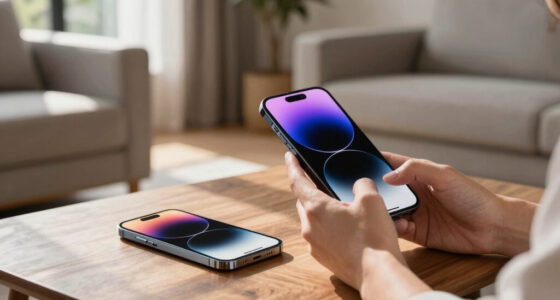

With 6G, your smartphone screens could become unnecessary because holographic displays will project 3D images directly into your environment. You’ll interact using neural interfaces that respond to your thoughts and gestures, making screens outdated. Faster data speeds and lower latency mean seamless, real-time connections. This new digital world will blend virtual content with your surroundings effortlessly. If you want to see how this transformation unfolds, stay tuned for more insights.

Get business pricing on monitors, keyboards and dev gear
- Business-only prices and quantity discounts
- Tax-exempt purchasing
- Multiple users, one account, clear invoices
Key Takeaways
- 6G enables high-speed data transfer and low latency, supporting real-time holographic displays that eliminate the need for physical screens.
- Advanced neural interfaces allow direct brain communication, making traditional screens unnecessary for device interaction.
- Holographic displays project 3D visuals into environment, replacing flat screens with immersive, environment-integrated digital content.
- Seamless virtual environments accessed via 6G reduce reliance on physical devices, enabling digital content to be viewed from any angle.
- 6G’s enhanced connectivity supports fully immersive, gesture- and thought-controlled digital experiences, rendering physical screens obsolete.
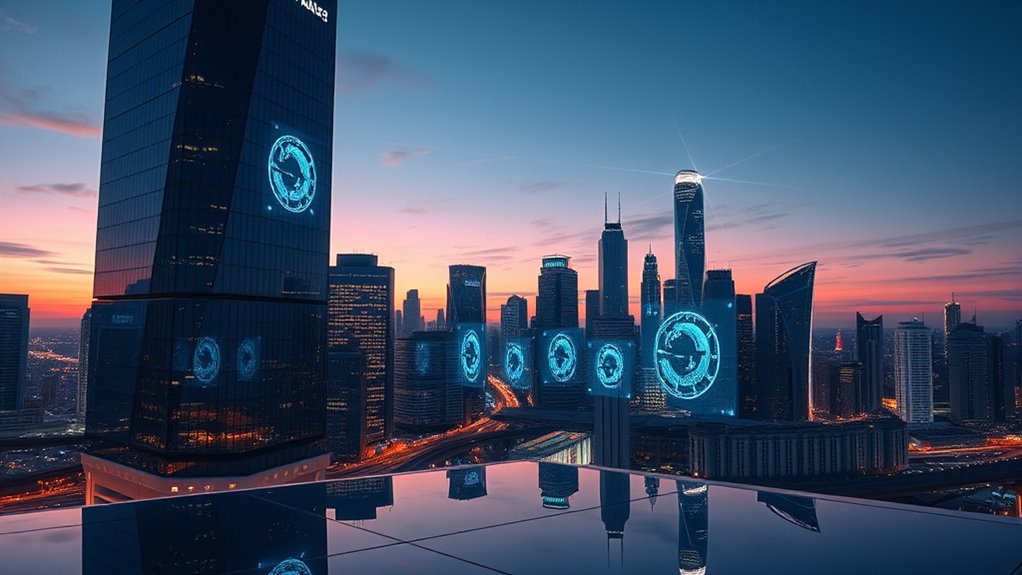
As 6G technology approaches, smartphone screens are set to undergo a major transformation. Instead of relying on the traditional glass displays you’re used to, you’ll soon experience a new level of immersion through holographic displays. These advanced visuals project three-dimensional images directly into your environment, eliminating the need for a physical screen altogether. With holographic displays, you’ll be able to see and interact with digital content from any angle, creating a seamless blend of the virtual and real worlds. This leap forward radically changes how you access information, communicate, and entertain yourself. No longer confined to a tiny screen, your digital interactions become more natural, intuitive, and immersive. Advances in display technology, such as holography, are key to making this vision a reality.
Alongside holographic displays, neural interface technology will play a pivotal role in replacing screens. Instead of tapping or swiping, you’ll communicate with your device through thought alone. Neural interfaces connect directly to your brain, translating your intentions into commands. As 6G networks enhance data transfer speeds and reduce latency, these interfaces will become more precise and responsive. You could think about opening an app, sending a message, or browsing the web, and your device will respond instantly without a physical interface. This technology makes information access more effortless and personal, removing the barriers of traditional screens. It also opens up new possibilities for accessibility, allowing people with disabilities to interact with technology in ways never before possible.
The combination of holographic displays and neural interfaces promises a future where your digital environment is fully integrated into your everyday life. Imagine walking into a room where floating holograms provide all the information you need—news updates, navigation cues, or entertainment—without pulling out a device. Instead, your thoughts and gestures interact with this virtual space, making your experience more natural and fluid. The physical limitations of current screens will become irrelevant as technology advances. You’ll no longer need to carry around bulky devices; instead, the digital world will be projected directly into your surroundings and accessed through your mind.
Frequently Asked Questions
How Soon Will 6G Technology Become Widely Available?
You might wonder when 6G will become widely available. Experts estimate it could take until around 2030, as the deployment depends on overcoming wireless infrastructure and affordability challenges. You’ll likely see initial tests and limited rollouts before mass adoption. While progress is steady, it’ll take time for 6G to reach most places, making current networks and devices still relevant for years to come.
Will 6G Replace All Existing Smartphone Features?
You might wonder if 6G will replace all your smartphone features. It’s likely, with holographic displays replacing screens and brain-computer interfaces enabling direct control and communication. These advancements could make traditional screens and buttons unnecessary, transforming how you interact with technology. Instead of tapping or swiping, you’ll connect seamlessly with data, experiencing a future where smartphone screens become obsolete, and immersive, intuitive interfaces take over.
Are There Health Concerns Related to 6G Radiation?
You might wonder if 6G radiation exposure poses health risks. While higher-frequency signals could increase radiation exposure, experts are researching potential health risks thoroughly. Current evidence doesn’t confirm serious health concerns, but ongoing studies aim to guarantee safety standards are met. As a user, stay informed about updates from health authorities, and trust that technological advancements prioritize minimizing health risks related to 6G radiation exposure.
Can Current Smartphones Be Upgraded for 6G Compatibility?
You can’t upgrade your current smartphone for 6G compatibility through software alone because hardware compatibility plays a vital role. Most existing devices lack the necessary 6G antennas and components, so software upgrades won’t enable 6G connectivity. To access 6G networks, you’ll need a new device specifically designed with the latest hardware. Keep an eye on upcoming models that incorporate these advancements for future-proof connectivity.
What Industries Will Benefit Most From 6G Advancements?
You might think only tech companies benefit from 6G, but industries like virtual reality and autonomous vehicles will see the biggest gains. With faster, more reliable connections, virtual reality experiences will become seamless, transforming entertainment and training. Autonomous vehicles will communicate more efficiently, improving safety and navigation. These advancements will revolutionize transportation, education, and entertainment, making 6G a game-changer across multiple sectors that directly impact your everyday life.
Conclusion
As 6G transforms connectivity, your smartphone screens might become relics of the past. Instead of scrolling, you’ll experience seamless, immersive interactions directly through your environment. The screen that once defined your device fades, replaced by invisible, intelligent displays that adapt effortlessly. In this new era, the visual boundary dissolves—no more screens, just pure, uninterrupted engagement. Embrace the future where technology melds with reality, making the old screen obsolete and your experience limitless.
Fall Picks
fall essentials
As an affiliate, we earn on qualifying purchases.