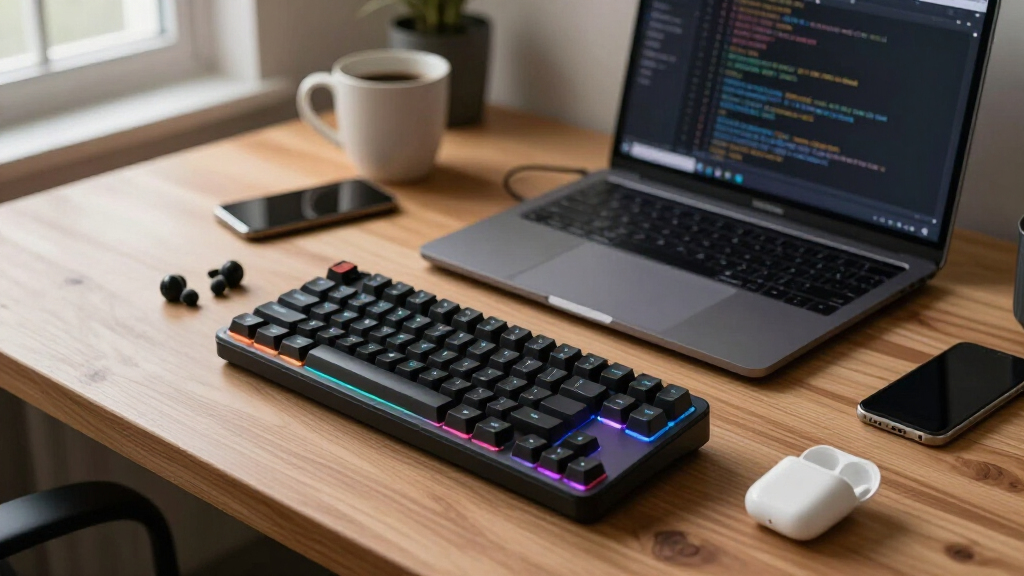

For developers, a reliable and customizable keyboard can significantly enhance coding efficiency and comfort. The Programming USB Macro Keyboard One-Handed Enter Key Button stands out for quick access to essential functions, while the K1 Pro Macro Keyboard offers full programmability and a built-in screen for advanced workflows. The main tradeoffs include balancing features like programmability and portability against size, build quality, and price. Continue reading for a detailed comparison that will help you find the best fit for your development setup.

Get business pricing on monitors, keyboards and dev gear
- Business-only prices and quantity discounts
- Tax-exempt purchasing
- Multiple users, one account, clear invoices
Key Takeaways
- The top picks excel in programmability, allowing developers to customize shortcuts and macros for faster coding.
- Wired options generally offer more stability and lower latency, but wireless keyboards provide greater flexibility and portability.
- Hot-swappable switches are a common feature among premium models, enabling easy customization without soldering.
- Full-sized layouts appeal to users needing dedicated keys, while 75% and compact designs favor portability and desk space saving.
- Pricing varies widely, with premium models offering advanced features like built-in screens, but budget options still deliver solid performance.


| programming keyboard for developer | Connectivity | Backlight | Switch Type |
|---|---|---|---|
| Programming USB Macro Keyboard | USB | — | — |
| K1 Pro Macro Keyboard | Wired | RGB with 16.8 million colors | — |
| AULA F99 Wireless Mechanical K | — | RGB with 16 effects | Pre-lubed linear, hot-swappable |
| AULA F108 PRO Wireless Mechani | Bluetooth 5.0, 2.4GHz, USB-C | RGB, customizable | — |
| NuPhy Air75 V2 Portable 75% Me | Bluetooth 5.1, 2.4G, USB-C | — | Gateron Cowberry |
| SIKAI Programmable Macro Keybo | Wired | — | Mechanical, Hot Swappable |
More Details on Our Top Picks
Programming USB Macro Keyboard One-Handed Enter Key Button with USB Flash Drive
This compact, one-handed macro keyboard is designed to streamline complex commands, making it ideal for developers who need quick access to specific functions. Compared to the K1 Pro, it offers a more focused setup without the full-size layout, which benefits users seeking minimalism. Its pre-configured macros and easy setup with the included USB flash drive make it accessible for users new to macro programming, though it’s limited to specific keys like Enter and macro functions, which may frustrate those needing broader customization. The durable plastic build and high sensitivity ensure reliable performance, but the small form factor and limited key options mean it’s less suited for extensive coding workflows or users requiring a full keyboard experience.
Pros:- Easy to set up with pre-configured macros and included software
- Durable construction with high sensitivity for precise input
- Versatile for gaming, video editing, and control applications
Cons:- Limited to specific functions like Enter key and macros
- Potentially complex setup for users unfamiliar with programming
Best for: Developers who want dedicated macro functionality for quick, repetitive tasks and prefer a one-handed device.
Not ideal for: Programmers needing a full-size keyboard or extensive macro customization beyond basic commands.
- Diameter:3.54 inches
- Height:1.77 inches
- Material:High-quality plastic
- Connectivity:USB
- Included:USB flash drive with software and instructions
Our verdict“This macro keyboard suits developers prioritizing quick macro execution over extensive key customization.”
K1 Pro Macro Keyboard, Wired Full-Key Programmable Mechanical Keyboard with Screen & Knob, RGB Backlit, Hot Swappable, Gasket Mount
The K1 Pro offers a full-size, wired mechanical experience with extensive customization—perfect for developers who also game or stream. Its built-in TFT color screen and multi-function knobs provide real-time control, setting it apart from more basic macro pads like the Programming USB Macro Keyboard. Hot-swappable switches make it easy to tailor the feel, but it requires software installation for many features, which might be a hurdle for some users. The RGB backlighting with over 16 million colors adds visual flair, yet the wired-only connection limits flexibility for those who prefer wireless setups. Overall, this keyboard is an excellent choice for users who want a versatile, feature-rich device but are comfortable with software configuration and wired connections.
Pros:- Full-key programmable layout with macro and multimedia controls
- Built-in TFT display and multi-function knobs for real-time adjustments
- Hot-swappable switches for personalized feel and sound dampening
- Vivid RGB backlighting with extensive color options
Cons:- Requires software installation for full feature access
- Limited to wired connection, reducing desk flexibility
Best for: Streamers, gamers, or developers who want a full-size macro keyboard with multimedia controls and customizable lighting.
Not ideal for: Developers seeking a compact or wireless solution, or those with limited desk space for a full-sized keyboard.
- Connectivity:Wired
- Switch Compatibility:3-pin or 5-pin hot-swappable
- Display:Built-in TFT color screen
- Backlight:RGB with 16.8 million colors
- Keycap Material:Concave keycaps
- Durability:50 million keystrokes
Our verdict“This full-sized macro keyboard is ideal for developers who need advanced controls and don’t mind wired setups.”
AULA F99 Wireless Mechanical Keyboard, Tri-Mode BT5.0/2.4GHz/USB-C, Hot Swappable, RGB Backlit, 96% Layout for PC/Tablet/Console
The AULA F99 stands out for its multi-device support, making it suitable for developers juggling multiple systems. Its 96% layout packs most keys into a compact footprint, comparable to the NuPhy Air75, but with the added benefit of wireless connectivity via Bluetooth 5.0, 2.4GHz, or USB-C. Its hot-swappable switches and vibrant RGB lighting cater to customization needs, although it may require drivers for advanced macros, which can complicate setup for less tech-savvy users. The long 8000mAh battery ensures extended use, but some Linux users might face compatibility issues with the F-zone features. Overall, this keyboard is a flexible option for those who prioritize connectivity and portability in their development environment.
Pros:- Supports multiple connection modes and up to five devices
- Hot-swappable switches for easy customization
- Long-lasting 8000mAh battery with compact design
- Vibrant RGB lighting with macro support
Cons:- Requires drivers for advanced lighting and macro features
- Potential compatibility issues on Linux
Best for: Developers working across multiple devices who value wireless flexibility and a compact layout.
Not ideal for: Users seeking a wired-only setup or those unfamiliar with driver-based customization on non-Windows systems.
- Connection Modes:BT5.0, 2.4GHz, USB-C
- Number of Devices Supported:Up to 5
- Switch Type:Pre-lubed linear, hot-swappable
- Backlight:RGB with 16 effects
- Key Layout:96% compact
- Battery Capacity:8000mAh
Our verdict“This multi-device wireless keyboard suits developers needing portability and seamless device switching, with some setup complexity.”
AULA F108 PRO Wireless Mechanical Keyboard with Screen & Knob, RGB Backlit, Hot Swappable, Full Size, 8000mAh Battery, Pink
The AULA F108 PRO offers a complete full-size layout with advanced features like a high-definition TFT display and multi-function knob, making it suitable for developers who prefer a traditional keyboard with added control. Its tri-mode connectivity (Bluetooth, 2.4GHz, USB-C) rivals the NuPhy Air75 in versatility, but the full size provides more keys for extensive coding or multitasking. The hot-swappable switches and durable PBT keycaps enhance personalization, while the large 8000mAh battery supports long sessions without recharging. However, driver software’s limited Windows support and some compatibility issues on Linux can be a drawback for open-source users. This model balances full functionality with portability, especially for those who want a wireless full-size keyboard.
Pros:- Tri-mode wireless connectivity for flexible device use
- High-definition TFT display and multi-function knob
- Hot-swappable switches and PBT keycaps for durability and customization
- Large 8000mAh battery for extended use
Cons:- Driver software mainly supports Windows, limiting customization on other OS
- Some Linux users may encounter compatibility issues
Best for: Developers needing a full-sized wireless keyboard with extra controls and a display for multitasking.
Not ideal for: Users who prefer compact setups or are on Linux, due to limited driver support and compatibility issues.
- Connectivity:Bluetooth 5.0, 2.4GHz, USB-C
- Battery:8000mAh
- Key Switches:Pre-lubed, hot-swappable
- Keycaps:PBT, dye-sublimated
- Backlight:RGB, customizable
- Number of Keys:104
Our verdict“Ideal for developers seeking a full-size, wireless keyboard with extra controls and display features, despite some OS limitations.”
NuPhy Air75 V2 Portable 75% Mechanical Keyboard, Wireless, RGB Backlit, Bluetooth/2.4G/USB-C, Compatible with Windows/Mac/Linux, White with Gateron Cowberry Switches
The NuPhy Air75 V2 emphasizes portability and cross-platform compatibility, making it ideal for developers on the go. Its 75% layout provides most keys in a compact form, similar to the AULA F99, but with a focus on lightweight design and open-source firmware. The RGB backlighting with over 21 effects and Gateron Cowberry switches delivers a satisfying typing experience, though the non-backlit keycaps can limit lighting customization. Battery life is impressive, supporting hours of extended use, but the keycaps are not backlit, which may disappoint users wanting full lighting effects on every key. This keyboard is a solid pick for those who prioritize multi-system support and portability without sacrificing core features.
Pros:- Supports multiple device connections with easy switching
- Open-source firmware for customization
- Long battery life with high-quality aluminum frame
- Compact and lightweight for portability
Cons:- Keycaps are not backlit, limiting lighting customization
- Wrist rest sold separately
Best for: Developers needing a portable keyboard that works seamlessly across Windows, Mac, and Linux environments.
Not ideal for: Users seeking a fully backlit keycap set or those who prefer larger layouts for extensive coding sessions.
- Connectivity:Bluetooth 5.1, 2.4G, USB-C
- Battery Capacity:4000mAh
- Battery Life:35-57 hours with backlight
- Material:Aluminum frame, PBT keycaps
- Switch Type:Gateron Cowberry
- Layout:75%
Our verdict“This portable, multi-OS compatible keyboard is perfect for developers on the move who value customization and battery longevity.”
SIKAI Programmable Macro Keyboard, 6-Key Mechanical Gaming Macro Keypad, Custom Knob, Hot Swappable Switch, Wired
This 6-key macro keyboard stands out for its small footprint, making it ideal for developers who need quick access to macros without sacrificing desk space. Unlike larger options like the K1 Pro, it focuses on essential shortcuts, which benefits those with streamlined workflows but limits flexibility for complex setups. Its hot-swappable switches offer customization and longevity, yet the requirement for Windows software for programming can be a barrier for users on Mac or Linux. The onboard memory allows quick switching between setups, a plus for multitasking developers. However, the limited number of keys may not satisfy those who rely on extensive macros or complex shortcuts, making it less suitable for heavy-duty automation. This keyboard makes the most sense for developers who prioritize portability and simple macro access over extensive customization.
Pros:- Compact and space-saving design perfect for tight desks or mobile setups
- Supports multiple OS platforms including Windows, Mac, and Linux
- Onboard memory for quick transfer of settings across devices
- Hot-swappable switches for easy customization and durability
Cons:- Macro configuration only possible via Windows software, limiting cross-platform flexibility
- Limited to six keys, which may not suit users with complex or multiple macro needs
- Requires software download for setup, adding extra steps for initial configuration
Best for: Developers who need a portable, easy-to-configure macro pad for quick commands and shortcuts on multiple OSes
Not ideal for: Power users requiring extensive macro layers or complex workflows, especially on Mac or Linux, due to Windows-only configuration software
- Number of Keys:6
- Switch Type:Mechanical, Hot Swappable
- Connectivity:Wired
- Compatibility:Windows, Mac, Linux
- Onboard Memory:Yes
- Programmable Keys:Yes
- Software Required:Windows
Our verdict“This macro keypad is best suited for developers who value portability and basic macro functions over extensive customization or high key count.”
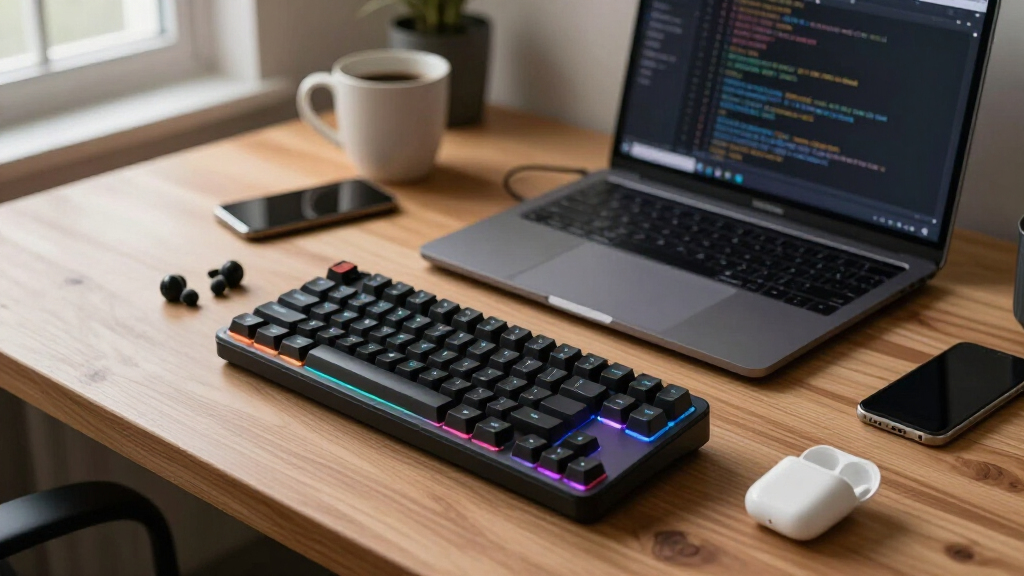
How We Picked
Our evaluation focused on key factors that matter most to developers: build quality, programmability, connectivity options, and layout. We prioritized models offering customization features such as programmable keys and switches, as well as those with reliable connectivity—whether wired or wireless. Portability and ease of use also played a role, especially for those who work across multiple devices. The ranking reflects a balance between advanced features and practical value, ensuring both serious developers and hobbyists find suitable options.| programming keyboard for developer | Connectivity | Backlight | Switch Type |
|---|---|---|---|
| Programming USB Macro Keyboard | USB | — | — |
| K1 Pro Macro Keyboard | Wired | RGB with 16.8 million colors | — |
| AULA F99 Wireless Mechanical K | — | RGB with 16 effects | Pre-lubed linear, hot-swappable |
| AULA F108 PRO Wireless Mechani | Bluetooth 5.0, 2.4GHz, USB-C | RGB, customizable | — |
| NuPhy Air75 V2 Portable 75% Me | Bluetooth 5.1, 2.4G, USB-C | — | Gateron Cowberry |
| SIKAI Programmable Macro Keybo | Wired | — | Mechanical, Hot Swappable |
Factors to Consider When Choosing Programming Keyboard For Developers
Choosing the right programming keyboard involves several considerations beyond basic features. Developers should think about layout preferences, customization capabilities, connectivity options, and ergonomic factors. Understanding these aspects helps avoid common pitfalls, such as sacrificing convenience for features that may not suit daily workflows or overspending on unnecessary extras. Here are key factors to guide your decision:Layout and Size
The physical size and layout of a keyboard influence both comfort and desk space. Full-sized keyboards include a number pad, which can be useful for data-heavy tasks, but may be cumbersome for small desks. Compact layouts like 75% or 60% save space and encourage a more ergonomic posture, but might require additional accessories for certain functions. Consider your workflow and space constraints when choosing the layout that best suits your needs.
Programmability and Customization
Developers often benefit from programmable keys and macros that streamline repetitive tasks. Look for keyboards with easy-to-use software or onboard programming, especially if you rely heavily on shortcuts. Be aware that some models offer hot-swappable switches, allowing you to customize the feel without soldering—an excellent feature for experimenting with different switches or replacing worn ones. Avoid models with limited or no programmability if quick customization is a priority.
Connectivity Options
Deciding between wired and wireless depends on your workspace and portability needs. Wired keyboards typically offer lower latency and a more stable connection, ideal for intensive coding sessions. Wireless options, including Bluetooth or 2.4GHz, provide greater flexibility but can introduce latency or connection stability issues if not well-designed. Consider your environment and whether mobility or stability matters more for your setup.
Build Quality and Key Switches
Durability is key, especially for daily use. Mechanical switches, particularly hot-swappable ones, tend to last longer and provide a better typing experience. Switch type (linear, tactile, or clicky) influences feel and noise levels—choose based on your preference and environment. Avoid cheap materials that may wear out quickly or produce inconsistent feedback, as this can hinder productivity and comfort over time.
Additional Features and Price
Features like built-in screens, customizable knobs, RGB lighting, and dedicated macro keys add convenience but also increase cost. Balance your need for advanced features against your budget. High-end models often justify their price with premium build quality, extensive customization, and extra functionalities, but many mid-range options deliver excellent performance for a lower investment. Be wary of paying for features you won’t use.
Frequently Asked Questions
Should I choose a wired or wireless programming keyboard?
Wired keyboards generally provide lower latency and more stable connections, making them ideal for coding sessions where responsiveness matters. Wireless options offer greater flexibility and reduce desk clutter, which can be advantageous if you move around or work across multiple devices. If you prioritize stability and speed, a wired model is the better choice; for convenience and portability, wireless may suit your setup better.
How important are programmable keys for developers?
Programmable keys can significantly boost productivity by allowing you to assign macros, shortcuts, or frequently used commands. This customization reduces repetitive motion and speeds up coding workflows. If you work with complex IDEs or perform repetitive tasks, investing in a keyboard with extensive programmability can be highly advantageous. However, if your work is straightforward, simpler models may suffice.
Is mechanical switching necessary for programming?
Mechanical switches provide a more precise and durable typing experience, which many developers prefer for long coding sessions. They offer better feedback and longevity compared to membrane switches. Hot-swappable switches add flexibility, letting you experiment or replace switches without soldering. However, they tend to come at a higher price. If comfort and longevity are priorities, mechanical is generally worth the investment.
What layout size should I choose?
The choice depends on your workspace and workflow. Full-sized keyboards are familiar and include dedicated number pads, which can be useful for data entry. Compact layouts like 75% or 60% save desk space and promote a more ergonomic posture, but may require additional accessories for certain functions. Consider your desk space, portability needs, and whether you frequently use the number pad when selecting a layout.
Are RGB lighting and extra features worth the extra cost?
RGB lighting and additional features can enhance aesthetics and usability, especially if you customize your setup heavily. However, they add to the price and may not improve typing performance. For most developers, core features like programmability, build quality, and connectivity matter more. Prioritize features that directly impact your workflow and budget, and view extras as optional enhancements.
Conclusion
For those seeking the best overall performance, the K1 Pro Macro Keyboard offers extensive programmability and a premium build. Budget-conscious developers will find the NuPhy Air75 V2 delivers excellent value with portability and wireless convenience. If you want a premium setup with a built-in screen and advanced features, the AULA F108 PRO is a compelling choice. Beginners or those with limited space might prefer a compact, straightforward model, while power users will appreciate fully programmable, hot-swappable options. Match your needs to these strengths to select the ideal keyboard for your development work.
As an affiliate, we earn on qualifying purchases.Halloween Picks

ELAMAS 11ft Animatronic Flying Witch Halloween Decoration

Pumpkin Halloween Fog Machine with 12-Color LEDs, Bluetooth Speaker, and Remote

Halloween Inflatable Haunted House Maze – 20×20 ft with Removable Roof and Blower