

AI code review tools can help developers spot bugs, security risks, and maintainability issues, but these six picks are books and guides rather than installable review platforms. CodeRabbit: AI Code Review Guidebook is my best overall starting point for readers focused directly on AI-assisted review, while 50 AI Workflows for Engineers stands out for broader engineering use cases and The Solo Developer’s AI Code Review Guide targets independent builders. The main tradeoff is focus: a dedicated review guide may offer a clearer learning path, while broader AI workflow books cover more tasks but less review-specific detail. Readers who need an automated pull-request service should verify that a book fits their goal before choosing. Continue reading for the full comparison, selection criteria, and guidance by reader type.

Get business pricing on monitors, keyboards and dev gear
- Business-only prices and quantity discounts
- Tax-exempt purchasing
- Multiple users, one account, clear invoices
Key Takeaways
- CodeRabbit: AI Code Review Guidebook ranks first because its subject aligns most directly with readers searching for AI code review guidance; it is not itself a software service.
- 50 AI Workflows for Engineers is the broadest-scope pick, trading concentrated review instruction for coverage of debugging, system design, and automation.
- The Solo Developer’s AI Code Review Guide is the clearest audience match for independent developers who need review practices suited to solo work.
- Coding With an AI Assistant and Pair Programming with GPT-6 Astra frame review as one part of a larger assistant or agent workflow, rather than as the sole focus.
- Cursor AI Code Review and Bug Fix Workflow Guide 2026 is the most tool-specific choice, with Japanese-language content that narrows its fit by both workflow and language.
| CodeRabbit: AI Code Review Guidebook |  | Best for CodeRabbit-Focused Learning | Product type: Guidebook | Named tool: CodeRabbit | Subject: AI-assisted code review | VIEW LATEST PRICE | See Our Full Breakdown |
| 50 AI Workflows for Engineers: From Debugging to System Design, Code Review, and Engineering Automation |  | Best for Broad Engineering Workflows | Number of workflows: 50 | Topics: Debugging, system design, code review, engineering automation | Product type: Workflow collection | VIEW LATEST PRICE | See Our Full Breakdown |
| The Solo Developer’s AI Code Review Guide: Catching Bugs, Security Issues, and Technical Debt |  | Best for Solo Developers Reviewing AI-Generated Code | Product type: Guide | Intended audience: Solo developers | Format: Not specified | VIEW LATEST PRICE | See Our Full Breakdown |
| Coding With an AI Assistant: Agentic Coding Tools, Reviewed Diffs, and the Discipline That Keeps You Employable | 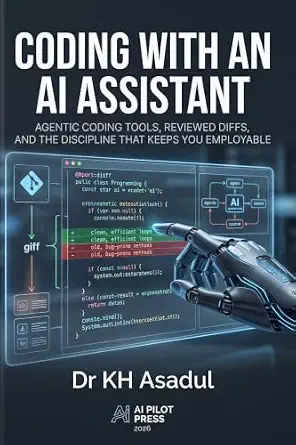 | Best for Review Within an AI-Assisted Coding Practice | Format: Book | Topics: AI coding assistants, agentic coding tools, reviewed diffs, developer employability | Intended audience: Developers working with AI coding assistants | VIEW LATEST PRICE | See Our Full Breakdown |
| Cursor AI Code Review and Bug Fix Workflow Guide 2026 (Japanese Edition) |  | Best for Japanese-Language Cursor Workflows | Language: Japanese | Named tool: Cursor AI | Topics: Code review and bug fixing | VIEW LATEST PRICE | See Our Full Breakdown |
| Pair Programming with GPT-6 Astra: Using an AI Coding Agent for Planning, Implementation, Code Review, and Refactoring | 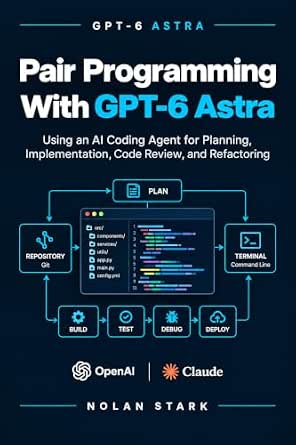 | Best for End-to-End AI Pair Programming | Format: Guide | AI coding agent: GPT-6 Astra | Approach: Pair programming | VIEW LATEST PRICE | See Our Full Breakdown |
| AI code review tool | Format | ASIN | Language | Topics |
|---|---|---|---|---|
| CodeRabbit: AI Code Review Gui | Not specified | B0GX33W78C | Not specified | — |
| 50 AI Workflows for Engineers: | Not specified | B0GZJNMY9C | Not specified | Debugging, system design, code review, engineering automation |
| The Solo Developer’s AI Code R | Not specified | B0HGYNFQLC | Not specified | — |
| Coding With an AI Assistant: A | Book | B0HKSM64CY | Not specified | AI coding assistants, agentic coding tools, reviewed diffs, developer employability |
| Cursor AI Code Review and Bug | Not specified | B0HD7HZ2QF | Japanese | Code review and bug fixing |
| Pair Programming with GPT-6 As | Guide | B0HJNY6JRP | — | Planning, implementation, code review, and refactoring |
More Details on Our Top Picks
CodeRabbit: AI Code Review Guidebook
CodeRabbit: AI Code Review Guidebook is the most direct choice here for readers seeking material centered on one AI code review product. That narrow focus sets it apart from 50 AI Workflows for Engineers, which ranges across debugging, system design, and automation as well as code review. The title signals a tool-specific guide, but the available details do not say which CodeRabbit features, setup steps, or review practices it covers. I would choose it when learning about CodeRabbit itself is the priority, not when I need a verified, broad workflow manual. Compared with The Solo Developer’s AI Code Review Guide, it appears less tailored to an individual developer’s bug and security review needs. The main tradeoff is clear: focused subject matter, but little product information to judge its depth or format.
Pros:- Focused on CodeRabbit and AI-assisted code review
- A more tool-specific subject than the broad workflow collection in 50 AI Workflows for Engineers
- Its title gives buyers a clear indication of the topic
Cons:- No detailed contents, format, or delivery information is provided
- The available description does not confirm specific CodeRabbit features or practical exercises
- It may be too narrow for readers looking for guidance across several AI coding tools
Best for: Developers or engineering leads who specifically want a guidebook about CodeRabbit and AI-assisted code review.
Not ideal for: Readers seeking a confirmed step-by-step setup guide, broad coverage of multiple engineering workflows, or detailed information about format and contents.
- Product type:Guidebook
- Named tool:CodeRabbit
- Subject:AI-assisted code review
- Format:Not specified
- Language:Not specified
- ASIN:B0GX33W78C
Our verdict“Choose this guide if CodeRabbit is the tool you want to learn about, but favor a broader workflow book if you need coverage beyond that product.”
50 AI Workflows for Engineers: From Debugging to System Design, Code Review, and Engineering Automation
50 AI Workflows for Engineers takes the broadest approach in this group: code review sits alongside debugging, system design, and engineering automation. That range makes it a better fit for engineers who want to connect review with the rest of their day-to-day work than CodeRabbit: AI Code Review Guidebook, whose stated focus is a single product. Its 50 workflows offer a defined scope, though the available information does not identify individual workflows, tools, or how much code-review detail each receives. Compared with The Solo Developer’s AI Code Review Guide, this title is less specifically aimed at checking AI-generated code for bugs, security issues, and technical debt. I would pick it for breadth, not as a substitute for a dedicated review handbook; format and delivery details are also unspecified.
Pros:- States a scope of 50 engineering workflows
- Includes code review alongside debugging and system design
- Addresses engineering automation as part of the broader workflow picture
- Covers more engineering task categories than the CodeRabbit-focused guide
Cons:- The available details do not show how many workflows focus on code review
- Format and delivery details are not provided
- No specific tools or workflow examples are identified in the product information
Best for: Engineers who want one resource spanning AI-assisted debugging, system design, code review, and automation.
Not ideal for: Readers who need a narrowly focused code-review manual or confirmed instructions for a particular AI coding tool.
- Number of workflows:50
- Topics:Debugging, system design, code review, engineering automation
- Product type:Workflow collection
- Format:Not specified
- Language:Not specified
- ASIN:B0GZJNMY9C
Our verdict“Pick this for a wide survey of AI-assisted engineering tasks, but choose a dedicated review guide if code review is your only goal.”
The Solo Developer’s AI Code Review Guide: Catching Bugs, Security Issues, and Technical Debt
The Solo Developer’s AI Code Review Guide is the clearest match for an individual developer who needs to scrutinize code from AI coding assistants. Its stated focus spans bugs, security issues, and technical debt, giving it a more specific review agenda than 50 AI Workflows for Engineers, which covers several engineering disciplines. It also speaks more directly to independent developers than Coding With an AI Assistant, whose scope includes agentic tools and broader career practices. The tradeoff is that the description does not name a particular review tool, explain its methods, or provide format details. I would favor it for a solo workflow centered on reviewing generated code, while teams seeking a shared process or tool-specific setup may need more concrete information before choosing.
Pros:- Directly focuses on reviewing code produced by AI coding assistants
- Names bugs, security issues, and technical debt as review targets
- Its solo-developer audience is more specific than the broad engineering audience of 50 AI Workflows for Engineers
Cons:- No specific AI coding assistants or review tools are identified
- The available description does not explain the review methods or level of detail
- Format and language details are not provided
Best for: Solo developers who use AI coding assistants and want guidance focused on checking generated code for defects, security problems, and accumulated technical debt.
Not ideal for: Teams looking for a shared code-review process, or buyers who require confirmed tool-specific instructions and format details.
- Product type:Guide
- Intended audience:Solo developers
- Format:Not specified
- Language:Not specified
- ASIN:B0HGYNFQLC
Our verdict“Choose this if you work solo and want a guide centered on risks in AI-generated code rather than a broad collection of engineering workflows.”
Coding With an AI Assistant: Agentic Coding Tools, Reviewed Diffs, and the Discipline That Keeps You Employable
Coding With an AI Assistant treats code review as one part of a wider practice: working with AI assistants, using agentic coding tools, and examining reviewed diffs. That makes it a broader fit than The Solo Developer’s AI Code Review Guide, which is explicitly centered on bugs, security, and technical debt in AI-generated code. The title also links review habits to staying employable, a career angle absent from CodeRabbit: AI Code Review Guidebook. This scope suits developers who want to think about how review fits into AI-assisted coding, rather than a manual devoted only to a review tool. The tradeoff is less visible depth on code review itself: the available details do not name specific practices, tools, or examples. Its format is listed as a book, but other publication details are not supplied.
Pros:- Covers AI coding assistants and agentic coding tools
- Includes reviewing diffs within an AI-assisted coding context
- Connects coding practices with developer employability
- Identifies its format as a book
Cons:- The available details do not specify particular review techniques or examples
- Code review is one topic among several rather than the sole focus
- No language or detailed publication information is provided
Best for: Developers adopting AI assistants or agentic coding tools who want code review discussed as part of their broader working practice.
Not ideal for: Readers seeking a narrowly technical review checklist, detailed security-review guidance, or confirmed instructions for a specific product.
- Format:Book
- Topics:AI coding assistants, agentic coding tools, reviewed diffs, developer employability
- Intended audience:Developers working with AI coding assistants
- Language:Not specified
- ASIN:B0HKSM64CY
Our verdict“Choose this book if you want code review framed as part of a wider AI-assisted development practice, not a focused review manual.”
Cursor AI Code Review and Bug Fix Workflow Guide 2026 (Japanese Edition)
Cursor AI Code Review and Bug Fix Workflow Guide 2026 (Japanese Edition) stands apart through its named tool, language, and practical workflow emphasis. The title points to reviewing changes, choosing tests, and rolling back edits, which gives it a more task-oriented angle than CodeRabbit: AI Code Review Guidebook. It is also more tool-specific than 50 AI Workflows for Engineers, whose stated coverage spans many engineering tasks. That specificity can help Cursor users looking for a workflow they can relate to, but the available description does not confirm the guide’s exact steps, edition details, or format. Its Japanese-language edition is a firm limitation for readers who need English. I would shortlist it for Japanese-speaking Cursor users; others may find the broader, language-unspecified guides a better starting point.
Pros:- Names Cursor as the tool covered
- The title signals practical review and bug-fixing workflows
- Mentions test selection and rollback procedures
- Provides a Japanese-language option unlike the language-unspecified titles in this group
Cons:- The Japanese edition is unsuitable for readers who need English
- The available product details do not confirm the exact workflow steps
- Format and further publication information are not provided
Best for: Japanese-speaking developers using Cursor who want guidance on reviewing changes, choosing tests, and handling rollbacks.
Not ideal for: English-only readers, developers using other coding assistants, or buyers who need confirmed contents and format details.
- Language:Japanese
- Named tool:Cursor AI
- Topics:Code review and bug fixing
- Workflow elements:Reviewing changes, selecting tests, rolling back changes
- Edition:2026 Japanese Edition
- Format:Not specified
- ASIN:B0HD7HZ2QF
Our verdict“Choose this if you read Japanese and use Cursor; otherwise, a broader guide may fit your language or tool needs better.”
Pair Programming with GPT-6 Astra: Using an AI Coding Agent for Planning, Implementation, Code Review, and Refactoring
This guide earns its place for treating AI code review as part of a broader coding workflow, alongside planning, implementation, and refactoring. That wider scope can help readers see how review fits into work with an AI coding agent rather than treating it as a standalone defect-finding step. Compared with The Solo Developer’s AI Code Review Guide, which centers on bugs, security issues, and technical debt, this book appears better suited to readers who want a process spanning several stages of development. The tradeoff is that its code-review coverage may be less focused, and the available description does not specify particular review techniques, integrations, or programming languages. I’d choose it for learning an end-to-end approach, not for a narrowly targeted reference to review automation.
Pros:- Covers code review alongside planning, implementation, and refactoring
- Frames AI assistance as a pair-programming workflow rather than an isolated review task
- May help readers connect review feedback to earlier and later development stages
Cons:- The broad scope may leave less room for detailed code-review guidance
- The available product information does not identify supported languages or integrations
- The description does not specify review methods or examples readers can expect
Best for: Developers exploring how to use an AI coding agent across planning, implementation, code review, and refactoring in one workflow
Not ideal for: Readers seeking a focused code-review manual with stated security methods, tool integrations, or language-specific guidance
- Format:Guide
- AI coding agent:GPT-6 Astra
- Approach:Pair programming
- Topics:Planning, implementation, code review, and refactoring
- ASIN:B0HJNY6JRP
Our verdict“Choose this guide if you want to place AI code review within a wider coding-agent workflow, but pick a review-focused guide for deeper coverage of bugs, security, or technical debt.”

How We Picked
I ranked these six books and guides by how closely their stated subject matches the search intent behind AI code review tools, how clearly they signal a target reader, and whether review appears to be the main focus or one element of a wider AI engineering workflow. I also weighed the practical scope implied by each title: review-specific learning, broader workflows, solo development, assistant-led coding, agent-based work, or a named editor workflow.
Because the supplied options are reading resources, not software products, I did not treat them as automated services or claim capabilities that their titles do not establish. The ranking favors direct relevance first, then audience clarity and useful breadth. A narrower guide can rank above a wider one when review is the buyer’s main goal, while tool-specific or language-specific titles rank lower for readers who want general guidance. Before choosing, check each book’s description and contents for the platforms, examples, and technical depth you need.
| AI code review tool | Product type | Format | Language | ASIN |
|---|---|---|---|---|
| CodeRabbit: AI Code Review Gui | Guidebook | Not specified | Not specified | B0GX33W78C |
| 50 AI Workflows for Engineers: | Workflow collection | Not specified | Not specified | B0GZJNMY9C |
| The Solo Developer’s AI Code R | Guide | Not specified | Not specified | B0HGYNFQLC |
| Coding With an AI Assistant: A | — | Book | Not specified | B0HKSM64CY |
| Cursor AI Code Review and Bug | — | Not specified | Japanese | B0HD7HZ2QF |
| Pair Programming with GPT-6 As | — | Guide | — | B0HJNY6JRP |
Factors to Consider When Choosing AI Code Review Tools
These picks are educational resources, so the first buying decision is whether you need guidance or functioning review automation. I would use the following checks to match a book to your work and avoid choosing by title alone.
Separate a learning guide from review software
A book can explain review workflows, but it does not automatically connect to a repository or comment on a pull request. If you need recurring automated checks, start by identifying software that integrates with your code host and fits your team’s approval process. Choose a guide when your gap is understanding how to assess AI suggestions, write better review prompts, or set review standards. A common mistake is searching for a tool and buying a book whose title contains the right keywords. Decide whether you need a service, a learning resource, or both before comparing options. If you choose both, use the guide to shape a workflow and evaluate the service separately.
Match the scope to the skill you want to improve
Review-focused resources suit readers who want to concentrate on bug finding, security concerns, and code quality. Broader engineering workflow books may help when review is only one part of a larger effort to use AI for debugging, design, and automation. That breadth can be useful, but it may mean less space for review-specific practice. Look for a contents list that shows how much attention the book gives to your priority rather than inferring depth from its title. If your immediate need is one repeatable review habit, focused material can be easier to apply. If you are building a wider AI-assisted development process, a broader guide may better fit the job.
Choose examples that fit your development setup
AI coding workflows differ across editors, code hosts, languages, and team policies. A guide tied to a named tool may give more relevant steps if that tool is already part of your work, but its advice may transfer less cleanly elsewhere. Before buying, check whether the examples match your editor and repository workflow, and whether the material is tied to a particular model or release. Version-specific advice can age faster than principles such as reviewing generated changes and validating tests. Avoid assuming that a tool-specific title will cover every integration you use. The closer the examples are to your setup, the less translation you will need.
Account for team size and ownership
A solo developer and a team reviewer face different problems. Independent builders may need guidance on catching issues without a second human reviewer, while teams must also think about shared standards, responsibility, and how AI comments fit into approval. A resource aimed at solo work may be more immediately relevant for one-person projects but leave team governance questions unanswered. Conversely, a broad engineering guide may offer more workflow context without going deep on individual review habits. Decide who will act on the AI’s findings and who owns the final decision. That choice shapes whether you need personal technique, team process, or both.
Check language, edition, and model references
Language and version labels can narrow a guide’s usefulness even when the topic sounds suitable. A Japanese edition is a better match for readers who prefer Japanese technical material, while readers seeking English instructions should confirm the actual edition before choosing. Model names and dated workflow references also call for a closer look at publication details and the contents page. A guide can still teach durable review principles, but screenshots, prompts, and setup steps may need adjustment as tools change. Do not assume a newer-sounding model reference means the material will match your current environment. Verify language, edition, and the level of version dependence against your needs.
Frequently Asked Questions
Are these AI code review tools I can connect to GitHub or GitLab?
No. The six entries are books and guides, not services that connect to repositories or automatically review pull requests. They may help readers understand AI-assisted coding and review practices, but the supplied titles do not establish integration or automation features. If you need automatic review comments, compare software products by code-host support, permissions, data handling, and how findings enter your existing review process. Use these books as learning resources rather than substitutes for an installed service.
Which pick should I choose if code review is my main goal?
CodeRabbit: AI Code Review Guidebook is the most directly aligned title in this roundup, so I would start there when review itself is the priority. The solo developer guide is a closer fit if you work independently and want the topic framed around solo development. Before purchasing, inspect the contents and sample material to confirm the guide covers the languages and review scenarios you care about. A title can signal focus, but its table of contents is a better check on the actual depth.
Should I choose a review-specific guide or a broader AI engineering book?
Choose a review-specific guide when your immediate need is improving how you inspect AI-generated changes or reason about review findings. A broad resource such as 50 AI Workflows for Engineers makes more sense when you also want ideas for debugging, design, and automation. The tradeoff is depth versus range: wider coverage can support a larger learning plan, while focused material may be easier to apply to one problem. Check how much of the book is devoted to review before deciding. If review is only a small part of its contents, it may not meet a narrow need.
Is the Cursor guide suitable if my team uses a different editor?
It may still offer transferable ideas, but a guide centered on Cursor is less directly matched to a workflow built around another editor. Check whether its instructions focus on general review habits or on Cursor-specific steps, prompts, and screens. The Japanese edition also makes language a practical part of the decision, so confirm that it suits your reading preference. If you need editor-neutral material, a broader guide may be a safer starting point. Treat the tool-specific book as a targeted resource rather than assuming every example will carry over unchanged.
Can one of these books replace human code review?
No book can replace a reviewer, and AI review output should not be treated as proof that a change is safe. A guide can help readers develop better habits for checking generated suggestions, but teams still need accountable people to judge context, design choices, and risk. Keep tests, security checks, and human approval in the workflow, especially for sensitive or high-impact changes. For solo developers, a guide can add structure to self-review without supplying an independent second opinion. Pair learning material with a process that assigns clear responsibility for the final decision.
Conclusion
Best overall: I recommend CodeRabbit: AI Code Review Guidebook for readers whose main goal is learning about AI-assisted code review. Best value for breadth: choose 50 AI Workflows for Engineers if you want review alongside other engineering applications of AI. Best for beginners working solo: The Solo Developer’s AI Code Review Guide offers the clearest audience match for independent builders. Best for broader assistant or agent practice: look at Coding With an AI Assistant or Pair Programming with GPT-6 Astra, depending on whether you want a reviewed-diff approach or a wider agent workflow. Best for a specific setup: the Cursor guide is a targeted option for readers comfortable with its Japanese edition and Cursor-centered focus. None of these is an installable review service, so choose a separate software product if you need automated repository checks.
Fall Picks
fall essentials
As an affiliate, we earn on qualifying purchases.