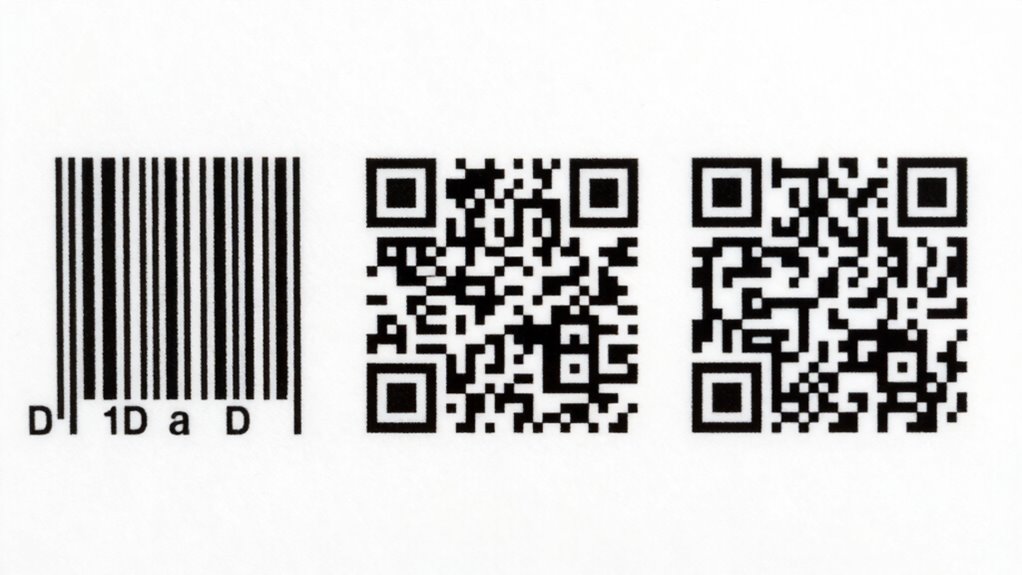
Barcode scanners come in different types: 1D barcodes use parallel lines and are common for retail; 2D barcodes store more information and work in smaller spaces, suitable for logistics and healthcare; QR codes are a special type of 2D code, great for marketing and mobile payments due to their quick scanability and data capacity. Choosing the right scanner depends on your needs—continue to explore so you can find the best fit.
Key Takeaways
- 1D barcodes use parallel lines to encode data linearly, ideal for simple product identification.
- 2D barcodes, including QR codes, encode data both horizontally and vertically, supporting larger and more complex information.
- QR codes are a type of 2D barcode designed for quick scanning, high data capacity, and robustness even when damaged.
- Scanning methods vary: smartphones and tablets use camera apps, while handheld scanners are suited for industrial environments.
-Choosing the right scanner depends on data capacity, environment, device compatibility, and security needs.
What Are 1D, 2D, and QR Code Barcodes?
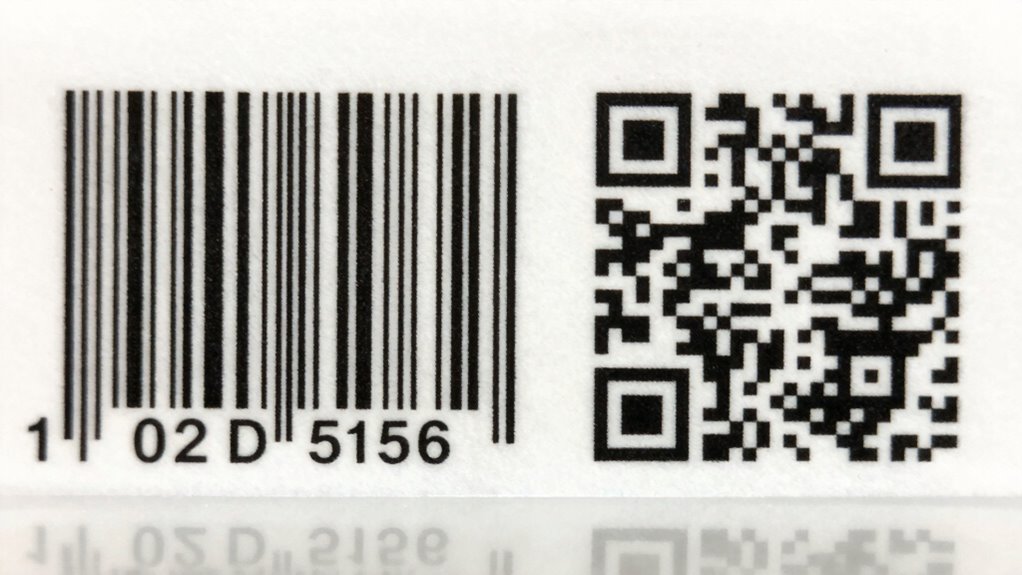
Barcodes come in different types, each designed to store specific kinds of information. Understanding barcode standards helps you recognize their differences and guarantees proper use. First, 1D barcodes are the most common, consisting of parallel lines and spaces that encode data linearly. They are simple but limited in data capacity. Next, 2D barcodes, like QR codes, store information both horizontally and vertically, increasing data capacity and enabling quick scanning accuracy even when partially damaged. These variations serve different purposes across industries. Your choice depends on the amount of data you need to encode and the scanning environment. Properly selecting the right barcode type and adhering to barcode standards ensures reliable scanning accuracy, reducing errors and improving efficiency in inventory, sales, or tracking processes. Additionally, understanding electric dirt bike horsepower can help you grasp the capabilities of high-performance scanning equipment and related technology. Recognizing the barcode symbology used is essential for ensuring compatibility with different scanners and applications, especially as security concerns grow in payment processing environments. To optimize performance, it is also important to consider barcode readability and how environmental factors might affect scan success.
How Do 1D Barcodes Work and Where Are They Used?
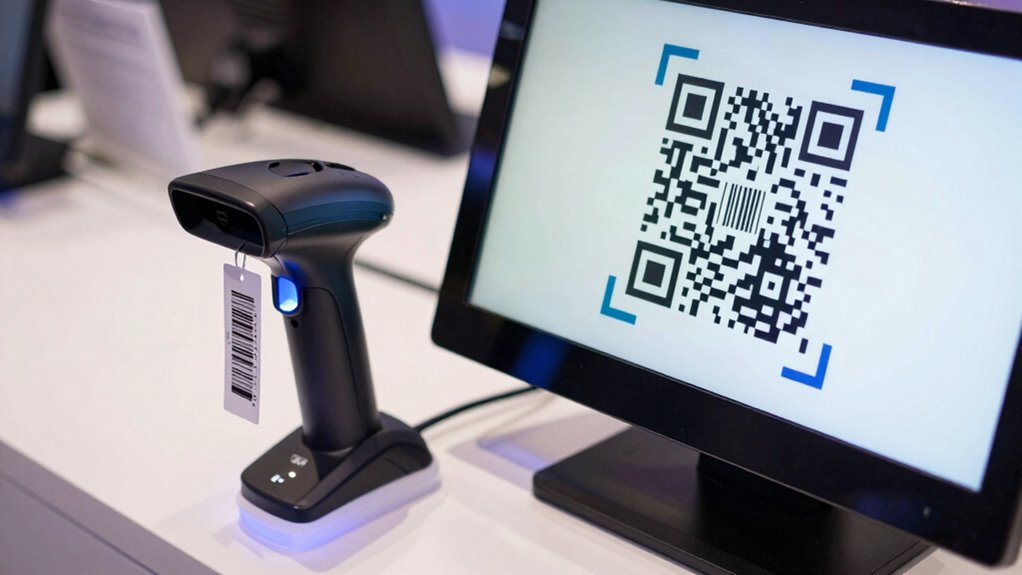
1D barcodes work by encoding data into a series of parallel lines and spaces that can be easily read by scanners. This technology dates back to the barcode history that revolutionized inventory management. When you scan a 1D barcode, the scanner’s light beam detects the pattern of lines, converting it into digital data using simple scanning technology. Commonly found in retail, logistics, and healthcare, these barcodes streamline checkout processes and tracking. These barcodes are also valued for their cost-effectiveness in various industries. Here’s a quick look at key aspects:
| Feature | Details |
|---|---|
| Data Capacity | Limited, usually up to 20 characters |
| Reading Method | Laser or CCD scanner |
| Typical Usage | Retail products, shipping labels |
Understanding how 1D barcodes work helps you appreciate their widespread use in everyday life, especially considering their role in inventory management and supply chain efficiency.
What Makes 2D Barcodes More Versatile and Useful?

Because they can encode much more information in a smaller space, 2D barcodes are inherently more versatile and useful than their 1D counterparts. Their multi layer encoding allows them to store data like URLs, contact details, and even multimedia content, expanding their functionality across various industry applications. For example, in retail, they streamline inventory management, while in healthcare, they improve patient record tracking. The ability to embed complex information makes 2D barcodes adaptable for logistics, marketing, and asset tracking. They also support faster data retrieval and reduce errors, increasing efficiency. Additionally, their data capacity enables them to contain extensive information that can be quickly accessed and processed. This increased data storage capacity enhances their flexibility in handling diverse data types, making them an essential tool in modern technology. Overall, their capacity to handle diverse data types and their adaptability across sectors make 2D barcodes a powerful tool for modern business needs.
Why Are QR Codes So Popular in Marketing and Mobile Payments?
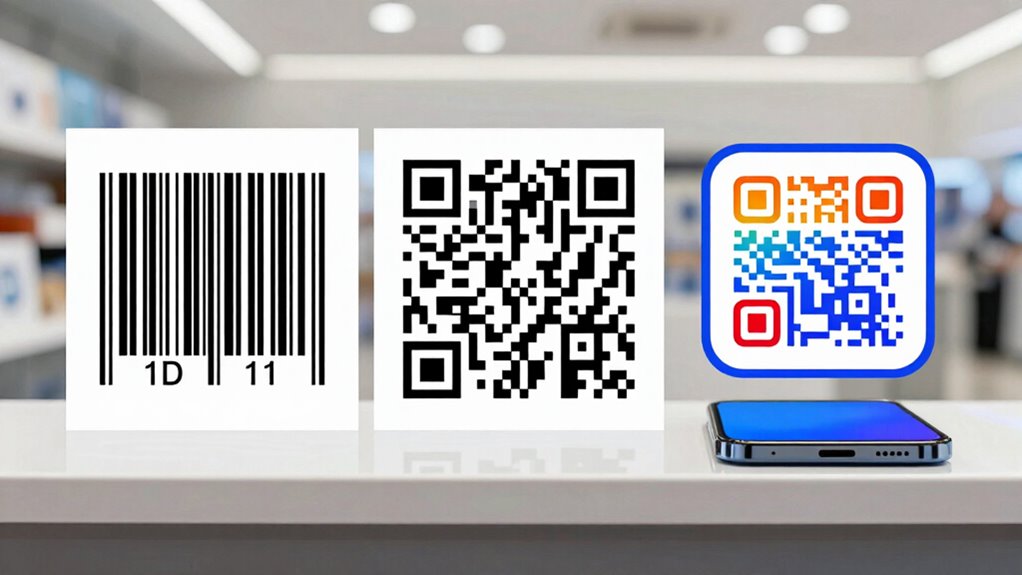
You’ll notice that QR codes are easy to scan and use, even with a smartphone camera. They also store a lot of data in a small space, making them versatile for marketing and payments. This combination of simplicity and capacity explains their popularity in these fields. Additionally, their wide compatibility with various devices and platforms further boosts their adoption. The security features of QR codes also contribute to their widespread use, especially in financial transactions. Many businesses also appreciate that easy integration with existing systems is straightforward, encouraging more widespread adoption. Moreover, their adaptability to evolving technologies ensures they remain relevant as digital payment solutions continue to develop. Understanding the regulatory compliance associated with QR codes can help businesses implement them more effectively and securely.
Ease of Use
Have you ever wondered why QR codes have become so popular in marketing and mobile payments? The answer lies in their user friendliness and scanning simplicity. QR codes are easy for anyone to use—most smartphones can scan them instantly without needing special equipment. Their straightforward design means users don’t have to struggle with complicated processes; just open your camera app and point it at the code. This seamless experience encourages quick interactions, making it ideal for busy environments like stores or events. Additionally, QR codes don’t require multiple steps or apps to access information or payments, enhancing convenience. Their intuitive nature appeals to a broad audience, helping businesses engage customers effortlessly and boosting adoption of mobile payments and marketing campaigns. Ease of use is further supported by their ability to encode a variety of data types, making them versatile in different applications. Moreover, their versatility in data encoding allows for a wide range of functionalities, from product information to website links and payment details. For example, their quick scanning capability further enhances user experience by reducing friction during interactions. Additionally, advances in smartphone camera technology have made scanning even more effortless across different devices, contributing to their widespread popularity. Furthermore, the simplicity of their design helps ensure quick recognition and decoding, encouraging more users to utilize QR codes regularly.
Data Storage Capacity
One key reason QR codes are so popular in marketing and mobile payments is their impressive data storage capacity. Unlike traditional barcodes, QR codes have a higher data density, allowing them to store more information within a small space. This increased storage capacity enables QR codes to hold detailed URLs, contact info, or even payment details, making them versatile for various applications. The ability to encode more data means fewer codes are needed, simplifying user interactions. Plus, their capacity to contain complex information makes QR codes ideal for marketing campaigns, mobile ticketing, and secure transactions. Overall, their superior data density and storage capacity enhance convenience and functionality, which explains their widespread adoption in modern digital interactions. Additionally, their data encoding efficiency allows for quick scanning and reliable performance across different devices. Furthermore, the robustness of QR code design ensures they remain functional even if partially damaged or obscured, contributing to their reliability in various environments.
How to Choose the Best Barcode Type for Your Business
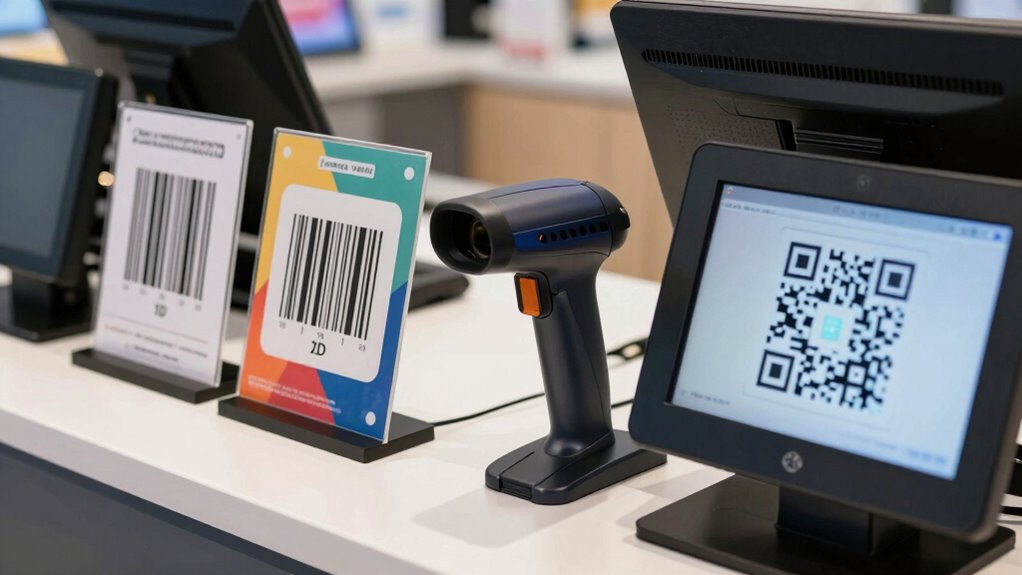
When selecting a barcode type, you need to consider whether it’s compatible with your devices to ensure smooth scanning. You’ll also want to evaluate your data storage needs, as some barcode formats can hold more information than others. By keeping these points in mind, you can choose a barcode that fits your business operations perfectly. Additionally, understanding barcode terminology can help you better grasp the differences between options and make more informed decisions.
Compatibility With Devices
Choosing the right barcode type depends largely on the devices you’ll use to scan them. Device compatibility and software integration are key factors. Some scanners work seamlessly with smartphones, tablets, or dedicated industrial scanners. For example, a smartphone app might scan QR codes effortlessly, but struggle with 1D barcodes without proper hardware. Consider this table to visualize compatibility:
| Device Type | Barcode Compatibility | Software Integration |
|---|---|---|
| Smartphones & Tablets | 2D & QR codes | Easy via apps |
| Handheld Scanners | 1D, 2D, QR codes | Varies, often customizable |
| Industrial Scanners | Mostly 1D & 2D | Complex, enterprise-ready |
Matching your devices with barcode types ensures smooth operation and efficient data flow, saving you time and hassle. Proper understanding of barcode types helps in selecting the most compatible equipment for your business needs.
Data Storage Capacity
Understanding the data storage capacity of different barcode types is essential for selecting the right solution for your business. Data capacity varies considerably between barcode types, impacting how much information you can encode. For example, 1D barcodes have limited storage limitations, typically holding only a few dozen characters, making them suitable for simple product codes. In contrast, 2D barcodes and QR codes offer much higher storage capacity, allowing you to store extensive data like URLs, contact info, or serial numbers. This greater capacity makes them ideal for applications requiring detailed information. When choosing a barcode, consider your data needs and the storage limitations of each type. Selecting a barcode with adequate data capacity ensures smooth operation and efficient data management, avoiding unnecessary complications later.
What Are the Key Factors When Picking a Barcode Scanner?
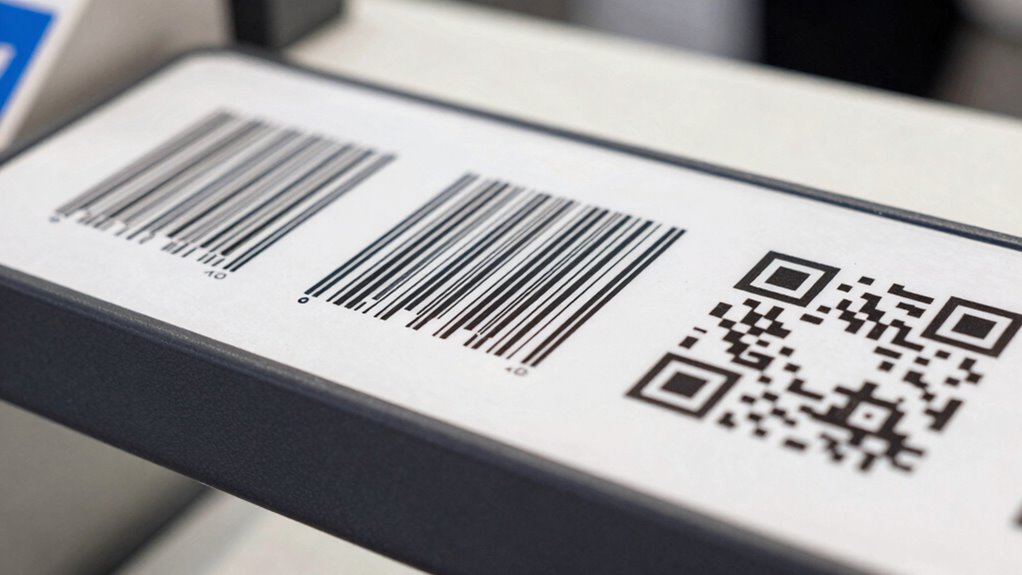
Selecting the right barcode scanner depends on several key factors that directly impact its performance and suitability for your needs. First, consider barcode security—guarantee the scanner can accurately read various code types and maintain data integrity. Scanning speed is also critical; a faster scanner boosts efficiency, especially in high-volume environments. You should assess the environment where you’ll use it: a busy retail store, a warehouse, or a healthcare setting. Durability and ease of use matter too, so look for ergonomic design and sturdy build quality. Compatibility with your existing system is essential, so verify connectivity options like USB or Bluetooth. Ultimately, consider your barcode types—1D, 2D, or QR codes—and select a scanner optimized for those formats to ensure seamless performance.
What Are Common Challenges When Scanning Different Barcodes?
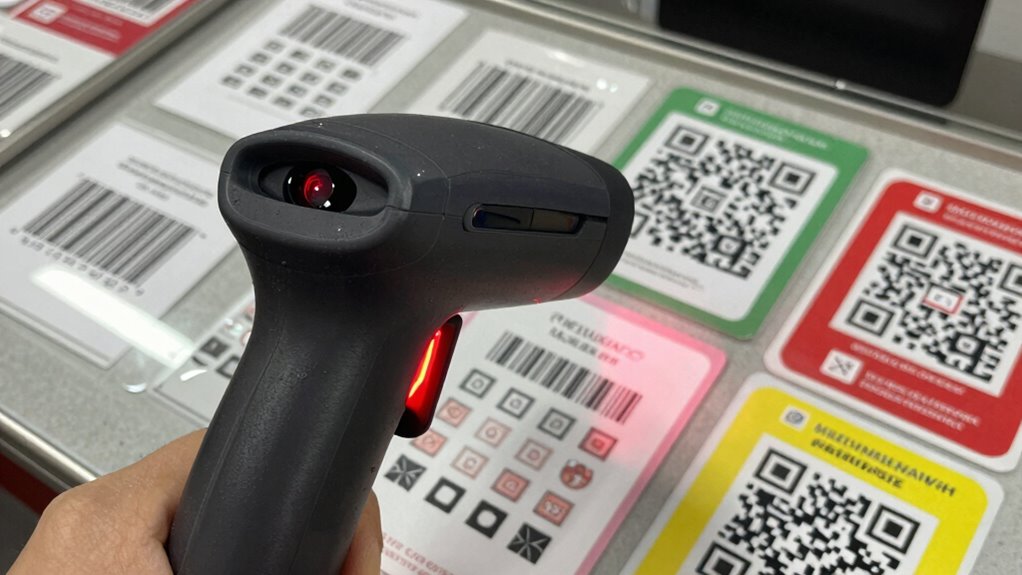
While picking the right scanner is essential, it’s equally important to recognize the challenges you might face when scanning different types of barcodes. Common issues can impact scanning accuracy and efficiency. Environmental interference, such as poor lighting, dust, or reflective surfaces, can cause misreads or failed scans. Small or damaged barcodes may be difficult to interpret, leading to frustration. Low contrast between the barcode and background reduces readability. Complex 2D or QR codes might require precise alignment, making quick scans harder. Additionally, barcode orientation can pose challenges, especially with larger or awkwardly placed codes.
Be aware of these hurdles to improve your scanning success:
- Frustration from inconsistent results
- Delays caused by environmental interference
- Misreads on damaged or dirty barcodes
- Difficulty scanning at awkward angles
- Reduced accuracy with poorly printed codes
What Are the Future Trends in Barcode Technology and Scanning?
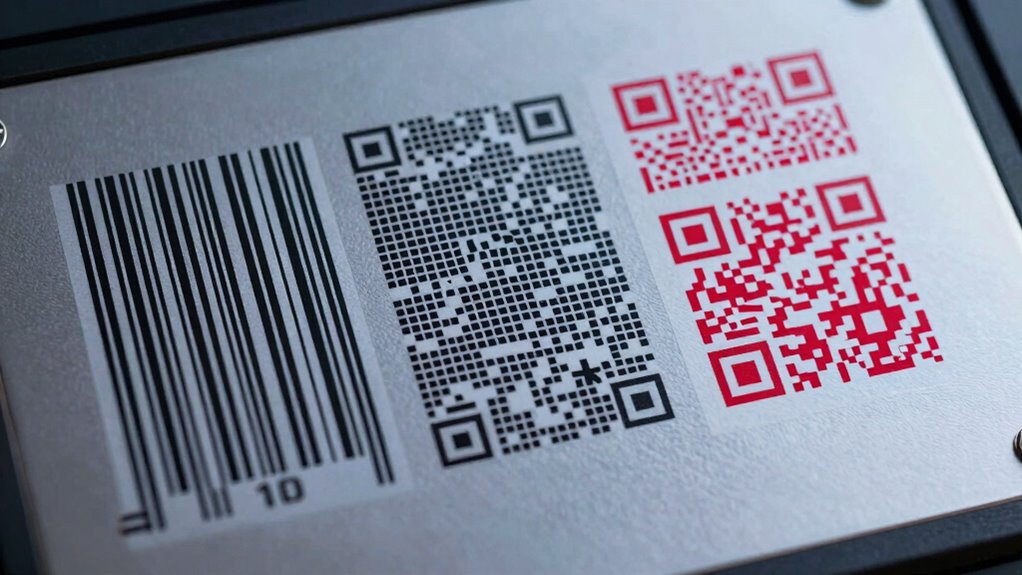
Have you noticed how barcode technology is rapidly evolving to meet the demands of modern commerce? Future trends include enhanced integration with augmented reality, allowing you to overlay product information, reviews, or virtual try-ons directly through your device’s camera. This creates a more interactive shopping experience and reduces checkout times. Additionally, blockchain integration promises increased security and transparency, enabling you to verify product authenticity and supply chain details instantly. As scanning devices become smarter and more connected, expect faster, more reliable data capture and real-time updates. These innovations will streamline operations, improve consumer engagement, and foster trust in digital transactions. Staying ahead means embracing these emerging trends to optimize efficiency and experience in an increasingly digital marketplace.
Frequently Asked Questions
Can Barcode Types Be Combined for Enhanced Data Capture?
Yes, you can combine barcode types for better barcode integration and data enrichment. Using multi-layered scanning systems, you can capture 1D, 2D, and QR codes simultaneously, which streamlines data collection and reduces errors. This approach allows you to access more detailed information from diverse barcode formats, enhancing your inventory management, checkout process, or asset tracking, and ultimately improving efficiency and accuracy in your operations.
What Security Features Are Integrated Into Modern Barcode Systems?
You’ll be interested to know that over 60% of modern barcode systems incorporate security features like barcode encryption, which safeguards sensitive data. These systems also enhance access control by restricting who can scan or modify barcode information. By integrating encryption, you guarantee data remains confidential, while access controls prevent unauthorized use, making your barcode system more secure and trustworthy against potential threats.
How Do Environmental Factors Affect Barcode Scanning Accuracy?
Environmental factors like poor lighting conditions can make it difficult for your barcode scanner to read codes accurately. Physical obstructions, such as dirt or damage on the barcode, also interfere with scanning. To guarantee accuracy, you should improve lighting, keep barcodes clean, and avoid obstructions. Properly maintaining your scanner and environment helps reduce errors, making your scanning process faster and more reliable.
Are There Industry-Specific Barcode Standards I Should Know?
You’ll find that industry-specific standards act like a secret codebook, guiding your barcode practices across sectors. Whether in healthcare, retail, or manufacturing, adhering to these standards guarantees regulatory compliance and smooth operations. Think of them as the blueprint for accuracy, safety, and consistency, helping you avoid costly mistakes. Staying informed keeps your scanning game sharp, so you can confidently navigate each industry’s unique barcode landscape.
What Are the Cost Implications of Upgrading Barcode Scanning Technology?
Upgrading your barcode scanning technology involves a thorough cost analysis, considering both initial purchase and long-term maintenance expenses. Newer scanners, like 2D or QR code readers, may have higher upfront costs but can reduce maintenance expenses over time through increased durability and versatility. Keep in mind, investing in advanced scanners can improve efficiency and accuracy, ultimately saving money by minimizing errors and speeding up operations.
Conclusion
Understanding the differences between 1D, 2D, and QR codes helps you choose the right barcode for your needs. Did you know over 11 million QR codes are scanned daily worldwide? Staying updated on barcode technology guarantees smoother operations and better customer experiences. By selecting the appropriate barcode type and scanner, you can boost efficiency and stay ahead in your industry. Embrace these tools today to open new growth opportunities.