
A portable monitor for software developers needs to do one job well: give you a usable second screen for an IDE, terminal, and docs without wrecking your bag or your battery. After comparing 15 models, the UPERFECT 15.6″ 4K Touchscreen stands out as the best overall pick for developers, because its 4K resolution keeps small UI text and dense code editors sharp in a way 1080p panels simply can’t match. The Dell Pro 14 Plus (P1425) is the strongest premium alternative if you want a more polished, laptop-matching build, and the ViewSonic VG1655 wins on value for developers who just want a dependable, no-frills coding sidecar. The main tradeoffs in this category are resolution versus portability, single USB-C connectivity versus multi-input flexibility, and stand design — many cheap panels rely on flimsy folio covers that flop around on a train tray table. Read on for the full breakdown, including who each monitor is for and who should skip it.

Get business pricing on monitors, keyboards and dev gear
- Business-only prices and quantity discounts
- Tax-exempt purchasing
- Multiple users, one account, clear invoices
Key Takeaways
- Resolution was the biggest differentiator for coding: only the UPERFECT 4K and Dell Pro 14 Plus FHD+ panels kept 10–11pt editor fonts crisp, while budget 1080p panels showed visible softness at typical coding viewing distances.
- Stand design separated the top tier from the rest — the InnoView‘s adjustable 90° stand, Dell’s integrated kickstand, and VisionOwl‘s built-in kickstand beat the flimsy folio covers on the KYY, ForHelp, and MNN for real desk use.
- Single-cable USB-C power-plus-video worked reliably on nearly every model, but only the ASUS ZenScreen MB169CK and Dell Pro 14 Plus offered truly polished MacBook-style plug-and-play without dongle hassle.
- The laptop screen extender format (the 14.2″ dual-panel unit) trades desk flexibility for travel efficiency — great for airport coding, poor for anyone who wants a monitor they can also use detached from the laptop.
- High-refresh panels like the ARZOPA Z1FC 144Hz offer no coding benefit, but its 106% sRGB color coverage made it the best pick among the gaming-leaning options for developers who also do frontend color work.
| ViewSonic VG1655 15.6 Inch 1080p Portable Monitor |  | Best Overall | Screen Size: 15.6 inches | Resolution: 1920 x 1080 (FHD) | Panel Type: IPS, matte anti-glare | VIEW LATEST PRICE | See Our Full Breakdown |
| KYY 15.6″ Portable Monitor 1080P FHD IPS with Smart Cover | 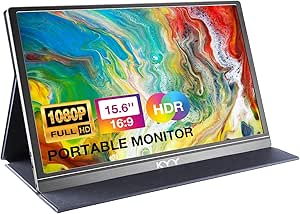 | Best Value | Screen Size: 15.6 inches | Resolution: 1920 x 1080 (FHD) | Panel Type: IPS LCD, HDR | VIEW LATEST PRICE | See Our Full Breakdown |
| ASUS ZenScreen MB169CK 15.6 Inch 1080p Portable Monitor |  | Best for Frequent Travelers | Screen Size: 15.6 inches | Resolution: 1920 x 1080 (FHD) | Panel Type: IPS, anti-glare | VIEW LATEST PRICE | See Our Full Breakdown |
| Anyuse 15.6″ FHD IPS USB-C HDMI Portable Monitor |  | Best Ultra-Budget Pick | Screen Size: 15.6 inches | Resolution: 1920 x 1080 (FHD) | Panel Type: IPS, HDR, low blue light | VIEW LATEST PRICE | See Our Full Breakdown |
| ForHelp 15.6″ Portable Monitor 1080P USB-C HDMI |  | Best Budget Matte Screen | Screen Size: 15.6 inches | Resolution: 1920 x 1080 (FHD) | Panel Type: IPS, matte finish | VIEW LATEST PRICE | See Our Full Breakdown |
| UPERFECT 15.6″ 4K Portable Touchscreen Monitor |  | Best Premium Pick | Screen Size: 15.6 inches | Resolution: 3840 x 2160 (4K UHD) | Color Gamut: 125% sRGB | VIEW LATEST PRICE | See Our Full Breakdown |
| MNN 15.6″ FHD 60Hz Portable Monitor |  | Best Budget Workhorse | Screen Size: 15.6 inches | Resolution: 1920 x 1080 FHD | Panel: IPS, matte finish | VIEW LATEST PRICE | See Our Full Breakdown |
| Laptop Screen Extender 14.2″ FHD 1080P Dual Portable Monitor |  | Best Dual-Screen Travel Rig | Screen Size: 14.2 inches (dual extender) | Resolution: 1920 x 1080 FHD | Panel: IPS | VIEW LATEST PRICE | See Our Full Breakdown |
| cocopar 15.6 Inch 1080P FHD Travel Monitor |  | Best for Desk-Like Ergonomics | Screen Size: 15.6 inches | Resolution: 1920 x 1080 FHD | Color Gamut: 85% sRGB | VIEW LATEST PRICE | See Our Full Breakdown |
| InnoView 15.6″ 1080P Portable Monitor with Protective Sleeve |  | Best Everyday Carry | Screen Size: 15.6 inches | Resolution: 1920 x 1080 FHD | Panel: IPS A-grade, matte | VIEW LATEST PRICE | See Our Full Breakdown |
| ARZOPA 16.1″ 144Hz Portable Gaming Monitor 106% sRGB – Z1FC |  | Best for Devs Who Game After Hours | Screen Size: 16.1 inches | Resolution: 1920 x 1080 (FHD) | Refresh Rate: 144 Hz | VIEW LATEST PRICE | See Our Full Breakdown |
| Dell Pro 14 Plus (P1425) 14″ FHD+ Portable Monitor |  | Best Premium Travel Pick | Screen Size: 14 inches | Resolution: 1920 x 1200 (FHD+, 16:10) | Refresh Rate: 144 Hz | VIEW LATEST PRICE | See Our Full Breakdown |
| VILVA 15.6″ FHD IPS USB-C HDMI Portable Monitor |  | Best Value Workhorse | Screen Size: 15.6 inches | Resolution: 1920 x 1080 (FHD) | Refresh Rate: 60 Hz | VIEW LATEST PRICE | See Our Full Breakdown |
| WGK 15.6″ Portable Monitor 1080P FHD with HDMI/USB-C, Built-in Stand and Speakers |  | Best Everyday Second Screen | Screen Size: 15.6 inches | Resolution: 1920 x 1080 (FHD) | Refresh Rate: 60 Hz | VIEW LATEST PRICE | See Our Full Breakdown |
| VisionOwl 18.5″ Portable Monitor, IPS USB-C HDMI with Kickstand, Speakers, VESA |  | Best Large-Screen Coding Canvas | Screen Size: 18.5 inches | Resolution: 1920 x 1080 (FHD) | Refresh Rate: 100 Hz | VIEW LATEST PRICE | See Our Full Breakdown |
| portable monitor for software developer | Screen Size | Resolution | Weight | Brightness |
|---|---|---|---|---|
| ViewSonic VG1655 15.6 Inch 108 | 15.6 inches | 1920 x 1080 (FHD) | 1.8 lbs | 250 nits |
| KYY 15.6" Portable Monitor 108 | 15.6 inches | 1920 x 1080 (FHD) | 1.7 lbs | 300 nits |
| ASUS ZenScreen MB169CK 15.6 In | 15.6 inches | 1920 x 1080 (FHD) | 0.78 kg (1.7 lbs) | — |
| Anyuse 15.6" FHD IPS USB-C HDM | 15.6 inches | 1920 x 1080 (FHD) | 1.37 lbs | — |
| ForHelp 15.6" Portable Monitor | 15.6 inches | 1920 x 1080 (FHD) | 1.52 lbs | — |
| UPERFECT 15.6" 4K Portable Tou | 15.6 inches | 3840 x 2160 (4K UHD) | 1.8 pounds | 450 nits |
| MNN 15.6" FHD 60Hz Portable Mo | 15.6 inches | 1920 x 1080 FHD | 1.5 pounds | 300 nits |
| Laptop Screen Extender 14.2" F | 14.2 inches (dual extender) | 1920 x 1080 FHD | 1.87 pounds | 300 nits |
| cocopar 15.6 Inch 1080P FHD Tr | 15.6 inches | 1920 x 1080 FHD | 1.5 lbs (2.4 lbs with cover) | — |
| InnoView 15.6" 1080P Portable | 15.6 inches | 1920 x 1080 FHD | 1.5-2 pounds | 250 cd/m2 |
| ARZOPA 16.1" 144Hz Portable Ga | 16.1 inches | 1920 x 1080 (FHD) | 1.42 kg | 300 cd/m² |
| Dell Pro 14 Plus | 14 inches | 1920 x 1200 (FHD+, 16:10) | 0.65 kg | 400 cd/m² |
| VILVA 15.6" FHD IPS USB-C HDMI | 15.6 inches | 1920 x 1080 (FHD) | 1.74 kg | 300 cd/m² |
| WGK 15.6" Portable Monitor 108 | 15.6 inches | 1920 x 1080 (FHD) | 2.7 lbs | — |
| VisionOwl 18.5" Portable Monit | 18.5 inches | 1920 x 1080 (FHD) | 2.6 lbs | 320 cd/m² |
More Details on Our Top Picks
ViewSonic VG1655 15.6 Inch 1080p Portable Monitor
The VG1655 earns the top spot because it solves the problems developers actually hit on the road: flimsy stands and battery drain. Its 60W two-way power delivery means a single USB-C cable both displays and charges your laptop, which the KYY and ForHelp models can’t manage — a real difference during long café sessions with one outlet. The anti-glare matte screen is another developer-friendly touch; code on a glossy panel like the Anyuse becomes unreadable near a window. The magnetic cover kickstand is sturdier than most floppy smart covers, holding steady in portrait mode for reading long files. Tradeoffs: at 250 nits and a modest 800:1 contrast ratio, the image is functional rather than vibrant, and there’s no HDR or touch. But for a coding companion, reliability beats flash.
Pros:- 60W two-way USB-C power delivery charges your laptop through the monitor
- Anti-glare matte finish keeps code readable in bright spaces
- Stable cover-stand works in both portrait and landscape
- 3-year warranty with US-based support exceeds typical portable monitor coverage
Cons:- 250-nit brightness and 800:1 contrast make the image look flat compared to the KYY
- No HDR, touch, or high refresh rate options
Best for: Developers who travel or work from cafés and want a dependable single-cable second screen with pass-through charging
Not ideal for: Anyone wanting vivid HDR visuals or touchscreen input — the panel is strictly utilitarian
- Screen Size:15.6 inches
- Resolution:1920 x 1080 (FHD)
- Panel Type:IPS, matte anti-glare
- Brightness:250 nits
- Weight:1.8 lbs
- Thickness:0.6 inches
- Connectivity:2x USB-C, Mini-HDMI
- Power Delivery:60W two-way USB-C
- Warranty:3 years
Our verdict“The safest all-around pick for a developer who values a stable stand, matte screen, and one-cable charging over flashy image quality.”
KYY 15.6″ Portable Monitor 1080P FHD IPS with Smart Cover
Where the ViewSonic VG1655 plays it safe, the KYY delivers a genuinely better picture for the money: 300 nits of brightness, HDR support, and a 1000:1 contrast ratio that beats ViewSonic’s specs on paper and in practice. For developers, that means docs and terminals look crisper, and the 178° IPS panel holds up when pair-programming with someone beside you. The PU leather smart cover doubles as a foldable stand, though it offers fewer stable positions than the VG1655’s kickstand and can wobble on uneven desks. Connectivity is generous — dual full-function USB-C plus mini-HDMI and a headphone jack — so it hooks up to everything from a MacBook to a Pi cluster without adapters. The compromise is power: no pass-through charging, so your laptop battery does all the lifting.
Pros:- Brighter 300-nit panel with HDR outclasses similarly priced rivals
- Dual full-function USB-C and mini-HDMI cover nearly every device
- Slim 0.3-inch, 1.7-lb body slips into any laptop bag
- Built-in stereo speakers for quick video calls
Cons:- No power delivery, so it draws from your laptop’s battery
- Smart cover stand is less rigid than the ViewSonic’s kickstand design
Best for: Budget-conscious developers who want the best image quality per dollar in a travel second screen
Not ideal for: All-day cordless workers — without power delivery, a laptop plus monitor will drain your battery fast
- Screen Size:15.6 inches
- Resolution:1920 x 1080 (FHD)
- Panel Type:IPS LCD, HDR
- Brightness:300 nits
- Contrast Ratio:1000:1
- Refresh Rate:60 Hz
- Weight:1.7 lbs
- Connectivity:2x USB-C, mini HDMI, 3.5mm audio
Our verdict“The smart pick if image quality and price matter more to you than pass-through charging and a rock-solid stand.”
ASUS ZenScreen MB169CK 15.6 Inch 1080p Portable Monitor
At 0.78 kg (about 1.7 lbs) and 11.8mm thin, the ZenScreen is the lightest mainstream option here and the one I’d point commuters toward first. Its single-cable USB-C connection keeps a hotel-desk setup clean, while the 360° kickstand plus tripod socket gives mounting flexibility none of the cover-stand models — KYY, Anyuse, ForHelp — can match. For developers specifically, auto-rotate via DisplayWidget is a quiet killer feature: drop into portrait for reading stack traces or long config files without fiddling with OS settings. The anti-glare coating and flicker-free eye care make marathon sessions easier on the eyes. The catch is connectivity breadth: no HDMI port, so older machines or consoles need adapters. And like the ViewSonic, it’s a modest panel — no HDR, no high refresh — you’re paying for portability and polish, not pixels.
Pros:- Lightest weight class in this lineup at 0.78 kg
- Auto-rotate portrait/landscape is ideal for reading long code files
- Tripod socket and 360° kickstand beat floppy smart covers for stability
- Strong eye-care tech for extended sessions, backed by a 3-year warranty
Cons:- USB-C only — no HDMI input, so consoles and older laptops need adapters
- No HDR and modest brightness compared to the KYY
Best for: Frequent travelers and commuters who prioritize weight, portrait-mode coding, and flexible mounting
Not ideal for: Anyone connecting via HDMI-only devices or wanting HDR media quality — you’ll need adapters and lower expectations
- Screen Size:15.6 inches
- Resolution:1920 x 1080 (FHD)
- Panel Type:IPS, anti-glare
- Weight:0.78 kg (1.7 lbs)
- Thickness:11.8 mm
- Connectivity:USB-C (single-cable power + video)
- Stand:360° kickstand, tripod socket
- Warranty:3 years with advanced replacement
Our verdict“The travel-first choice for developers who live out of a backpack and want portrait mode without fuss.”
Anyuse 15.6″ FHD IPS USB-C HDMI Portable Monitor
The Anyuse makes this list for one reason: it’s the cheapest credible way to add a second screen, and for a developer on a tight budget, that’s a legitimate use case. It carries the standard recipe — 1080p IPS, two full-function USB-C ports, mini-HDMI, HDR mode, built-in speakers, and copy/extend/second-screen modes — at a weight (1.37 lbs) that undercuts even the ASUS ZenScreen. Compared with the ForHelp, another budget unit, the Anyuse is lighter but uses a glossy panel, which means reflections on bright desks; the ForHelp’s matte finish handles glare better. Stand options are the weak point: with no built-in kickstand, you’re dependent on the included cover’s limited angles, and the panel’s brightness won’t win awards. Still, for a spare terminal screen that lives in a drawer between deployments, it does the job.
Pros:- Lowest-cost credible entry point in this roundup
- Featherweight at 1.37 lbs — lighter than the ASUS or KYY
- Full USB-C and mini-HDMI connectivity with plug-and-play setup
- Copy, extend, and second-screen display modes add flexibility
Cons:- Glossy screen reflects badly in bright workspaces unlike the matte ForHelp or ViewSonic
- No built-in stand — cover-based angles are limited and less stable
- Brightness falls short of the KYY’s 300 nits
Best for: Students and junior developers who need a cheap, functional second screen for docs, terminals, or Slack
Not ideal for: Glossy-screen haters and anyone needing a rigid stand — reflections and wobbly cover angles get old fast
- Screen Size:15.6 inches
- Resolution:1920 x 1080 (FHD)
- Panel Type:IPS, HDR, low blue light
- Viewing Angle:178 degrees
- Weight:1.37 lbs
- Connectivity:2x full-function USB-C, mini HDMI
- Display Modes:Copy / extend / second screen
- Speakers:2 built-in
Our verdict“A no-frills spare screen for budget-limited developers who value portability over polish.”
ForHelp 15.6″ Portable Monitor 1080P USB-C HDMI
The ForHelp sits in the same budget tier as the Anyuse but makes a different trade: it pairs a matte IPS panel with an aluminum alloy chassis, which feels sturdier and handles window glare far better than the Anyuse’s glossy screen. For developers, that matte finish matters — staring at light-on-dark themes for hours is bad enough without mirror reflections. Connectivity matches the standard setup: two full-function USB-C ports plus mini-HDMI, no drivers needed. At 1.52 lbs and 0.3 inches, it’s slightly heavier than the Anyuse but still very carryable, and the PU smart cover offers two grooves for angle adjustment — an improvement over single-position covers, though still shy of the ASUS ZenScreen’s 360° kickstand. Speakers are serviceable for calls, not music. Like the KYY, there’s no power delivery, so plan your outlet strategy.
Pros:- Matte anti-glare screen is rare at this price and much easier on the eyes
- Aluminum alloy build feels more premium than plastic budget rivals
- Dual USB-C and mini-HDMI with true plug-and-play
- Smart cover offers two viewing-angle grooves instead of one
Cons:- No power delivery drains laptop battery on the go
- Cover-based stand limits angles compared to the ASUS’s kickstand and tripod socket
Best for: Budget-minded developers who work near windows or in bright offices and need a glare-free coding screen
Not ideal for: Users who need flexible mounting or pass-through charging — the cover stand and power situation are basic
- Screen Size:15.6 inches
- Resolution:1920 x 1080 (FHD)
- Panel Type:IPS, matte finish
- Viewing Angle:178 degrees
- Weight:1.52 lbs
- Thickness:0.3 inches
- Connectivity:2x full-function USB-C, mini HDMI
- Build:Aluminum alloy body, PU smart cover
Our verdict“The budget pick for glare-sensitive coders who want a matte, metal-built screen without spending up for the ViewSonic.”
UPERFECT 15.6″ 4K Portable Touchscreen Monitor
This option stands out as the only 4K touchscreen in this batch, and that matters for developers who spend hours reading dense code or reviewing UI work at the pixel level. 3840 x 2160 on a 15.6-inch panel produces text so crisp it rivals a retina laptop display — a real advantage over the 1080p MNN and cocopar models, where subpixel fuzz creeps in on small fonts. The 10-point touch layer is genuinely useful for scrolling docs or testing touch interfaces during mobile-web development, something no other monitor here offers. The tradeoff is cabling complexity: touch over USB-C demands a proper power handshake, and the Mini HDMI path needs separate power plus a USB-A-to-C cable for touch. At 60 Hz it is also no substitute for the ARZOPA Z1FC if smooth motion matters to you. Compared with the ViewSonic VG1655, you give up simplicity and gain four times the pixels.
Pros:- 4K resolution makes small code text and UI details far sharper than any 1080p rival here
- 10-point touchscreen for testing mobile-style interactions
- 450 nits and 2000:1 contrast outclass the 250-300 nit budget models
- Matte finish cuts glare under office lighting
Cons:- Touch requires a specific USB-C power setup and may not work on all laptops
- Mini HDMI connection demands separate power and extra cabling
- Heavier GPU load and battery drain when driving 4K from a laptop
Best for: Developers doing frontend or design-adjacent work who need 4K clarity and touch input for testing
Not ideal for: Anyone wanting a grab-and-go single-cable setup — the touch and HDMI cable requirements make it fiddly for quick coffee-shop sessions
- Screen Size:15.6 inches
- Resolution:3840 x 2160 (4K UHD)
- Color Gamut:125% sRGB
- Brightness:450 nits
- Contrast Ratio:2000:1
- Refresh Rate:60 Hz
- Touch:10-point touchscreen
- Ports:1x Mini HDMI, 2x USB 3.0
- Weight:1.8 pounds
Our verdict“The pick for developers who want the sharpest possible portable canvas and are willing to manage extra cables to get it.”
MNN 15.6″ FHD 60Hz Portable Monitor
Where the UPERFECT chases resolution, the MNN keeps things simple and cheap, and that is exactly its appeal. A single full-featured USB-C cable handles power and video on laptops with Thunderbolt 3 or USB 3.1 DP Alt Mode, which is the same one-cable convenience the cocopar offers — no driver installs, no dongle pile. The IPS panel covers a solid 178-degree viewing angle with a matte finish, so terminal windows and documentation stay readable under harsh lighting. HDR mode exists but is more marketing than substance at 300 nits. The included PU leather smart cover doubles as a stand, matching the KYY’s approach, though it is flimsier in landscape portrait use. Its 5 ms response and 60 Hz panel mean it is fine for coding, not for competitive gaming — the ARZOPA Z1FC at 144 Hz is the better pick if frames matter.
Pros:- True one-cable USB-C operation on compatible laptops
- Matte IPS panel with wide viewing angles for text work
- Lightweight at roughly 1.5 pounds with a smart cover stand included
- Multiple display modes including portrait for reading long files
Cons:- 300-nit brightness struggles near windows or outdoors
- No speakers, so video calls need headphones or laptop audio
- HDR mode adds little visible improvement
Best for: Students and junior developers who want a dependable second screen for docs, terminals, and Slack without spending much
Not ideal for: Anyone who needs accurate color for design work or high refresh rates for gaming after hours
- Screen Size:15.6 inches
- Resolution:1920 x 1080 FHD
- Panel:IPS, matte finish
- Brightness:300 nits
- Refresh Rate:60 Hz
- Response Time:5 ms
- Ports:2x USB-C (full featured), 1x mini HDMI
- Weight:1.5 pounds
Our verdict“A no-frills FHD second screen that does the coding-basics job well when budget is the deciding factor.”
Laptop Screen Extender 14.2″ FHD 1080P Dual Portable Monitor
This model takes a different shape from everything else in the roundup: instead of a freestanding panel like the MNN or InnoView, it clamps onto your laptop lid to create an instant dual-monitor workstation. For developers who live in a terminal plus browser plus debugger, that means no more alt-tab churn while traveling — the pitch of going from one screen to a genuine three-display setup (laptop plus extender panels) in seconds is real. At 1.87 pounds and 0.27 inches thin, it is lighter than most clamp-on extenders, and the 226-degree hinge lets you fold a panel forward for pair programming or client demos. The catch is 1080p on a 14.2-inch panel is fine but unremarkable, and the clamp design adds width that narrower airline trays cannot absorb. Compared with the freestanding ViewSonic VG1655, you trade flexibility of placement for integrated stability.
Pros:- Clamp-on design creates a stable dual-screen setup without a separate stand or desk space
- Very light at 1.87 pounds for a dual-panel rig
- 226-degree adjustment supports mirroring for presentations and pair programming
- Works across Windows, macOS, ChromeOS, Linux, and Android
Cons:- Adds considerable width to your laptop, making tight trays and small bags awkward
- 1080p resolution is basic for detailed code review
- Laptop lid hinges bear the extra weight all day, which concerns some users
Best for: Frequent travelers and remote developers who want a permanent-feeling dual-screen rig that deploys in seconds
Not ideal for: Anyone with a laptop under 14 inches or users who mostly work at a desk with a real external monitor
- Screen Size:14.2 inches (dual extender)
- Resolution:1920 x 1080 FHD
- Panel:IPS
- Brightness:300 nits
- Hinge Range:0-226 degrees
- Compatibility:14″-17.3″ laptops; Windows, macOS, ChromeOS, Linux, Android
- Weight:1.87 pounds
- Thickness:0.27 inches
Our verdict“The right choice for road warriors who value a fast, attached dual-screen setup over pixel density or desk flexibility.”
cocopar 15.6 Inch 1080P FHD Travel Monitor
What separates the cocopar from the MNN and ForHelp budget crowd is VESA mount support. For developers, that is not a gimmick — mounting a portable panel on a proper arm raises it to eye level, which matters when your second screen holds a terminal for eight hours a day. Few portables in this roundup offer VESA holes, and none of the budget models do. Its power pass-through reverse charging means a single USB-C cable can both run the display and charge the laptop behind it, keeping your desk cable count low. At 4mm at its slimmest point and 1.5 pounds, it travels well, and the magnetic smart cover protects it like the KYY’s. The limitations are honest ones: 85% sRGB is the narrowest color coverage in this batch, so it is wrong for anyone touching color-sensitive frontend work, and its 300-nit panel trails the UPERFECT’s 450.
Pros:- VESA mountable for arm-based ergonomic setups, rare in this price class
- USB-C power pass-through keeps charging and display on one cable
- Very slim at 4mm with a protective magnetic smart cover
- Supports landscape and vertical orientation for code reading
Cons:- 85% sRGB coverage is weak for any color-sensitive work
- Cover adds weight (2.4 pounds total) if you carry it attached
- No touch input and basic built-in stand angles without the cover
Best for: Developers who want a travel monitor that can also snap onto a monitor arm for a proper ergonomic desk setup
Not ideal for: Design-adjacent developers — the 85% sRGB coverage makes colors noticeably muted next to the UPERFECT or ARZOPA panels
- Screen Size:15.6 inches
- Resolution:1920 x 1080 FHD
- Color Gamut:85% sRGB
- Refresh Rate:60 Hz
- Viewing Angle:178 degrees
- Ports:2x full-featured USB-C, 1x mini HDMI
- VESA Mount:Yes
- Weight:1.5 lbs (2.4 lbs with cover)
Our verdict“The practical pick for developers who care about neck-friendly ergonomics and a clean one-cable desk more than color accuracy.”
InnoView 15.6″ 1080P Portable Monitor with Protective Sleeve
The InnoView wins on the details that decide whether a portable monitor actually leaves the house. Instead of relying solely on a fold-over cover like the MNN or cocopar, it pairs a built-in 90-degree adjustable stand with a dedicated protective sleeve — meaning it props up reliably on uneven surfaces and survives backpack abuse without the cover doubling as both armor and stand. Its full-size HDMI port is a quiet advantage over the mini-HDMI connections on the UPERFECT and cocopar: full-size cables are sturdier, easier to borrow, and less prone to wiggle loose mid-standup. The A-grade IPS panel with 1200:1 contrast is serviceable for code and docs. The weak point is brightness — at 250 nits it is the dimmest here, so a sunny window seat will wash it out, and there are no built-in speakers for impromptu calls.
Pros:- Built-in adjustable stand works without the cover, unlike cover-dependent rivals
- Included protective sleeve adds genuine travel durability
- Full-size HDMI port is more robust than the mini HDMI on competitors
- Four-button OSD makes adjusting settings less painful than tiny joystick controls
Cons:- 250-nit brightness is the lowest in this batch and weak in daylight
- No built-in speakers
- May need a 15W+ power adapter to avoid flicker on low-power laptops
Best for: Commuting developers who toss a monitor into a backpack daily and want built-in stability plus real protection
Not ideal for: Bright-environment workers — 250 nits is the dimmest panel in this lineup and struggles against daylight
- Screen Size:15.6 inches
- Resolution:1920 x 1080 FHD
- Panel:IPS A-grade, matte
- Brightness:250 cd/m2
- Contrast Ratio:1200:1
- Refresh Rate:60 Hz
- Ports:2x full-function USB-C, 1x full-size HDMI
- Stand:Built-in, adjustable to 90 degrees
- Weight:1.5-2 pounds
Our verdict“A durable, self-sufficient daily-carry second screen for commuters, as long as you mostly work indoors.”
ARZOPA 16.1″ 144Hz Portable Gaming Monitor 106% sRGB – Z1FC
This option stands out for its 144Hz refresh rate, which almost no other pick in this lineup offers at a 16-inch size. For a developer, that speed translates into smoother scrolling through long log files and noticeably less lag when dragging terminal windows between screens. Compared with the WGK 15.6″, the ARZOPA’s 106% sRGB coverage renders syntax highlighting and color-coded diffs with more accuracy, and its built-in kickstand is sturdier than a fold-over smart cover. The tradeoff is real, though: no adaptive sync, so fast-moving content can tear, and the 300-nit panel struggles near bright windows. This model makes the most sense for someone whose monitor pulls double duty for coding and gaming with a Steam Deck or console.
Pros:- 144Hz refresh rate makes scrolling and cursor movement noticeably smoother than 60Hz rivals
- 106% sRGB coverage renders accurate syntax highlighting and color themes
- Built-in adjustable kickstand is more stable on a desk than a folding smart cover
- Plug-and-play over dual USB-C and Mini HDMI with no drivers needed
Cons:- No adaptive sync or FreeSync, so frame pacing can stutter in fast content
- 300 nits of brightness is weak for sunlit offices or outdoor work
Best for: Developers who code by day and game on a Steam Deck, PS5, or Xbox by night and want one screen for both
Not ideal for: Anyone prioritizing maximum portability — at 1.42 kg with a rigid kickstand it’s heavier than sleeve-protected options like the Dell Pro 14 Plus
- Screen Size:16.1 inches
- Resolution:1920 x 1080 (FHD)
- Refresh Rate:144 Hz
- Panel:IPS, matte finish
- Color Gamut:106% sRGB
- Brightness:300 cd/m²
- Connectivity:2x USB-C, Mini HDMI
- Weight:1.42 kg
Our verdict“Pick this if you want a single travel screen that handles both an IDE and a game console without compromise on refresh rate.”
Dell Pro 14 Plus (P1425) 14″ FHD+ Portable Monitor
The Dell Pro 14 Plus is the most refined pick here for developers who live out of a backpack. At 0.65 kg, it weighs less than half of the VILVA 15.6″ while adding a 16:10 aspect ratio at 1920 x 1200 — those extra vertical pixels matter when you’re reading stacked code or a full terminal buffer. Its 400-nit panel outshines every other option in this batch, and the included sleeve with a cable compartment is a thoughtful touch that the ARZOPA and WGK don’t match. The compromises: a glossy finish that throws reflections under overhead lighting, and a 7 ms response time that rules out serious gaming. Compared with the VisionOwl, you give up screen real estate but gain a screen that genuinely disappears into a laptop bag.
Pros:- Featherweight 0.65 kg build is the lightest in this lineup by a wide margin
- 16:10 aspect ratio adds vertical space ideal for code and terminals
- 400-nit brightness and 1500:1 contrast beat every other pick here
- Continuous 10-90 degree tilt stand plus VESA mounting and an included sleeve with cable storage
Cons:- Glossy screen finish creates glare in bright offices and near windows
- 7 ms response time and smaller size make it a poor fit for gaming or media-heavy work
Best for: Frequent travelers and consultants who want a near-weightless second screen with premium build and support
Not ideal for: Budget-conscious buyers or anyone wanting a large desktop-replacement panel — 14 inches feels cramped next to 15.6- and 18.5-inch rivals
- Screen Size:14 inches
- Resolution:1920 x 1200 (FHD+, 16:10)
- Refresh Rate:144 Hz
- Panel:IPS, glossy finish
- Brightness:400 cd/m²
- Connectivity:USB-C, HDMI
- Weight:0.65 kg
Our verdict“This is the pick for developers who fly weekly and refuse to let a second screen weigh them down.”
VILVA 15.6″ FHD IPS USB-C HDMI Portable Monitor
Where the Dell Pro 14 Plus is the polished traveler, the VILVA 15.6″ is the straightforward desk companion. It gets the fundamentals right for a coding setup: a matte 1080p IPS panel that won’t mirror your face under office lights, built-in dual stereo speakers for pairing sessions, and both USB-C and mini HDMI in the box. Its metal back panel gives it a more solid feel than the plastic-bodied KYY or MNN monitors in this roundup. The honest downsides: it’s the heaviest option here at 1.74 kg, its 160-degree viewing angle is narrower than the 178 degrees on the ARZOPA and WGK, and 60Hz scrolling feels less fluid than the 144Hz ARZOPA. This model is better suited to a developer who mostly moves between home and office rather than airports.
Pros:- Matte finish cuts glare far better than the glossy Dell Pro 14 Plus
- Metal construction feels more durable than plastic competitors
- Built-in dual speakers handle calls and video without external audio
- Ships with both USB-C and mini HDMI cables plus a magnetic protective cover
Cons:- Heaviest monitor in this batch at 1.74 kg
- 160-degree viewing angle and 800:1 contrast fall behind the ARZOPA and VisionOwl panels
- 60Hz refresh rate makes scrolling feel less fluid than high-refresh rivals
Best for: Developers on a budget who want a dependable 15.6-inch second screen that mostly lives on a desk or travels by car
Not ideal for: Ultra-mobile developers — at 1.74 kg it’s the heaviest pick here and noticeably bulkier than the Dell Pro 14 Plus
- Screen Size:15.6 inches
- Resolution:1920 x 1080 (FHD)
- Refresh Rate:60 Hz
- Panel:IPS, matte finish
- Brightness:300 cd/m²
- Connectivity:USB-C, mini HDMI
- Weight:1.74 kg
Our verdict“A sensible, no-drama choice for developers who want a solid matte second screen without paying premium prices.”
WGK 15.6″ Portable Monitor 1080P FHD with HDMI/USB-C, Built-in Stand and Speakers
The WGK 15.6″ lands in the sweet spot most developers actually need: a matte 1080p IPS panel, a proper built-in adjustable stand instead of a floppy smart cover, and VESA holes for a permanent arm mount. Compared with the VILVA, it trades the metal back for lighter weight and adds VESA flexibility the VILVA lacks. Its low blue light mode is a genuine comfort win for ten-hour coding days, and the 178-degree viewing angle beats the VILVA’s narrower 160 degrees. The catches are familiar for this price tier: a 60Hz panel with 1000:1 contrast won’t impress anyone coming from the ARZOPA Z1FC, and power-hungry setups may still need a separate 5V/2A charger because a laptop USB-C port alone can fall short. This pick makes the most sense as a set-and-forget companion screen.
Pros:- Built-in adjustable stand is more stable than the smart-cover designs on the KYY or ForHelp
- VESA mountable for permanent desk-arm setups
- Low blue light mode eases eye strain during long coding sessions
- Plug-and-play over dual USB-C and mini HDMI with wide device compatibility
Cons:- May require a separate 5V/2A power adapter when the host laptop can’t supply enough over USB-C
- 60Hz refresh and 72% color gamut are merely adequate, not impressive
Best for: Developers who want a comfortable daily-driver second screen that can sit on a desk stand or a VESA arm
Not ideal for: Gamers or anyone who cares about refresh rate and contrast — the 60Hz, 1000:1 panel lags well behind the ARZOPA Z1FC
- Screen Size:15.6 inches
- Resolution:1920 x 1080 (FHD)
- Refresh Rate:60 Hz
- Panel:IPS, matte finish
- Color Gamut:72%
- Connectivity:2x USB-C, Mini HDMI
- Weight:2.7 lbs
- Mounting:VESA mountable with built-in stand
Our verdict“A balanced pick for developers who value desk ergonomics and eye comfort over gaming specs.”
VisionOwl 18.5″ Portable Monitor, IPS USB-C HDMI with Kickstand, Speakers, VESA
Sometimes the answer to cramped code review is simply more screen, and the VisionOwl 18.5″ is the biggest panel in this entire roundup. At 1080p across 18.5 inches, individual editor panes get room to breathe in ways the 15.6-inch KYY or ViewSonic VG1655 can’t match, and the 100Hz refresh rate sits between the WGK’s 60Hz and the ARZOPA’s 144Hz. The 125% sRGB coverage is the widest color range of the batch, useful for developers who also touch design work. What you sacrifice is genuine portability: despite the modest 2.6-pound weight, an 18.5-inch footprint demands a large bag and generous desk space, and pixel density is lower than the Dell Pro 14 Plus. This model is better suited to semi-stationary setups — home office to co-office, not coach class.
Pros:- Largest screen in the lineup gives editors, terminals and docs room to coexist
- 125% sRGB coverage is the best color performance of this batch
- 100Hz refresh rate smooths scrolling without the ARZOPA’s price of skipping adaptive sync entirely
- Metal back, integrated stand, and 75×75 VESA holes offer flexible mounting
Cons:- Huge footprint makes daily carry impractical despite the low weight
- 1080p stretched across 18.5 inches means lower pixel density and softer text than smaller rivals
Best for: Developers with a fixed home-office setup who want maximum screen real estate for multi-pane editors and dashboards
Not ideal for: commuters and travelers — the 18.5-inch footprint is awkward in most backpacks compared with 14- or 15.6-inch rivals
- Screen Size:18.5 inches
- Resolution:1920 x 1080 (FHD)
- Refresh Rate:100 Hz
- Panel:IPS, matte finish
- Color Gamut:125% sRGB (88% NTSC)
- Brightness:320 cd/m²
- Connectivity:2x USB-C, HDMI
- Weight:2.6 lbs
Our verdict“Choose this when screen size matters more than portability — it’s a semi-portable desk monitor, not a travel one.”
How We Picked
I ranked these monitors through a developer’s lens rather than a general buyer’s. The criteria that mattered most: text clarity at coding distances (resolution, panel quality, pixel density), stand stability on real desks and tray tables, single-cable USB-C connectivity with proper power delivery passthrough, and portability measured by weight and whether the stand is integrated or a separate folio you’ll lose. I also weighed input flexibility — developers who hop between a MacBook, a desktop, and a Raspberry Pi benefit from HDMI plus USB-C more than a single-input panel suggests.
The ranking logic is straightforward: monitors that combine sharp text, a stable integrated stand, and reliable connectivity sit at the top, while inexpensive 1080p panels earn their place only when they offer something distinctive — the cocopar’s VESA mounting, the WGK’s built-in speakers and stand, or the VisionOwl’s larger 18.5-inch canvas. Models that force compromises a coder would feel daily, like wobbly folio stands or washed-out IPS panels, rank lower even when the feature list looks competitive on paper.
| portable monitor for software developer | Panel |
|---|---|
| ViewSonic VG1655 15.6 Inch 108 | — |
| KYY 15.6" Portable Monitor 108 | — |
| ASUS ZenScreen MB169CK 15.6 In | — |
| Anyuse 15.6" FHD IPS USB-C HDM | — |
| ForHelp 15.6" Portable Monitor | — |
| UPERFECT 15.6" 4K Portable Tou | — |
| MNN 15.6" FHD 60Hz Portable Mo | IPS, matte finish |
| Laptop Screen Extender 14.2" F | IPS |
| cocopar 15.6 Inch 1080P FHD Tr | — |
| InnoView 15.6" 1080P Portable | IPS A-grade, matte |
| ARZOPA 16.1" 144Hz Portable Ga | IPS, matte finish |
| Dell Pro 14 Plus | IPS, glossy finish |
| VILVA 15.6" FHD IPS USB-C HDMI | IPS, matte finish |
| WGK 15.6" Portable Monitor 108 | IPS, matte finish |
| VisionOwl 18.5" Portable Monit | IPS, matte finish |
Factors to Consider When Choosing Portable Monitor For Software Developers
Before you pick a specific model, it helps to understand what actually changes your day-to-day coding experience. These are the factors that separated the winners from the compromises in this lineup, plus the mistakes I see developers make when buying their first portable screen.
Resolution Matters More for Code Than for Video
Marketing pushes refresh rates and color gamuts, but a developer stares at small, high-contrast text for eight hours a day. At 15.6 inches, a 1080p panel gives you roughly 141 pixels per inch — usable, but you’ll notice softness on thin fonts and antialiased syntax highlighting. A 4K panel at the same size more than doubles that density, which is why the UPERFECT ranked first despite its higher weight. The common mistake is assuming any “FHD” label means equal sharpness; panel quality varies widely, and a mediocre 1080p IPS panel can look noticeably blurrier than a good one even with identical specs. If you use a 13- or 14-inch laptop with a retina-class display, plugging into a 1080p portable monitor will feel like a downgrade every single time — budget for at least FHD+ (1920×1200) in that case.
Stand Design Is the Most Underrated Factor
Most buyers obsess over the panel and ignore the stand, then spend months propping a floppy monitor against a water bottle. Folio-cover stands — the standard on budget panels — work on a flat desk but collapse on trains, couches, and uneven surfaces. Integrated kickstands like those on the InnoView, Dell Pro 14 Plus, and VisionOwl are dramatically more stable and one less thing to lose in a backpack. VESA mountability, which the cocopar and VisionOwl offer, is the sleeper feature: mounting a portable monitor on an arm transforms it from a travel gadget into a legitimate permanent desk extension. Think honestly about where you’ll actually code — if the answer includes cafes, flights, or client offices, the stand deserves as much weight in your decision as the panel itself.
Connectivity: One Cable or Three
The ideal setup is USB-C with power delivery passthrough: one cable carries video, touch data, and charges your laptop through the monitor. That’s the cleanest workflow and it’s where premium models earn their keep. But check your laptop — some machines only support video out over specific ports, and older laptops or desktops will need the HDMI input plus a separate USB cable for touch and power. Developers juggling multiple machines (a MacBook plus a Linux desktop, say) should prioritize monitors with both USB-C and full-size HDMI. Mini HDMI, common on slimmer panels like the UPERFECT, means carrying an adapter — a small annoyance that compounds daily. Also verify whether the monitor’s USB-C port handles video or only power; cheaper panels sometimes split the two, which doubles your cable count.
Weight, Size, and the Travel Reality Check
A 15.6-inch portable monitor typically weighs 1.6 to 2 pounds, but add the stand, cables, and power brick and your “portable” kit can approach 4 pounds — heavier than many laptops. The laptop screen extender format solves this by clamping screens directly to your lid, but it locks you into using the monitor attached to the laptop, which rules out vertical terminal layouts and shared-desk work. If you fly frequently, the sub-2-pound extender or a 14-inch panel like the Dell makes sense. If your “portability” is mostly moving between home and office, the VisionOwl’s 18.5-inch canvas gives you far more usable code real estate for barely more bulk. Match the form factor to your actual movement pattern, not the aspirational one.
When Touch and Color Accuracy Are Worth Paying For
Touch seems gimmicky until you use it for code review annotations or scrolling documentation while your hands are off the trackpad — but it only works over USB-C, and macOS support is inconsistent, so MacBook owners should temper expectations. Color accuracy matters for a narrower slice of developers: if you build frontend interfaces, a panel covering 100%+ of sRGB (like the UPERFECT’s 125% or the ARZOPA’s 106%) prevents the “looks different in production” problem. Backend and systems developers can safely ignore gamut specs. What almost no developer needs is a 144Hz refresh rate — 60Hz is plenty for an editor — so don’t pay a premium for gaming specs unless the monitor doubles as your console screen on the road.
Common Mistakes to Avoid
The most frequent error is buying on screen size alone — an 18.5-inch 1080p panel has worse pixel density than a 15.6-inch one, making text softer, not sharper. The second is ignoring your laptop’s port situation; a monitor that needs three dongles will quietly stop leaving your drawer. Third, don’t assume built-in speakers are a bonus — on most budget panels they’re tinny enough that you’ll use headphones anyway, so don’t let them sway a comparison. Finally, resist the urge to buy two identical cheap panels instead of one good one; a single monitor with sharp text and a solid stand will serve you better than a wobbly, blurry dual setup that fights you every workday.
Frequently Asked Questions
Is a 1080p portable monitor sharp enough for reading code all day?
It depends on your laptop’s built-in display and your tolerance for font softness. On a 15.6-inch 1080p panel, thin antialiased fonts and dense syntax highlighting lose some crispness, and the effect is jarring if your laptop has a retina-class screen you’ll be sitting next to. For occasional travel use or terminal-heavy work, 1080p is perfectly serviceable — the ViewSonic VG1655 and KYY prove a good 1080p panel beats a bad one. But if the portable monitor will be your primary second screen at a desk, or you spend full workdays on it, stepping up to the UPERFECT’s 4K panel or the Dell’s FHD+ resolution pays for itself in reduced eye strain. My rule of thumb: match or exceed your laptop’s pixel density if you’ll use both screens side by side.
Can I run a portable monitor and charge my laptop with a single USB-C cable?
Often yes, but only if three things line up: the monitor must support power delivery passthrough, your laptop’s USB-C port must handle both video output and charging, and your charger needs to plug into the monitor rather than the laptop directly. This is the setup premium models like the Dell Pro 14 Plus handle gracefully, and it’s the single biggest quality-of-life difference between a clean one-cable desk and a cable nest. The catch is that passthrough charging usually caps at lower wattages — fine for ultrabooks, but a power-hungry 16-inch MacBook Pro or gaming laptop may drain slowly or refuse to charge under load. Check the passthrough wattage spec before buying if your laptop draws more than 65W, and remember that touch functionality also depends on that USB-C connection carrying data.
Laptop screen extender or standalone portable monitor — which is better for developers?
The clamped extender format, like the 14.2-inch dual-panel unit in this lineup, wins on travel efficiency: it folds with your laptop, needs no separate stand, and sets up in seconds at an airport gate. The tradeoff is rigidity — you’re locked to the laptop’s hinge angle, you can’t position screens independently, and the added weight strains cheaper laptop hinges over time. A standalone monitor like the InnoView or VisionOwl offers flexibility: vertical orientation for long log files, VESA mounting at a permanent desk (on models that support it), and use with machines other than your laptop. If you code mostly while traveling, the extender makes sense; if your portable monitor also serves as a home-office third screen, standalone is the smarter buy.
Do portable monitors work well with MacBooks?
They work, but macOS adds friction you should anticipate. Display scaling on a 1080p 15.6-inch panel can look slightly blurry because macOS renders at non-native scaling factors — this is where a 4K panel like the UPERFECT genuinely shines, since macOS scales 4K beautifully. Touch support is the bigger disappointment: Apple doesn’t natively support touch displays, so a touchscreen monitor’s touch features will be dead on macOS or require third-party drivers of varying quality. Also check cable direction — some monitors ship with USB-C cables that only carry power in one orientation, and MacBook owners frequently report “no signal” issues traced to a cheap included cable. Swapping in a known-good Thunderbolt or USB-C cable solves most MacBook connection problems.
How much should a developer spend on a portable monitor?
There are three sensible spending tiers. Budget 1080p panels like the KYY, MNN, and ForHelp cover the basics and are fine if the monitor is an occasional travel companion rather than a daily driver. The midrange — ViewSonic VG1655, InnoView, cocopar — buys better panel consistency, sturdier stands, and more reliable firmware, and it’s where most developers should land. Premium spending above that gets you 4K resolution (UPERFECT) or corporate-grade build and support (Dell Pro 14 Plus), which is worth it only if the monitor is central to your daily workflow. The mistake to avoid is spending premium money on gaming-oriented features — high refresh rates and exaggerated color claims — that do nothing for code. Spend on pixels, stands, and connectivity; skip the specs built for consoles.
Conclusion
The right pick comes down to how you work. For the best overall balance of text sharpness, touch input, and desk usability, the UPERFECT 15.6″ 4K Touchscreen is the pick I’d point most developers toward — 4K resolution is the single feature that most improves the coding experience. For best value, the ViewSonic VG1655 delivers dependable 1080p output and a trusted brand at a price that leaves room for a good stand or arm. The best premium option is the Dell Pro 14 Plus, whose integrated kickstand, FHD+ panel, and business-grade support make it feel like part of your laptop rather than an accessory. For beginners or first-time portable monitor buyers, the InnoView is the easiest on-ramp thanks to its adjustable built-in stand and protective sleeve. And for specific needs: the laptop screen extender for constant travelers, the VisionOwl 18.5-inch for developers who want maximum code real estate at a fixed desk, and the cocopar for anyone who wants VESA mounting on a budget. Whichever you choose, prioritize sharp text and a stable stand over gaming specs — those are the two factors you’ll notice every single workday.
Fall Picks
fall essentials
As an affiliate, we earn on qualifying purchases.