
Developers need network attached storage that goes beyond simple file sharing: it should run containers, host Git mirrors, back up build artifacts, and survive on a home-lab budget. After comparing 13 current models, the UGREEN DXP4800 GT 4-Bay NAS stands out as the best overall pick thanks to its strong CPU, container-friendly platform, and room to grow. The Synology DS425+ is the smarter choice if you want polished software and a mature package ecosystem, while the UGREEN DXP2800 bundle wins on value by pairing a compact 2-bay unit with a battery backup for clean shutdowns. The main tradeoffs in this category come down to software maturity versus raw hardware, and 2-bay simplicity versus 4-bay expandability. Keep reading for the full breakdown of every pick.

Get business pricing on monitors, keyboards and dev gear
- Business-only prices and quantity discounts
- Tax-exempt purchasing
- Multiple users, one account, clear invoices
Key Takeaways
- Synology‘s DSM remains the most developer-friendly ecosystem out of the box, but UGREEN models consistently deliver faster CPUs and more RAM per dollar — the core tension across this entire lineup.
- Every 2-bay option here (DS223j, DS223, DS225+, DXP2800, DH2300, Yxk Zero1) limits you to mirroring, which caps usable capacity at half your raw storage — a real constraint if you plan to host containers and datasets alongside backups.
- The included UPS in both UGREEN bundles solves a problem most developers ignore until it corrupts a volume: unclean shutdowns during writes.
- The Yxk Zero1 and Buffalo LinkStation 210 are the weakest fits for development work — one lacks community software support, the other is a single-bay unit with no redundancy at all.
- Intel N305-based models (TerraMaster F4-425 Pro, UGREEN DXP4800 Plus) hit a sweet spot for self-hosted toolchains: enough cores to compile and containerize without a full server build.
| UGREEN DXP2800 2-Bay NAS and US3000 12000mAh UPS Bundle |  | Best Power-Safe Starter Kit | NAS Bays: 2 | Storage Capacity: Up to 80 TB | UPS Battery: 12000 mAh, about 10 minutes runtime | VIEW LATEST PRICE | See Our Full Breakdown |
| UGREEN DXP4800 GT 4-Bay NAS |  | Best for Virtualization and Heavy Containers | Processor: AMD Ryzen Embedded R2514, 4C/8T, up to 3.70GHz | Memory: 8GB DDR4, expandable to 64GB (non-ECC stock) | Drive Bays: 4 SATA; 2 bays also support U.2 NVMe SSDs | VIEW LATEST PRICE | See Our Full Breakdown |
| TerraMaster F4-425 Pro 4-Bay NAS, Intel N305 8-Core, 8GB RAM, Diskless |  | Best Value 4-Bay Performer | Processor: Intel N305 8-core | Memory: 8GB | Drive Bays: 4 (diskless) | VIEW LATEST PRICE | See Our Full Breakdown |
| Synology DiskStation DS223j 2-Bay NAS Enclosure (Diskless) |  | Best for Synology Ecosystem Beginners | Brand: Synology | Model: DS223j | Drive Bays: 2 | VIEW LATEST PRICE | See Our Full Breakdown |
| UGREEN DXP4800 Pro 4-Bay NAS and US3000 12000mAh Battery Bundle |  | Best All-Round Developer Workstation Bundle | Processor: Intel Core i3-1315U, 6 cores, 8 threads, up to 4.5GHz | Memory: 8GB DDR5, expandable to 96GB | Drive Bays: 4 HDD | VIEW LATEST PRICE | See Our Full Breakdown |
| UGREEN DXP4800 Plus 4-Bay NAS |  | Best for Containerized Dev Workflows | Bays: 4 | Maximum capacity: 144 TB (drives sold separately) | Processor: Intel 5-core CPU | VIEW LATEST PRICE | See Our Full Breakdown |
| Synology DS425+ 4-Bay Diskless NAS Media Server |  | Best Software Ecosystem | Drive bays: 4 (diskless) | Transfer speed: Up to 278 MB/s | Concurrent users: 10+ | VIEW LATEST PRICE | See Our Full Breakdown |
| Synology DS223 2-Bay Diskless NAS for Home and Office | 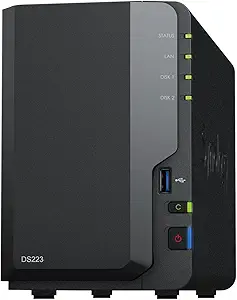 | Best for Solo Developer Setups | Drive bays: 2 (diskless) | Backup targets: Cloud, external drives, Macs, PCs, mobile | File sharing: Version control supported | VIEW LATEST PRICE | See Our Full Breakdown |
| UGREEN NAS DH2300 2-Bay Personal Network Storage |  | Best Budget Starter Pick | Bays: 2 (drives sold separately) | Maximum capacity: 64 TB | Memory: 4 GB RAM | VIEW LATEST PRICE | See Our Full Breakdown |
| Yxk Zero1 2-Bay Desktop NAS for Home and Personal Storage (Diskless) |  | Best Compact Tinkerer’s Option | Bays: 2 (diskless) | RAM: 4 GB | Networking: 2.5GbE | VIEW LATEST PRICE | See Our Full Breakdown |
| Synology DS225+ 2-Bay Diskless NAS |  | Best Software Ecosystem | Model: DS225+ | Drive Bays: 2 (diskless) | Transfer Speed: 282 MB/s | VIEW LATEST PRICE | See Our Full Breakdown |
| UGREEN NAS DXP4800 Pro 4-Bay Network Attached Storage |  | Best for Homelab Workloads | Processor: Intel Core i3-1315U, 6 cores / 8 threads, up to 4.5GHz | Memory: 8GB DDR5, expandable to 96GB | Drive Bays: 4 HDD bays plus 2 PCIe 4.0 M.2 slots | VIEW LATEST PRICE | See Our Full Breakdown |
| BUFFALO LinkStation 210 2TB 1-Bay NAS with Included Hard Drive |  | Best Plug-and-Play Starter | Capacity: 2TB (drive included) | Drive Bays: 1 | Compatibility: Windows and macOS 15 (Sequoia) and earlier | VIEW LATEST PRICE | See Our Full Breakdown |
| network attached storage for developer | Drive Bays | Warranty |
|---|---|---|
| UGREEN DXP2800 2-Bay NAS and U | — | — |
| UGREEN DXP4800 GT 4-Bay NAS | 4 SATA; 2 bays also support U.2 NVMe SSDs | — |
| TerraMaster F4-425 Pro 4-Bay N | 4 (diskless) | — |
| Synology DiskStation DS223j 2- | 2 | 2 years |
| UGREEN DXP4800 Pro 4-Bay NAS a | 4 HDD | — |
| UGREEN DXP4800 Plus 4-Bay NAS | — | 2 years |
| Synology DS425+ 4-Bay Diskless | 4 (diskless) | 3 years |
| Synology DS223 2-Bay Diskless | 2 (diskless) | 2 years |
| UGREEN NAS DH2300 2-Bay Person | — | — |
| Yxk Zero1 2-Bay Desktop NAS fo | — | 2 years |
| Synology DS225+ 2-Bay Diskless | 2 (diskless) | 3 years |
| UGREEN NAS DXP4800 Pro 4-Bay N | 4 HDD bays plus 2 PCIe 4.0 M.2 slots | — |
| BUFFALO LinkStation 210 2TB 1- | 1 | 2 years, including hard drive |
More Details on Our Top Picks
UGREEN DXP2800 2-Bay NAS and US3000 12000mAh UPS Bundle
This bundle stands out for solving a problem most NAS buyers ignore until it costs them data: sudden power loss mid-write. Pairing the compact DXP2800 with UGREEN’s US3000 battery means the NAS receives seamless backup power, app-based alerts, and graceful shutdown policies rather than a hard crash. Compared with the Synology DS223j, which offers no bundled power protection at all, this kit makes more sense for developers running long database migrations or container builds overnight. The tradeoff is capacity — two bays caps your expansion, and the ~10 minutes of runtime is enough for a clean shutdown, not for working through an outage. Anyone already running a DXP6800 or DXP8800 is out of luck, since the UPS only supports the listed smaller models.
Pros:- Seamless power transfer prevents corruption during outages
- App-based alerts and configurable NAS shutdown policies
- Automatic restart once electricity returns
- Quiet, compact footprint suits a desk or home office
Cons:- Only about 10 minutes of battery runtime — shutdown only, not continued work
- Two bays limits long-term storage growth
Best for: Developers setting up their first home server who want data protection baked in from day one
Not ideal for: Owners of UGREEN DXP6800 or DXP8800 series NAS units — the bundled UPS is incompatible with them
- NAS Bays:2
- Storage Capacity:Up to 80 TB
- UPS Battery:12000 mAh, about 10 minutes runtime
- Connectivity:Ethernet
- Protection:Power failure, surge, over-charge, over-current, short-circuit
- Compatible NAS Models:DXP2800, DXP4800, DXP4800Plus, DXP480T, DH4300Plus, DH2300
Our verdict“A smart pick for a first home-lab NAS where dirty shutdowns are the biggest realistic risk to your data.”
UGREEN DXP4800 GT 4-Bay NAS
Where most NAS enclosures in this roundup treat Docker as a nice extra, the DXP4800 GT is built around it. The Ryzen Embedded R2514 with four cores and eight threads, memory expandable to 64GB, and dual 10GbE ports make this the strongest choice here for running multiple containers, a VM or two, and still pushing builds across the network fast. Compared with the TerraMaster F4-425 Pro’s dual 5GbE, the aggregate 20Gbps networking here roughly doubles throughput for multi-user workloads. The tradeoffs are real: drives are not included, Plex needs manual Docker setup rather than native support, and the pre-installed memory is non-ECC — you’ll need a compatible upgrade if your workloads demand error-checked RAM. Compared with the DXP4800 Pro bundle, you gain stronger virtualization headroom but lose the bundled battery.
Pros:- Dual 10GbE ports handle fast transfers and concurrent multi-user access
- Expandable memory plus U.2 NVMe and M.2 storage options
- Full support for Docker, virtual machines, and surveillance
- LAN-only account mode suits privacy-focused setups
Cons:- Drives not included, so budget for four disks
- Pre-installed memory is non-ECC; ECC requires an upgrade
Best for: Developers running self-hosted CI runners, virtual machines, and several Docker services simultaneously
Not ideal for: Buyers wanting a plug-and-play media server — Plex requires manual Docker configuration and drives cost extra
- Processor:AMD Ryzen Embedded R2514, 4C/8T, up to 3.70GHz
- Memory:8GB DDR4, expandable to 64GB (non-ECC stock)
- Drive Bays:4 SATA; 2 bays also support U.2 NVMe SSDs
- M.2 Storage:2 slots, up to 16TB total
- Networking:2 × 10GbE, up to 20Gbps aggregate
- Max Capacity:144TB
- Operating System:UGOS Pro
Our verdict“The most capable compute platform in this batch — choose it when your NAS doubles as a homelab server, not just a file dump.”
TerraMaster F4-425 Pro 4-Bay NAS, Intel N305 8-Core, 8GB RAM, Diskless
The F4-425 Pro punches above its price class by combining an 8-core Intel N305, dual 5GbE ports, and — unusually at this tier — three M.2 NVMe slots for cache acceleration. For developers, that cache matters: repeated database reads and container image pulls feel dramatically faster than on an uncached array. Compared with the Synology DS223j’s two bays and 1GbE-class networking, this is a different league for multi-user and throughput-sensitive work. TOS 7 supports Docker and VirtualBox, though the app ecosystem is thinner and rougher than Synology’s DSM, which is the honest tradeoff. It ships diskless, so factor four drives into the real cost, and hardware 4K decoding makes it a credible dual-duty media box alongside your dev storage.
Pros:- Dual 5GbE ports with link aggregation support
- Three M.2 NVMe slots for meaningful cache acceleration
- Docker, VirtualBox, and multiple backup tools included
- Handles 4K streaming via Plex, Emby, and Jellyfin
Cons:- Diskless — drives must be purchased separately
- TOS app ecosystem is smaller and less refined than Synology’s
Best for: Budget-conscious developers who want 4-bay capacity, NVMe caching, and container support without paying premium-brand prices
Not ideal for: Buyers who want the most polished software experience — TOS 7 lags Synology’s DSM in app maturity and polish
- Processor:Intel N305 8-core
- Memory:8GB
- Drive Bays:4 (diskless)
- Ethernet:Dual 5GbE ports
- M.2 Slots:3 NVMe
- Storage Modes:RAID 0/1/5/6/10 and TRAID
- Operating System:TOS 7
- Video Support:Hardware 4K decoding
Our verdict“The best hardware-per-dollar 4-bay here, ideal if you’re comfortable with slightly less polished software in exchange for NVMe caching and 5GbE networking.”
Synology DiskStation DS223j 2-Bay NAS Enclosure (Diskless)
The DS223j earns its place on software, not specs. Its two bays and modest hardware look unremarkable next to the UGREEN DXP2800 bundle, but DSM — Synology’s operating system — is the most polished NAS software available, with painless setup, reliable snapshots, and mature mobile backup apps. For a developer who mostly wants a dependable private Git mirror, Time Machine target, and file sync box, that software maturity matters more than raw throughput. It also handles IP camera recording and remote access without port forwarding headaches. The tradeoffs: it ships diskless, the two-bay ceiling limits growth, and it lacks the 10GbE networking and Docker muscle of the DXP4800 GT — this is a quiet workhorse, not a homelab. A two-year warranty rounds out a low-risk entry point.
Pros:- Best-in-class DSM software with intuitive setup and maintenance
- Reliable backups for computers and mobile devices
- IP camera recording with secure remote access
- Compact, quiet, and energy-efficient
Cons:- Hard drives not included
- Two bays and modest hardware cap future expansion and workloads
Best for: First-time NAS owners who value dead-simple setup and mature backup software over raw performance
Not ideal for: Developers wanting to run containers or VMs — the hardware isn’t built for heavy self-hosted services
- Brand:Synology
- Model:DS223j
- Drive Bays:2
- Drive Status:Diskless
- Warranty:2 years
- Key Features:Private cloud, remote file access, IP camera surveillance
Our verdict“Buy it for the software and simplicity; skip it if your NAS needs to do actual compute work.”
UGREEN DXP4800 Pro 4-Bay NAS and US3000 12000mAh Battery Bundle
This is the most balanced package for a developer who wants performance, capacity, and power protection in one purchase. The Intel Core i3-1315U with 8GB of DDR5 (expandable to 96GB) plus 10GbE networking gives it noticeably more single-threaded snap than the TerraMaster F4-425 Pro, which helps with interactive work like running a dev database on-device. Docker, VMs, four RAID modes, and on-device AI photo organization make it genuinely multi-purpose. And unlike the TerraMaster or Synology options here, it ships with the US3000 battery, so dirty shutdowns are already handled — the same protection the DXP2800 bundle offers, but on a far more capable chassis. Budget honestly, though: drives and any memory expansion come out of your pocket, so the true cost lands well above the sticker.
Pros:- 10GbE plus dual PCIe 4.0 M.2 slots deliver up to 1.25GB/s transfers
- Docker, virtual machines, and four RAID modes supported
- Includes US3000 battery for graceful shutdowns during outages
- Memory expandable to 96GB DDR5 for growing workloads
Cons:- Drives and memory upgrades sold separately, raising the real cost
- UGOS Pro app ecosystem is younger and less mature than Synology DSM
Best for: Developers who want one NAS to handle storage, containers, a VM, and outage protection without separate purchases
Not ideal for: Minimalists who just need file backups — the compute and networking headroom will sit idle and cost extra
- Processor:Intel Core i3-1315U, 6 cores, 8 threads, up to 4.5GHz
- Memory:8GB DDR5, expandable to 96GB
- Drive Bays:4 HDD
- Max Storage:144TB
- M.2 Slots:2 × PCIe 4.0
- Network Ports:10GbE and 2.5GbE
- RAID Modes:0, 1, 5, 10
- Bundle:US3000 12000mAh battery included
Our verdict“The most complete single-purchase setup in this batch — strong hardware, fast networking, and battery backup together make it the easy default for a serious home dev server.”
UGREEN DXP4800 Plus 4-Bay NAS
This is the option that takes Docker and virtual machines seriously without demanding a rack in a closet. With an Intel 5-core CPU, 8 GB of DDR5 RAM, and a 128 GB internal SSD for caching, the DXP4800 Plus can actually run containerized services — a Git mirror, a CI artifact cache, a local registry — rather than just advertising the capability. Compared with the Synology DS425+, which leans on polished software but ships with a lighter hardware story, this model’s 10GbE port and 10Gbps USB give it a clear edge when moving large build artifacts or datasets. The tradeoff is that drives cost extra, real-world throughput still depends on your disk choices, and there’s no Wi-Fi, so plan for wired runs to your switch.
Pros:- Docker and virtual machine support backed by an Intel 5-core CPU and 8 GB DDR5 RAM
- 10GbE plus 10Gbps USB connectivity for fast large-file transfers
- 128 GB internal SSD for responsive system and cache performance
- Up to 144 TB of capacity with RAID, encryption, and remote access
Cons:- Drives are sold separately, adding meaningful cost to the total build
- No Wi-Fi support — strictly wired Ethernet
- Real transfer speeds depend heavily on drive choice and file sizes
Best for: Developers who want to self-host Docker containers and VMs for CI caches, registries, and Git mirrors on fast networking
Not ideal for: Buyers wanting a plug-and-play experience — drives, wired Ethernet, and some hands-on setup are all required
- Bays:4
- Maximum capacity:144 TB (drives sold separately)
- Processor:Intel 5-core CPU
- Memory:8 GB DDR5 + 128 GB SSD cache
- Networking:1x 10GbE, 1x 2.5GbE
- Features:Docker, VMs, RAID, encryption, 4K HDMI
- Warranty:2 years
Our verdict“The strongest pick here for developers whose NAS needs to do real compute work, not just serve files.”
Synology DS425+ 4-Bay Diskless NAS Media Server
Synology’s real product is its software, and the DS425+ is where that maturity pays off for a developer who values reliability over raw specs. Snapshot technology, automated backups, and granular access controls mean your code repositories and shared team folders stay protected and restorable at a moment’s notice. Compared with the UGREEN DXP4800 Plus, transfer speeds top out around 278 MB/s rather than 10GbE-class throughput, and there’s no Docker-first pitch — but DSM’s package ecosystem and its support for up to 30 IP cameras make it a broader all-rounder. The 3-year warranty also beats most competitors here by a full year, which matters for hardware you’ll depend on daily.
Pros:- Mature DSM software with snapshots, access controls, and automated backups
- Up to 30 IP camera licenses for surveillance
- 3-year warranty, longer than most rivals in this lineup
- Handles 10+ concurrent users comfortably for shared team storage
Cons:- Ships diskless, so budget for four drives
- Transfer speed caps around 278 MB/s — no 10GbE option
Best for: Developers and small teams who prioritize polished, dependable software and strong data protection over maximum hardware specs
Not ideal for: Anyone needing 10GbE-class throughput or heavy VM workloads — the hardware ceiling is modest here
- Drive bays:4 (diskless)
- Transfer speed:Up to 278 MB/s
- Concurrent users:10+
- IP cameras:Up to 30
- Key features:RAID, snapshots, automated backups
- Warranty:3 years
Our verdict“The safest long-term choice if polished software and data protection matter more than cutting-edge hardware.”
Synology DS223 2-Bay Diskless NAS for Home and Office
The DS223 strips the Synology experience down to its essentials: two bays, the same DSM software, and a price that makes sense when your NAS is a personal backup target and file hub rather than a team server. What makes it interesting for developers specifically is file versioning on shared projects — a lightweight safety net alongside Git for assets, binaries, and documents that don’t belong in a repository. Compared with the Synology DS425+, you give up two bays of expandability and camera headroom, but the software experience is identical. Against the Yxk Zero1, it trades raw 2.5GbE speed for a far more established ecosystem, which is the better bet for long-term reliability.
Pros:- Full DSM software including version control on shared projects
- Automated backups to cloud, external drives, Macs, PCs, and mobile devices
- Surveillance features with motion alerts and remote viewing included
- Same mature Synology ecosystem as larger models at a lower entry point
Cons:- Only two bays caps capacity and RAID options early
- Diskless — drives add to the upfront cost
Best for: Solo developers or freelancers who want reliable centralized backups and file versioning without paying for four bays
Not ideal for: Growing teams or anyone planning heavy expansion — two bays limit both capacity and RAID flexibility
- Drive bays:2 (diskless)
- Backup targets:Cloud, external drives, Macs, PCs, mobile
- File sharing:Version control supported
- Surveillance:Motion alerts, recording schedules, remote viewing
- Warranty:2 years
Our verdict“A low-risk entry into Synology’s ecosystem for individual developers who mostly need dependable backups.”
UGREEN NAS DH2300 2-Bay Personal Network Storage
For a developer who just wants a no-frills private backup box, the DH2300 covers the fundamentals: automatic backups across desktops, laptops, phones, and tablets, plus AI photo organization and two-factor authentication at an accessible price. It accepts up to 64 TB of drives, which is generous for a two-bay personal unit. The limits are real, though — 1GbE networking caps transfers at around 125 MB/s, and there’s no Docker or VM support at all, which puts it in a different category from the Yxk Zero1, another 2-bay unit that manages 2.5GbE and containers for a bit more capability. If your NAS is purely a backup and media target rather than a homelab node, those omissions won’t hurt.
Pros:- Automatic backups across desktops, laptops, phones, and tablets
- AI-powered photo search and organization
- Up to 64 TB capacity with HDD or SSD support
- RAID modes and two-factor authentication included
Cons:- 1GbE networking limits real transfers to roughly 125 MB/s
- No Docker, virtual machines, or Wi-Fi support
- Explicitly unsuitable for server-style workloads
Best for: First-time buyers who want simple automatic backups and photo organization without homelab ambitions
Not ideal for: Tinkerers and homelab developers — no Docker, no VMs, no Wi-Fi, and 1GbE caps every transfer
- Bays:2 (drives sold separately)
- Maximum capacity:64 TB
- Memory:4 GB RAM
- Networking:1GbE Ethernet, no Wi-Fi
- Transfer speed:Up to 125 MB/s
- Containers/VMs:Not supported
Our verdict“A solid, affordable first NAS if backups matter more than build tooling.”
Yxk Zero1 2-Bay Desktop NAS for Home and Personal Storage (Diskless)
The Yxk Zero1 squeezes a surprising amount into a 2 kg desktop chassis: 2.5GbE networking, Docker support, snapshot recovery, and flexible RAID modes. For a developer wanting a small homelab-adjacent box — hosting a few containers, serving files, running backups — it undercuts the bigger four-bay options on footprint and complexity. Against the UGREEN DH2300, the Zero1’s 2.5GbE port and Docker support make it far more capable, though its 4 GB of RAM and two-bay ceiling mean it can’t approach the UGREEN DXP4800 Plus for serious containerized workloads. Snapshot recovery is a genuine highlight at this size, giving you point-in-time restore for shared folders. The main caveat is brand maturity: software updates and long-term support are less proven than Synology’s track record.
Pros:- 2.5GbE networking for noticeably faster transfers than 1GbE rivals
- Docker support and snapshot recovery rare at this size and price
- Compact 2 kg chassis with 4K HDMI output
- Cross-platform apps for Windows, macOS, iOS, Android, and web
Cons:- Only 4 GB RAM and two bays limit container and capacity headroom
- Newer brand with a less proven software update track record than Synology
Best for: Space-constrained tinkerers who want Docker and 2.5GbE speeds in a small, affordable two-bay box
Not ideal for: Buyers who want a proven software ecosystem and multi-year support pedigree — this is a newer, less established platform
- Bays:2 (diskless)
- RAM:4 GB
- Networking:2.5GbE
- Video output:4K HDMI
- Key features:Docker, RAID modes, snapshots, encryption
- Weight:2 kg
- Warranty:2 years
Our verdict“The most capable small-footprint option for light container work — as long as you accept a less established platform.”
Synology DS225+ 2-Bay Diskless NAS
What separates the DS225+ from hardware-flashier picks like the UGREEN DXP4800 Pro is DSM, Synology’s operating system. For a developer, that software layer is the product: Snapshots, Btrfs file integrity, container support, and rock-solid scheduled backups behave like infrastructure, not consumer gadgets. This model stands out for anyone who wants their NAS to quietly mirror a homelab build server or hold Time Machine and rsync targets without babysitting. Compared with the Synology DS223, the DS225+ trades a higher price for stronger hardware and a longer three-year warranty. The tradeoffs are real, though: two bays cap you at mirroring, drives are not included, and raw transfer speed trails UGREEN’s 10GbE machines by a wide margin.
Pros:- Synology DSM offers the most mature software ecosystem in the roundup
- Btrfs snapshots give near-instant rollback for botched deploys or deleted files
- 3-year warranty beats the typical 2-year coverage on budget units
- 282 MB/s transfer speed handles multi-device backup traffic comfortably
Cons:- Diskless — you must budget for two drives on top of the enclosure
- Only two bays, so capacity and redundancy options are limited
- Gigabit-class networking caps large repository and VM image transfers
Best for: Developers who want the most polished, low-maintenance NAS software for backups, containers, and snapshot-based versioning
Not ideal for: Anyone needing 10GbE throughput or more than two drives — the UGREEN DXP4800 Pro covers both for similar money
- Model:DS225+
- Drive Bays:2 (diskless)
- Transfer Speed:282 MB/s
- Surveillance Support:Up to 30 IP cameras
- Key Features:Automated backups, RAID redundancy, snapshot technology
- Warranty:3 years
Our verdict“Buy it if you value software reliability and snapshots over raw speed; skip it if you need multi-gig networking.”
UGREEN NAS DXP4800 Pro 4-Bay Network Attached Storage
The DXP4800 Pro is the closest thing in this lineup to a small server you’d actually run CI jobs on. A 6-core Intel Core i3-1315U, DDR5 memory expandable to 96GB, and dual 10GbE and 2.5GbE ports mean Docker containers, virtual machines, and large artifact transfers all fit comfortably. Compared with the TerraMaster F4-425 Pro, it pulls ahead on networking and M.2 expansion; compared with the Synology DS225+, it wins on raw power while losing on software polish — UGOS Pro is improving but still less proven than DSM. The capacity ceiling of 144TB across four HDDs and two PCIe 4.0 SSD slots makes cache or scratch-volume configurations viable. Just remember the listed maximums assume upgrades you pay for separately.
Pros:- Core i3-1315U with 6 cores and 8 threads runs Docker and VMs without strain
- 10GbE plus 2.5GbE ports enable fast artifact and image transfers
- Memory expandable to 96GB for serious virtualization workloads
- Two PCIe 4.0 M.2 slots support SSD caching or fast scratch volumes
Cons:- Reaching the 144TB maximum requires buying drives and memory separately
- UGOS Pro software is younger and less battle-tested than Synology’s DSM
- Overkill in both price and capability for basic home file storage
Best for: Developers running Docker services, VMs, and multi-gig networks who want workstation-class hardware in a NAS chassis
Not ideal for: Buyers who just want simple file backups — the Buffalo LinkStation 210 does that for far less complexity and cost
- Processor:Intel Core i3-1315U, 6 cores / 8 threads, up to 4.5GHz
- Memory:8GB DDR5, expandable to 96GB
- Drive Bays:4 HDD bays plus 2 PCIe 4.0 M.2 slots
- Maximum Capacity:144TB
- Network:10GbE and 2.5GbE ports
- Transfer Speed:Up to 1.25 GB/s
- RAID Options:RAID 0, 1, 5, 10
- OS & Features:UGOS Pro with Docker, VMs, on-device AI photo recognition
Our verdict“The pick for developers who treat a NAS as a homelab server, provided they accept less mature software.”
BUFFALO LinkStation 210 2TB 1-Bay NAS with Included Hard Drive
Most picks in this roundup arrive diskless and expect assembly; the LinkStation 210 shows up with a 2TB drive installed and working backup software. That makes it the least intimidating entry point for a developer who wants a network target for laptop backups tonight, not a weekend project. Compared with the Synology DS223j, you give up expandability, snapshots, and container support entirely — but you also skip drive shopping and RAID configuration. Security basics are covered with folder-level access controls and SSL-encrypted transfers, and the closed-system design reduces attack surface. The single bay is the hard limit: one drive failure means restoring from elsewhere, and 2TB fills fast with repositories, node_modules archives, and VM images.
Pros:- Hard drive included, so it works minutes after unboxing
- Bundled backup software with automated PC backup for Windows and macOS
- Subscription-free personal cloud access to your files remotely
- Folder access controls and SSL encryption cover basic security
Cons:- Single bay means zero redundancy — a drive failure loses everything on it
- 2TB capacity is tight for development VM images and large repositories
- macOS support stops at version 15 and earlier
Best for: Students and junior developers who want a zero-setup network backup drive out of the box
Not ideal for: Anyone storing irreplaceable data — a single bay offers no redundancy, unlike the DS225+’s mirrored pair
- Capacity:2TB (drive included)
- Drive Bays:1
- Compatibility:Windows and macOS 15 (Sequoia) and earlier
- Security:Closed system, SSL-encrypted file transfers, folder access controls
- Software:NAS Navigator utility and PC backup software
- Support:24/7 US-based support
- Warranty:2 years, including hard drive
Our verdict“The simplest way to get networked backups running immediately, as long as you keep a second copy elsewhere.”

How We Picked
I evaluated each NAS through a developer’s lens rather than a general home-user one. The criteria that mattered most: CPU and RAM headroom for running Docker containers, VMs, or self-hosted services; operating system maturity, meaning how good the package center, community support, and update cadence are; drive-bay configuration and expandability, since RAID options and future capacity directly affect long-term cost; and ecosystem lock-in, including whether the platform allows third-party OS installation or custom software.
Ranking also reflected practical realities: bundled UPS units scored well because power protection is often skipped by buyers, and single-bay or underpowered models dropped to the bottom because they fail the core developer use case of running services, not just storing files. Value was judged on hardware-per-dollar within each tier, not sticker price alone — a cheaper 2-bay that needs replacing in a year costs more than a 4-bay that scales with your projects.
Factors to Consider When Choosing Network Attached Storage For Developers
Before picking a specific model, it helps to understand the broader decisions that shape a developer NAS purchase — mistakes here cost far more than picking the wrong brand.RAM and CPU Determine What Your NAS Actually Is
The single biggest mistake developers make is treating a NAS as a storage box and nothing more. With 8GB of RAM and a multi-core x86 chip — like the Intel N305 models in this lineup — a NAS becomes a lightweight server that runs Git mirrors, CI runners, databases, and monitoring dashboards. ARM-based or low-RAM units can share files fine but choke the moment you schedule three containers and a nightly backup job at once. Check whether RAM is soldered or user-upgradable before buying; a model with upgradeable memory extends your useful lifespan by years. Also verify CPU virtualization support if you ever want to run VMs, since several budget models omit it.
Two Bays Is a Trap for Growing Projects
A 2-bay NAS forces you into RAID 1, meaning half your raw capacity becomes redundant copy. That math works for backups, but developers often want the same box to hold media, datasets, container volumes, and archives — and a mirrored 2-bay fills up fast. Four bays lets you run RAID 5 or RAID 10, giving you both more usable capacity and better redundancy per terabyte. The common regret pattern: buy 2-bay, fill it in 14 months, then face a full re-platform. If budget forces a 2-bay choice, at least pick one with USB expansion or a clear upgrade path, and size your drives aggressively from day one.
Software Ecosystem Matters More Than Specs
Hardware gets the headlines, but the operating system determines your daily experience. Synology’s DSM has years of mature packages, first-party tools, and an enormous troubleshooting community — invaluable when a container misbehaves at midnight. UGREEN’s UGOS Pro is newer and less battle-tested, though the hardware is often open enough to install alternative operating systems, which some developers prefer. TerraMaster’s TOS has improved but still trails both. Before buying, browse the package catalog and community forums for your must-have tools. The best spec sheet in the world cannot compensate for an OS you fight against.
Power Protection Is Not Optional
A NAS writes to disk constantly — RAID scrubbing, snapshots, database flushes — and a sudden power cut mid-write can corrupt a volume that took days to build. Two bundles in this lineup ship with battery backups precisely because of this, and that should push buyers without any UPS to treat one as part of the purchase price. Size the UPS to cover the NAS plus networking gear, and confirm it supports clean-shutdown signaling so the NAS parks itself safely rather than simply riding out the outage. Developers hosting anything irreplaceable — source mirrors, unrecoverable datasets — should consider this the cheapest insurance in the entire setup.
Drives, Licensing, and the Hidden Total Cost
Most of these units ship diskless, and the drives often cost more than the enclosure. Avoid desktop drives in a NAS: they lack vibration tolerance for multi-bay chassis and drop error-resilience features meant for 24/7 operation. Budget for NAS-rated drives and remember that RAID is not backup — plan for a separate offsite or cloud tier for anything critical. Also check licensing quirks: some platforms restrict advanced features, app installs, or OS replacement by model tier. Comparing enclosures alone understates real cost by 50-100% once drives, a UPS, and possibly a second backup target enter the picture.
Match the Platform to Your Workflow, Not the Reviews
A developer who wants turnkey packages with minimal maintenance has different needs from one who plans to flash a custom OS and script everything from day one. The former benefits from Synology’s polish; the latter often prefers UGREEN’s capable hardware as a foundation for whatever software they choose. If your NAS will sit in a bedroom or office, noise from fans and drive vibration matters more than a benchmark score. And if you travel or work across sites, prioritize models with strong remote-access and sync tooling rather than raw throughput. The right pick is the one whose weaknesses you will never actually hit.
Frequently Asked Questions
Can a NAS realistically replace a dedicated home server for development work?
For many workflows, yes — but with clear limits. A 4-bay unit with an Intel N305-class CPU and 8GB+ of RAM handles Docker containers, lightweight databases, Git hosting, and reverse proxies comfortably. Where it falls short is sustained compilation, heavy virtualization, or GPU-dependent work, since NAS CPUs are tuned for efficiency rather than burst performance. The pragmatic approach many developers take is hybrid: the NAS holds storage, backups, and low-traffic services, while a separate machine or cloud runner handles compute-heavy builds. If you plan to consolidate everything onto one box, prioritize models with upgradeable RAM and strong CPU cooling.
Is UGREEN’s operating system good enough for developers, or should I stick with Synology?
UGREEN’s UGOS Pro has matured quickly and covers containers, snapshots, and file sharing well, but Synology’s DSM still leads on package variety, documentation, and community troubleshooting depth. The deciding factor is your tolerance for friction: if you want a tool that just works and has an answer for every problem on a forum, Synology earns its premium. If you are comfortable installing alternative operating systems or working around rougher edges, UGREEN’s stronger hardware per dollar becomes hard to ignore. Several UGREEN models in this lineup are popular targets for custom OS installs, which sidesteps the stock software question entirely.
How much usable storage will I actually get from a 2-bay versus a 4-bay NAS?
A 2-bay NAS in RAID 1 gives you exactly 50% of raw capacity — two 8TB drives yield 8TB usable. A 4-bay in RAID 5 yields roughly 75% — four 8TB drives give you about 24TB usable while surviving one drive failure. That difference compounds when you add container images, datasets, and versioned backups, all of which grow faster than people expect. There is also an expansion argument: a 4-bay can absorb larger drives later, while a full 2-bay often forces a full replacement cycle. If your data includes anything you generate rather than download, the 4-bay math usually wins within two years.
Do I really need the UPS bundles, or can I add a battery backup later?
You can always add one later, but in practice most buyers never do — which is exactly why the bundles exist. A battery backup’s job is not to keep the NAS running through an outage; it is to trigger a clean shutdown so an in-flight write or RAID rebuild does not corrupt the volume. If you buy separately, confirm the UPS supports USB signaling compatible with your NAS platform, because a dumb UPS that just keeps the power on can cause more harm than a straight outage by extending the risky window. Bundled units remove that compatibility guesswork. Treat this as roughly the cost of one hard drive protecting all of them.
Are budget options like the Buffalo LinkStation or Yxk Zero1 viable for any developer use case?
Honestly, only the narrowest ones. The LinkStation 210 is a single-bay unit with a preinstalled drive and no redundancy, which makes it suitable as a scratch target or secondary backup tier — never as your primary storage. The Yxk Zero1 can share files but lacks the software ecosystem, CPU headroom, and community support that make a NAS useful beyond storage. Where budget models do fit: archiving rarely-touched artifacts, offloading media, or acting as an air-gapped copy of important data. If development workloads are even remotely on your roadmap, spending modestly more on an Intel-based 2-bay from an established brand pays for itself the first time you need to run a container.
Conclusion
The right choice comes down to what you plan to run, not just store. For best overall, the UGREEN DXP4800 GT balances capable hardware, four bays, and a platform flexible enough for serious self-hosting. For best value, the UGREEN DXP2800 bundle delivers a functional 2-bay plus battery backup at an accessible price. For best premium, the Synology DS425+ justifies its cost with DSM’s unmatched package ecosystem and long-term support cadence. Beginners should start with the Synology DS223 or DS223j — forgiving, well-documented, and hard to break. For specific needs: home-lab tinkerers who want to flash custom operating systems get the most from the TerraMaster F4-425 Pro or UGREEN DXP4800 Plus; compact-desk setups fit the UGREEN DH2300; and anyone wanting a zero-setup secondary backup tier can grab the Buffalo LinkStation 210. Match the pick to your workflow, budget for NAS-rated drives and power protection, and the NAS you buy today will still be earning its keep years from now.
Evergreen bestsellers Picks
bestsellers
As an affiliate, we earn on qualifying purchases.