

For teams comparing continuous integration platforms, my best overall pick in this roundup is Automating DevOps with GitLab CI/CD Pipelines, which centers on an integrated pipeline workflow. GitHub Actions in Action is a strong choice for GitHub-centered teams, while Continuous Delivery with Docker and Jenkins suits readers working with Jenkins and containerized applications. The main tradeoff is between learning a platform tied to your existing source-control ecosystem and building broader skills that transfer across tools. These 13 books and guides vary from beginner introductions to cloud, security, and Kubernetes-focused material. Read on for the full breakdown and guidance on choosing a resource that matches your pipeline and experience level.

Get business pricing on monitors, keyboards and dev gear
- Business-only prices and quantity discounts
- Tax-exempt purchasing
- Multiple users, one account, clear invoices
Key Takeaways
- GitLab CI/CD and GitHub Actions lead the platform-specific choices: their focused material is the clearest fit when your organization has already committed to one of those ecosystems.
- GitHub resources are not interchangeable: the beginner-oriented Practical CI/CD is aimed at first pipelines, while GitHub Actions in Action offers a more targeted route into automation and delivery.
- Jenkins remains a distinct learning path: the Docker and Jenkins guide is more relevant to teams operating Jenkins than broader platform-agnostic delivery titles.
- Cloud and Kubernetes subjects call for specialized reading: The Cloud DevOps Engineer’s Guide and GitOps and Kubernetes address delivery concerns that general CI/CD primers may not cover in enough depth.
- Several titles teach delivery practice rather than a single platform: Continuous Delivery Pipelines and Fundamentals of DevOps and Software Delivery are better matches for readers seeking process and production context.
| CI/CD Pipelines with GitHub Actions: Automate Builds, Tests, and Deployments |  | Best for a Focused GitHub Actions Introduction | Format: Not provided | Platform focus: GitHub Actions | Build automation: Covered | VIEW LATEST PRICE | See Our Full Breakdown |
| CI/CD as a Control System: Designing Cloud, DevOps, and DevSecOps Platforms for Scale, Stability, and Autonomous Delivery |  | Best for Platform Architecture and Scale | Format: Not provided | Subject: CI/CD platform design | Design framing: CI/CD as a control system | VIEW LATEST PRICE | See Our Full Breakdown |
| Azure DevOps for Beginners: Implement Continuous Integration and Delivery |  | Best for Azure DevOps Beginners | Format: Book | Platform focus: Azure DevOps | Intended level: Beginner | VIEW LATEST PRICE | See Our Full Breakdown |
| GitHub Actions in Action: Continuous Integration and Delivery for DevOps | 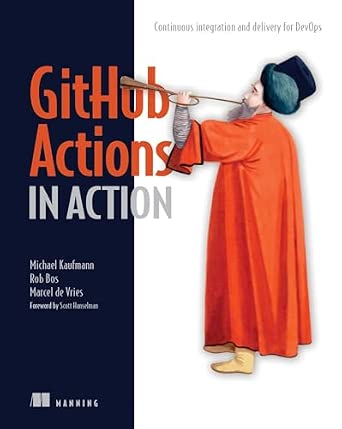 | Best for GitHub Actions and DevOps Workflows | Format: Book | Platform focus: GitHub Actions | Continuous integration: Covered | VIEW LATEST PRICE | See Our Full Breakdown |
| Automating DevOps with GitLab CI/CD Pipelines |  | Best for GitLab Pipeline Security and Verification | Format: Book | Platform focus: GitLab CI/CD | Pipeline development: Covered | VIEW LATEST PRICE | See Our Full Breakdown |
| Continuous Delivery with Docker and Jenkins: Create Secure Applications by Building Complete CI/CD Pipelines, 3rd Edition |  | Best for Docker-and-Jenkins Pipeline Depth | Edition: 3rd Edition | Format: Book | Primary topics: Docker, Jenkins, CI/CD, continuous delivery, application security | VIEW LATEST PRICE | See Our Full Breakdown |
| Practical CI/CD: Building CI/CD Pipelines with GitHub for Beginners |  | Best for GitHub CI Beginners | Format: Book | Primary topic: CI/CD pipelines | Platform focus: GitHub | VIEW LATEST PRICE | See Our Full Breakdown |
| Fundamentals of DevOps and Software Delivery: A Hands-On Guide to Deploying and Managing Software in Production |  | Best for Production Delivery Context | Format: Book | Primary subject: DevOps and software delivery | Approach: Hands-on guide | VIEW LATEST PRICE | See Our Full Breakdown |
| Continuous Deployment: Enable Faster Feedback, Safer Releases, and More Reliable Software |  | Best for Release-Outcome Perspective | Format: Not specified in provided data | Stated subject: Continuous deployment | Named outcome: Faster feedback | VIEW LATEST PRICE | See Our Full Breakdown |
| The Cloud DevOps Engineer’s Guide: Build, Automate, Secure, and Scale Cloud-Native CI/CD Pipelines |  | Best for Cloud-Native Pipeline Scaling | Format: Book | Primary focus: Cloud-native CI/CD pipelines | Pipeline activities: Build, automate, secure, and scale | VIEW LATEST PRICE | See Our Full Breakdown |
| GitOps and Kubernetes: Continuous Deployment with Argo CD, Jenkins X, and Flux |  | Best for Kubernetes GitOps | Format: Book | Primary subject: GitOps | Workflow focus: Continuous deployment | VIEW LATEST PRICE | See Our Full Breakdown |
| Continuous Delivery Pipelines: How to Build Better Software Faster |  | Best for Pipeline Improvement | Format: Book | Primary subject: Continuous delivery pipelines | Stated goal: Help teams produce software more effectively | VIEW LATEST PRICE | See Our Full Breakdown |
| Continuous Integration (CI) and Continuous Delivery (CD): A Practical Guide to Designing and Developing Pipelines |  | Best for Pipeline Design Fundamentals | Format: Book | Primary subject: Continuous integration and continuous delivery | Stated approach: Practical guide | VIEW LATEST PRICE | See Our Full Breakdown |
| continuous integration platform | Format |
|---|---|
| CI/CD Pipelines with GitHub Ac | Not provided |
| CI/CD as a Control System: Des | Not provided |
| Azure DevOps for Beginners: Im | Book |
| GitHub Actions in Action: Cont | Book |
| Automating DevOps with GitLab | Book |
| Continuous Delivery with Docke | Book |
| Practical CI/CD: Building CI/C | Book |
| Fundamentals of DevOps and Sof | Book |
| Continuous Deployment: Enable | Not specified in provided data |
| The Cloud DevOps Engineer’s Gu | Book |
| GitOps and Kubernetes: Continu | Book |
| Continuous Delivery Pipelines: | Book |
| Continuous Integration | Book |
More Details on Our Top Picks
CI/CD Pipelines with GitHub Actions: Automate Builds, Tests, and Deployments
This guide centers on GitHub Actions and the core CI/CD sequence of automating builds, tests, and deployments. That narrow scope is useful for readers who want to connect repository changes with repeatable delivery tasks rather than compare several platforms. Compared with GitHub Actions in Action: Continuous Integration and Delivery for DevOps, its description presents a more direct focus on the basic pipeline stages, while the other title signals a wider DevOps framing. The tradeoff is limited detail about depth, examples, prerequisites, or coverage of security and scaling. I would choose it as a starting point for a GitHub-based workflow, not as a platform-selection guide or a reference for advanced delivery architecture.
Pros:- Focuses specifically on GitHub Actions rather than spreading attention across CI platforms.
- Covers the core build, test, and deployment stages of a pipeline.
- A direct subject match for readers automating delivery from GitHub repositories.
Cons:- Available product details do not establish the book’s technical depth or level of hands-on instruction.
- No stated coverage of security, platform scaling, or alternatives to GitHub Actions.
Best for: Developers who already keep code on GitHub and want an introduction to automating builds, tests, and deployments with GitHub Actions.
Not ideal for: Teams comparing multiple CI platforms or seeking documented coverage of security, scaling, and advanced workflow design; the available description does not establish that scope.
- Format:Not provided
- Platform focus:GitHub Actions
- Build automation:Covered
- Test automation:Covered
- Deployment automation:Covered
- CI/CD focus:Continuous integration and deployment
Our verdict“Choose this for a focused introduction to GitHub Actions pipeline stages, but look elsewhere for documented advanced or cross-platform guidance.”
CI/CD as a Control System: Designing Cloud, DevOps, and DevSecOps Platforms for Scale, Stability, and Autonomous Delivery
This is the most architecture-oriented option in this group: it frames CI/CD as a control system and addresses platform scale, stability, and autonomous delivery across cloud, DevOps, and DevSecOps. That makes it a different kind of choice from Azure DevOps for Beginners, which is explicitly aimed at getting newcomers started with one platform. Here, the appeal is the broader design perspective, especially for readers responsible for how delivery systems behave across teams. The tradeoff is that the description does not identify specific platform tutorials, implementation exercises, or prerequisites, so it may not help someone configure a first pipeline. I would favor it for systems-level thinking, not for a step-by-step tool walkthrough.
Pros:- Treats CI/CD as a platform-design problem rather than only a sequence of pipeline tasks.
- Connects cloud, DevOps, and DevSecOps concerns.
- Explicitly addresses scale, stability, and autonomous delivery.
Cons:- The supplied description does not name specific CI tools or platforms.
- No details confirm hands-on exercises, implementation examples, or the intended experience level.
Best for: Engineering leaders, platform engineers, and experienced DevOps practitioners designing CI/CD systems for scale, stability, or autonomous delivery.
Not ideal for: Newcomers seeking a guided first pipeline or practitioners who need a clearly specified tutorial for a particular CI platform.
- Format:Not provided
- Subject:CI/CD platform design
- Design framing:CI/CD as a control system
- Cloud coverage:Covered
- DevOps coverage:Covered
- DevSecOps coverage:Covered
- Named goals:Scale, stability, and autonomous delivery
Our verdict“Pick this for broad CI/CD platform architecture and scale concerns, not for a beginner’s tool-specific setup guide.”
Azure DevOps for Beginners: Implement Continuous Integration and Delivery
For someone new to CI/CD inside the Microsoft ecosystem, this title makes its audience and platform clear: it is a beginner-focused guide to Azure DevOps and continuous integration and delivery. That specificity gives it a different starting point from CI/CD Pipelines with GitHub Actions: Automate Builds, Tests, and Deployments, which targets GitHub’s automation system instead. The right pick depends less on which platform sounds more capable and more on where your repositories and development tools already live. Its tradeoff is the thin available description: it does not spell out particular Azure services, pipeline examples, or deployment scenarios. I would treat it as an entry point for Azure DevOps learners, while experienced engineers may need a more detailed reference.
Pros:- Names Azure DevOps as its platform focus, helping readers match the guide to their existing environment.
- Explicitly targets beginners rather than assuming advanced CI/CD experience.
- Covers both continuous integration and continuous delivery.
Cons:- The supplied description does not identify specific pipeline tasks, examples, or Azure services.
- Its platform-specific focus offers little stated help for teams evaluating other CI systems.
Best for: Developers and IT learners who are new to CI/CD and expect to build or maintain pipelines with Azure DevOps.
Not ideal for: Experienced platform engineers seeking detailed architecture guidance, or teams committed to GitHub Actions, GitLab, or another CI platform.
- Format:Book
- Platform focus:Azure DevOps
- Intended level:Beginner
- Continuous integration:Covered
- Continuous delivery:Covered
- Subject:Implementing CI/CD
Our verdict“Choose this as a beginner-oriented Azure DevOps starting point if that is the platform your team plans to use.”
GitHub Actions in Action: Continuous Integration and Delivery for DevOps
This book pairs GitHub Actions with a broader DevOps context, making it a stronger apparent fit for readers who want to understand how CI and delivery workflows connect to team practices. By comparison, CI/CD Pipelines with GitHub Actions: Automate Builds, Tests, and Deployments is described around the core automation stages, so its emphasis sounds more direct and task-focused. The distinction matters: choose this title when the DevOps framing is part of your learning goal, and the companion title when a concise focus on build-test-deploy automation is the priority. The available description does not confirm particular integrations, security topics, or exercise depth, so advanced buyers should check the book’s detailed contents before relying on it as a technical reference.
Pros:- Focuses on GitHub Actions, giving readers a clear platform-specific scope.
- Covers continuous integration and delivery workflows.
- Explicitly connects pipeline use with DevOps practices.
Cons:- The available description does not specify the book’s technical level or hands-on exercise coverage.
- No stated detail confirms coverage of security, scaling, or integrations.
Best for: Developers and DevOps practitioners who use GitHub Actions and want to connect CI/CD workflows with broader DevOps practices.
Not ideal for: Readers seeking a clearly documented advanced reference on security, platform architecture, or specific integrations not stated in the product details.
- Format:Book
- Platform focus:GitHub Actions
- Continuous integration:Covered
- Continuous delivery:Covered
- DevOps context:Covered
- Subject:Building CI/CD workflows
Our verdict“Pick this over a basic automation-focused guide when you want GitHub Actions presented in a broader DevOps workflow context.”
Automating DevOps with GitLab CI/CD Pipelines
GitLab is the defining choice here, and this guide stands out for linking pipeline development with code verification, security, and deployment. That makes it a distinct alternative to the two GitHub Actions books in this batch: choose this one when GitLab is already your team’s platform and you want those pipeline concerns treated together. The description also mentions real-life examples, which may help readers connect the topics to practical workflows, though it does not specify their scope or technical depth. Its main limitation is platform commitment: guidance centered on GitLab may transfer only partly to teams using GitHub Actions or Azure DevOps. I would favor it for GitLab users whose pipeline goals include verification and security, not for cross-platform comparison.
Pros:- Centers on GitLab CI/CD pipelines.
- Connects pipeline building with code verification, security, and deployment.
- The description identifies real-life examples as part of the guide.
Cons:- Its platform-specific approach may not map directly to GitHub Actions or Azure DevOps workflows.
- The supplied details do not establish the examples’ depth or the book’s intended experience level.
Best for: Developers and DevOps teams using GitLab who want to build pipelines that cover code verification, security, and deployment.
Not ideal for: Teams choosing between CI platforms or working primarily with GitHub Actions or Azure DevOps, since the guide is GitLab-focused.
- Format:Book
- Platform focus:GitLab CI/CD
- Pipeline development:Covered
- Code verification:Covered
- Security:Covered
- Deployment:Covered
- Examples:Real-life examples
Our verdict“Choose this for GitLab-specific pipeline work that brings verification, security, and deployment into the same workflow.”
Continuous Delivery with Docker and Jenkins: Create Secure Applications by Building Complete CI/CD Pipelines, 3rd Edition
This book is the most implementation-focused choice here for readers building delivery workflows around Docker and Jenkins. Its stated coverage of complete CI/CD pipelines and application security gives it a more specific remit than Fundamentals of DevOps and Software Delivery, which centers on production deployment and management. That focus can help teams connect container-based builds with security-minded delivery practices rather than treating CI as a standalone build step. The tradeoff is its named-tool emphasis: readers committed to GitHub Actions or another CI platform may get less direct value, and the supplied details do not establish how current its examples are. I’d choose it for a Jenkins-based environment, not as a neutral survey of CI platforms.
Pros:- Covers complete CI/CD pipelines rather than only isolated build steps
- Pairs Docker with Jenkins for a defined container-and-automation workflow
- Includes application security as part of continuous delivery
- Identifies itself as the third edition
Cons:- Its Docker-and-Jenkins focus may not transfer directly to teams using other CI platforms
- The provided description does not specify supported software versions or the recency of examples
Best for: Developers and platform engineers who need a book focused on Jenkins, Docker, secure applications, and end-to-end CI/CD pipelines.
Not ideal for: Teams standardized on GitHub Actions or another CI system, or readers seeking a tool-neutral comparison of CI platforms.
- Edition:3rd Edition
- Format:Book
- Primary topics:Docker, Jenkins, CI/CD, continuous delivery, application security
- Pipeline focus:Complete CI/CD pipelines
- Security focus:Creating secure applications
- Named CI tool:Jenkins
- Container technology:Docker
Our verdict“Choose this book if your team uses Jenkins and Docker and wants pipeline guidance that includes application security.”
Practical CI/CD: Building CI/CD Pipelines with GitHub for Beginners
Practical CI/CD is the clearest starting point in this group for a reader who is new to pipelines and wants a GitHub-centered introduction. Its beginner positioning separates it from Continuous Delivery with Docker and Jenkins, whose named tools and security focus point toward readers already choosing a particular stack. A GitHub focus can make the learning path more relevant for someone building workflows around GitHub, but the supplied product information does not identify particular tools, lessons, or examples, so I can’t judge how much practical detail the book provides. That limited detail is a real drawback for buyers comparing learning depth. Pick it for a beginner-oriented GitHub focus; skip it if you need a verified, advanced platform reference.
Pros:- Explicitly aimed at beginners
- Centers on building CI/CD pipelines with GitHub
- Its stated scope connects GitHub use with pipeline creation
Cons:- The supplied description does not list specific tools, concepts, or exercises
- No detail is provided about depth, example projects, or coverage beyond the beginner focus
Best for: New developers or small-team maintainers who want an introductory guide to CI/CD pipelines in a GitHub-focused workflow.
Not ideal for: Experienced platform engineers seeking detailed, confirmed coverage of a specific GitHub CI tool, advanced pipeline patterns, or multiple platforms.
- Format:Book
- Primary topic:CI/CD pipelines
- Platform focus:GitHub
- Intended audience:Beginners
- Stated activity:Building CI/CD pipelines
- ISBN/ASIN:B0HFF615CL
Our verdict“Choose this if you are new to CI/CD and want a GitHub-oriented entry point, but seek more detailed material for advanced implementation needs.”
Fundamentals of DevOps and Software Delivery: A Hands-On Guide to Deploying and Managing Software in Production
This guide earns its place for readers who want to understand what CI pipelines feed into: deploying and managing software in production. That broader delivery context distinguishes it from Practical CI/CD, which explicitly targets beginners building GitHub pipelines. The hands-on positioning may suit engineers who need to connect automation with operational software delivery, though the provided description does not name a CI platform or spell out particular exercises. That makes it a weaker choice for someone seeking step-by-step setup instructions for a specific CI service. I’d treat it as a production-delivery companion rather than a direct platform manual: its value is the stated focus on deployment and management, while its limitation is the lack of confirmed platform-specific detail.
Pros:- Focuses on deployment and management of software in production
- Described as a hands-on guide
- Broadens CI learning toward the delivery and operations stages
Cons:- The supplied description does not identify a CI platform or pipeline implementation
- Specific exercises and technical coverage are not detailed in the provided product data
Best for: Software engineers and DevOps practitioners who want hands-on guidance centered on deploying and managing production software alongside CI work.
Not ideal for: Readers who need a specific CI platform tutorial, a clearly identified pipeline tool, or beginner instructions for GitHub workflows.
- Format:Book
- Primary subject:DevOps and software delivery
- Approach:Hands-on guide
- Deployment focus:Deploying software in production
- Operations focus:Managing software in production
- ISBN/ASIN:1098174593
Our verdict“Choose this for production-delivery context that complements CI learning, not as a platform-specific pipeline manual.”
Continuous Deployment: Enable Faster Feedback, Safer Releases, and More Reliable Software
The available title frames this book around the outcomes teams often seek after CI: faster feedback, safer releases, and more reliable software. That makes it a potentially useful companion to Continuous Delivery with Docker and Jenkins, which is explicitly described as covering tools and complete pipelines. Here, however, no description, format, platform, or specific topics are supplied beyond the title, so I can’t verify how the book approaches those outcomes or whether it offers implementation guidance. That uncertainty matters for buyers choosing a CI learning resource: a promise about deployment outcomes is not the same as confirmed coverage of CI platform configuration. I’d shortlist it for release-process interest, but not rely on it as a hands-on guide to a particular CI service.
Pros:- Title directly emphasizes feedback, release safety, and reliability
- Offers a deployment-outcome angle distinct from tool-specific Jenkins and Docker coverage
- May complement a separate CI platform implementation guide
Cons:- No product description or technical contents were provided
- The available data does not identify a platform, format, or implementation approach
Best for: Readers interested in how continuous deployment relates to feedback speed, release safety, and software reliability.
Not ideal for: Buyers seeking verified instructions for configuring a CI platform, since the supplied product data provides no description or tool details.
- Format:Not specified in provided data
- Stated subject:Continuous deployment
- Named outcome:Faster feedback
- Named outcome:Safer releases
- Named outcome:More reliable software
- ISBN/ASIN:B0DB9LT83H
Our verdict“Consider this for its release-outcome focus, but choose a better-documented platform guide if you need actionable CI setup details.”
The Cloud DevOps Engineer’s Guide: Build, Automate, Secure, and Scale Cloud-Native CI/CD Pipelines
This is the strongest fit in this group for engineers whose CI/CD work is shaped by cloud-native delivery at scale. The stated combination of pipeline building, automation, security, and scaling reaches beyond the Docker-and-Jenkins-specific approach of Continuous Delivery with Docker and Jenkins, making this a better match for readers who want a cloud-oriented DevOps perspective rather than a single named toolchain. Still, the supplied description does not identify cloud providers, CI services, or the depth of its implementation examples. That limits its usefulness as a precise platform manual. I’d favor it for a broad cloud-native pipeline agenda, while buyers who need exact instructions for a chosen CI product should confirm the book’s contents before relying on it.
Pros:- Explicitly focuses on cloud-native CI/CD pipelines
- Includes automation and security in its stated scope
- Addresses scaling, which suits teams with growing delivery demands
- Frames pipeline work within DevOps practices
Cons:- The supplied description does not name cloud providers or CI platforms
- No details are provided about example projects or the depth of technical instructions
Best for: Cloud DevOps engineers and platform teams planning to automate, secure, and scale cloud-native CI/CD pipelines.
Not ideal for: Readers who need a beginner tutorial for one named CI service or verified provider-specific setup steps.
- Format:Book
- Primary focus:Cloud-native CI/CD pipelines
- Pipeline activities:Build, automate, secure, and scale
- Related practice:DevOps
- Security coverage:Included in stated scope
- Scaling coverage:Included in stated scope
- ISBN/ASIN:1835461670
Our verdict“Choose this for a cloud-native, scale-aware view of CI/CD, and verify its platform coverage if you need provider-specific guidance.”
GitOps and Kubernetes: Continuous Deployment with Argo CD, Jenkins X, and Flux
This book is the most focused choice here for teams whose CI process feeds a Kubernetes deployment workflow. Its coverage of Argo CD, Jenkins X, and Flux gives readers several ways to connect Git-managed configuration with release automation, rather than concentrating on one hosted CI service. Compared with Continuous Delivery Pipelines: How to Build Better Software Faster, its value is the specific Kubernetes and GitOps emphasis; it is less suited to readers seeking broad pipeline guidance across varied environments. The description centers on continuous deployment, so buyers should not treat it as a full survey of CI platform selection or general build and test design. Its tool-specific focus may also age faster than platform-neutral material.
Pros:- Covers Argo CD, Jenkins X, and Flux in one Kubernetes-focused resource
- Connects GitOps practices to continuous deployment workflows
- Useful for comparing multiple approaches to managing Kubernetes releases
Cons:- Its Kubernetes specialization leaves general CI platform selection outside the stated scope
- Tool-specific guidance may require checking against current versions and practices
- The description emphasizes deployment more than build and test pipeline design
Best for: Platform engineers and development teams already deploying containerized applications to Kubernetes who want to evaluate GitOps tools alongside their CI workflows
Not ideal for: Teams seeking an introductory overview of CI platforms, non-Kubernetes release workflows, or detailed guidance on choosing a general-purpose CI service
- Format:Book
- Primary subject:GitOps
- Workflow focus:Continuous deployment
- Target environment:Kubernetes
- Covered tool:Argo CD
- Covered tool:Jenkins X
- Covered tool:Flux
Our verdict“Choose this book if your CI platform must feed Kubernetes releases managed through GitOps tools.”
Continuous Delivery Pipelines: How to Build Better Software Faster
This book is a fit for readers focused on making delivery pipelines work better as a team practice, rather than learning one named CI platform. The stated emphasis on building pipelines to help teams produce software more effectively gives it a broader process-oriented angle than GitOps and Kubernetes: Continuous Deployment with Argo CD, Jenkins X, and Flux, which is centered on Kubernetes tools. That breadth may help teams looking for principles they can apply across systems, but the available description does not identify specific platforms, techniques, or hands-on examples. I would choose it for a general pipeline-improvement goal, not as a substitute for platform documentation or a tool-specific implementation guide.
Pros:- Focuses on building continuous delivery pipelines rather than promoting a named platform
- Frames pipeline design around helping teams produce software more effectively
- Its general scope may apply across different CI and delivery tools
Cons:- The provided description names no specific CI platforms or implementation details
- It may not provide the tool-by-tool instruction needed to configure a real pipeline
- The breadth makes its depth and intended experience level difficult to judge from the available information
Best for: Engineering leads and software teams seeking general guidance on improving delivery pipeline effectiveness without committing to a particular CI platform
Not ideal for: Readers who need tool-specific setup instructions, Kubernetes deployment guidance, or a clearly described hands-on curriculum
- Format:Book
- Primary subject:Continuous delivery pipelines
- Stated goal:Help teams produce software more effectively
Our verdict“Pick this for broad pipeline-improvement guidance, but choose a tool-specific title when implementation steps are your priority.”
Continuous Integration (CI) and Continuous Delivery (CD): A Practical Guide to Designing and Developing Pipelines
The title positions this as a practical guide to designing and developing CI/CD pipelines, making it the clearest fit in this batch for readers who want the pipeline itself—not a specific deployment ecosystem—to be the subject. Compared with GitOps and Kubernetes: Continuous Deployment with Argo CD, Jenkins X, and Flux, it appears broader and less tied to Kubernetes; compared with Continuous Delivery Pipelines: How to Build Better Software Faster, it explicitly calls out both integration and delivery and promises a practical approach. The description provides no chapter, platform, or exercise details, though, so buyers cannot tell how hands-on it is or whether it covers a particular CI service. Treat it as a general pipeline-design guide, not verified platform documentation.
Pros:- Explicitly covers both continuous integration and continuous delivery
- The title promises practical pipeline design and development guidance
- Less narrowly tied to Kubernetes than the Argo CD, Jenkins X, and Flux book
Cons:- The available product description provides no named platforms or technical scope
- The extent of hands-on examples cannot be verified from the supplied information
- May not replace platform-specific documentation for implementation
Best for: Developers and delivery teams who want practical guidance on designing CI and CD pipelines before selecting or configuring a specific platform
Not ideal for: Readers who need confirmed coverage of a particular CI product, a Kubernetes-specific GitOps workflow, or detailed information about the book’s exercises and tools
- Format:Book
- Primary subject:Continuous integration and continuous delivery
- Stated approach:Practical guide
- Stated focus:Designing pipelines
- Stated focus:Developing pipelines
Our verdict“Choose this if you want a practical, platform-unspecified guide to CI/CD pipeline design rather than Kubernetes-specific deployment coverage.”

How We Picked
I ranked these 13 books and guides by how directly they help a reader choose, learn, or improve a continuous integration and delivery workflow. I weighed platform specificity, suitability for the stated experience level, relevance to current delivery environments, and how clearly each title signals its scope. A resource focused on GitHub Actions, GitLab CI/CD, Jenkins, or Azure DevOps can be more useful than a general guide when that is already the reader’s toolchain; broader titles earn a place for transferable practices and production context.
The order favors a clear path from platform-focused implementation to specialist and foundational material, not a claim that one CI product is universally superior. The supplied titles do not establish details such as edition currency, hands-on exercise quality, or coverage depth beyond their stated focus, so I avoid treating those as verified strengths. Readers should match the subject and intended level to their own stack, then check the publication details and contents before choosing.
| continuous integration platform | Format |
|---|---|
| CI/CD Pipelines with GitHub Ac | Not provided |
| CI/CD as a Control System: Des | Not provided |
| Azure DevOps for Beginners: Im | Book |
| GitHub Actions in Action: Cont | Book |
| Automating DevOps with GitLab | Book |
| Continuous Delivery with Docke | Book |
| Practical CI/CD: Building CI/C | Book |
| Fundamentals of DevOps and Sof | Book |
| Continuous Deployment: Enable | Not specified in provided data |
| The Cloud DevOps Engineer’s Gu | Book |
| GitOps and Kubernetes: Continu | Book |
| Continuous Delivery Pipelines: | Book |
| Continuous Integration | Book |
Factors to Consider When Choosing Continuous Integration Platforms
These titles are books and learning resources about CI/CD, not hosted CI services to install or subscribe to. I would choose based on the workflow problem you need to solve, then verify that the resource’s examples map to your repository host, deployment targets, and team’s experience.
Start With Your Existing Source-Control Ecosystem
A platform-specific guide is most useful when it matches the tools your team already uses. GitHub Actions and GitLab CI/CD have different configuration models and integrations, so a guide for one will not automatically teach the other. Before buying, check whether the examples assume GitHub-hosted repositories, GitLab projects, Azure DevOps, or a self-managed Jenkins setup. A common mistake is choosing the most familiar brand name even when the organization runs a different pipeline system. If a migration is planned, prioritize concepts that transfer—workflow design, testing, secrets, and deployment gates—alongside tool-specific syntax. The narrower the match, the faster you can apply what you learn; the broader the resource, the more useful it may be during a tool change.
Match the Material to Your Current Skill Level
Beginners usually need a clear route from repository changes to automated tests and a working deployment, rather than a catalogue of advanced integrations. Experienced engineers may find introductory material slow unless it addresses architecture, security, scaling, or production failure modes. Look for signals in the title and contents: “for beginners” suggests an entry point, while cloud-native, DevSecOps, or Kubernetes topics point to more specialized concerns. Do not assume that an advanced-sounding title provides a gentle foundation. Starting too far ahead can leave gaps in basic pipeline concepts; starting too low can delay practical improvements. Choose the resource that fills your next skill gap, not the one with the most ambitious wording.
Decide Whether You Need Platform Skills or Delivery Principles
Some teams need to write and maintain pipeline configuration now; others need to improve the way software is tested, released, and operated. Platform-specific learning is the direct route to tool fluency, while broader delivery titles can help teams discuss feedback loops, release safety, and production ownership across tools. A common buying mistake is expecting a general DevOps guide to supply detailed instructions for a particular CI service. The reverse also happens: a syntax-focused resource may not help a team decide how to structure approvals or reduce release risk. If your immediate blocker is implementation, favor a focused platform guide. If the larger problem is inconsistent delivery practice, choose material that treats the pipeline as part of the software lifecycle.
Account for Deployment Targets and Operating Model
A pipeline that ends in a container registry has different requirements from one that deploys to Kubernetes or several cloud environments. Identify where builds run, how artifacts move, and who owns the production release before selecting a guide. Jenkins may be relevant where teams need control over a self-managed automation setup, while Kubernetes and GitOps material speaks to a more specific deployment model. Hosted services can reduce infrastructure work, but they may impose limits or governance requirements that a learning resource does not address. Check whether your organization needs self-hosting, private networking, compliance controls, or multiple environments. Paying attention to these constraints early prevents learning a workflow that cannot be adopted in your setting.
Prioritize Security, Reliability, and Maintenance
Fast builds are only one part of a dependable CI system. Teams handling sensitive credentials, third-party actions, or production deployments should look for guidance that treats permissions, secrets, dependency risk, and release controls as everyday pipeline concerns. Security-focused material can be a better fit than a beginner guide when the organization already has working automation but lacks guardrails. Also consider who will maintain the configuration: a complex setup may serve a large organization yet burden a small team without dedicated platform support. Check whether the resource addresses failure recovery and ongoing upkeep, not just the first successful run. A slightly slower, well-governed pipeline can be more useful than an elaborate one that few people can safely change.
Check Currency and Learning Format Before Committing
CI platforms change their syntax, hosted runner options, integrations, and recommended practices over time. The year in a roundup does not by itself confirm that a book’s examples reflect the current release of a service, so inspect its publication date, edition, and contents. Hands-on exercises can make a guide easier to apply, but only if they use tools and environments your team can access. Consider whether you prefer a focused reference for a current project or a broader learning path that builds concepts over time. Avoid choosing solely by title: review the table of contents for the exact platform and topics you need. When the material is older or tool-specific, pair it with official documentation for current configuration details.
Frequently Asked Questions
Are these continuous integration platforms I can sign up for?
No. The 13 items here are books and learning resources about CI/CD, rather than hosted services or software platforms. They cover subjects such as GitHub Actions, GitLab CI/CD, Jenkins, Azure DevOps, and general delivery practice. If you are selecting a service for your team, compare factors such as repository integration, runner management, security controls, deployment targets, and operational ownership separately. Use these titles to build skills or understand an approach, not as a list of services to purchase.
Which resource should I choose if my team already uses GitHub?
For a first pipeline, Practical CI/CD: Building CI/CD Pipelines with GitHub for Beginners is the clearest match by stated audience. GitHub Actions in Action is a more direct choice if your goal is to study GitHub Actions and delivery workflows in greater depth. CI/CD Pipelines with GitHub Actions also points toward the same ecosystem, though the title alone gives less information about its level. Compare the contents and edition details before deciding, especially if your team uses reusable workflows, protected environments, or self-hosted runners. For current syntax and service behavior, pair any book with GitHub’s official documentation.
Should I learn Jenkins if my team is considering a hosted CI service?
Learn Jenkins when your organization runs it, needs a self-managed automation system, or must understand an existing Jenkins pipeline. If the team is moving to a hosted service and has little Jenkins legacy, a resource centered on GitHub Actions, GitLab CI/CD, or Azure DevOps is likely more directly applicable. Jenkins knowledge can still build transferable understanding of stages, agents, artifacts, and automation, but its administration model differs from hosted tools. Weigh the cost of maintaining infrastructure against the control your organization needs. Choose a Jenkins-focused book only when that operational model is part of your near-term work.
Do I need a Kubernetes or GitOps guide to build a CI pipeline?
No. A basic CI pipeline can build and test code without Kubernetes or GitOps. A specialized guide becomes relevant when your delivery process deploys to Kubernetes, uses declarative cluster configuration, or separates build automation from deployment reconciliation. GitOps and Kubernetes focuses on that specialized territory, so it may be too narrow for a team that only needs pull-request checks or conventional application releases. Start with your deployment target and current release workflow, then add Kubernetes material if those are real requirements. This avoids adding concepts and tooling that do not solve the team’s present problem.
How can I tell whether a CI/CD book is current enough for my workflow?
Check the publication date, edition, table of contents, and any references to the specific service features your team plans to use. CI configuration and hosted runner behavior can change, so a sound explanation of pipeline principles may remain useful even when some examples need updating. Compare sample configuration or chapter topics with current official documentation before copying them into a production repository. Pay particular attention to authentication, permissions, secrets, and deployment integrations, since outdated guidance in those areas can create operational risk. If the resource is older, treat it as a concepts guide and verify implementation details against current vendor material.
Conclusion
For the best overall learning fit, I would start with Automating DevOps with GitLab CI/CD Pipelines when GitLab is central to the team’s workflow; it offers a focused path rather than a broad survey. My best value in practical flexibility is Continuous Delivery Pipelines for readers seeking delivery principles that can inform work across tools. For a premium-depth, specialist choice, consider The Cloud DevOps Engineer’s Guide when cloud-native pipeline design and scale are the actual challenge. Practical CI/CD: Building CI/CD Pipelines with GitHub for Beginners is my beginner pick, while Continuous Delivery with Docker and Jenkins fits teams already operating Jenkins and containers. Choose GitOps and Kubernetes for Kubernetes-oriented deployment practice, or the Azure DevOps guide when that is your organization’s platform. The right choice is the one whose toolchain, level, and deployment model match the work you need to do next.
Fall Picks
fall essentials
As an affiliate, we earn on qualifying purchases.