
📊 Full opportunity report: Your Route, Your Walk, And Audio That Responds on IdeaNavigator AI — validation score, market gap, and execution plan.

Get business pricing on monitors, keyboards and dev gear
- Business-only prices and quantity discounts
- Tax-exempt purchasing
- Multiple users, one account, clear invoices
TL;DR
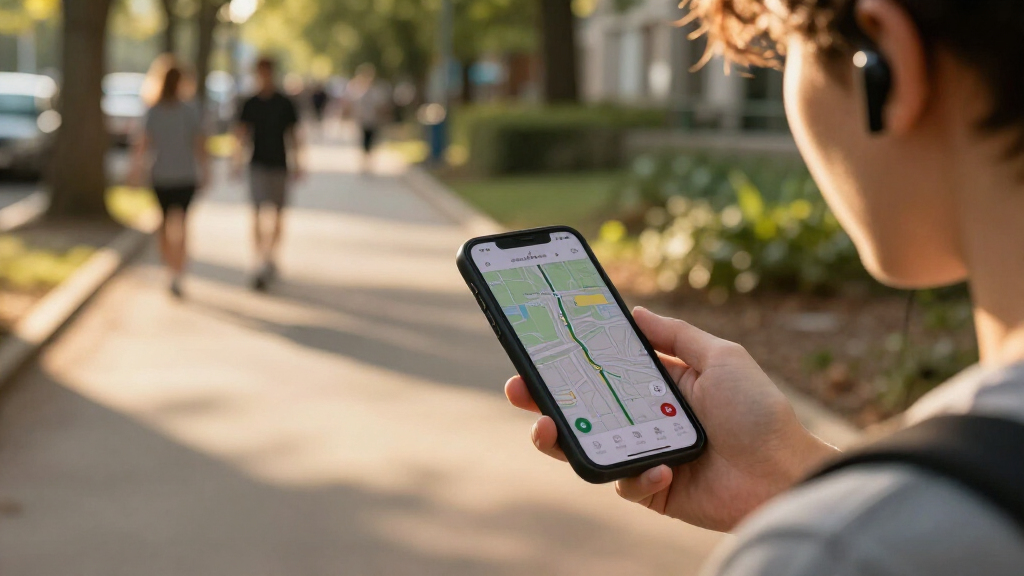
IdeaNavigator AI has described a proposed audio walking app that would generate route-aware narration using location and open data. The concept suggests testing it in two cities, measuring week-four walking retention and checking narration accuracy; no launch or test results are reported.
IdeaNavigator AI has outlined a concept for a mobile app that would generate audio narration as people walk, using their live routes and location information to tell stories about nearby buildings, history and other details. The proposal describes a product idea and a suggested test, not a launched app or a service with verified results.
The proposed app would let a user start a walk and hear narration tied to the route, with audio reacting as the person reaches corners or landmarks. Suggested content includes local history, architecture and unusual details, with themed modes for history, architecture and nature. Users could also save favorite routes.
The concept is aimed at people who want their own neighborhoods and travel destinations narrated, rather than only visitors following established landmark tours. IdeaNavigator AI argues that podcasts generally do not respond to a listener’s location, while many tour apps focus on landmark districts. Those are the proposal’s assessment of the market, not findings supported by usage data in the description.
For an initial product, the proposal recommends testing in two cities. It identifies walks per week at week four as a retention measure and calls for an audit of narration accuracy across a sample of routes. It also suggests a consumer subscription and a licensing tier for tourism boards as possible revenue streams. No pricing, city names, launch schedule, or test outcomes are provided.
Product concept · Early proposal
Your Route, Your Walk, And Audio That Responds
Imagine a walk narrated as it unfolds: local stories, architecture and unusual details arriving when you reach the right corner. IdeaNavigator AI has proposed the concept; no launch or verified results are reported.
A personal soundtrack
for local discovery
The idea aims beyond established landmark tours, bringing context to everyday streets and travel routes alike.
Stories at the corner
Narration could respond as walkers reach a corner or landmark, connecting the moment to nearby history and place details.
Modes for every mood
Suggested themes include history, architecture and nature, with favorite routes available to save for another walk.
More streets in scope
Historical records, building information and place records could help assemble narration beyond a fixed set of famous stops.
Market idea, not market evidence. The proposal contrasts location independent podcasts with tours concentrated in landmark districts. It provides no usage data to establish that gap or the size of demand.
From route to story
A proposed listening loop depends on relevance, timing and trustworthy source material at every step.
Start walking
The user begins a route through a neighborhood or destination.
Read the place
Location is matched with nearby records and points of interest.
Hear the context
Selected narration arrives around landmarks, corners or other moments.
Return and explore
Saved routes and themed modes invite another walk—if the experience earns trust.
Proposed validation
Two cities.
Two hard questions.
The suggested pilot would examine both continued use and narration quality. No cities, participants, methods or outcomes have been named.
Bars are visual markers for proposed evaluation topics, not reported scores or achieved targets. The audit method and accuracy standard are unspecified.
What still needs an answer
Good audio is not enough. The product would need to show how it selects, sources and delivers reliable local information.
How are claims checked?
No process is given for citations, conflicting records, thin sources or who would run the accuracy audit.
Where does the data run out?
Record quality may vary across cities and ordinary streets. Coverage beyond well-documented landmarks remains unknown.
When is narration prepared?
The description does not say whether stories are generated live, assembled before a walk or delivered through a mix.
Who would pay?
A consumer subscription and tourism-board licensing are suggested. Pricing, buyer interest and operating costs are untested.
Evidence that would move
the idea forward
A useful trial report would make the proposed measures clear and show what happened across different kinds of routes.
Name the cities
Describe how routes and stories are selected, how many people participate and what counts as a completed walk.
Make the checks repeatable
Define week-four retention and walks per week; state who audits accuracy and how claims are judged.
Show results and gaps
Share return use, accuracy findings and coverage limits, including routes outside popular visitor districts.
Key questions
What is known so far—and what remains open.
Has the app launched?
No launch is confirmed. The description presents a product proposal and a possible validation plan, with no release date or working demonstration.
What would it do?
It would connect a person’s walking route with narration about nearby history, architecture and local details.
How might it be tested?
The proposal suggests a two-city trial, tracking walks per week at week four and auditing narration accuracy across a route sample.
How might it earn revenue?
A consumer subscription and tourism-board licensing are proposed. No pricing or buyer demand has been established.
How will listeners judge accuracy?
An accuracy audit is proposed, but its standards, method and responsible reviewers are not specified.
What is the evidence today?
The concept description reports no pilot results, user demand, retention data or validated business model.
A Test Beyond Landmark Tours
The idea targets a gap between general audio listening and location-specific tours: people often walk through neighborhoods that are not covered by conventional guide products, while podcasts typically continue regardless of where a listener is. If the proposed system can reliably connect a route to relevant, accurate narration, it could make local discovery available across more streets than individually produced tours can cover.
The commercial case is still a hypothesis. Generating narration from open records could, in principle, reduce the need to produce each route as a separate audio package. But usefulness depends on more than generating words: the app would need to identify relevant places, deliver audio at an appropriate moment, and avoid presenting incorrect or thinly sourced details as fact. The suggested week-four retention measure and accuracy audit would address two distinct questions: whether people keep using it and whether they can trust what they hear.
For readers, the distinction is material: this is an early product proposal, not evidence that AI-generated walking tours are already available or that a subscription market has been validated.
Products Worth Considering

Anker SOLIX C300 Portable Power Station, 288Wh

Bose QuietComfort Headphones (2nd Gen), Wireless Noise-Cancelling Over-Ear Headphones, Black

Jackery Explorer 500 v2 Portable Power Station, 512Wh, 500W
As an affiliate, we earn on qualifying purchases.
Why Route-Aware Audio Now
IdeaNavigator AI frames the opportunity around recent capabilities of large language models, which it says can generate location-grounded narration on demand using open data such as historical records, architectural information and place records. The proposed shift is from making audio for a fixed set of routes in advance to producing or assembling narration for a person’s actual walk.
The concept also draws a line between landmark-focused tour apps and the everyday routes people take in residential or less-visited areas. That distinction explains the intended audience, but it does not establish how many people want such a service or whether available records are sufficient in different cities. The proposal’s two-city test is intended to begin answering practical questions before expanding the product.
The suggested scope is comparatively narrow: route-responsive narration, several thematic modes and saved routes. The description does not specify whether the audio would be generated entirely in real time, prepared in advance after a route is selected, or delivered through a combination of methods.
Accuracy, Coverage and Launch Status
No app launch is confirmed in the description, and it names no developer, release date, participating cities or working demonstration. It is also unclear whether any team has begun building the product or secured tourism-board partners.
The plan does not explain how the app would verify generated claims, cite historical information, handle conflicting records, or flag gaps in local data. Nor does it set a standard for what counts as an accurate narration or say who would conduct the proposed audit. These details matter because a polished audio delivery could make an unsupported claim sound authoritative.
Other unanswered product questions include how frequently the app would use location data, how it would work when a user has limited connectivity, and what subscription pricing might be. The proposal offers no evidence yet about user demand, retention, operational costs or whether tourism organizations would pay for licensing.
Evidence Needed From City Trials
The next step described by IdeaNavigator AI is a two-city pilot, but the proposal gives no timeline or confirmation that one is underway. A meaningful update would identify the cities, explain how routes and narration are selected, and report how many people took part.
Evaluation would need to connect the stated measures to clear methods: how walks per week are counted, what qualifies as week-four retention, and how accuracy is checked across different route types. Results could show whether people return to the app and whether the narration remains dependable outside well-documented landmark areas.
Until those details or trial results are available, the concept should be understood as an early product opportunity rather than a demonstrated service. The proposed subscription and tourism-board licensing model also remains untested.
Source: IdeaNavigator AI
Key Questions
Has the audio walking app launched?
No launch is confirmed. IdeaNavigator AI describes a proposed product and a possible validation plan, but provides no release date or evidence of an operating app.
What would the app do?
It would generate narration related to a person’s live walking route, including suggested history, architecture and local details, and respond as the user reaches points along the way.
How would the concept be tested?
The proposal recommends a trial in two cities, tracking walks per week at week four and auditing the accuracy of narration on a sample of routes. No trial results are reported.
How might the app make money?
IdeaNavigator AI suggests a consumer subscription and a licensing option for tourism boards. Pricing and buyer interest have not been established.
How will users know whether the narration is accurate?
The proposal calls for an accuracy audit but does not specify its method, standards or who would carry it out. Those safeguards remain an open question.
Source: IdeaNavigator AI