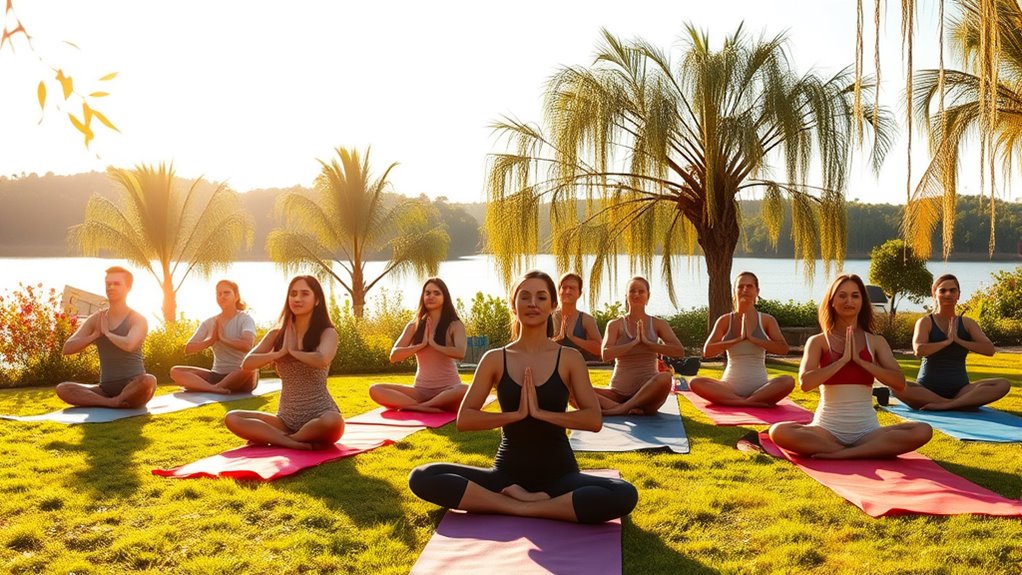

Yoga offers you an array of benefits for both mental and physical health. It helps reduce anxiety and depression while enhancing self-awareness and emotional stability. Through mindful breathing and gentle movements, you develop a toolkit for managing stress effectively. Physically, yoga builds strength, flexibility, and balance, improving your overall fitness and posture. By practicing regularly, you can cultivate a deeper sense of inner peace and holistic well-being. There’s even more to discover about how it can transform your life.
Key Takeaways
- Yoga enhances mental health by reducing anxiety and depression while promoting mindfulness and self-awareness through breath and body connection.
- Regular practice of yoga improves physical health by building strength, flexibility, and balance, decreasing injury risk in daily activities.
- The combination of physical exertion and mental relaxation in yoga promotes better sleep quality and overall physical well-being.
- Yoga fosters emotional stability and resilience by providing effective stress management tools and techniques for relaxation.
- Consistent yoga practice supports long-term personal growth, encouraging self-discovery and a deeper connection with oneself and the environment.
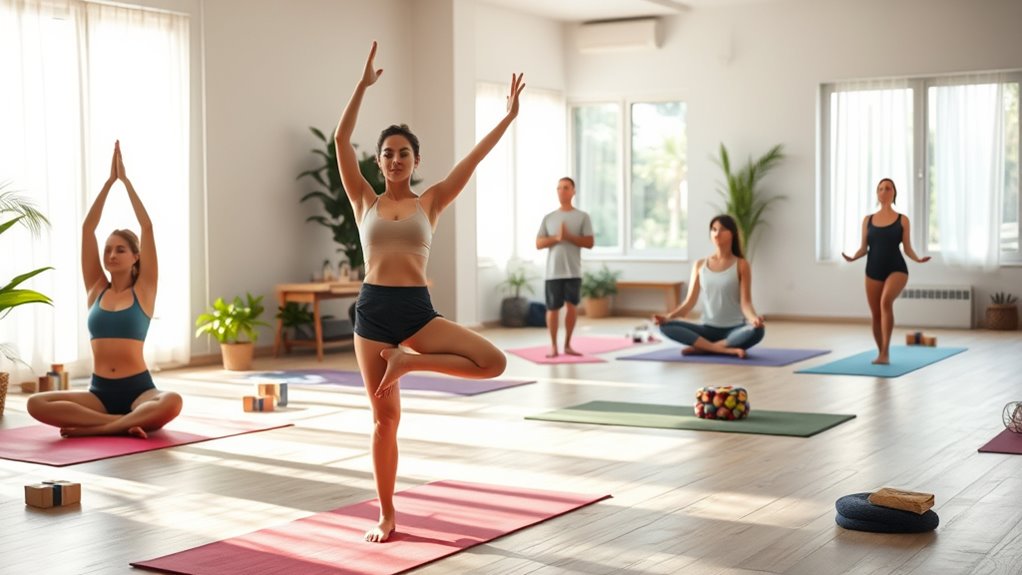
Yoga offers a unique blend of benefits that can considerably enhance both your mental and physical health. When you step onto the mat, you’re not just engaging in a series of physical postures; you’re setting out on a journey of self-discovery and personal growth. One of the most significant aspects of yoga lies in its ability to incorporate mindfulness meditation and stress reduction techniques into your daily life. These elements can help you cultivate a deeper connection with yourself, leading to improved overall well-being.
As you practice yoga, you learn to focus on your breath and become more aware of your body. This mindfulness aspect encourages you to stay present, allowing you to let go of distractions and worries that often plague your mind. When you engage in mindfulness meditation during your sessions, you’ll find that you can navigate everyday challenges with greater ease. You may even notice a reduction in anxiety and depression, as the practice helps you cultivate a sense of inner peace and contentment.
Incorporating stress reduction techniques into your yoga routine can also profoundly impact your mental health. You’ll discover that simple breathing exercises and gentle movements can help release built-up tension and promote relaxation. By regularly practicing these techniques, you’ll develop a toolbox for managing stress more effectively. This means you won’t just be relying on external sources to cope; instead, you’ll equip yourself with the skills to handle stress head-on, enhancing your resilience.
The physical benefits of yoga shouldn’t be overlooked either. As you flow through various poses, you’ll build strength, flexibility, and balance. This can lead to improved posture and decreased risk of injury in everyday activities. You might even find that you sleep better at night, as the combination of physical exertion and mental relaxation helps to regulate your body’s natural rhythms. Additionally, research shows that regular practice of mindfulness can lead to improved skin tone and clarity, highlighting the holistic benefits of integrating practices like yoga into your life.
Ultimately, yoga serves as a holistic practice that nurtures both your mind and body. By embracing mindfulness meditation and stress reduction techniques, you’ll not only enhance your physical capabilities but also foster a deeper sense of mental clarity and emotional stability. As you continue on this journey, you’ll likely discover a newfound appreciation for yourself and the world around you, making yoga an invaluable part of your life. So, step onto your mat and explore the transformative power of yoga—it’s time to realize your full potential.
Frequently Asked Questions
How Often Should I Practice Yoga for Optimal Benefits?
To achieve ideal practice, you should aim for yoga frequency of at least three to five times a week. This regularity helps you build strength, flexibility, and mindfulness. Even shorter sessions can be effective, so don’t feel pressured to commit large amounts of time. Listen to your body and adjust your practice as needed. Consistency is key, so find a schedule that fits your lifestyle and keeps you motivated.
Can Yoga Help With Specific Mental Health Disorders?
Absolutely, yoga can be a lifeline for specific mental health disorders. Picture yourself standing firm like a tree, rooted in mindfulness meditation; it cultivates emotional regulation and helps you manage anxiety and depression. By focusing on your breath and movements, you create a sanctuary for your mind. It’s not just stretching; it’s nurturing your emotional well-being, allowing you to navigate life’s storms with greater resilience and inner peace.
What Types of Yoga Are Best for Beginners?
If you’re a beginner, Hatha and Vinyasa yoga are great options. Hatha introduces you to basic postures and foundational techniques, making it perfect for learning beginners’ poses at a comfortable pace. Vinyasa, on the other hand, links breath with movement, offering a more dynamic experience. You’ll find that both styles help build strength and flexibility while providing a solid grounding for more advanced practices as you progress in your yoga journey.
Is There an Age Limit for Practicing Yoga?
Yoga’s like a timeless river; it flows for everyone, regardless of age. There aren’t strict age restrictions for practicing yoga. Whether you’re a child or a senior, you can benefit from it. In fact, senior yoga classes cater specifically to older adults, focusing on gentle movements and flexibility. Just listen to your body and choose a style that suits your needs. Embrace this journey at any age; it’s never too late to start!
Do I Need Special Equipment for Yoga Practice?
You don’t need special equipment to practice yoga, but using yoga props can enhance your experience. A mat is essential for grip and stability. Blocks, straps, and bolsters can help you modify poses to suit your needs. As for practice attire, wear something comfortable that allows for movement, like leggings or a loose top. Ultimately, it’s about what makes you feel good and supports your practice!
Conclusion
Incorporating yoga into your daily routine can be a game-changer for both your mind and body. Like a gentle breeze that clears the fog, yoga helps reduce stress, enhances focus, and boosts physical strength. You’ll find yourself more centered and resilient, ready to tackle life’s challenges with grace. So, roll out your mat, take a deep breath, and embrace the transformative journey of yoga—it’s a gift you give to yourself that keeps on giving.