
TL;DR

Get business pricing on monitors, keyboards and dev gear
- Business-only prices and quantity discounts
- Tax-exempt purchasing
- Multiple users, one account, clear invoices
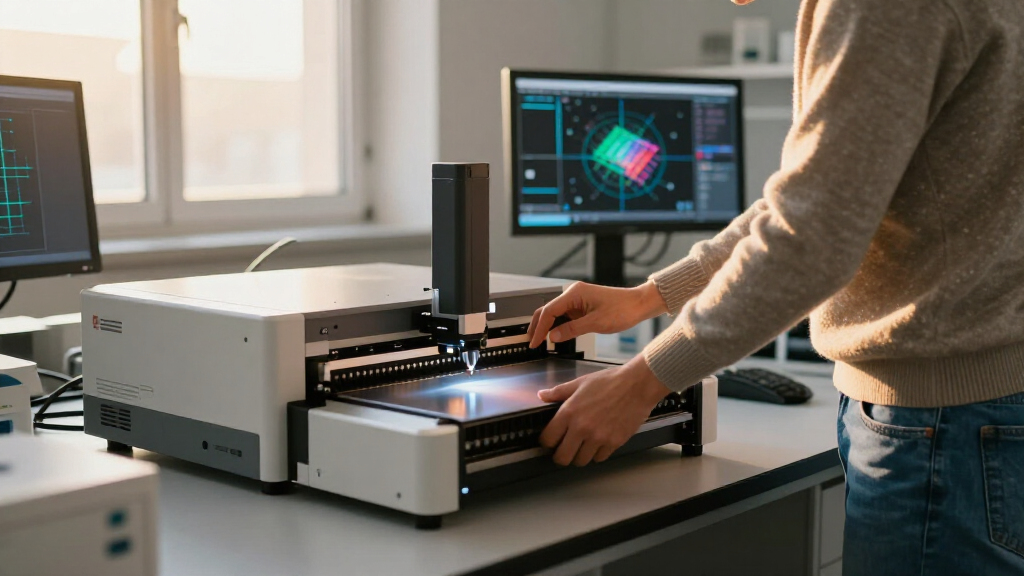
Xanadu and ASML have formed a partnership focused on developing lithography tools for photonic quantum computers. The collaboration aims to enhance manufacturing precision, potentially advancing quantum hardware capabilities.
Xanadu, a leading quantum photonics company, and ASML, a major supplier of lithography equipment, have announced a partnership to develop specialized lithography tools for manufacturing photonic quantum hardware. This collaboration aims to improve the precision and scalability of quantum photonic components, which are critical for advancing quantum computing technology. The joint effort underscores a strategic move to address manufacturing challenges in the emerging field of photonic quantum systems, with potential implications for the future of quantum hardware development.
The partnership between Xanadu and ASML was publicly disclosed in March 2024, with both companies emphasizing their shared goal of refining lithography processes specifically for photonic quantum devices. Xanadu, known for its work in photonic quantum computing, seeks to leverage ASML’s expertise in advanced lithography equipment, traditionally used in semiconductor manufacturing, to produce more precise and scalable quantum components. While the exact technical scope remains under development, the collaboration signals a targeted effort to adapt lithography technologies to the unique demands of quantum photonics, such as manipulating light at nanometer scales.
ASML, a Dutch company renowned for its EUV (extreme ultraviolet) lithography machines, has been exploring new applications of its technology beyond traditional chip production. The partnership with Xanadu indicates a strategic pivot toward quantum hardware, particularly photonic systems, which rely on light-based qubits. Both companies have confirmed that the collaboration is at an early stage, with no specific product launches or technical milestones announced yet. Industry analysts see this as a significant step toward integrating advanced lithography into quantum manufacturing processes, which could help overcome current limitations in scalability and reproducibility of quantum photonic devices.
Potential Impact on Quantum Hardware Manufacturing
This collaboration could be a pivotal development in the quest to make scalable, manufacturable quantum photonic systems. By adapting lithography techniques—traditionally used in semiconductor fabrication—to quantum hardware, the partnership aims to address key challenges such as device uniformity and mass production. If successful, this could accelerate the deployment of quantum computers capable of tackling complex problems in cryptography, material science, and optimization. The collaboration also highlights the increasing importance of hardware innovation in the quantum computing ecosystem, which has so far been dominated by software and algorithm development. Industry observers suggest that this move could set a precedent for further integration of advanced manufacturing techniques into quantum hardware development, potentially reducing costs and increasing performance.
As an affiliate, we earn on qualifying purchases.
Background on Lithography and Quantum Photonics
Traditional lithography, especially extreme ultraviolet (EUV) lithography, has been a cornerstone of semiconductor manufacturing, enabling the production of smaller, more powerful chips. ASML is a global leader in this technology, with its EUV machines used by major chipmakers. Meanwhile, photonic quantum computing relies on manipulating light particles (photons) to encode and process information. Unlike superconducting qubits, photonic systems promise advantages such as room-temperature operation and easier integration with existing optical technologies. However, manufacturing photonic quantum devices at scale remains challenging due to the need for extremely precise fabrication of nanostructures and waveguides. The collaboration between Xanadu and ASML appears to be an effort to bridge this gap by applying advanced lithography to quantum hardware production, a relatively uncharted territory that could redefine manufacturing standards in the field.
photonic quantum computing components
As an affiliate, we earn on qualifying purchases.
As an affiliate, we earn on qualifying purchases.
Technical Challenges and Unconfirmed Details
It is not yet clear what specific lithography techniques will be adapted for quantum photonic manufacturing or how far along the development process is. Details about the technical goals, timelines, or expected outcomes remain undisclosed. Experts note that translating lithography technology from semiconductors to photonics involves complex challenges, such as achieving nanometer-scale precision in light-based components and ensuring reproducibility. The extent to which the partnership will result in commercial-ready solutions is still uncertain, and no technical milestones have been publicly announced.
As an affiliate, we earn on qualifying purchases.
Expected Milestones and Future Developments
Both companies are expected to provide updates on their progress over the coming months, potentially including technical demonstrations or pilot manufacturing processes. Industry insiders anticipate that initial prototypes or proof-of-concept devices could emerge within the next 12 to 18 months. Further, the collaboration may lead to joint patents or new manufacturing standards for photonic quantum hardware. Observers will be watching for any announcements regarding scaling, reproducibility, and integration of lithography into quantum device fabrication lines.
quantum hardware manufacturing tools
As an affiliate, we earn on qualifying purchases.
As an affiliate, we earn on qualifying purchases.
Key Questions
What is the main goal of the Xanadu and ASML partnership?
The partnership aims to develop advanced lithography techniques tailored for manufacturing photonic quantum hardware, improving precision and scalability.
Why is lithography important for quantum photonics?
Lithography enables the precise fabrication of nanostructures and waveguides critical for light-based qubits. Improving this process can help scale quantum devices.
Are there any products or prototypes expected soon?
No specific products or prototypes have been announced yet. The collaboration is still in early development, with potential updates expected in the next 12-18 months.
How does this collaboration impact the broader quantum computing industry?
If successful, it could accelerate manufacturing innovations, making quantum photonic systems more reliable and scalable, and potentially lowering costs for future quantum computers.
What are the technical hurdles remaining?
Key challenges include achieving nanometer-scale precision in light-based components and ensuring reproducibility in manufacturing processes, which are still under investigation.
Source: rss
Halloween Picks
halloween
As an affiliate, we earn on qualifying purchases.