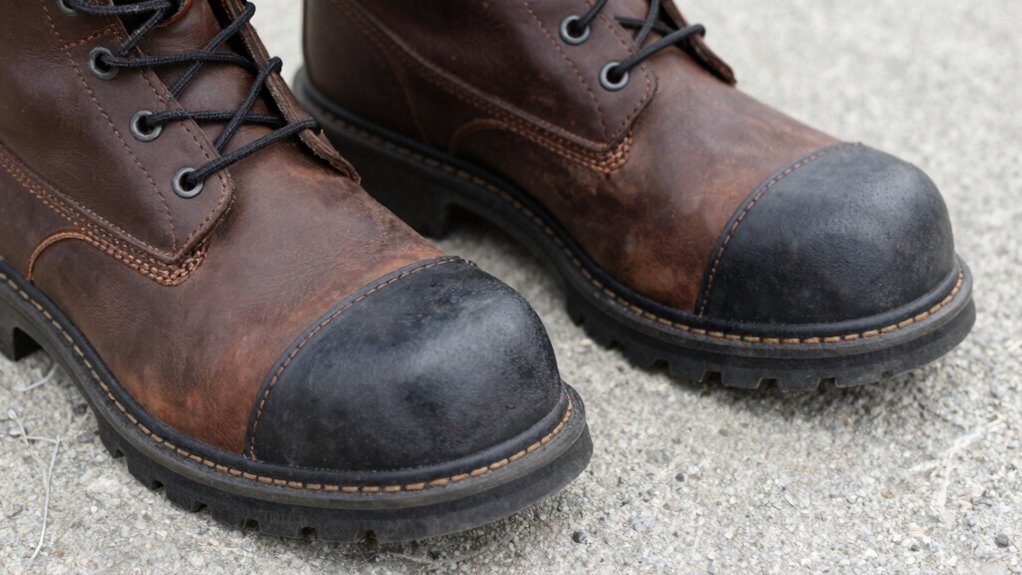
Understanding work boots means knowing about different toe types, shank support, and slip ratings. Steel, composite, or alloy toes each offer varying impact protection suited for different hazards, while shanks like steel or fiberglass support your arch and stabilize your feet. Slip ratings indicate how well boots grip slippery surfaces to prevent falls. Choosing the right combination guarantees safety, comfort, and durability—if you want to get the full picture, keep exploring these features in detail.
Key Takeaways
- Toe types (steel, composite, alloy) vary in impact protection, weight, and suitability for different work environments.
- Shank materials (steel, fiberglass, nylon) support arches, improve stability, and reduce foot fatigue during prolonged wear.
- Slip ratings indicate the slip resistance of boots, with higher ratings providing better grip on slippery surfaces.
- Proper selection of toe style and shank depends on safety standards and work conditions to ensure optimal protection and comfort.
- Certifications like ASTM or OSHA verify safety features, including impact resistance and slip resistance, for reliable footwear safety.
What Are the Different Work Boot Toe Types and Their Safety Benefits
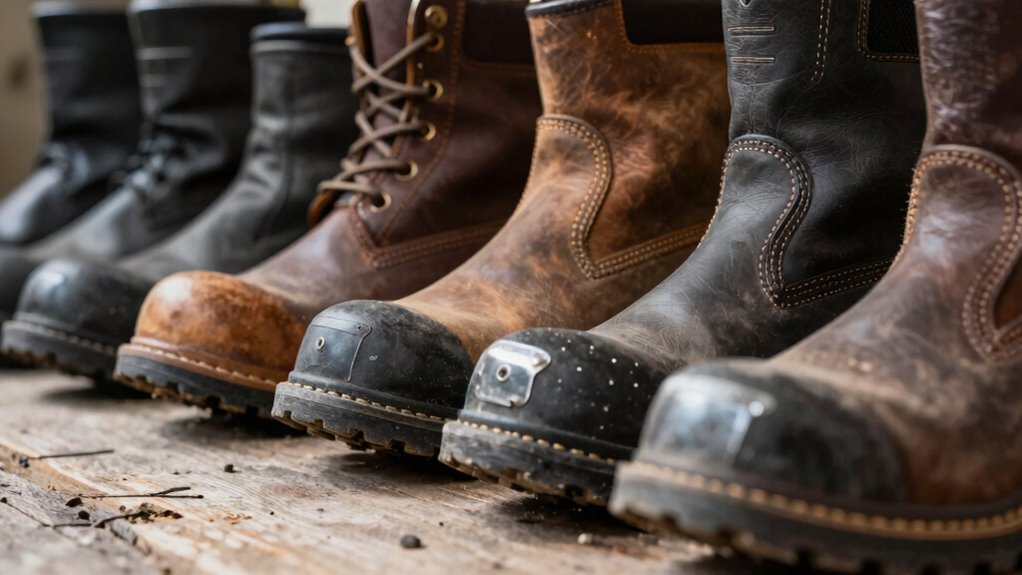
Choosing the right work boot toe type is essential for ensuring safety on the job site. Toe shape variations, such as rounded, square, or pointed, influence both comfort and protection. Steel toes are the most common, meeting strict toe protection standards to guard against falling objects and compression hazards. Composite toes offer lightweight protection while still meeting safety standards, making them ideal for those needing lighter gear. Aluminum toes strike a balance between weight and durability. Each toe type adheres to specific safety standards, like ASTM or OSHA, ensuring reliable protection. Understanding these variations helps you select the best toe type for your work environment, giving you confidence that your footwear meets safety requirements and provides necessary defense against workplace hazards. Additionally, verifying that your work boots are properly tested and certified can help prevent potential safety hazards, especially when considering safety standards compliance in footwear. Ensuring your work boots are compliant with industry safety standards is crucial for maintaining a safe work environment and reducing injury risks. Incorporating proper safety standards into your footwear choice can further enhance overall job site safety and compliance. Furthermore, selecting toe types that meet certification requirements can improve your overall safety and peace of mind.
How Do Shank Types Support and Protect Your Feet
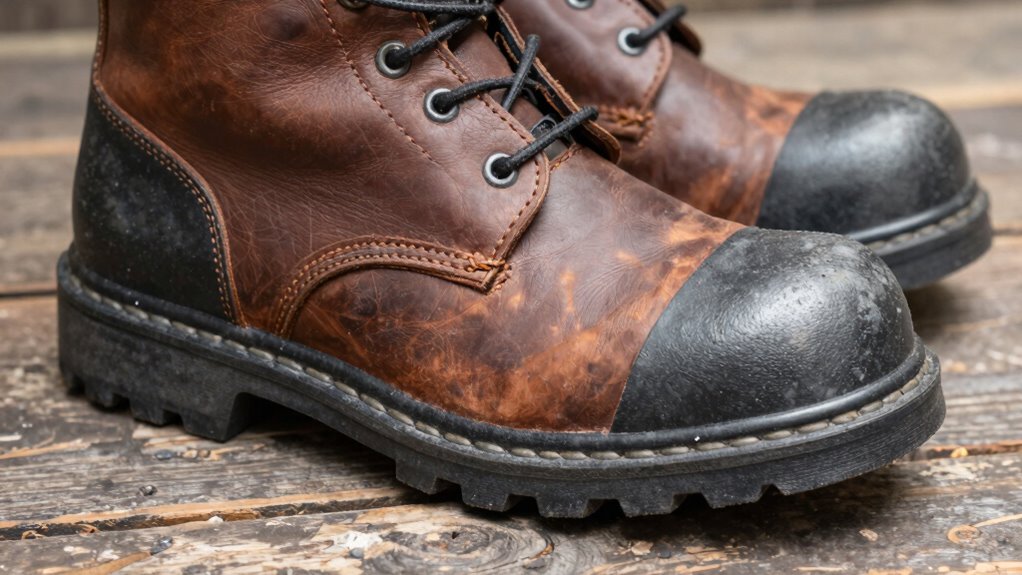
Shank types and materials determine how well your boots support your arches and stabilize your feet on uneven surfaces. Different structures, like steel, fiberglass, or nylon, offer varying levels of durability and flexibility. Knowing these options helps you choose the right shank to protect your feet during tough work conditions. Understanding shank materials can also help you select footwear that balances support with comfort for your specific needs. Additionally, the type of shank can influence the overall weight and mobility of your boots, making it an important consideration for prolonged wear. Being aware of indoor air quality and humidity levels can also contribute to overall foot health and comfort during extended wear. Recognizing how shank design impacts foot support can further assist in making an informed choice. Moreover, selecting the appropriate shank type can help prevent foot fatigue and injury over time.
Types of Shank Structures
The type of shank in your work boots plays a crucial role in supporting your feet and protecting them from fatigue and injury. Different shank structures provide varying levels of stability and flexibility, depending on your needs. Shank material options include steel, fiberglass, plastic, or nylon, each offering different durability and weight. Shank design variations include flat, concave, or reinforced shapes, which influence how your foot aligns and bears weight. For demanding tasks, a steel shank offers maximum support, while fiberglass provides a lighter alternative for less intensive work. Some boots feature a combination of materials to balance comfort and protection. Choosing the right shank structure depends on your work environment and personal comfort preferences, ensuring your feet stay supported all day long.
Shank Material Benefits
Different shank materials in work boots provide varying levels of support and protection to keep your feet safe and comfortable throughout the day. The right shank material enhances stability, prevents fatigue, and improves overall durability benefits. Steel shanks offer maximum strength and support, ideal for heavy-duty tasks. Composite shanks are lightweight and resist corrosion, reducing fatigue over long shifts. Plastic shanks provide flexibility and are often more affordable, making them suitable for lighter work. Choosing the appropriate shank material depends on your work demands and comfort needs. It’s also important to consider the material composition of the shank to ensure it aligns with your safety requirements. Understanding the role of shanks in work boots can help you make better footwear choices. For example, selecting the right shank can significantly influence the overall foot support and comfort during long hours on your feet. Additionally, knowing how different shank types impact foot stability can help prevent common foot injuries. Recognizing the importance of support structures in work boots can further enhance your safety and comfort. Here’s a quick comparison:
| Shank Material | Durability Benefits |
|---|---|
| Steel | Highest support, long-lasting |
| Composite | Lightweight, corrosion-resistant |
| Plastic | Flexible, affordable |
| Wood | Moderate support, less durable |
| Aluminum | Lightweight, good support, durable |
What Do Slip Ratings Mean for Work Boot Safety
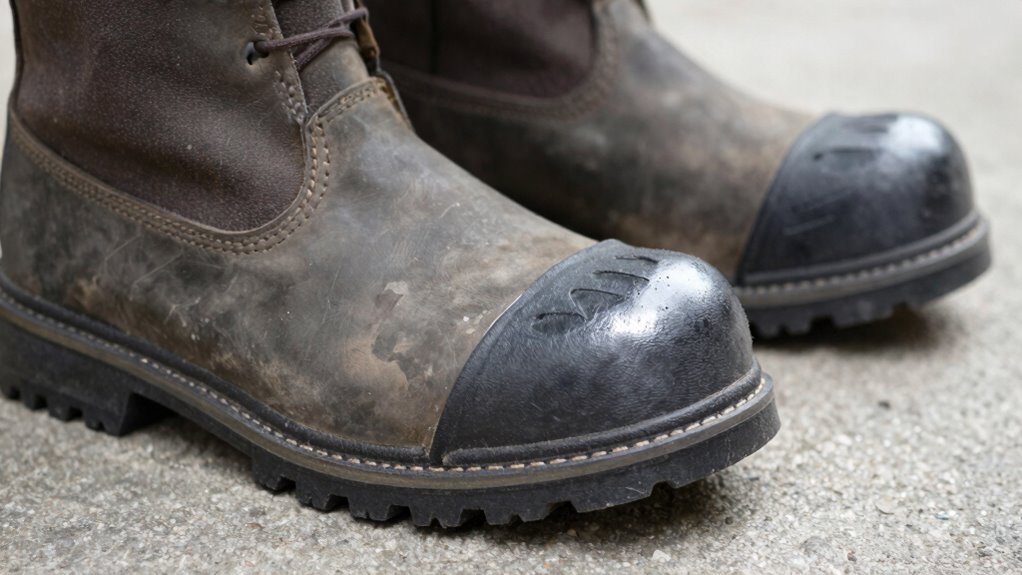
Slip ratings indicate how well work boots grip surfaces, directly impacting your safety on the job. Higher slip ratings mean better slip resistance, reducing the risk of falls. Pay attention to tread design, as it influences how water, oil, or mud are dispersed. Boots with good slip ratings often feature deep, multidirectional treads that improve traction. Here are some key points to contemplate:
- A higher slip rating offers more security on slippery surfaces
- Slip resistance varies with different sole materials
- Tread design plays a crucial role in grip efficiency
- Always check slip ratings for specific work environments
- Proper maintenance of soles keeps slip resistance effective
Knowing what slip ratings mean helps you choose boots that keep you safe and stable all day long.
How to Choose the Right Toe Style for Your Job

Choosing the right toe style depends on your work environment and the level of impact protection you need. You should also consider how comfortable the boots are and if they fit well throughout your shift. Making the right choice helps keep you safe and comfortable all day long. Additionally, selecting a toe type that complements your daily tasks can prevent unnecessary fatigue and discomfort. Proper fit and support ensure that your work boots provide the best protection and comfort during extended wear. Knowing about impact resistance can help you choose a toe style that aligns with your safety requirements. Understanding safety standards can further guide you in selecting boots that meet industry regulations and ensure optimal protection. Being aware of material durability can also influence your choice, as different toe types may vary in how well they withstand daily wear and tear. Incorporating credit card insights can also be beneficial when investing in high-quality work boots, ensuring you get value for your money.
Work Environment Compatibility
Selecting the right toe style for your work boots is essential because it directly affects safety, comfort, and compliance with industry standards. Your work environment plays a big role in this choice, especially considering industrial hazards and environmental conditions. For outdoor jobs, steel toes offer durability against heavy impacts and protection from falling objects. If you work in wet or corrosive environments, composite toes resist electrical conductivity and corrosion better. In dusty or abrasive settings, a more flexible toe might reduce discomfort. For jobs with sharp objects or extreme impacts, alloy toes provide a lighter alternative without sacrificing protection. Always assess your environment to ensure your chosen toe style withstands the specific hazards you face daily, keeping you protected and comfortable on the job. Additionally, understanding the various materials used for toes can help you make an informed decision tailored to your specific work conditions. Recognizing the water resistance and durability of different toe materials can further aid in selecting the most suitable option for challenging environments. Knowing the power and performance capabilities of electric dirt bikes can also influence the type of protective gear needed for off-road safety.
Impact Protection Needs
Your work environment determines how much impact protection you need from your boots’ toe style. If you work in construction or manufacturing, you’ll want boots with high impact resistance to protect against falling objects or heavy equipment. Steel toes and composite toes excel at absorbing shock and providing maximum impact absorption. For lighter tasks or less hazardous environments, lighter toe styles like soft or moc toes may suffice, offering less impact resistance but greater comfort. Consider the level of shock absorption your job demands—if you’re frequently on your feet or exposed to dropping items, prioritize boots with enhanced impact protection. Choosing the right toe style ensures your safety without sacrificing mobility, so assess your work risks carefully.
Comfort and Fit
The impact protection level of your work boots influences not just safety but also how comfortable they feel throughout the day. When choosing the right fit, focus on an ergonomic design that supports your foot’s natural shape. Look for boots with adequate padding techniques around the toes and collar to prevent discomfort and blisters. It’s essential to find a toe style that matches your job demands—stiff toes for heavy-duty tasks, or more flexible options for agility. Try on different styles with your usual socks to ensure a snug but not tight fit. Remember, proper fit reduces fatigue and improves productivity. Consider these tips:
- Prioritize ergonomic design for all-day comfort
- Choose padding to match your activity level
- Test different toe styles for mobility
- Ensure enough room for toe movement
- Confirm a secure, comfortable fit
Which Shank Types Offer the Best Comfort and Support
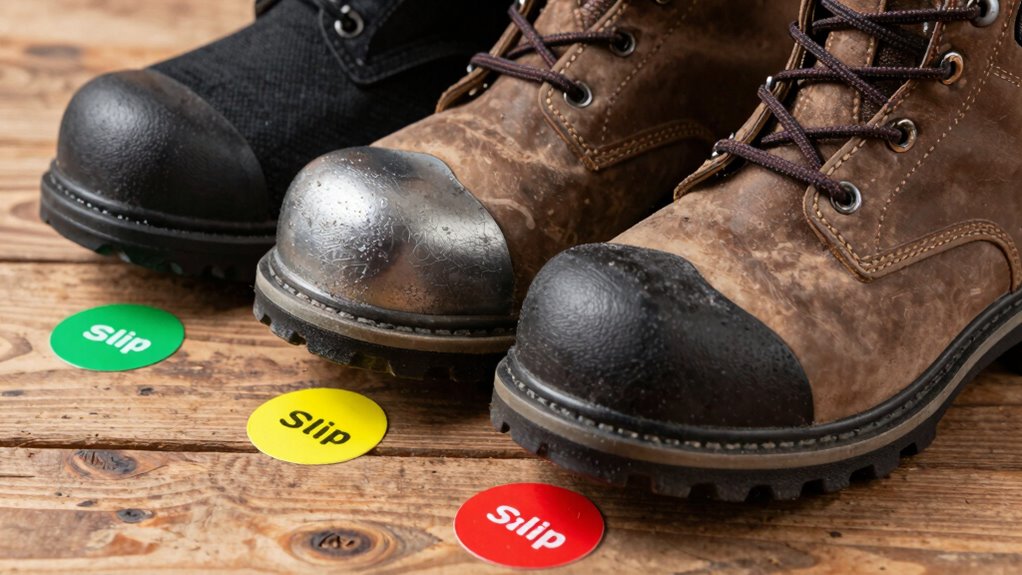
When it comes to comfort and support, the type of shank inside your work boots makes a significant difference. A well-designed shank enhances shank ergonomics, aligning your foot and providing stability during long hours on your feet. Steel shanks are sturdy, offering excellent support but can feel rigid, which may reduce comfort over time. Composite shanks, made from lightweight materials, deliver a good balance of support and flexibility, improving overall cushioning technology. Nylon shanks are lighter and flexible, providing comfort for less demanding tasks. Your choice depends on your work environment and personal preference, but selecting a shank that balances support with cushioning can help reduce fatigue and increase comfort throughout your workday.
Which Slip Ratings Keep You Safe on Slippery Surfaces

Choosing the right slip rating for work boots is essential to stay safe on slippery surfaces. Non slip soles are designed to provide better traction, reducing the risk of falls. When selecting boots, consider hazard assessments of your work environment to guarantee you choose the appropriate slip rating. Look for soles with high slip resistance ratings, especially if you often work on wet, oily, or icy surfaces.
Choosing the right slip rating ensures safety on wet, oily, or icy work surfaces.
- Non slip soles with textured patterns
- Rubber or polyurethane outsoles
- Deep lugs for better grip
- Anti-slip coatings
- Certifications like ASTM or EN standards
How to Pick Work Boots That Are Safe, Comfortable, and Long-Lasting

Selecting work boots that are safe, comfortable, and long-lasting requires careful consideration of multiple factors. First, check for waterproof features, especially if you’ll be exposed to wet conditions, to keep your feet dry and prevent discomfort. Consider current fashion trends to find boots that suit your style, but prioritize function over looks. Look for proper fit, arch support, and cushioning to boost comfort during long hours. Durability comes from quality materials like reinforced stitching and sturdy soles, so inspect construction details. Safety features such as slip-resistant soles and toe protection are essential. Remember, the best work boots blend practicality with style, ensuring you stay safe, comfortable, and confident on the job, no matter the conditions.
Frequently Asked Questions
How Do Work Boots Differ for Various Industries?
You’ll find work boots differ across industries based on industry-specific safety standards and footwear customization options. For example, construction workers need steel toes and slip-resistant soles, while factory workers might require electrical hazard protection. You can choose boots tailored to your job’s demands, ensuring safety and comfort. By selecting industry-specific features, you’ll stay compliant and perform better, all while enjoying personalized comfort and protection suited to your work environment.
Can Toe Types Affect Work Boot Weight and Agility?
Yes, toe types can affect your work boot weight and agility. Steel toes tend to be heavier, which might slow you down and tire your feet faster, impacting agility. On the other hand, composite toes are lighter, offering better mobility and less fatigue without sacrificing protection. If agility and comfort are priorities, consider choosing boots with lighter toe options to reduce overall boot weight and enhance your performance on the job.
Are There Eco-Friendly Options for Slip-Resistant Work Boots?
You can definitely find eco-friendly slip-resistant work boots that make a huge difference for the environment. These boots often use eco-friendly materials like recycled rubber and sustainable leather, crafted through sustainable manufacturing practices. Not only do they protect your feet, but they also help reduce your carbon footprint. Choosing these options means you’re supporting a greener planet while staying safe and secure on the job. It’s a win-win for you and Earth!
How Often Should Work Boots Be Replaced for Optimal Safety?
You should replace your work boots when the boot material shows significant wear, the sole durability decreases, or they no longer provide proper support and traction. Regularly inspect for cracks, holes, or worn-out soles, and don’t wait too long to replace them. Doing so guarantees your safety and comfort, preventing slips or injuries. Typically, if you work in tough conditions, consider replacing your boots every 6 to 12 months for maximum safety.
What Maintenance Tips Extend the Lifespan of Work Boots?
To extend your work boots’ lifespan, regularly clean them to remove dirt and debris, which prevents material breakdown. Keep the soles in good shape by inspecting and repairing or replacing them as needed, ensuring better grip and safety. Store your boots in a cool, dry place to prevent moisture damage. Proper maintenance like these helps your boots last longer, saving you money and maintaining safety on the job.
Conclusion
Choosing the right work boots isn’t just about safety – it’s about feeling confident on the job every day. When you understand toe types, shanks, and slip ratings, you naturally make smarter choices. The best part? The perfect boots can unexpectedly boost your comfort and durability, making your workday smoother. So, next time you pick out your gear, remember, a good fit isn’t just coincidence – it’s a smart move for your safety and success.