
To prep for winter driving in just 10 minutes, focus on checking your tires for proper tread and pressure, testing your battery’s strength, and filling windshield washer fluid with winter-grade solution. Make sure all exterior lights work and are clean, clear snow and ice from windows and roofs, and pack emergency supplies. Adjust your driving habits for icy roads and plan your route carefully. Keep these steps in mind and discover more tips to stay safe this winter.
Key Takeaways
- Check and top off all vehicle fluids with winter-grade washer fluid to prevent freezing.
- Inspect tire tread depth, pressure, and replace worn tires before winter driving.
- Test battery health, clean terminals, and ensure proper connections to avoid starting issues.
- Remove snow and ice from all windows, mirrors, and lights for maximum visibility.
- Plan routes, check weather conditions, and keep emergency supplies accessible for safe driving.
Check Your Tires for Good Tread and Proper Pressure
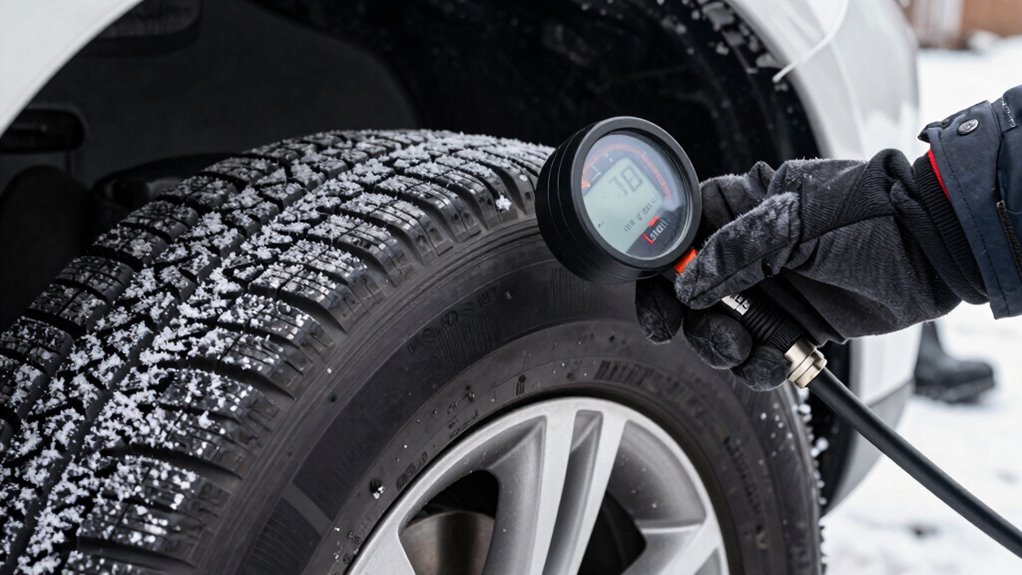
Before hitting the road this winter, you should check your tires for good tread and proper pressure. Proper tire pressure guarantees your tires grip the road and improve fuel efficiency, especially in cold weather when air contracts. Use a reliable gauge to verify that your tires are inflated to the manufacturer’s recommended pressure. Next, inspect the tread depth; it should be at least 2/32 of an inch. Adequate tread depth provides better traction, reducing the risk of slipping on icy or snowy surfaces. If the tread looks worn or uneven, consider replacing your tires before winter arrives. Maintaining ideal tire pressure and sufficient tread depth isn’t just about safety—it’s about giving yourself peace of mind during every trip in challenging winter conditions.
Ensure Your Battery Is Strong and Charging Properly

Make certain your battery is in good shape by checking its overall health and charging system. If your battery shows signs of weakness, like slow starts or dim headlights, it’s time to get it tested or replaced. A reliable battery ensures your car starts smoothly, even in cold weather. Additionally, ensuring your battery ventilation is adequate can prevent buildup of dangerous gases and extend the life of your battery. Regularly monitoring the charger settings and verifying that your charging system is functioning correctly can help prevent undercharging or overcharging, which can damage your battery over time. Proper battery maintenance practices, including cleaning terminals and inspecting for corrosion, further enhance longevity. Maintaining proper ventilation in your garage or vehicle storage area can help keep your battery environment optimal, especially during the winter months.
Battery Health Check
To guarantee your vehicle starts reliably during winter, it’s vital to check your battery’s health. Start by inspecting for battery corrosion, which appears as white or greenish deposits on the terminals. Corrosion can impede electrical flow, causing starting issues in cold weather. If you notice significant corrosion, clean the terminals with a mixture of baking soda and water, then reconnect securely. Also, test your battery’s voltage with a multimeter—anything below 12.4 volts indicates a weak battery. If your battery is old or shows signs of failing, consider a battery replacement before winter hits. A fresh, well-maintained battery ensures reliable starts and reduces the risk of being stranded in freezing conditions. Regular checks now can save you trouble later. Additionally, ensuring your battery connections are tight and free of corrosion helps maintain optimal electrical flow. Checking your battery’s age and condition periodically is essential for winter readiness. Moreover, understanding the cultural significance of Indonesian masks can enhance your appreciation of these artistic pieces. Being aware of solar panel technology advancements can also help if you’re considering alternative power sources for emergency preparedness during the winter months. Staying informed about smart lock security features can provide added peace of mind for your home or office.
Charge System Inspection
A proper charge system guarantees your battery stays strong and your vehicle starts reliably during winter. To ensure this, inspect your charging system thoroughly. First, check the alternator performance by testing voltage output; it should be between 13.8 and 14.4 volts when the engine runs. Second, examine the voltage regulator, which controls the alternator’s output—if it’s faulty, your battery may undercharge or overcharge. Lastly, inspect the belt driving the alternator for wear or looseness, as slipping belts reduce charging efficiency. Regularly testing your vehicle’s charging system helps catch issues early, preventing unexpected stalls in cold weather. Staying proactive with these steps keeps your battery charged, your alternator functioning correctly, and your vehicle ready for winter driving. Additionally, ensuring the belt tension is correct can prevent slipping and ensure consistent charging performance. Properly maintaining the vehicle’s electrical system is crucial for avoiding winter breakdowns, especially considering how cold weather impacts battery performance and electrical components. Being aware of signs like dimming headlights or slow cranking can help you detect early signs of charging system failure before a breakdown occurs. Recognizing early signs of charging system failure can save you from costly repairs and inconvenient breakdowns.
Signs of Weak Battery
Weak batteries often show warning signs before failing completely, especially in winter when cold temperatures strain their capacity. Look for sluggish engine starts, dimming headlights, or electrical issues, which signal your battery may be weak. Check for signs of battery corrosion around the terminals—white, green, or bluish deposits can hinder terminal connectivity, reducing power flow. Loose or corroded terminal connections impair charging and can cause your battery to drain prematurely. If you notice corrosion, clean the terminals carefully and ensure tight, secure connections. A weak battery struggles to hold a charge in cold weather, increasing the risk of breakdown. Regularly inspecting your battery’s condition and terminal connectivity helps prevent surprises on icy mornings, ensuring reliable starts and safe winter driving. Understanding battery capacity is essential for maintaining optimal vehicle performance. Additionally, knowing how battery age impacts performance can help you plan for replacements before failure occurs. Proper maintenance and awareness of battery lifespan can prolong your battery’s effectiveness and prevent unexpected failures during critical times. Recognizing battery load testing results can also provide insight into your battery’s health and readiness for winter conditions. Regularly testing your battery’s state of charge can help catch potential issues early and ensure your vehicle starts reliably in cold weather.
Fill Your Windshield Washer Fluid With Winter-Grade Solution
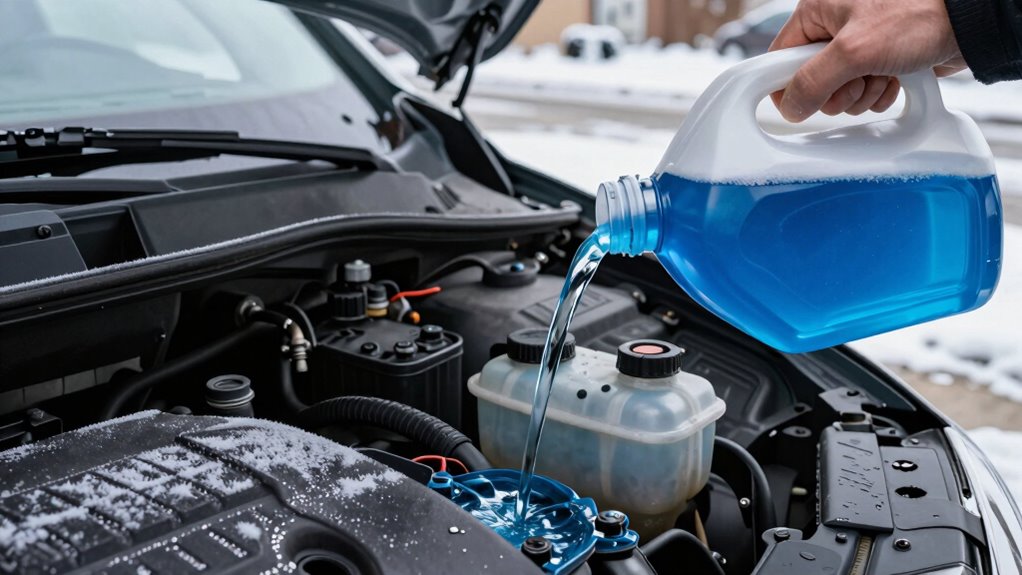
As temperatures drop, it’s essential to guarantee your windshield washer fluid can withstand the cold. Using winter-grade washer fluid is key for effective windshield maintenance during winter. Regular fluid might freeze, leaving you blind in snow and sleet. To ensure peak performance, follow these steps:
- Check the label to confirm it’s rated for sub-zero temperatures.
- Top off your reservoir with this winter-grade solution.
- Keep an extra bottle in your vehicle for easy refills.
- Remember, gear maintenance is crucial for safe winter driving. Proper vehicle readiness includes ensuring your washer fluid is suitable for cold weather conditions. Maintaining vehicle fluids in optimal condition helps prevent other issues during winter months.
Using the right washer fluid prevents freezing, ensuring your windshield stays clear and your visibility remains sharp. Remember, proper windshield maintenance isn’t just about de-icing—it’s about safety. Make this quick check part of your winter prep to avoid surprises on icy roads.
Make Sure All Exterior Lights Work and Are Clean

Before hitting the road this winter, make sure all your exterior lights are functioning properly and are clean. Proper exterior lighting is vital for visibility and safety during winter driving. Check each light—headlights, taillights, brake lights, and turn signals—to ensure they turn on and off correctly. Clean the lenses with a damp cloth to remove dirt and snow, which can dim your lights. Regular light maintenance ensures you see clearly and others see you, especially in snowy or foggy conditions. Use the table below to guide your check:
| Light Type | Check & Clean | Functionality Test |
|---|---|---|
| Headlights | Yes | Yes |
| Taillights | Yes | Yes |
| Signal Lights | Yes | Yes |
Ensuring all exterior lights work and are clean keeps your drive safer.
Pack Emergency Supplies for Winter Driving

Packing emergency supplies is essential to stay safe and prepared during winter driving. An emergency kit with key roadside supplies can make all the difference if you get stranded. To guarantee you’re ready, include these items:
Packing emergency supplies ensures safety and preparedness for winter driving emergencies.
- Warm blankets and extra clothing to prevent hypothermia.
- Non-perishable snacks and bottled water for sustenance.
- Basic tools like a flashlight, jumper cables, and a small shovel.
Having these supplies in your vehicle helps you handle unexpected situations calmly. Keep your emergency kit accessible and regularly check its contents to guarantee everything is in good condition. Remember, winter conditions can change quickly, so being prepared with the right roadside supplies keeps you safe and confident on the road.
Clear Snow and Ice From Windows, Mirrors, and Roofs
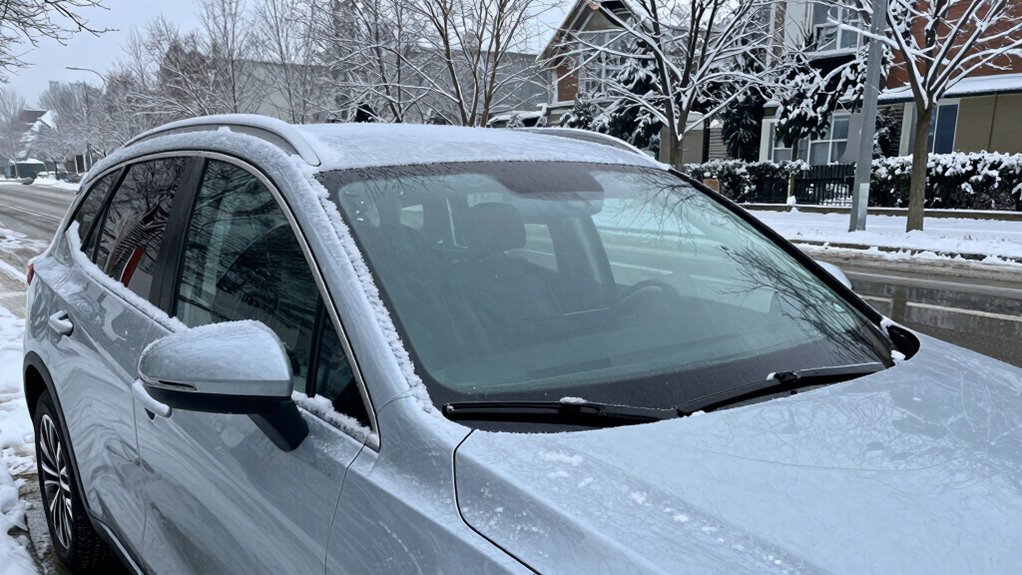
Before hitting the road, make sure your wipers and fluid are in good shape to keep your visibility clear. Remove all snow and ice from your windows, mirrors, and especially the roof and hood to prevent debris from flying onto your windshield. Taking these steps guarantees safer driving and better control in winter conditions.
Check Wipers and Fluid
Have you checked your windshield wipers and fluid lately? Making sure they’re in good shape is essential for winter driving safety. First, inspect your windshield wipers for cracks, tears, or stiffness—they should glide smoothly across the glass. Second, check your fluid level; it should be full of winter-grade fluid that won’t freeze. Third, consider replacing worn wipers if they streak or skip, as clear visibility depends on them. Don’t forget to test your windshield washer system to confirm the fluid sprays evenly. Keeping your wipers in top condition and maintaining a full, proper fluid level ensures you can quickly clear snow, ice, or road grime, giving you a clear view and safer drive in winter conditions.
Remove All Snow and Ice
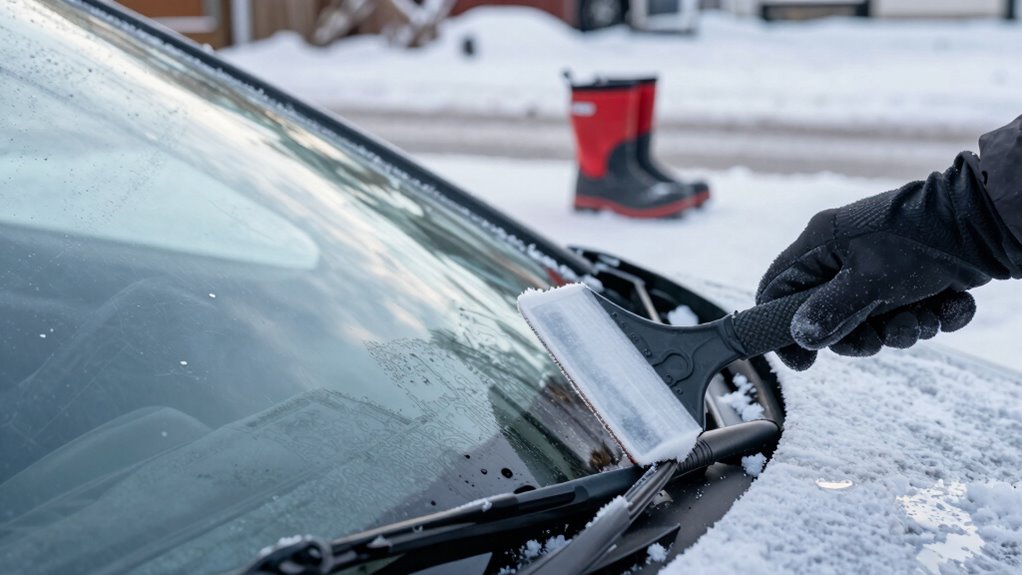
Removing snow and ice from your vehicle is a key step in winter driving prep that directly impacts visibility and safety. You need to thoroughly clear your windows, mirrors, and roof to prevent snow from flying off or ice from obstructing your view. Use a snow removal tool to gently scrape off ice melting residues, ensuring no frost remains. Be systematic: focus on the driver’s side, passenger side, and rear windows. Clear snow from side mirrors to maintain proper visibility.
| Snow Removal | Ice Melting |
|---|---|
| Use a scraper | Apply de-icer |
| Clear all glass | Wait for ice to soften |
| Remove snow from mirrors | Avoid chipping paint |
| Clear roof to prevent falling snow | Use a soft brush if needed |
| Check all windows | Ensure nothing obstructs your view |
Clear Roof and Hood
To guarantee maximum visibility and safety, you need to clear snow and ice from your vehicle’s roof, hood, windows, and mirrors. Roof cleanliness is vital to prevent snow from sliding onto your windshield while driving. Additionally, clearing the hood improves visibility of the engine and prevents ice from flying off. To do this effectively:
- Remove snow and ice from the entire roof to avoid snow blowing onto your windshield or other vehicles.
- Clear the hood thoroughly to maintain hood visibility and prevent ice buildup.
- Wipe down windows and mirrors for unobstructed views and safer driving conditions.
Taking these steps ensures your vehicle is safe for winter roads, reduces the risk of accidents, and keeps your view clear at all times.
Adjust Your Driving Habits for Icy Roads and Snow

When roads turn icy and snow-covered, adjusting your driving habits becomes essential for staying safe. Focus on improved driving techniques and heightened road hazard awareness. Reduce your speed and leave extra space between vehicles to account for longer stopping distances. Avoid sudden turns or braking, which can cause skidding. Instead, steer smoothly and brake gently. Be especially cautious on bridges and shaded areas, where ice forms first. Here’s a quick guide:
| Driving Technique | Road Hazard Awareness | Tip |
|---|---|---|
| Gentle steering | Watch for black ice | Drive slowly, no quick moves |
| Increase following distance | Be alert for snowplows | Stay patient and cautious |
| Use lower gears | Notice changing road conditions | Maintain control, avoid distractions |
Adjusting your habits helps keep you safe on icy roads.
Plan Your Route and Check Weather Forecasts Before Leaving
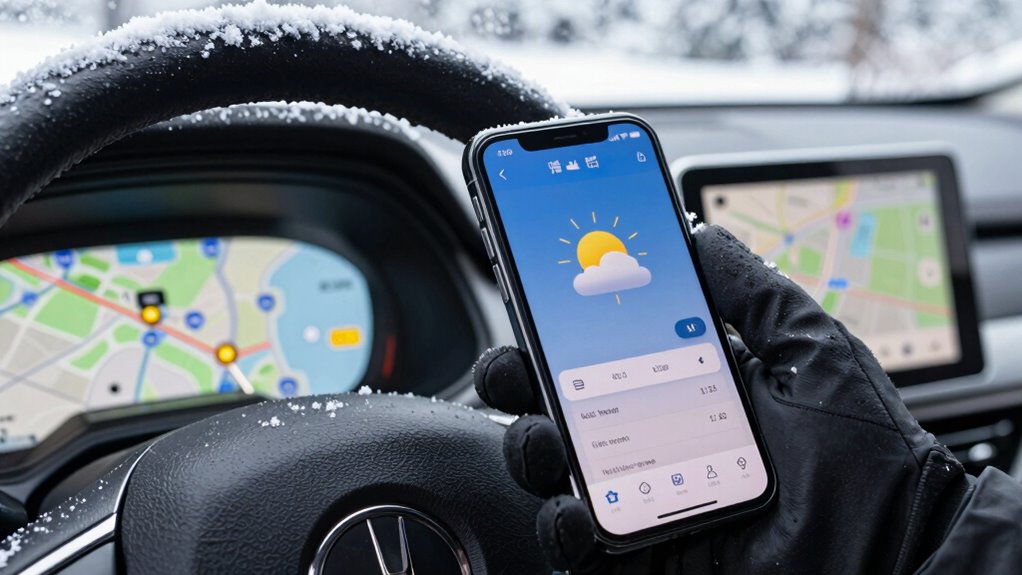
Before hitting the road in winter conditions, take the time to plan your route and check the weather forecast. Proper route planning helps you avoid dangerous areas like steep hills or poorly maintained roads. Use weather monitoring tools to stay updated on snow, ice, or storms along your path. Here are three essential steps:
- Map out alternative routes in case your primary road becomes unsafe.
- Check local weather forecasts for your entire trip, not just your starting point.
- Stay informed about road conditions and closures through traffic reports.
Create a Quick Safety Checklist Before Hitting the Road
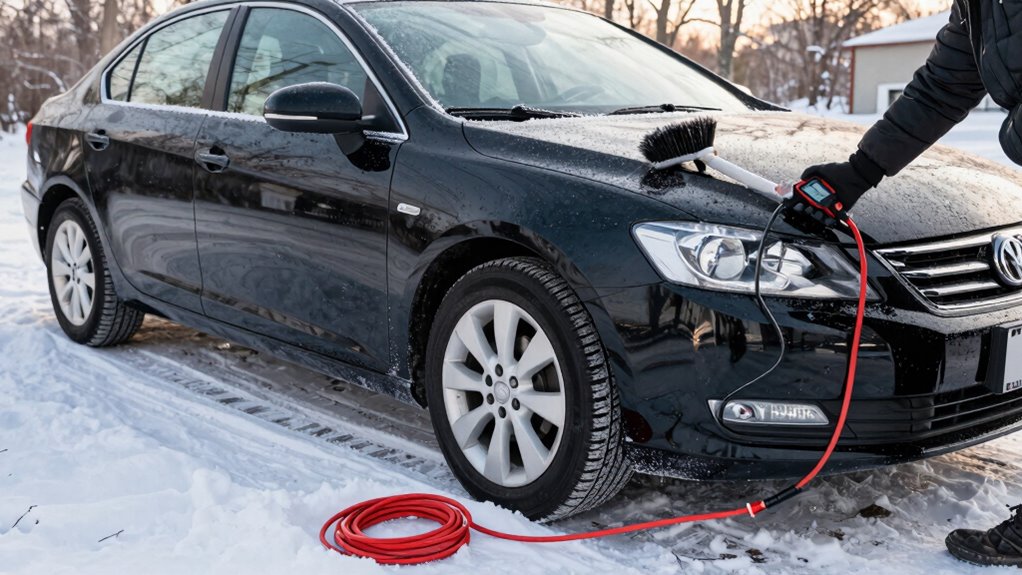
Creating a quick safety checklist before hitting the road guarantees you’re prepared for winter driving conditions. Start by inspecting your vehicle maintenance: check tire tread, tire pressure, and fluid levels, including windshield washer fluid rated for cold weather. Make certain your brakes and lights are functioning properly. Review driving techniques suited for winter, like reducing speed, increasing following distance, and gentle steering inputs. Confirm emergency supplies are in your car—blankets, a scraper, and a flashlight. Don’t forget to verify that your windshield wipers are effective. Taking these simple steps in just a few minutes helps you avoid surprises and stay safe. A thorough, quick checklist keeps your vehicle ready and sharpens your driving techniques for icy or snowy roads.
Frequently Asked Questions
How Often Should I Check My Tire Pressure During Winter?
You should check your tire pressure at least once a month during winter to guarantee winter safety. Cold temperatures cause tire pressure to drop, compromising traction and handling. Regularly inspecting your tires helps you catch any issues early and maintain peak performance. Keep a gauge handy, especially before long drives or bad weather, so you stay safe on icy or snowy roads and avoid unnecessary accidents.
What Is the Best Way to Test My Car Battery’s Strength?
Like a blacksmith testing a sword, you should use a multimeter for voltage testing your car battery. Turn off your car, disconnect the battery if possible, and set the multimeter to DC volts. Place the probes on the battery terminals; a healthy battery should read around 12.6 volts. Anything notably lower indicates poor battery health and may need replacing before winter hits.
Which Ice Scrapers Are Most Effective for Winter Conditions?
You should choose an ice scraper with high durability and ergonomic design for winter conditions. Look for models with sturdy, impact-resistant materials that won’t break easily. An ergonomic handle provides better grip and comfort, making scraping less tiring. Consider a scraper with multiple edges or a built-in brush for versatility. These features guarantee you can clear ice efficiently and comfortably, even in the toughest winter weather.
How Can I Prevent Fogging on My Windows While Driving?
To prevent fogging on your windows while driving, use effective defogging techniques like turning on the defroster and adjusting the air to direct airflow onto the windows. You can also improve window insulation by cracking a window slightly to promote airflow and reduce humidity inside your vehicle. Regularly clean your windows with a suitable anti-fog solution, and guarantee your climate control system is functioning properly for maximum visibility.
What Are Essential Items to Include in a Winter Emergency Kit?
Did you know winter emergencies can happen in just 15 minutes? To stay safe, always include emergency supplies like blankets, a flashlight, extra batteries, and non-perishable snacks. Also, check your vehicle maintenance—ensure your tires, antifreeze, and brakes are in top shape. Keep a snow brush, ice scraper, and jumper cables handy. Being prepared with these essentials can make all the difference during winter road surprises.
Conclusion
Did you know that over 70% of winter driving accidents could be prevented with just a quick prep? Taking 10 minutes to check your tires, battery, lights, and emergency supplies can make a huge difference. Don’t skip these simple steps—your safety depends on it. Stay prepared, drive carefully, and enjoy a safer winter season on the road. A little preparation goes a long way in keeping you safe and confident behind the wheel.