
Insulation ratings like R-value and TOG measure how well winter boots retain heat, helping you stay warm in cold weather. Higher ratings generally mean better heat retention, but they should match your activity level and climate. These ratings are determined through standardized tests that assess heat transfer and moisture resistance. When choosing boots, compare ratings along with waterproof features and traction to find the best fit. Keep exploring to understand how different insulation types and extra tips keep your feet cozy.
Key Takeaways
- Insulation ratings like R-value and TOG measure how well boots retain heat; higher ratings generally mean warmer footwear.
- Always select boots with insulation ratings suited to your climate and activity level for optimal warmth.
- Natural insulations (down, wool) offer high warmth but less moisture resistance; synthetics provide better moisture management.
- Combine insulation ratings with waterproof features and good sole traction to maximize foot warmth and safety in winter conditions.
- Proper sock layering and regular footwear maintenance enhance insulation effectiveness and prevent heat loss.
What Do Insulation Ratings Mean for Winter Boots?
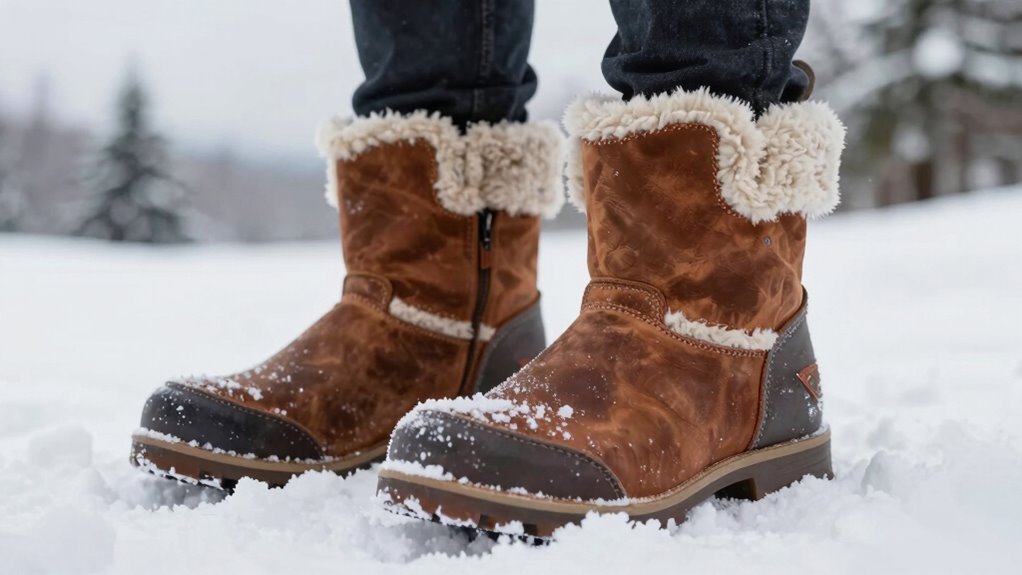
Understanding insulation ratings is essential when choosing winter boots because they directly indicate how well the boots will keep your feet warm in cold weather. These ratings help you compare different options, especially when considering fashion trends and brand comparisons. Some brands prioritize sleek, trendy designs, while others focus on insulation performance. Recognizing what the insulation rating means allows you to balance style with warmth, ensuring you don’t sacrifice comfort for fashion. A higher rating generally indicates better insulation, making it suitable for harsher winter conditions. When comparing brands, look for those that clearly specify insulation levels, so you can confidently select boots that match your climate and style preferences. This knowledge helps you make smarter choices for both function and fashion. Additionally, understanding insulation performance can guide you in choosing boots that provide the right level of warmth for your specific environment, especially in extreme cold. Knowing how insulation ratings are measured can help you better interpret product labels and make informed decisions. Being aware of thermal resistance ratings can further ensure you select footwear that withstands the coldest conditions, especially in freezing temperatures.
How Are Insulation Ratings Measured in Winter Boots?
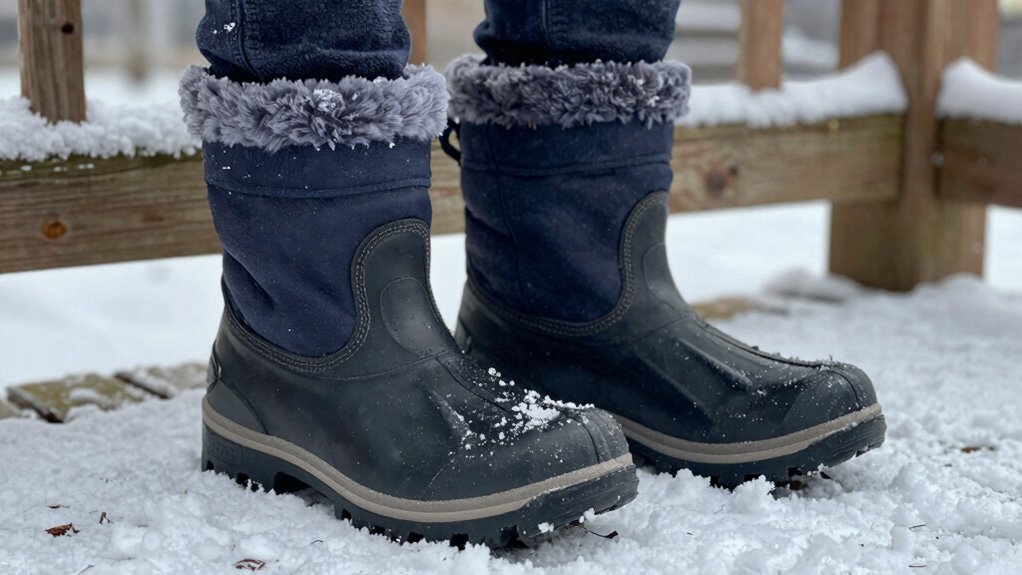
Insulation ratings in winter boots are determined through standardized testing methods that measure how well the footwear retains heat. These tests assess the thermal conductivity of the insulation, which indicates how easily heat passes through the material. A lower thermal conductivity means the insulation is better at trapping heat. The testing also considers insulation thickness, as thicker insulation generally provides more warmth. Manufacturers often use a thermal probe or heat source to evaluate how much heat escapes through the boot material over a set period. The results help assign insulation ratings, such as TOG or R-value, which quantify the boot’s ability to keep your feet warm. Additionally, understanding the specific testing standards used in insulation measurement can help you compare different boots more effectively. By understanding these measurements, you can choose winter boots that offer the appropriate level of insulation for your needs. Recognizing the testing methods can also give you insight into the durability and performance of the insulation over time. Knowledge of the thermal conductivity of materials can further aid in selecting footwear suited for extreme cold conditions. Furthermore, considering insulation durability ensures your boots maintain their warmth during prolonged winter use.
What Are the Different Types of Insulation Materials?
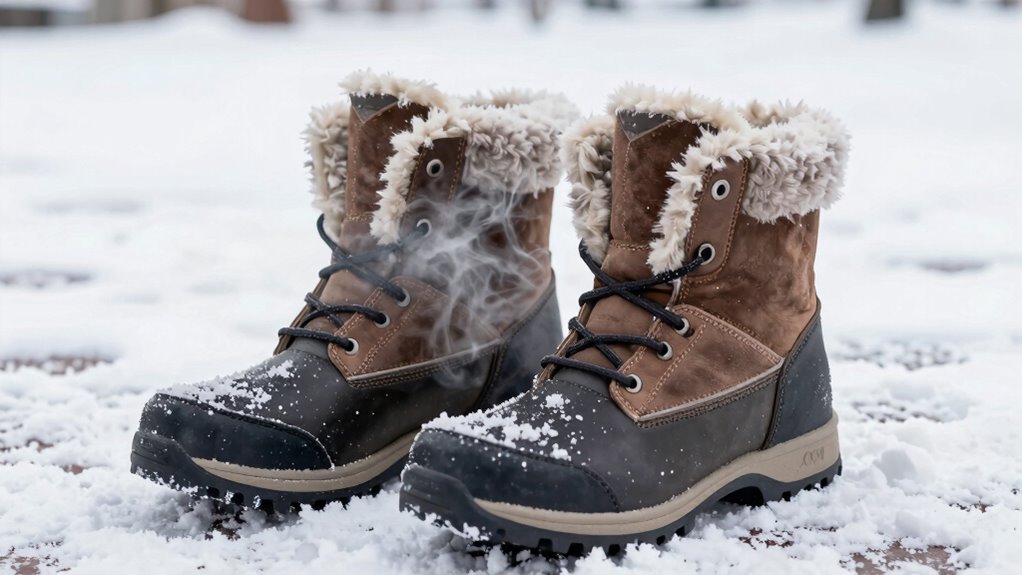
You’ll find insulation materials in winter boots mainly fall into natural and synthetic categories. Down and synthetic fill are common options, each offering different benefits in warmth and weight. Understanding these types helps you choose the right boots for cold weather conditions. Proper insulation selection ensures optimal comfort and warmth during harsh winter days. Additionally, considering the moisture resistance of insulation materials can significantly impact their effectiveness in winter conditions.
Natural vs. Synthetic Materials
When choosing insulation materials for winter boots, it’s important to contemplate the differences between natural and synthetic options. Natural materials, like wool or down, often provide excellent warmth and insulation durability, but they can be less resistant to moisture and may require more maintenance. Synthetic insulations, such as polyester fill, are designed to mimic natural fibers, offering better moisture resistance and durability in wet conditions. They tend to be lightweight and retain warmth even when wet. However, synthetic options generally have a higher environmental impact due to their production processes and challenges in biodegradability. Your choice depends on your priorities—whether you value eco-friendliness or prefer insulation that performs well in damp environments. Understanding insulation properties can help you select the best material for your needs. Additionally, considering moisture management is crucial to ensure your boots stay dry and warm during winter adventures, especially since sustainable insulation choices are becoming more popular among environmentally conscious consumers.
Down and Synthetic Fill
Down and synthetic fill are two common types of insulation materials used in winter boots, each offering distinct benefits. Down, usually from ducks or geese, provides excellent warmth-to-weight ratio and compressibility, making your boots lightweight and cozy. Synthetic fills, like polyester, excel at retaining heat even when wet and are often more affordable. Some boots feature thermal liners or merino wool insoles, enhancing insulation further. For added moisture management, different materials perform better in various conditions. Proper boot fit can also improve insulation efficiency and overall comfort. Additionally, the insulation material selected can influence the longevity of your boots, especially in harsh winter environments. Here’s a quick comparison: insulation materials.
| Feature | Down | Synthetic Fill |
|---|---|---|
| Warmth-to-Weight | Excellent | Good |
| Moisture Resistance | Poor | Good |
| Durability | Less durable | More durable |
| Cost | Usually more expensive | Usually more affordable |
| Compressibility | Very compressible | Less compressible |
How to Choose the Right Insulation Level for Your Climate and Activities
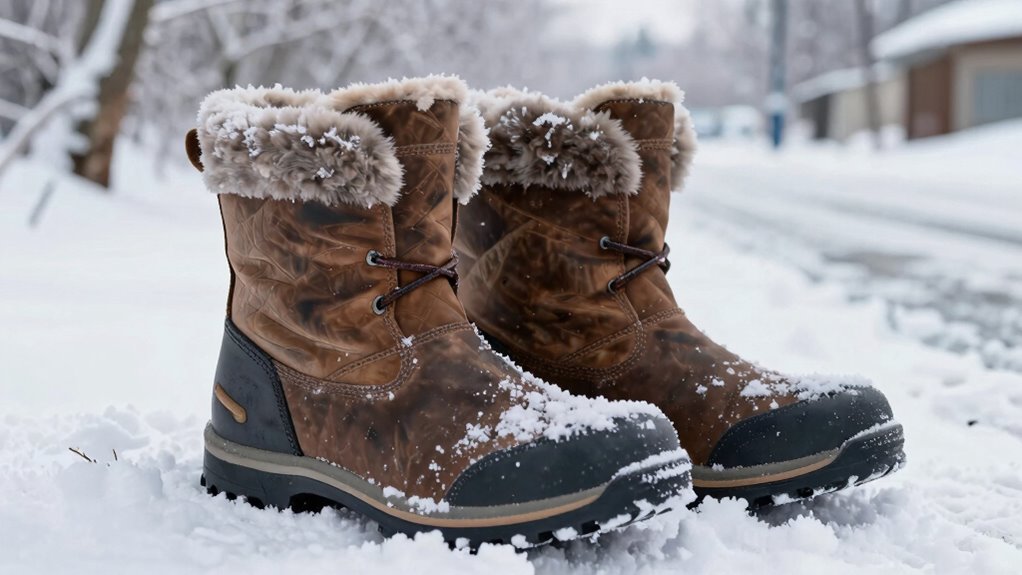
Choosing the right insulation level for your winter boots depends on your climate and activity level. If you’re hitting the slopes, opt for boots with higher insulation to maintain skiing performance without sacrificing mobility. Insulation that’s too thick can hinder your agility, while too little leaves you cold. For urban fashion, lighter insulation offers style and comfort without bulk, perfect for short walks and daily commuting. Consider your typical winter weather—colder regions demand more insulation, while milder climates require less. Think about your activity intensity; vigorous activities generate body heat, so less insulation might suffice. Additionally, understanding insulation ratings can help you compare and select the best boots for your needs. Ultimately, matching insulation to your environment and routine ensures your feet stay warm and comfortable, whether you’re carving slopes or managing city streets.
How to Read and Compare Insulation Ratings When Shopping for Winter Boots

Understanding how insulation ratings are displayed can help you compare winter boots effectively. Look for the insulation type and R-value or TOG rating, which indicate warmth levels. Higher ratings generally mean better insulation, but also consider sole traction for icy conditions and waterproof features to keep your feet dry. When comparing boots, keep these points in mind:
Compare insulation types, R-value or TOG ratings, waterproof features, and sole traction for optimal winter boots.
- Insulation ratings should align with your climate and activity level.
- Check if waterproof features are included to prevent moisture entry.
- Evaluate sole traction to ensure slip resistance on icy or snowy surfaces.
- Familiarizing yourself with insulation ratings systems can improve your ability to select the best footwear for winter conditions. Additionally, understanding how insulation ratings are determined can help you make more informed comparisons across different brands and models. Recognizing the barriers to understanding insulation ratings can further enhance your confidence when choosing winter boots.
Tips for Keeping Your Feet Warm Beyond Insulation Ratings
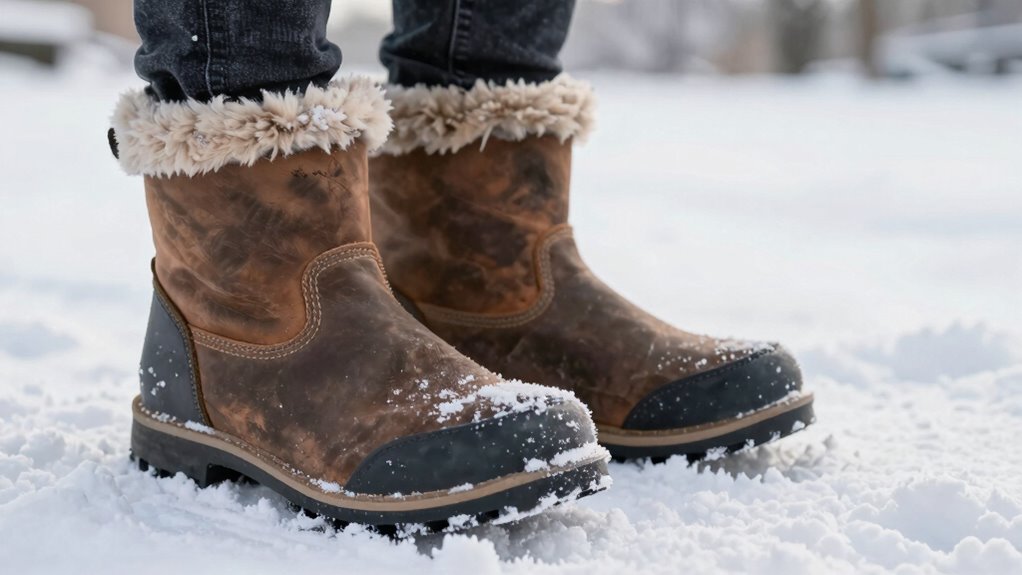
Even with high insulation ratings, keeping your feet warm in winter requires additional strategies. One effective method is sock layering—wearing a thin moisture-wicking sock next to your skin, topped with a thicker insulating sock. This traps heat and manages moisture, preventing your feet from getting cold or sweaty. Additionally, waterproofing techniques are vital; ensure your boots are waterproof or apply a waterproof spray to keep moisture out. This prevents dampness, which can sap heat and cause discomfort. Regularly check your footwear for any leaks or damage. Combining sock layering with waterproofing creates a barrier that maintains warmth and dryness, even in harsh conditions. These simple tips greatly boost your warmth, complement insulation ratings, and keep your feet comfortable throughout winter adventures.
Frequently Asked Questions
How Does Insulation Thickness Impact Warmth and Flexibility?
Thicker insulation increases warmth by trapping more heat, but it can reduce material flexibility, making boots stiffer and less comfortable. Higher insulation density means more insulating material, which boosts warmth but may limit movement. To stay warm without sacrificing flexibility, look for boots with moderate insulation thickness and flexible materials like soft neoprene or lightweight synthetic fibers. This balance keeps your feet warm while allowing natural movement.
Are Higher Insulation Ratings Always Better for Extreme Cold?
Think of insulation density as a cozy blanket for your feet. Higher insulation ratings aren’t always better in extreme cold because they can reduce flexibility and breathability. For extreme temperatures, look for boots designed with ideal insulation that balances warmth and temperature regulation. Too much insulation can trap moisture and cause discomfort, so choose a rating that matches the climate, ensuring your feet stay warm without overheating.
Can Insulation Ratings Indicate Waterproof or Breathable Features?
Insulation ratings don’t directly indicate waterproof features or breathable technology. While some boots with high insulation might also be waterproof, it’s not guaranteed. To find waterproof boots, look for features like waterproof membranes or sealed seams. For breathability, check for breathable technology that allows moisture to escape while keeping water out. Always read product descriptions to confirm the boots meet your needs for waterproofing and breathability alongside insulation.
Do Different Insulation Materials Perform Better in Moisture or Damp Conditions?
Different insulation materials vary in moisture resistance and damp performance. Synthetic insulations like Thinsulate perform better in damp conditions because they retain insulation properties when wet, unlike down, which loses its effectiveness. You’ll find that materials with moisture-wicking properties help keep your feet dry and warm, ensuring better damp performance. So, choose boots with moisture-resistant insulation if you expect to encounter damp or wet environments frequently.
How Do I Maintain Insulation Effectiveness Over Time?
To maintain insulation effectiveness over time, you should regularly clean and dry your boots to prevent moisture buildup, which can reduce insulation longevity. Guarantee the sole comfort remains high by inspecting for wear and replacing insoles if needed. Store your boots in a cool, dry place when not in use, and avoid exposure to extreme heat. Proper care keeps your boots insulated, comfortable, and effective in keeping your feet warm through the season.
Conclusion
Remember, choosing the right winter boots is like planting seeds for warmth—you’ll reap comfort all season long. Pay attention to insulation ratings, but also consider your climate and activity level. Just as a sturdy ship needs the right anchor, your feet need proper insulation to weather the cold. With informed choices, you’ll navigate winter’s chill with confidence, knowing you’re prepared to face whatever the season throws your way—because staying warm is your true north.