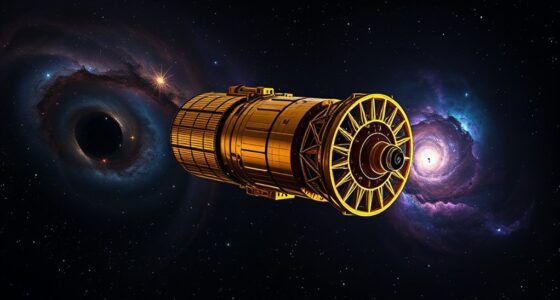

🔍 Read the full analysis: What This Twilight Dial Reveals About AI-Based NLC Watching on ThorstenMeyerAI.com

Get business pricing on monitors, keyboards and dev gear
- Business-only prices and quantity discounts
- Tax-exempt purchasing
- Multiple users, one account, clear invoices
TL;DR
ThorstenMeyerAI.com describes “Noctilucent — NLC Watch at 83 km,” an AI-built exhibition website that uses a solar-depression dial to change the page’s simulated twilight. The exhibit is fictional, not a real observing network or live scientific service; the clouds it depicts are real.
ThorstenMeyerAI.com has described an AI-built web exhibition that uses a solar-depression dial to change a simulated noctilucent-cloud scene. The project, titled “Noctilucent — NLC Watch at 83 km,” is a fictional field journal, not a real observing organization or live scientific service; its subject, high-altitude noctilucent clouds, is real. The original project description details the exhibit.
The dial spans the Sun’s position from six to sixteen degrees below the horizon, with the exhibit’s most expressive visual state near eleven degrees. Moving it changes several page elements together, including sky brightness, shadow depth, cloud glow, ambient color, grain and horizon flare. The same setting also informs diagrams and accompanying text, making the control a model for the experience rather than a simple decorative slider.
According to the project description, browser-generated Canvas graphics create the sky and cloud forms, while inline SVG draws diagrams and the altitude illustration. CSS supplies additional visual effects and layout; the site uses no image assets. Cloud types are given distinct animated patterns, and a later exercise asks visitors to hold a control while ground-level haze fades and the band at 83 kilometres becomes clearer. Releasing early lets the simulated sighting fade.
The project says the interaction supports pointer, keyboard and touch-like key input. It also describes measures to reduce unnecessary animation: offscreen scenes are not continually painted, animation stops when the page is hidden, and reduced-motion settings receive a still version. The supplied material outlines these features but does not provide independent testing results or performance measurements.
FIELD NOTE · VISUAL EXHIBITION
What This Twilight Dial Reveals About AI-Based NLC Watching
“Noctilucent — NLC Watch at 83 km” is an AI-built web exhibition about real high-altitude clouds. Its solar-depression dial reshapes a simulated twilight scene; the field journal itself is fictional, not a live observing service.
01 / THE CONTROL
A dial connects light to the scene
The dial changes simulated solar depression. Several visual layers follow together, helping visitors explore why high clouds may glow after the ground is dark.
Sky and shadows
Sky brightness and shadow depth shift as the simulated Sun moves farther below the horizon.
Glow and color
Cloud glow, ambient color, grain and horizon flare respond to the selected setting.
Diagrams and text
The setting also informs diagrams and accompanying copy, tying the control to the wider story.
02 / THE EXPERIENCE
Patience becomes part of the interface
The page pairs generated visuals with a timed-feeling interaction. These are described design choices; the supplied material includes no independent performance measurements.
Move the dial through the simulated solar-depression range.
Sky light, cloud glow, shadows and atmosphere adjust together.
In an exercise, ground haze fades while the 83 km band grows clearer.
Release early and the simulated sighting fades from view.
“Patience becomes part of the interface rather than just a subject in the text.”
ThorstenMeyerAI.com project description
03 / REALITY CHECK
Real clouds, fictional field journal
Noctilucent clouds are real, high-altitude ice clouds that can remain sunlit after the ground enters darkness. The invented stations and logs belong to the exhibition’s fictional frame.
What the exhibit describes
Browser-generated Canvas graphics form the sky and clouds; inline SVG draws diagrams and the altitude illustration. CSS adds visual effects and layout, with no image assets. Cloud types receive distinct animated patterns. The project describes pointer, keyboard and touch-like key input, reduced-motion still imagery, and animation that pauses when hidden or offscreen.
What the source does not establish
It gives no independent accuracy review of the lighting model, accessibility results, mobile performance or frame-rate measurements. It does not identify the AI tools, provide a go-live date, or say that the scenes use live observations. Its fictional stations are not operational observer sites.
04 / CLAIMS AT A GLANCE
What the project does—and does not—verify
The supplied description outlines an interactive visual experience and its intended design. It does not provide external validation or evidence of a live scientific service.
| Question | Supported by description | Not established |
|---|---|---|
| Is NLC Watch a real observing service? | ✓ Fictional field journal | ✗ Live network |
| Are noctilucent clouds real? | ✓ High-altitude ice clouds | ~ Current local sightings |
| Does the dial change the scene? | ✓ Described visual response | ~ Match to real conditions |
| Has the experience been independently tested? | ~ No results supplied | ✗ Verified performance |
| Does the page report live cloud data? | ✓ Browser-generated scene | ✗ Live data indicated |
05 / QUICK ANSWERS
Key questions
What does the dial change?
It spans 6° to 16° below the horizon and updates aspects of the simulated sky, cloud glow, shadows and ambient color.
Are the clouds real?
Yes. Noctilucent clouds are real high-altitude ice clouds that may remain illuminated after the ground darkens.
Does the exhibit show live conditions?
The description does not say that it uses live observations or data. Treat the visuals as an educational simulation.
Where should I look for current sightings?
Consult an actual observing or meteorological service; the fictional NLC Watch is not a source for current conditions.
A Dial Connects Light to the Scene
The exhibit’s main idea is that one changing variable can shape an entire visual explanation. Rather than depicting noctilucent clouds against an unchanging night sky, the dial alters the simulated illumination across the page. That makes the contrast at the center of the subject easier to follow: the ground can be dark while high clouds remain lit by the Sun below the visible horizon.
For readers, the distinction between an educational visualization and a scientific service matters. The site can offer an interactive way to think about twilight and cloud visibility, but the source does not describe it as collecting observations, issuing forecasts or reporting live conditions. Its invented stations and field-log format are part of the fictional presentation, not evidence of an operational observer network.
The interaction also makes patience part of the design. In the haze exercise, the cloud band becomes clearer only while the visitor holds the control. That is an artistic choice intended to echo observation; it is not, on the information provided, a measured demonstration of how long a real sighting takes.
As an affiliate, we earn on qualifying purchases.
Real Clouds, Fictional Field Journal
Noctilucent clouds are real, high-altitude ice clouds that can remain illuminated after the ground below has entered darkness. The project places its imagined observing subject around 83 kilometres above Earth and presents the changing twilight as a way to explore how illumination affects visibility.
The source describes the exhibit as room 162 of a planned 175-room series and frames its editorial sequence around the horizon, cloud forms, ice crystals, seasonal observing and a field log. It also gives a fictional design brief referencing summer observations near 55–65 degrees latitude and stations inspired by areas near Kiruna and the Shetland Islands. These details establish the scene’s setting; they should not be mistaken for records from actual stations.
The project’s stated production process has three passes: building the working page, reviewing it for clarity and interaction, and conducting an art-direction review. The accompanying design guide is described as covering the lighting model, generated graphics and animation behavior. The supplied source does not include an independent review or documentation showing that the described review process was externally conducted.
““An AI-built exhibition piece: a fictional field journal for a fictional observing project, not a real company or live scientific service.””
— ThorstenMeyerAI.com project description
As an affiliate, we earn on qualifying purchases.
What the Project Does Not Verify
The supplied description does not state when the exhibition went live, provide a URL to independently inspect it, or identify which AI tools were used to build it. It also offers no independent assessment of the scientific accuracy of the lighting model or the visual relationship between the dial settings and real observing conditions.
The page is described as interactive, but the source does not provide test results confirming its accessibility, mobile performance or frame rate. Its fictional logs and station references are not presented as genuine observations, and there is no indication that the site receives live data. The exact status of the stated 175-room series and any planned releases is also not given.
As an affiliate, we earn on qualifying purchases.
The Design Guide and Live Page
ThorstenMeyerAI.com points readers to a live version of the room and a design guide detailing its implementation. The source does not give a release schedule for further rooms or say whether the exhibition will receive updates. Readers seeking current cloud sightings would need to consult an actual observing or meteorological service rather than treat the fictional NLC Watch as a live source.
high-altitude cloud observation tools
As an affiliate, we earn on qualifying purchases.
As an affiliate, we earn on qualifying purchases.
Key Questions
Is NLC Watch a real cloud-observing service?
No. The project description calls NLC Watch a fictional field journal and says it is not a live scientific service or real company.
Are noctilucent clouds real?
Yes. The source describes them as high-altitude ice clouds that can remain sunlit after the ground has become dark.
What does the solar-depression dial change?
It moves through a simulated range of six to sixteen degrees below the horizon and updates aspects of the scene including sky light, cloud glow, shadows and ambient color.
Does the exhibit show live cloud conditions?
The source does not say that it uses live observations or data. It describes a browser-generated visual experience, so its scenes should not be read as current sightings.
Source: ThorstenMeyerAI.com
Halloween Picks
halloween
As an affiliate, we earn on qualifying purchases.