
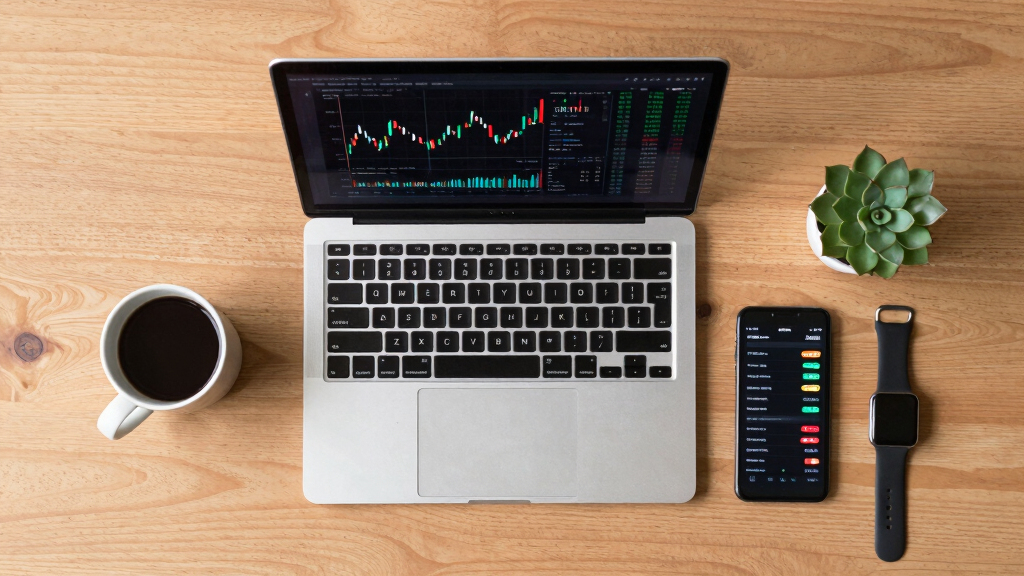

📊 Full opportunity report: Week Three — Foundation model vs Brownian motion. Kronos on five-minute BTC. on ThorstenMeyerAI.com — validation score, market gap, and execution plan.

TL;DR

A recent test comparing Kronos, a foundation model, with a Brownian motion baseline for 5-minute Bitcoin predictions found no statistically significant advantage for Kronos. The experiment aimed to determine if modern models outperform traditional assumptions in short-term crypto forecasting.

Recent testing shows that Kronos, an open-source foundation model for financial time series, does not outperform a traditional Brownian motion baseline in predicting 5-minute Bitcoin price movements.

Researchers conducted a rigorous offline comparison of Kronos-small, a foundation model trained on global exchange data, against a geometric Brownian motion model used as a baseline for short-term Bitcoin prediction. Using historical trade data from Polybot, which simulated trading over 497 instances, they assessed each model’s predictive accuracy through metrics such as Brier score, log-loss, and hypothetical profit and loss.

The results showed that Kronos’s predictive performance was statistically indistinguishable from Brownian motion on both the full sample and a strictly out-of-sample subset. Specifically, on the out-of-sample trades, the Brier scores for Kronos and Brownian were nearly identical, with a negligible difference of 0.0011, well within the margin of statistical noise. Consequently, the study concluded that, at least in this context, the modern foundation model does not offer a clear advantage over the traditional Brownian assumption for 5-minute BTC predictions.

Polybot Week 3 — Kronos vs Brownian — Thorsten Meyer AI
KRONOS
● RESEARCH SERIES / MAY 2026
THORSTEN MEYER AI · POLYBOT · WEEK 3
POLYBOT · WEEK 3
KRONOS vs BROWNIAN
Research Series · Foundation Model vs Classical Baseline · 2026-05-17

Foundation model
vs Brownian motion.
Kronos on five-minute BTC.

A modern learned model just lost to math from 1900. On 497 paired trades. Stage 2 is not happening.
Polybot’s fair-value strategy uses a 1900s geometric Brownian model to price 5-minute BTC outcomes. The natural follow-up after two weeks of negative parametric results: would a modern learned model trained on millions of real candles do better? The credible candidate: Kronos — open-source MIT-licensed foundation model, 25,000+ GitHub stars, AAAI 2026, four sizes from 4M to 499M parameters, trained on candles from 45 global exchanges. Test design: 497 paired (FILL→SETTLE) trades, Brownian baseline reconstructed line-for-line, Kronos-small (24.7M params) sampled with 16 forecast paths, scored on Brier + log-loss + hypothetical P&L, chronologically split for out-of-sample discipline. On 249 out-of-sample trades: Brownian 0.188 Brier vs Kronos 0.189 Brier. Gap 0.0011. Statistically indistinguishable. Stage 2 is not happening. But the paradox is more interesting than the verdict: when used as a directional signal Kronos fires 28% less often and wins 60.7% vs Brownian’s 49.1% — slightly better trader on hypothetical P&L, even while systematically over-confident in the tails (predicts 2.4% chance → actual 20.4% win; predicts 84% → actual 69.6%). The negative result is the answer. The methodology is what gets published.
This is not financial advice. Nothing in this article should be used to inform real trading decisions. The bot trades simulated money. If you build something like it and run it with real funds, the most likely outcome — by a wide margin — is that you lose those funds. That holds whether you use a Brownian model, a 100-million-parameter foundation model, or any other forecaster.
497
Paired (FILL→SETTLE) trades
all BTC · 5-min Up/Down markets
0.0011
Out-of-sample Brier-score gap
249 trades · statistically indistinguishable
Kronos log-loss vs Brownian
signature of confident wrong predictions
+$538 / +$465
Hypothetical Kronos vs Brownian P&L
the paradox · 60.7% vs 49.1% win rates
POLYBOT WEEK 3· KRONOS-SMALL · 24.7M PARAMS· BROWNIAN BASELINE· 497 PAIRED TRADES · BTC· POLYMARKET 5-MIN UP/DOWN· BRIER 0.193 / 0.211 / 0.213· LOG-LOSS 0.567 / 0.604 / 1.080· OUT-OF-SAMPLE 0.188 vs 0.189· GAP 0.0011 · INDISTINGUISHABLE· STAGE 2 NOT HAPPENING· KRONOS BETTER TRADER · WORSE FORECASTER· 60.7% vs 49.1% WIN RATE· TAILS: 2.4% → 20.4% · 84% → 69.6%· POLYBOT MIT· KRONOS MIT· AAAI 2026 PAPER · 25K+ STARS· 11 MIN MAC M-SERIES · MPS BACKEND· 1,300 LINES OF PYTHON· RESEARCH_PIPELINE.MD PUBLIC· SAME GAUNTLET · DIFFERENT MODEL· POLYBOT WEEK 3· KRONOS-SMALL · 24.7M PARAMS· BROWNIAN BASELINE· 497 PAIRED TRADES · BTC· POLYMARKET 5-MIN UP/DOWN· BRIER 0.193 / 0.211 / 0.213· LOG-LOSS 0.567 / 0.604 / 1.080· OUT-OF-SAMPLE 0.188 vs 0.189· GAP 0.0011 · INDISTINGUISHABLE· STAGE 2 NOT HAPPENING· KRONOS BETTER TRADER · WORSE FORECASTER· 60.7% vs 49.1% WIN RATE· TAILS: 2.4% → 20.4% · 84% → 69.6%· POLYBOT MIT· KRONOS MIT· AAAI 2026 PAPER · 25K+ STARS· 11 MIN MAC M-SERIES · MPS BACKEND· 1,300 LINES OF PYTHON· RESEARCH_PIPELINE.MD PUBLIC· SAME GAUNTLET · DIFFERENT MODEL·
FIG. 01 — THE TEST PIPELINE
Five steps · for every paired (FILL → SETTLE) trade in the running session
~1,300 lines of Python · 11 minutes on Mac M-series with PyTorch MPS · methodology public, specific numbers local
1
Reconstruct OHLCV context of the 60 minutes leading up to fire-time. Pull from the bot’s local Binance recording where available; fall back to Binance’s public klines API otherwise. Cache to parquet so re-runs cost nothing.
2
Recompute the Brownian baseline in Python — a line-for-line port of the bot’s own fairValuePUp(spot, openPrice, secondsLeftFrac, windowVol) formula. Matches scipy.stats.norm.cdf to three decimal places.
3
Read off the market-implied probability from the FILL price — what Polymarket’s order book thought the side was worth at the moment of fire. The market’s view as a reference point.
4
Run Kronos-small (24.7M parameters) on the OHLCV context · sample 16 forecast paths to the window’s end · count the fraction in which the underlying closes above the open price. That fraction is Kronos’s predicted p(Up).
5
Record (p_brownian, p_market, p_kronos, actual_outcome, P&L). Score on Brier + log-loss + hypothetical P&L. Sort chronologically · split into first/second half · report on both halves separately.
The discipline that matters: if a model wins on the first half but ties or loses on the second, that’s the curve-fit-in-slow-motion pattern the previous two articles named, and it doesn’t count as edge. The whole pipeline is reproducible from docs/RESEARCH_PIPELINE.md. Any future candidate model gets a sibling directory in research//, reuses the same Brownian baseline, the same trade-log loader, the same OHLCV fetcher, the same metrics, the same out-of-sample split. Same gauntlet, different model, same discipline.
FIG. 02 — FULL-SAMPLE SCORING · 497 PAIRED TRADES
Three models · two probability-scoring metrics
Brier score and log-loss · the standard scoring rules for probability forecasts · lower is better
Model
Brier ↓
Log-loss ↓
BrownianGeometric Brownian motion · the 1900s baseline
0.193
0.567
Market-impliedPolymarket order book at FILL · reference
0.211
0.604
Kronos24.7M-param foundation model · 16 sampled forecast paths
0.213
1.080
Kronos’s log-loss is roughly twice Brownian’s — the signature of a model that makes confident, wrong predictions in the tails. Polymarket’s order book sits between the two, reasonably calibrated, slightly worse than the bot’s Brownian and slightly better than the foundation model. The 100-year-old math beat the 24.7M-parameter foundation model on both probability-scoring metrics.
FIG. 03 — OUT-OF-SAMPLE VERDICT · 249-TRADE TEST HALF
Chronologically-separated · never seen by tuning
The verdict the test was designed to deliver · noise band of repeated runs with different sampling seeds
Brownian · 249-trade test half
0.188
Brier score (out-of-sample)
lower is better
Kronos · 249-trade test half
0.189
Brier score (out-of-sample)
lower is better
The gap
0.0011
Statistically indistinguishable
inside the noise band
Kronos does not beat Brownian on a held-out chronologically-separated sample. So Stage 2 is not happening.
“Stage 2” was the planned next step: wiring Kronos into Polybot as a live strategy if Stage 1 produced a clear signal. The case is not earned by this data. For 5-minute BTC at the horizons the bot trades, the open Kronos-small checkpoint does not. Stop. The next candidate model — Chronos · TimesFM · Lag-Llama · a Kronos finetune on 5-min crypto · something else — goes through the same gauntlet. Most will fail it. That is the gauntlet doing its job.
FIG. 04 — THE PARADOX · BETTER TRADER vs WORSE FORECASTER
By operational standards Kronos wins · by probabilistic standards Kronos loses
The hypothetical-P&L counterfactual replays the same data through “what if Polybot fired on each model’s probability”
Operational view · Kronos as the better trader
Kronos fires less · wins more · nets slightly more.
Hypothetical fires
201
Brownian fires (reference)
279
Win rate (Kronos)
60.7%
Win rate (Brownian)
49.1%
Hypothetical net P&L (Kronos)
+$538
Hypothetical net P&L (Brownian)
+$465
Fires ~28% less often and wins more reliably when it does. If you use Kronos as a directional signal in a broader system that does its own sizing — closer to how TradingAgents uses analyst outputs — the directional accuracy might still be useful.
Probabilistic view · Kronos as the worse forecaster
Systematically over-confident in the tails.
Kronos predicts
2.4%
Trades actually win
20.4%
Kronos predicts
84%
Trades actually win
69.6%
Log-loss vs Brownian
~2× worse
Brier (full sample)
0.213 vs 0.193
If you are building a fully-probabilistic system where the probability feeds an expected-value calculation against the market’s implied price — which is what Polybot does — calibration is everything, and Kronos’s calibration is bad enough to disqualify it. It thinks it knows more than it does at both ends.
Both interpretations are honest. Neither earns the model a place in Polybot. One of them might earn it a place, later, in TradingAgents — as a 5th analyst voice that votes on direction without being trusted for calibrated odds. That experiment is not what this week tested; it is a separate hypothesis for a separate week.
FIG. 05 — WEEK FOUR · THREE POSSIBLE THREADS
Each is a separate article · the pattern across them is the same
Honest measurement · out-of-sample discipline · no rescue narratives when something doesn’t work
1
A second-tier candidate model · Amazon’s Chronos
Same general shape as Kronos · different training corpus · also open-source. Running it through the exact same gauntlet would say whether the negative result is specific to Kronos or generalises to learned models in this regime.
Generalisation test
2
Kronos with a finetune on 5-min crypto data
The Kronos repo ships a finetuning pipeline. Taking the open Kronos-base checkpoint, finetuning on the bot’s own recorded BTC tick history, re-testing. Isolates “is the pretrained distribution wrong for crypto?” from “is the architecture wrong for this horizon?”
Architecture vs distribution
3
A live-trading update on Polybot
The fleet has been running paper trades continuously across these three weeks. A fresh aggregate-P&L view, with the same calibration-style analysis applied to live performance rather than historical replay, is overdue.
Status reset
The contract is “same gauntlet, different model, same discipline.” Specific numbers stay local. Methodology is public on the repo’s docs/RESEARCH_PIPELINE.md. Publishing reproducible parameter recipes for strategies that might be marginally profitable encourages people to copy them with real money, and the prior on real-money outcomes when copying retail strategies is “they lose.” Publishing the methodology lets the next person test their own model honestly without inheriting any of mine.
By probabilistic standards · Kronos is a worse forecaster. By operational standards · Kronos is the better trader. Both interpretations are honest. Neither earns the model a place in Polybot. One of them might earn it a place, later, in TradingAgents.
Thorsten Meyer AI · Week 3 · Foundation Model vs Brownian Motion

Implications for Short-Term Crypto Prediction Models

This finding is significant because it challenges the assumption that modern, learned models will automatically outperform traditional mathematical approximations like Brownian motion in high-frequency trading scenarios. For traders and developers, it suggests that sophisticated models may not always translate into better short-term forecasts, especially when market dynamics deviate from the assumptions embedded in the models. It underscores the importance of rigorous testing and validation before integrating advanced models into live trading systems.

The No-BS Guide to Prediction Market Arbitrage: AI-Powered Strategies for Polymarket & Kalshi — Find Arbitrage, Manage Risk & Profit from Real-World Events ... Code (The No-BS AI Playbooks Book 5)

The No-BS Guide to Prediction Market Arbitrage: AI-Powered Strategies for Polymarket & Kalshi — Find Arbitrage, Manage Risk & Profit from Real-World Events … Code (The No-BS AI Playbooks Book 5)

As an affiliate, we earn on qualifying purchases.

As an affiliate, we earn on qualifying purchases.

Background on Model Testing in Crypto Markets

Over recent years, there has been a growing interest in applying machine learning and foundation models to financial markets, aiming to improve prediction accuracy and trading performance. Kronos, an open-source model trained on millions of candles from global exchanges, emerged as a promising candidate. Prior research has shown that traditional models like geometric Brownian motion, which assume independent, normally-distributed log returns, are often used as baselines due to their simplicity and theoretical foundations. However, whether these models can be surpassed by modern learning algorithms remains an open question. This latest test builds on two weeks of previous experiments where a simple bot using Brownian motion was evaluated against real market data, revealing that most “edges” found were artifacts rather than genuine predictive advantages.

“Our results show that, at least for 5-minute BTC predictions, the foundation model does not outperform the traditional Brownian baseline in a statistically significant way.”

— Thorsten Meyer, researcher behind the test

Electronic Display for Real-Time Cryptocurrency/Bitcoin/Stock Market Data, Time, Weather & Temperature, 164*28*65mm, Supports Image Upload and 30s Video Playback, App-Controlled, 960*360 Resolution

Electronic Display for Real-Time Cryptocurrency/Bitcoin/Stock Market Data, Time, Weather & Temperature, 164*28*65mm, Supports Image Upload and 30s Video Playback, App-Controlled, 960*360 Resolution

Real-Time Data Display – Shows live cryptocurrency (Bitcoin), stock market trends, time, weather, and temperature updates at a…

As an affiliate, we earn on qualifying purchases.

As an affiliate, we earn on qualifying purchases.

Limitations and Unanswered Questions in Model Performance

While the test was thorough, it is limited to the specific context of 5-minute BTC predictions and the particular models evaluated. It remains unclear whether different foundation models, larger training sets, or alternative configurations could yield different results. Additionally, market conditions and the nature of short-term volatility may influence model effectiveness, and these factors could change over time. The study does not address long-term predictive capabilities or performance in different assets or timeframes.

Investing with the Secret Indicators of the Wealthy: How to Know What Stocks (and Crypto) to Buy and When: Proven Technical Indicators for Stocks and ... ... and Sell (The Power of Investing Book 1)

Investing with the Secret Indicators of the Wealthy: How to Know What Stocks (and Crypto) to Buy and When: Proven Technical Indicators for Stocks and … … and Sell (The Power of Investing Book 1)

As an affiliate, we earn on qualifying purchases.

As an affiliate, we earn on qualifying purchases.

Future Directions for Short-Term Crypto Forecasting

Further research is needed to explore whether other models, training data, or feature sets can outperform Brownian motion in short-term crypto prediction. Researchers may also examine different market conditions, asset classes, or longer prediction horizons. Additionally, integrating real-time data and adaptive learning techniques could provide new insights. For now, the results suggest caution in assuming that advanced models will automatically provide an edge in high-frequency crypto trading.

Financial Literacy Flashcards for Kids & Teens | 108 Money & Finance Terms with Images, Definitions & Discussion Prompts | 3 Skill Levels (Beginner–Advanced) | Deluxe Set with Digital Activity Book

Financial Literacy Flashcards for Kids & Teens | 108 Money & Finance Terms with Images, Definitions & Discussion Prompts | 3 Skill Levels (Beginner–Advanced) | Deluxe Set with Digital Activity Book

📘 BONUS Digital Companion Activity Book: Includes a printable 108 page companion activity book with structured exercises and…

As an affiliate, we earn on qualifying purchases.
As an affiliate, we earn on qualifying purchases.

Key Questions

Does this mean foundation models are useless for crypto trading?

No, this specific test shows they do not outperform a simple Brownian motion baseline in 5-minute BTC predictions. Other models or longer-term strategies may still have value.

Could different model sizes or training data improve performance?

Potentially, but the current study used a specific size (24.7M parameters) and training data. Further experiments are needed to determine if larger or differently trained models can do better.

Is the result specific to Bitcoin or applicable to other assets?

This study focused on Bitcoin at 5-minute intervals. Results may differ for other assets or timeframes, requiring separate testing.

What does this imply for traders using machine learning models?

It suggests that relying solely on complex models without rigorous validation may not lead to better short-term predictions, especially in volatile markets like crypto.

Source: ThorstenMeyerAI.com

You May Also Like

Understanding Riser Cable: Why It’s Important for Your Building

Journey into the world of riser cables to discover their crucial role in enhancing communication and safety within your building.

Buy Now, Pay Later: How Fintech Is Changing the Way We Shop

Fintech is revolutionizing shopping with Buy Now, Pay Later, but what hidden factors should consumers consider before diving in? Discover the potential pitfalls.

OpenEuroLLM. The third path.

European consortium OpenEuroLLM faces compute resource challenges amid progress, highlighting limits of pan-European AI development efforts.

Understanding NFTs: Why Digital Art and Collectibles Sold for Millions

Beneath the surface of digital art sales lies a transformative phenomenon—explore how NFTs are reshaping ownership and value in unexpected ways.