
Umami is the fifth taste that adds savory depth to your dishes. It enhances flavors, like when ripe tomatoes meet fresh basil, creating a delightful blend. Ingredients rich in umami, such as soy sauce and aged cheeses, bring out the best in meals. Cooking techniques, like slow simmering or marinating, release glutamate, amplifying flavors. This understanding can transform your cooking, making even simple recipes unforgettable. Keep exploring to discover even more secrets of this flavorful phenomenon.
Key Takeaways
- Umami is recognized as the fifth taste, characterized by a savory flavor from compounds like glutamate found in various foods.
- Combining umami-rich ingredients, such as tomatoes and basil, enhances flavor cohesion and elevates culinary creations.
- Cooking methods like slow-cooking and marinating release glutamate, maximizing the savory potential of meats.
- Seafood dishes benefit from umami sources like fish sauce and anchovies, enriching their overall taste profile.
- Embracing umami in cooking encourages experimentation and transforms simple recipes into more flavorful and memorable meals.
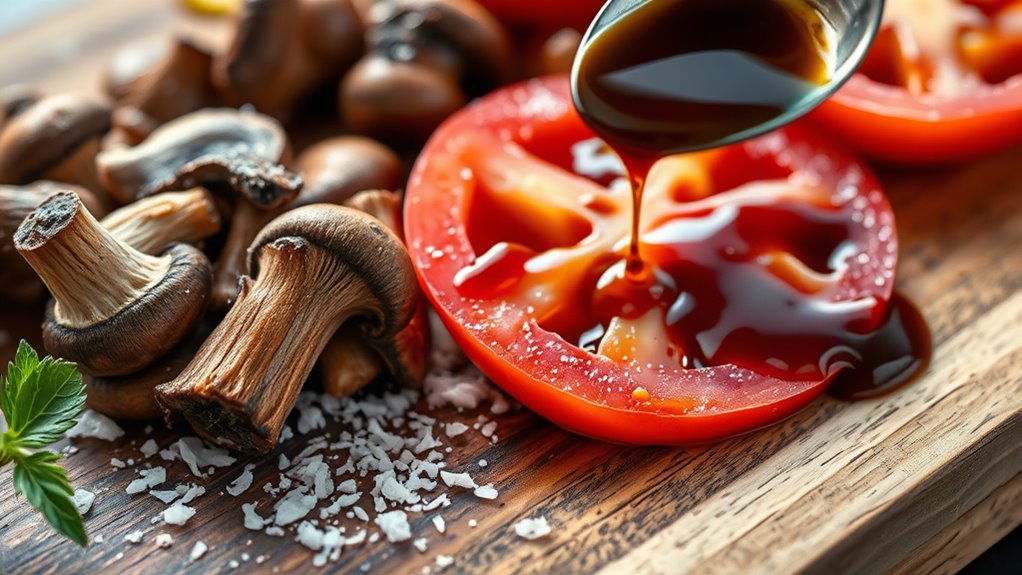
Umami, often described as the fifth taste, adds a rich depth to your dishes that enhances overall flavor. This savory taste comes from compounds like glutamate, which is found in foods such as tomatoes, mushrooms, and aged cheeses. When you start incorporating umami-rich ingredients into your cooking, you’ll discover how they can elevate the taste profile of your meals. It’s all about flavor enhancement, and once you understand how to harness this unique taste, you’ll see your culinary creations transform.
Umami, the fifth taste, enriches your dishes with savory depth, transforming your culinary creations through flavor enhancement.
When you think about ingredient pairing, umami plays a vital role. For instance, combining ripe tomatoes with fresh basil creates a symphony of flavors that’s hard to resist. The natural sweetness of tomatoes complements the aromatic quality of basil, while both ingredients provide a solid umami base. Similarly, adding a dash of soy sauce to stir-fried vegetables not only enhances the dish’s overall depth but also introduces a lovely saltiness that ties everything together. You’ll find that umami-rich ingredients can act as a bridge between contrasting flavors, making your dishes more cohesive and satisfying.
Don’t forget about meats, which are often a primary source of umami. When you slow-cook beef or roast chicken, the natural amino acids break down to release glutamate, creating an irresistible depth of flavor. Try marinating your proteins with ingredients like miso or Worcestershire sauce before grilling or frying. These umami boosters will not only tenderize the meat but also impart a complex taste that excites your palate.
Seafood is another fantastic source of umami. Whether you’re cooking with fish sauce, anchovies, or even seaweed, these ingredients can provide that savory punch your dishes might be missing. When making a seafood stew or a sauce, consider incorporating these umami elements to enhance the flavor further. Additionally, using essential oils for relaxation can create a calming cooking environment, making the process of preparing meals even more enjoyable.
Experimenting with different umami-rich ingredients will allow you to reveal new layers of flavor in your cooking. Whether you’re making a simple pasta or an elaborate feast, understanding the science behind umami can guide your ingredient pairing, ensuring that every meal you prepare is both delicious and memorable. So go ahead, embrace umami in your kitchen, and watch as your culinary skills flourish.
Frequently Asked Questions
What Foods Are Highest in Umami Flavor?
Foods high in umami flavor include mushrooms, tomatoes, aged cheeses, soy sauce, and cured meats. You’ll find that umami-rich ingredients like miso paste and fish sauce also enhance dishes beautifully. For the best umami flavor pairing, try combining these ingredients in your meals. For instance, adding Parmesan to a tomato sauce or incorporating shiitake mushrooms into stir-fries can elevate the taste, giving you that rich, savory depth you’re looking for.
Is Umami Taste Experienced Differently by Individuals?
Yes, you experience umami differently than others. Think of taste as a unique symphony, where individual taste sensitivity plays different notes. Your genetic flavor perception shapes how you savor each bite, making umami resonate more or less intensely. Some might find it a rich crescendo, while others perceive it softly. This variation creates a delicious tapestry of experiences, where each person’s palate dances to its own rhythm, highlighting the beauty of individual taste.
Can Umami Enhance Food Preservation Methods?
Yes, umami can enhance food preservation methods. By incorporating fermentation techniques, you not only boost the umami flavor but also create a natural barrier against spoilage. For instance, when you ferment vegetables or soy products, the resulting umami compounds enhance flavor and extend shelf life. This process taps into the power of beneficial bacteria, allowing your food to remain delicious and safe to eat for longer periods.
How Does Umami Impact Vegetarian or Vegan Diets?
Umami can profoundly enhance vegetarian or vegan diets by adding depth to plant-based flavors. You’ll find that incorporating ingredients like mushrooms, tomatoes, or fermented products can elevate your dishes, making them more satisfying. This culinary innovation allows you to explore new textures and tastes, ensuring your meals are both nutritious and delicious. By embracing umami, you can create plant-based dishes that tantalize your taste buds and keep you coming back for more.
Are There Any Health Benefits Associated With Umami?
Umami’s like a secret ingredient in the recipe of health! Scientific research shows it can enhance your nutrition by improving protein absorption and supporting muscle health. In culinary applications, it adds depth to dishes, making nutritious meals more satisfying. This savory taste can help curb cravings, leading you to make healthier food choices. So, embrace umami; it’s not just delicious, it’s a flavorful ally in your journey toward better health!
Conclusion
So, next time you’re cooking, remember that umami isn’t just a buzzword—it’s a game changer. Did you know that about 80% of your taste experience comes from what you smell? By embracing umami-rich ingredients like mushrooms, tomatoes, and soy sauce, you can elevate your dishes to new heights. It’s all about balance and depth, so don’t shy away from experimenting. Uncovering umami might just make your meals unforgettable!