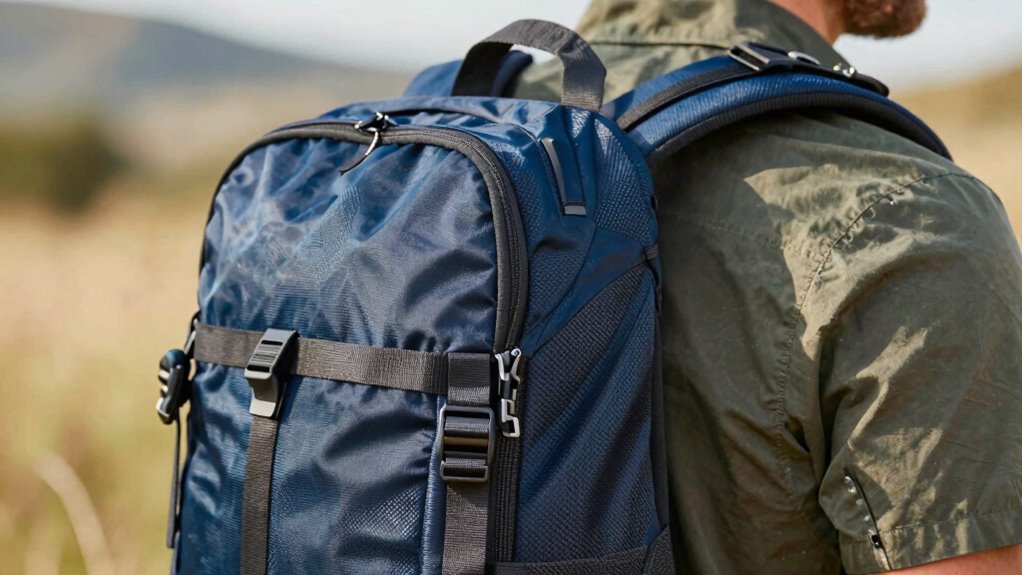

To stop shoulder pain, make sure your backpack straps are properly adjusted. Measure your torso and shoulder width to find the right strap length, then tighten or loosen the straps so the pack sits snugly just above your hips. Confirm straps are comfortable, not too tight or loose, and that padding aligns well. Adjustments like these help distribute weight evenly and prevent discomfort during travel. Keep exploring for tips on perfecting your fit and avoiding pain.
Key Takeaways
- Measure shoulder to strap sit point to ensure proper strap length for a snug, comfortable fit.
- Loosen straps before slipping arms through, then gradually tighten for even weight distribution.
- Adjust straps so the backpack rests just above the hips, not pulling on your shoulders.
- Check for pressure points or discomfort; fine-tune straps to eliminate shoulder strain.
- Replace worn or ill-fitting straps to maintain support and prevent ongoing shoulder pain.
Why a Proper Backpack Strap Fit Matters for Shoulder Comfort
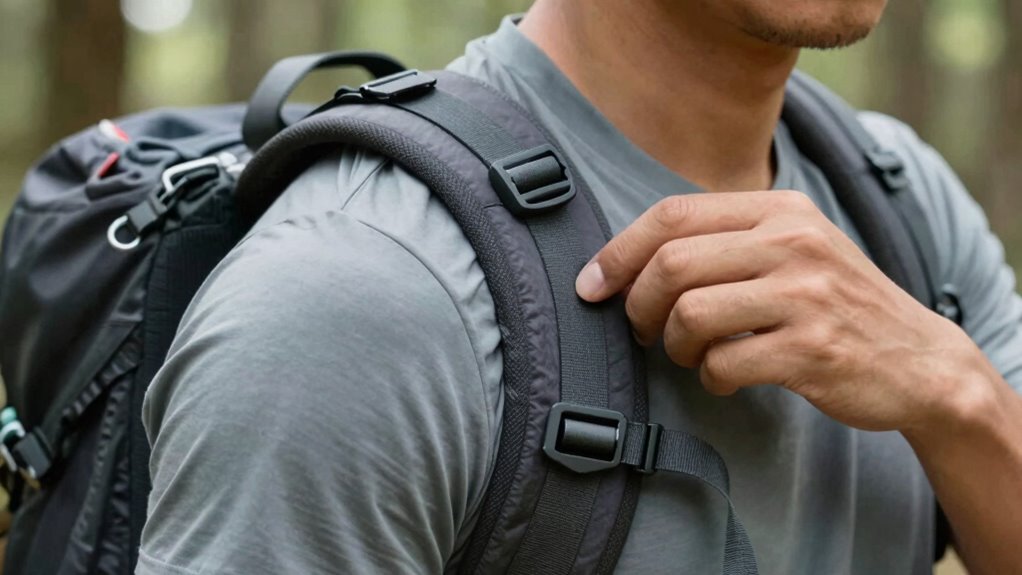
A proper backpack strap fit is essential because it directly affects how comfortable your shoulders feel during travel. When straps are too tight or too loose, it can cause unnecessary strain and discomfort. Backpack padding plays a key role in distributing weight evenly, reducing pressure points on your shoulders. Well-padded straps also improve shoulder ergonomics, preventing soreness and fatigue after long hours of walking. If your straps don’t fit correctly, you might develop aches or even injuries over time. Properly adjusted straps ensure the weight is balanced and aligned with your body’s natural posture. Additionally, understanding the importance of color accuracy in visual displays can help you better appreciate the details of your surroundings. Proper strap adjustment can also help prevent musculoskeletal issues, ensuring you enjoy your trip without added pain. Maintaining correct backpack fit is crucial for overall posture and comfort during extended periods of wear. Regularly checking your strap length can help prevent discomfort and keep your pack fitting perfectly. Paying attention to strap adjustment techniques can further enhance your comfort and reduce the risk of strain.
How to Measure Your Body and Backpack for the Right Strap Length
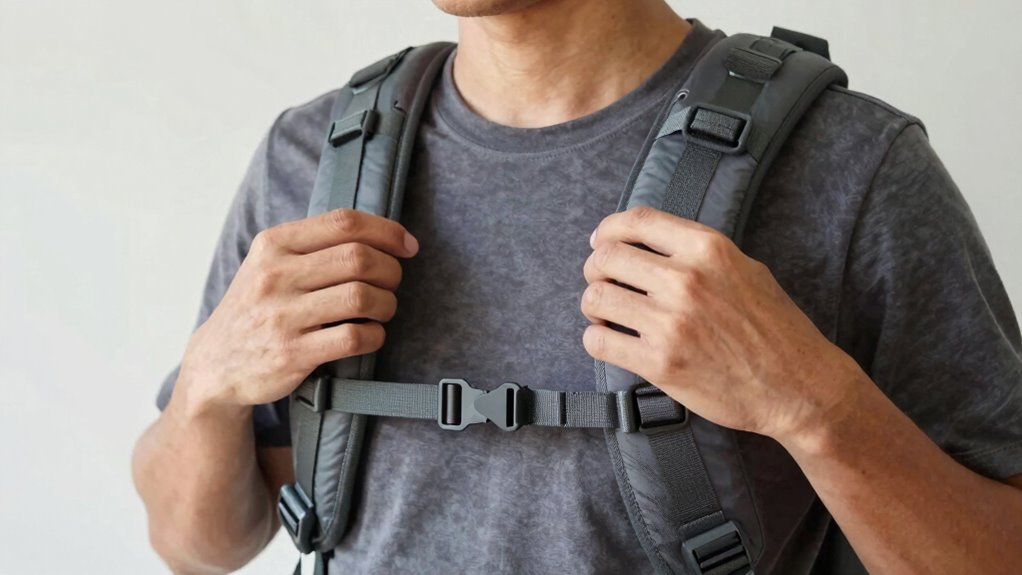
To guarantee your backpack straps fit perfectly, start by measuring your body accurately. Using simple measurement techniques ensures proper backpack sizing and comfort. Stand straight and have someone help you or use a mirror for accuracy. Measure from your shoulder seam to where you want the strap to sit, typically just below your shoulder blades. Use a flexible tape measure for precision. Check the table below for key measurements:
| Measurement Area | How to Measure | Typical Range |
|---|---|---|
| Shoulder to waist | Shoulder seam to waistline | 16-20 inches |
| Shoulder width | Across your shoulders from seam to seam | 14-18 inches |
| Backpack strap length | From shoulder to desired strap position | 20-30 inches |
| Torso length | Base of neck to hip | 16-22 inches |
Accurate measurements help you select the right backpack sizing and strap length for shoulder relief. Additionally, understanding proper fit can prevent discomfort during extended wear. Proper measurement techniques are essential for achieving an optimal fit that supports your posture and reduces strain. Incorporating adjustable straps into your backpack design or choice can further enhance comfort and customization. Moreover, knowing your body measurements can assist in choosing a backpack that distributes weight evenly and minimizes shoulder pain.
Simple Steps to Adjust Your Backpack Straps for a Perfect Fit

Adjusting your backpack straps correctly can make a significant difference in comfort and support. Begin by loosening the straps to easily slide them over your shoulders. Pull the straps evenly until the backpack sits snug against your back, ensuring the weight is evenly distributed. Check that the strap padding aligns comfortably without causing pressure points, and consider the backpack material—stiff or soft fabrics may affect how tight the straps need to be. Once in position, tighten the straps gradually, avoiding excessive tension that could cause shoulder strain. Make sure the backpack’s bottom rests just above your hips, and the shoulder straps stay secure without digging in. Proper adjustment minimizes shoulder pain and enhances overall comfort during your travels. Additionally, adjusting your straps correctly can help in managing stress and preventing injury, similar to the importance of proper support in healing and managing divorce practices. Remember that ergonomic fitting plays a crucial role in reducing fatigue and discomfort over long periods of wear, especially when considering proper support for your back and shoulders. Ensuring your straps are correctly aligned can also prevent long-term posture issues, which is essential for overall musculoskeletal health. Taking time to find the right fit can also improve your posture, reducing unnecessary strain and promoting better spinal alignment.
Tips for Fine-Tuning Strap Tightness During Your Trip
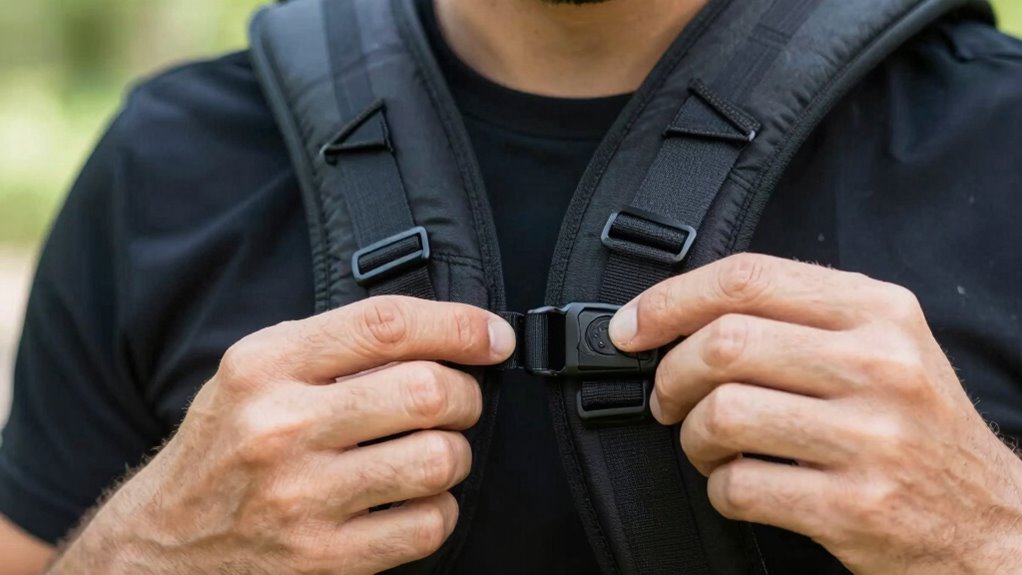
Once you’ve set your backpack straps for a comfortable fit, fine-tuning their tightness during your trip can improve comfort and prevent fatigue. If you notice your backpack shifting or causing discomfort, adjust the straps slightly tighter or looser as needed. Pay attention to how your backpack’s color might influence visibility and safety, especially if you’re in crowded areas where sibling rivalry might lead to competition for space. Keep the straps snug enough to secure the pack but not so tight that they restrict movement or cause pressure points. Regular adjustments help prevent shoulder pain and distribute weight evenly. Being aware of everyday safety habits, such as proper backpack fit, can also help prevent issues while traveling, such as choosing waterproof gear to stay dry in unpredictable weather. Additionally, maintaining an ergonomic backpack posture can reduce strain and enhance comfort during long walks. Small tweaks throughout your day make a big difference in maintaining comfort and avoiding unnecessary strain, especially when practicing work-life harmony during travel adventures.
Recognizing and Avoiding Common Shoulder Pain Causes
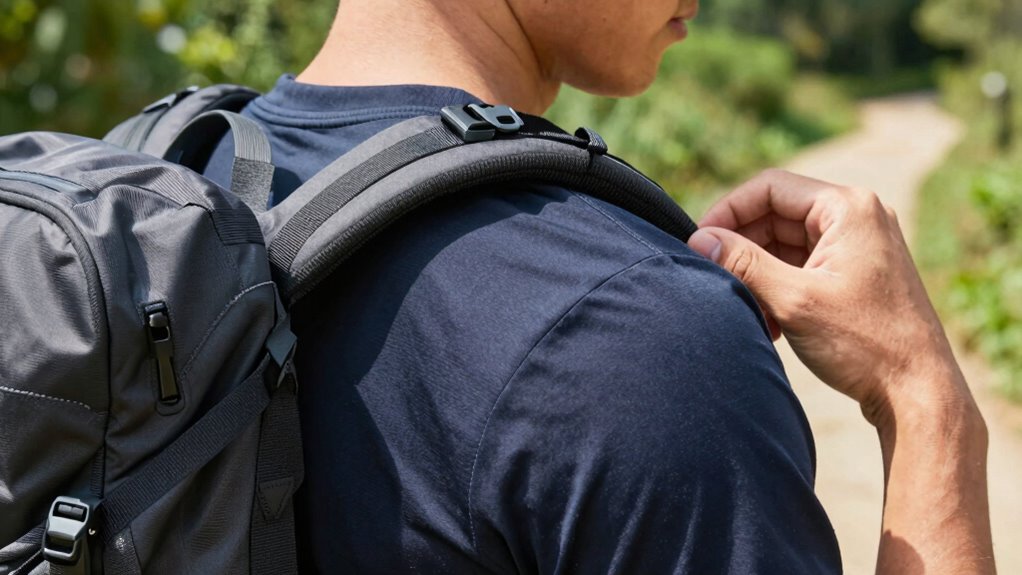
You might experience shoulder pain if your backpack’s load isn’t evenly distributed or if the straps are set too long or too tight. Recognizing these issues early helps prevent discomfort and injury. Adjusting your straps properly can make a big difference in avoiding common pain causes. Ensuring your gear is properly fitted can enhance comfort and support during your rides. Additionally, choosing ergonomic household products can help reduce overall strain and promote better posture while carrying your backpack. Remember that weight distribution plays a crucial role in minimizing shoulder discomfort, especially when carrying heavier loads.
Uneven Load Distribution
Uneven load distribution is a common culprit behind shoulder pain when carrying a backpack. If your pack isn’t balanced, it puts extra strain on one shoulder, leading to discomfort. To avoid this, focus on proper pack weight distribution and hip belt adjustment. Here are some tips:
- Use the hip belt to transfer weight from your shoulders to your hips, reducing shoulder strain.
- Pack heavier items closer to your back and centered to maintain balance.
- Adjust shoulder straps so the pack sits snugly without sagging.
- Regularly check that the load feels evenly distributed, avoiding lopsided weight on one side.
Incorrect Strap Length
Proper strap length is key to preventing shoulder pain when carrying a backpack. When straps are too tight or too loose, it can cause discomfort and strain, especially with popular fashion trends emphasizing sleek, minimalist designs. The material of your backpack also influences how the straps sit; lightweight fabrics may need different adjustments than heavier materials. Recognize incorrect strap length by feeling tension or slack, which can lead to uneven load and pain.
| Strap Length | Effect on Comfort | Style Impact |
|---|---|---|
| Too tight | Causes shoulder compression | Limits style versatility |
| Too loose | Promotes sliding, uneven weight | Looks sloppy |
| Proper length | Ensures even weight distribution | Maintains sleek look |
When to Seek Help or Consider Upgrading Your Backpack

If adjusting your backpack straps no longer provides a comfortable fit or relieves strain, it’s a clear sign that help or an upgrade might be necessary. Over time, backpack materials can wear out, reducing durability and support. If you notice frayed straps or weakened fabric, it’s time to think about a replacement. Also, if your current backpack no longer fits your travel needs or causes persistent shoulder pain, upgrading is smart. Here are some signs to watch for:
- Straps feel uncomfortable despite adjustments
- Backpack materials show signs of wear or damage
- Your pack no longer fits your body properly
- You need better support or features for extended travel
Investing in a high-quality backpack can protect your gear and your health, especially when considering travel insurance for added security.
Frequently Asked Questions
Can Improper Strap Adjustment Cause Long-Term Shoulder Injury?
Yes, improper strap adjustment can cause long-term shoulder injury. When you don’t properly adjust your straps, it can lead to poor posture correction, putting unnecessary strain on your shoulders. Make sure to use strap padding for comfort and adjust straps so the backpack sits evenly. This helps distribute weight correctly, reducing the risk of chronic pain or injury over time. Proper fit is essential for safe, comfortable carrying.
How Often Should I Recheck My Backpack Strap Fit During Travel?
You should recheck your backpack strap tension regularly, ideally every few hours or whenever you notice discomfort. Adjusting your straps guarantees they stay within your comfort zones, preventing unnecessary shoulder strain. Keep an eye on how the weight is distributed and make small tweaks as needed. Staying attentive helps maintain proper fit and avoids long-term pain or injury during your travels.
Are There Specific Backpack Features That Help Prevent Shoulder Pain?
Yes, look for backpacks with an ergonomic design and proper weight distribution features. These help diminish shoulder strain by evenly spreading the load across your back and hips. Adjustable straps, padded shoulder straps, and a supportive lumbar area ensure a comfortable fit. When choosing a backpack, prioritize these features to prevent shoulder pain, especially during long trips or heavy loads. Proper fit and design make all the difference in comfort.
What Materials Are Best for Straps to Reduce Shoulder Discomfort?
You’ll find that straps with plush padding and breathable materials are your best allies. Opt for straps made from lightweight, moisture-wicking fabrics that keep you comfortable even when the journey gets long. Good strap padding cushions your shoulders, while breathable materials prevent overheating and irritation. Together, these features help reduce shoulder discomfort, making your travel experience smoother and more enjoyable without any unwelcome distractions.
How Do Different Body Types Affect the Ideal Strap Adjustment?
Your body type influences how you should customize your straps for comfort. If you’re petite, you’ll want tighter straps to keep the pack close without pulling. Conversely, a taller or broader person benefits from looser straps for even weight distribution. Always use strap customization to dial in the fit, ensuring your backpack feels supportive and reduces shoulder strain, no matter your body type. Proper adjustment makes all the difference.
Conclusion
Getting your backpack straps just right is like finding the perfect dance partner—you move smoothly without pain. Take the time to measure, adjust, and fine-tune your straps, so your shoulders stay happy mile after mile. Remember, ignoring discomfort only lets pain sneak in like uninvited guests. By staying proactive and attentive, you’ll keep your journey comfortable and carefree, turning every trek into a well-choreographed adventure you’ll want to relive time and again.