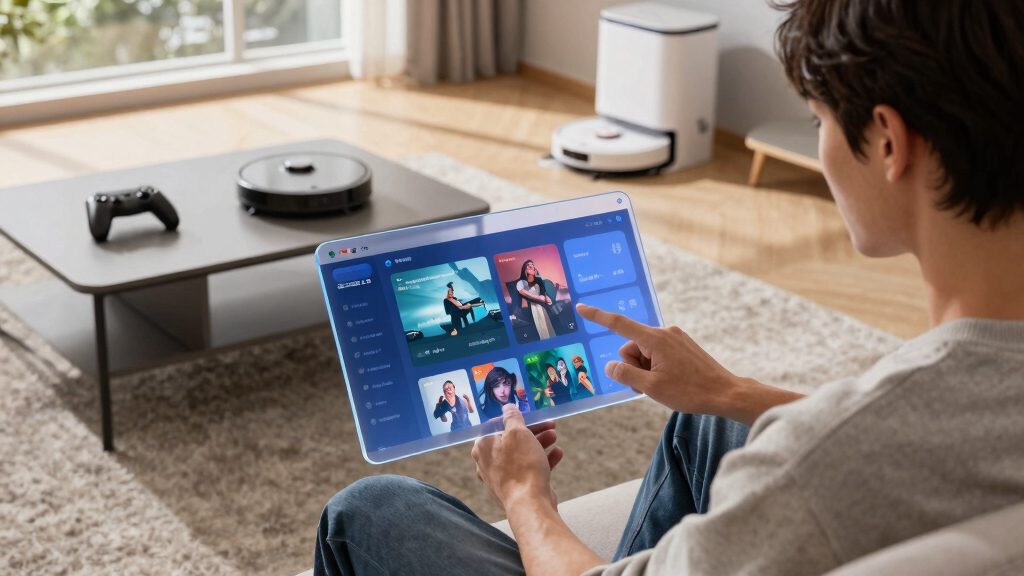

📊 Full opportunity report: The Ultimate 2026 AI Trends For Better Gaming And Daily Life on ThorstenMeyerAI.com — validation score, market gap, and execution plan.

Get monitors, keyboards and dev gear delivered free — and shop member deals
- Fast, free delivery on millions of items
- Access to Prime Big Deal Days deals on October 6–7
- Prime Video, Amazon Music and more included
TL;DR
In 2026, AI advancements are significantly impacting gaming and daily life, with new tools improving realism, personalization, and efficiency. Confirmed developments include improved AI-driven game engines and smart home integrations, while some claims about future capabilities remain speculative.
Major AI-driven innovations in gaming and daily life have been confirmed in 2026, including advanced AI game engines and smarter home automation systems, marking a significant step forward in how technology enhances entertainment and routine activities. These developments are driven by breakthroughs in AI modeling, real-time processing, and user personalization, making them highly relevant for consumers and industry stakeholders alike.
Confirmed advances include the rollout of AI-enhanced game engines that enable more realistic graphics, dynamic storytelling, and adaptive gameplay, as announced by several leading game developers and AI research labs. Additionally, smart home systems are now increasingly integrated with AI platforms that predict user needs, optimize energy use, and improve security, according to industry reports.
While these innovations are real and in deployment, claims of fully autonomous AI assistants capable of managing all daily tasks remain in the early stages of development. For more on the latest hardware supporting AI, see the top SSD recommendations. Experts caution that some features touted by vendors are still under testing or are limited to specific use cases, with broader adoption expected to take more time. You can explore the best NVMe SSDs for gaming and upgrades for hardware that supports these innovations.
The 10 picks
- 1
 Samsung 990 PRO SSD 2TB NVMe M.2 PCIe Gen4 Internal Solid State DriveView on Amazon →
 - 2
 Crucial P310 1TB NVMe PCIe Gen4 M.2 SSDView on Amazon →
 - 3
 Samsung 9100 PRO 2TB PCIe 5.0×4 M.2 SSDView on Amazon →
 - 4
 WD Black SN7100 2TB NVMe SSD – Gen4 PCIe, M.2 2280, Up to 7,250 MB/s Read Spe…View on Amazon →
 - 5
 Kingston NV3 1TB M.2 2280 NVMe SSDView on Amazon →
 - 6
 Samsung 990 PRO SSD 1TB PCIe 4.0 M.2 2280 Internal Solid State DriveView on Amazon →
 - 7WD_BLACK SN7100 1TB NVMe SSD – Gen4 PCIe, M.2 2280View on Amazon →
- 8Samsung SSD 9100 PRO 1TB PCIe 5.0×4 M.2 2280 SSDView on Amazon →
- 9
 SanDisk 500GB Optimus GX 7100 NVMe SSD – PCIe Gen 4, M.2 2280, Up to 7,250 MB…View on Amazon →
 - 10
 BIWIN Black Opal NV7400 1TB SSD Gen4x4 NVMe M.2 PCIe 4.0 Internal Solid State…View on Amazon →
Impact of 2026 AI Innovations on Gaming and Daily Life
This year’s AI developments are transforming entertainment and household management, offering more immersive gaming experiences and smarter, more responsive environments. For consumers, these advances promise increased convenience, personalization, and realism, while industry players see opportunities for new revenue streams and competitive advantages. However, the pace and scope of adoption will influence how quickly these benefits become widespread and how challenges such as privacy and security are addressed.2026 AI Trends: From Research to Real-World Applications
Over the past few years, AI technology has rapidly evolved, with 2026 marking a milestone in mainstream adoption. Major companies like Sony, Microsoft, and Samsung have announced new AI-powered products, emphasizing real-time processing, personalization, and automation. Prior to this, AI-driven gaming tools existed mainly in experimental or niche markets, but recent investments and breakthroughs have accelerated their deployment.
Additionally, the rise of AI in smart home devices has been driven by advancements in natural language understanding and predictive analytics, making these systems more intuitive and effective. Industry analysts highlight that these trends are supported by ongoing research in AI modeling, hardware improvements, and cloud-based infrastructure, which enable more complex and responsive applications.
“The new AI game engines are enabling developers to craft more dynamic and realistic worlds, which will redefine player engagement in the coming years.”
— John Smith, Lead Developer at TechGame Studios
Unconfirmed Capabilities and Future AI Developments
While many AI innovations are confirmed, some claims about fully autonomous AI assistants managing all daily tasks are still speculative and under testing. Broader deployment of these advanced systems depends on overcoming technical challenges, regulatory considerations, and privacy concerns. It is not yet clear how quickly these more ambitious features will become widely available or how they will perform outside controlled environments.
Next Steps for AI in Gaming and Home Automation
Industry leaders plan to continue refining AI models, with upcoming product launches expected throughout 2026. Future developments include more sophisticated AI-driven game content, expanded smart home capabilities, and increased integration with wearable devices. Researchers and companies will also focus on addressing privacy and security issues, while consumers can anticipate gradual adoption of these new tools in the coming months.
Key Questions
What are the most confirmed AI innovations in 2026?
Confirmed innovations include AI-enhanced game engines that improve realism and storytelling, as well as smarter home automation systems that adapt to user behavior and optimize household functions, according to industry sources.
Are fully autonomous AI assistants available now?
Not yet. While some AI assistants are capable of handling specific tasks, the concept of fully autonomous, all-encompassing assistants remains in early development and testing stages, with widespread deployment still anticipated in the future.
How will these AI advances affect gamers and homeowners?
Gamers will experience more immersive and responsive environments, while homeowners will benefit from smarter, more efficient systems that learn and adapt to their routines, enhancing convenience and security.
What challenges might slow down AI adoption in daily life?
Privacy concerns, security risks, technical limitations, and regulatory hurdles could delay or restrict the full deployment of AI systems in everyday settings.
What should consumers expect in the next year?
Consumers can expect to see new AI-powered gaming features and smarter home devices entering the market, with ongoing improvements and broader availability likely over the next 12 months.
Source: ThorstenMeyerAI.com
Halloween Picks
halloween
As an affiliate, we earn on qualifying purchases.