
📊 Full opportunity report: The City That Watches Itself: The Living Digital Twin, and the God’s-Eye View We’re Building on ThorstenMeyerAI.com — validation score, market gap, and execution plan.
TL;DR
Cities are creating dynamic digital twins that continuously monitor and simulate urban environments using advanced sensors and AI. This development enhances planning but also raises privacy and sovereignty issues. The story is evolving as technology and policy debates unfold.
City authorities and technology firms are deploying live, AI-powered digital twins that monitor urban environments in real-time, combining sensors, satellite data, and advanced AI models. This innovation enhances city planning and management but also introduces significant surveillance and sovereignty concerns, making it a pivotal development in urban technology.
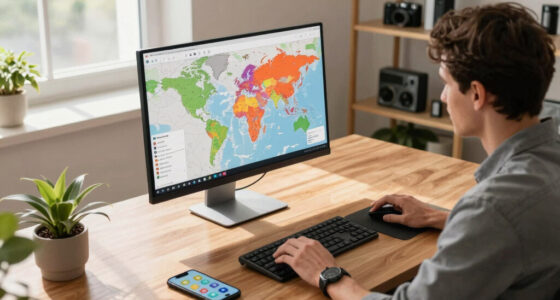
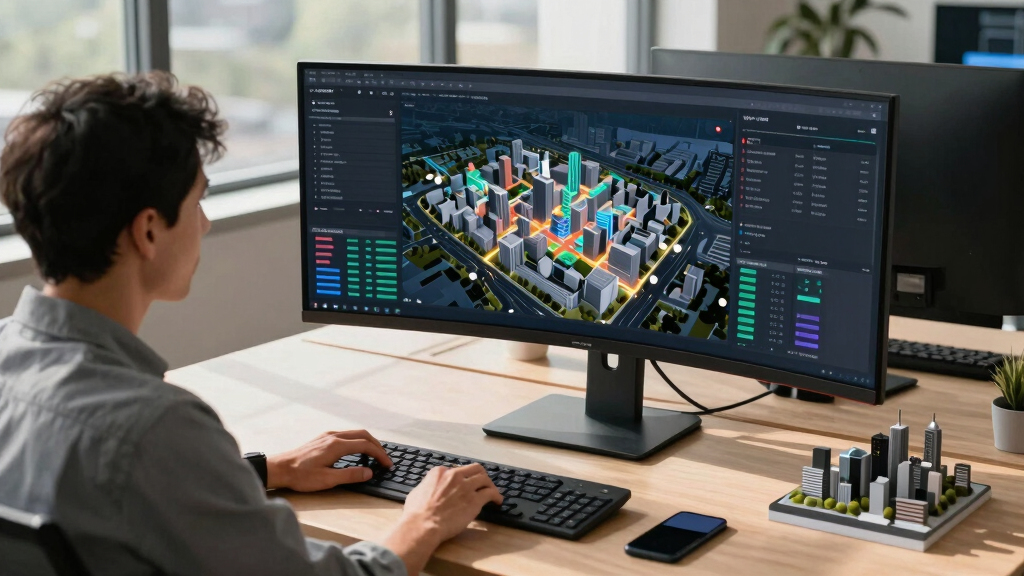
The core of this development is the creation of **dynamic, three-dimensional virtual replicas** of cities that integrate data from IoT sensors, satellite imagery, GIS, and utility networks. These digital twins are now capable of reflecting real-time conditions and running predictive simulations. Singapore’s Virtual Singapore exemplifies this approach, modeling every building, road, and utility with live overlays. Cities like Helsinki and Las Vegas operate similar systems, reporting benefits such as cost savings and improved urban planning. The recent technological leap involves integrating **Wide-Area Motion Imagery (WAMI)**, which allows continuous, comprehensive tracking of vehicles and pedestrians, and synthetic-aperture radar for all-weather imaging. These sensors enable the twin to archive and rewind city activity, transforming it from a static map into a living record of urban life. The third critical element is advanced AI models capable of understanding heterogeneous data streams, recognizing patterns, and enabling natural language queries about city operations. This AI capability turns the digital twin into an ‘oracle’ that can answer complex questions and simulate various scenarios, such as infrastructure failures or evacuation routes. While the technology offers significant benefits for urban planning, disaster response, and rural land management, it also raises concerns about privacy, data sovereignty, and the potential for misuse. Governments and firms are debating the implications of such pervasive surveillance tools, especially when data may be hosted or controlled by foreign entities.The city that watches itself: the living digital twin, and the god’s-eye view we’re building
Soon most cities will exist twice — once in concrete, once as a live data model you can rewind, simulate, and question in plain language. Persistent sensing + frontier AI turn the planner’s digital twin into an oracle. The most useful thing we’ve built — and the most powerful surveillance instrument. Both at once.
- Plan better — cities & rural: traffic, zoning, energy, land use
- Emergency response — route crews, one live picture, ~50% faster
- Disaster resilience — simulate, track live, assess damage in hours
- Mass surveillance — track everyone, retroactively, forever
- Pattern-of-life — AI links movements, infers associations
- Social control — no warrant, no suspicion (cf. Baltimore, 2021 ruling)
We’re building a city that watches itself, remembers everything, and can be asked anything. The technology won’t choose between saving lives and ending privacy — we will, through the rules we write now, while the twin is still under construction and the defaults haven’t yet hardened into permanence. WAMI and the living twin open our lives to a view from the heavens that, from the dawn of civilization until a heartbeat ago, was reserved for gods and stars. The question is no longer whether we can see everything — it’s who gets to look, and who watches the watchers.
Implications of Self-Monitoring Urban Environments
This development could revolutionize how cities are managed, enabling more efficient planning, faster responses to emergencies, and better resource allocation. However, it also introduces risks related to privacy violations, increased surveillance, and sovereignty issues, as cities’ data and AI models may be controlled by external entities. The balance between innovation and privacy will shape the future of urban digital twins and their role in society.

Geodesign, Urban Digital Twins, and Futures
As an affiliate, we earn on qualifying purchases.
As an affiliate, we earn on qualifying purchases.
Evolution of Urban Digital Twins and Sensor Technology
The concept of digital twins originated as static models used for urban planning, with early examples like Singapore’s Virtual Singapore emerging after 2012 to model infrastructure and environmental risks. Over the past decade, sensor technology has advanced from periodic satellite imagery to persistent, wide-area sensing like WAMI, providing continuous data streams. The integration of all-weather radar and high-capacity AI models has been the missing piece, enabling real-time, comprehensive understanding of city dynamics. Recent AI leaps, exemplified by models like GPT-5.6, now make it possible to interpret and query this vast data in natural language, transforming the twin into an interactive oracle.
“The convergence of sensors, AI, and infrastructure modeling is creating a city that not only observes itself but can also anticipate and respond in real time.”
— Thorsten Meyer, AI researcher

SMARTHON Smart City IoT Starter Kit for Micro:bit
- Complete IoT Learning Kit: Hands-on smart city projects with micro:bit
- Includes 11 Smart City Projects: Build applications like traffic lights and weather stations
- Comprehensive Accessories: Sensors, modules, and building models included
As an affiliate, we earn on qualifying purchases.
As an affiliate, we earn on qualifying purchases.
Unresolved Issues and Potential Risks
It is still unclear how widespread adoption will influence privacy laws and sovereignty debates. The potential for external control of city data and AI models raises questions about security and independence. Additionally, the long-term societal impacts of pervasive surveillance and data collection remain under discussion, with no definitive regulatory framework in place yet.

Satellite Remote Sensing for Archaeology
As an affiliate, we earn on qualifying purchases.
As an affiliate, we earn on qualifying purchases.
Future Developments and Policy Debates
Next steps involve establishing regulatory standards for data privacy, sovereignty, and ethical AI use in urban environments. Technological advancements will likely continue, with cities expanding their digital twin capabilities and integrating more autonomous decision-making. Policy discussions around data control, international cooperation, and privacy protections are expected to intensify as these systems become more embedded in urban life.

Harmonix TravelerAI Smart Translator Earbuds with LCD Case, AI-Powered Wireless Headphones for Travel, Real-Time Language Translation, Black
- Travel-Ready Smart Earbuds: AI-powered with translation and navigation
- Real-Time Voice Translation: Supports 100+ languages for instant communication
- Long-Lasting LCD Charging Case: Provides up to 48 hours of power
As an affiliate, we earn on qualifying purchases.
As an affiliate, we earn on qualifying purchases.
Key Questions
How do digital twins improve city planning?
They allow planners to simulate and analyze urban changes before implementation, reducing costs and improving resource allocation by predicting second-order effects of new developments.
What are the privacy concerns associated with city digital twins?
Pervasive real-time monitoring can infringe on individual privacy, and the control of sensitive data by external or foreign entities raises sovereignty and security issues.
Are digital twins used in rural or less populated areas?
Yes, they are increasingly applied to rural regions for land use, agriculture, and infrastructure management, extending their benefits beyond urban centers.
Could these systems be hacked or misused?
Yes, as with all digital infrastructure, there are risks of cyberattacks or misuse, which underscores the need for robust security and governance measures.
Source: ThorstenMeyerAI.com