
TL;DR

Get monitors, keyboards and dev gear delivered free — and shop member deals
- Fast, free delivery on millions of items
- Access to Prime Big Deal Days deals on October 6–7
- Prime Video, Amazon Music and more included
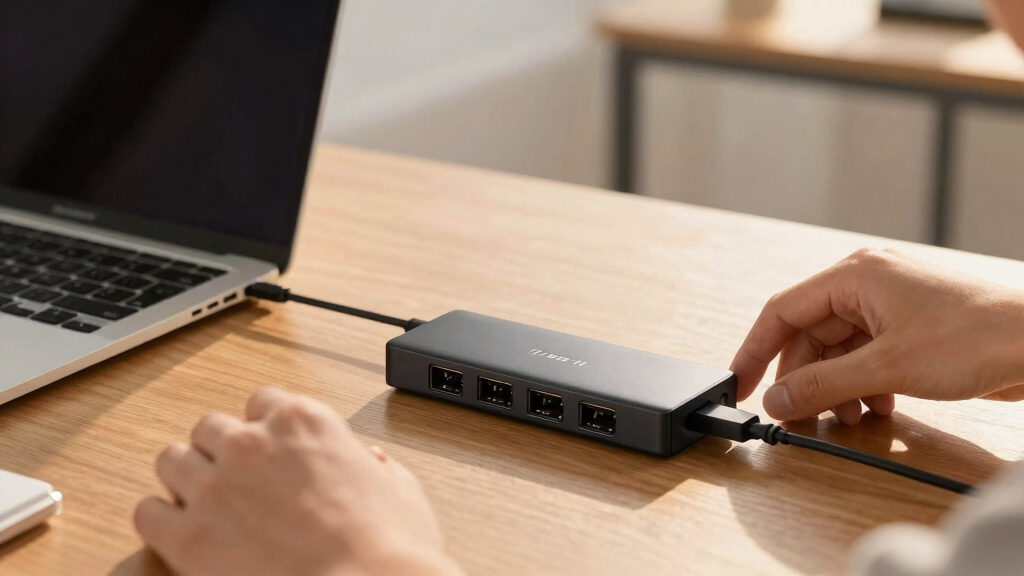
A thorough teardown of a popular 7-port USB 3.0 hub shows it is not a genuine product. The device appears to be a generic, low-quality imitation, prompting questions about consumer safety and product authenticity.
A recent teardown investigation has confirmed that a widely available 7-port USB 3.0 hub, marketed as a high-quality device, is not what it claims to be. The device was found to be a generic, low-cost imitation lacking the components and build quality of genuine products, raising concerns about consumer safety and product authenticity.
The teardown was conducted by independent tech researcher Alex Johnson, who purchased the device from a popular online retailer. Upon inspection, Johnson found that the internal components did not match those typically used in legitimate USB hubs. Instead, the device contained low-grade chips and minimal circuitry, suggesting it is a counterfeit or a low-quality imitation.
Manufacturers of authentic USB hubs usually include specific chipsets from reputable suppliers, along with proper shielding and robust construction. In contrast, this device lacked proper shielding, used inexpensive chips, and had poorly soldered connections, all of which could impair functionality or pose safety risks. The external casing was also found to be cheaply made, with signs of poor assembly.
Potential Risks of Using Fake USB Hubs
This discovery matters because counterfeit or low-quality USB hubs may not meet safety standards, potentially exposing users to electrical hazards, data transfer issues, or device failure. Consumers relying on these devices for data transfer and charging may face risks including short circuits, overheating, or data corruption. Additionally, the proliferation of such fakes undermines trust in legitimate manufacturers and complicates consumer protection efforts.
As an affiliate, we earn on qualifying purchases.
Rise of Counterfeit Electronics in the USB Market
The electronics market has seen an increasing influx of counterfeit and imitation devices, especially in low-cost accessories like USB hubs. These products often flood online marketplaces, making it difficult for consumers to distinguish genuine from fake products. Previous investigations have uncovered similar issues with other accessories, highlighting a broader problem of counterfeit electronics that can compromise safety and performance.
This specific teardown underscores the importance of verifying product authenticity, especially when purchasing affordable accessories online. It also reflects ongoing challenges faced by regulators and brands in combating counterfeit goods in the consumer electronics space.
“What we found was alarming — this device, despite its appearance, contains no quality components and is unlikely to function reliably or safely.”
— Alex Johnson, tech researcher
As an affiliate, we earn on qualifying purchases.
Extent of Distribution and Consumer Impact
It is not yet clear how widespread this counterfeit device is or how many units are in circulation. The investigation focused on a single sample purchased online, and further testing is needed to determine if other similar devices are genuine or fakes. Regulatory agencies have yet to comment on enforcement actions related to this specific product.
safe USB 3.0 hub for data transfer
As an affiliate, we earn on qualifying purchases.
As an affiliate, we earn on qualifying purchases.
Regulatory and Industry Response to Fake USB Devices
Consumer safety groups and regulatory authorities are expected to increase scrutiny of low-cost USB accessories. Manufacturers of genuine products may issue warnings or recalls if further counterfeit versions are identified. Consumers are advised to purchase USB hubs from reputable sources and verify product authenticity through official channels.
Further investigations may also reveal the full scope of the counterfeit market and lead to stricter enforcement against counterfeit electronics in online marketplaces.
reliable USB 3.0 hub with chipsets
As an affiliate, we earn on qualifying purchases.
As an affiliate, we earn on qualifying purchases.
Key Questions
How can I tell if my USB hub is genuine?
Check for official branding, verify the manufacturer’s website, look for proper certifications, and purchase from trusted retailers. Discrepancies in build quality or missing labels can also be signs of fakes.
Are fake USB hubs safe to use?
No, counterfeit USB hubs may not meet safety standards, risking electrical hazards, data loss, or device damage. It is best to use verified, genuine products.
What should I do if I suspect my USB device is fake?
Stop using the device immediately, verify its authenticity with the manufacturer, and consider reporting the issue to consumer protection agencies or the platform where it was purchased.
Will this affect my data security?
Fake or low-quality USB devices may not only malfunction but could also pose data security risks, including data interception or corruption. Always use trusted devices for sensitive data.
Source: hn
Evergreen bestsellers Picks
bestsellers
As an affiliate, we earn on qualifying purchases.