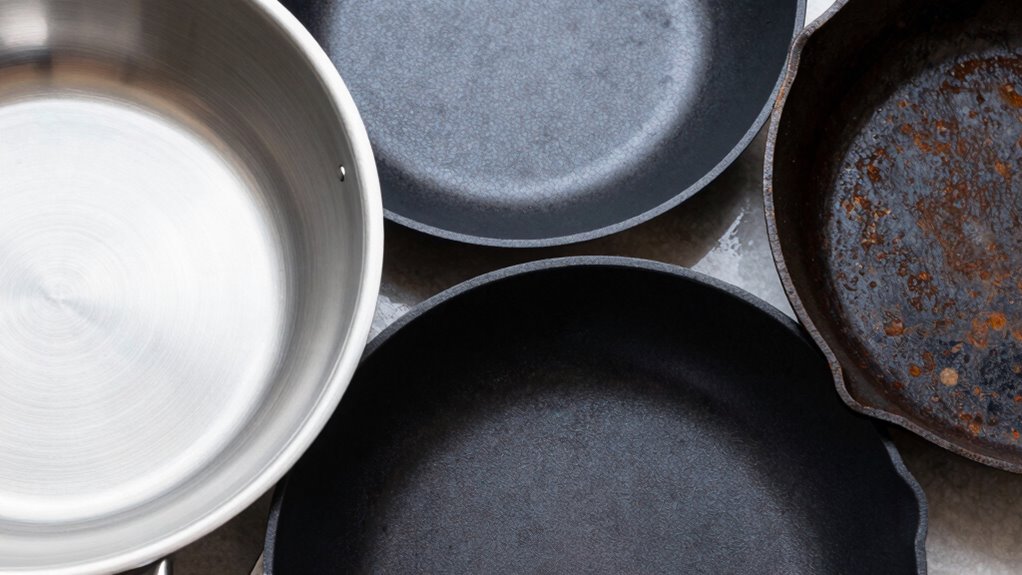

When choosing between stainless steel, nonstick, and cast iron, consider your cooking style and maintenance preferences. Stainless steel offers durability and excellent heat control but needs careful cleaning. Nonstick is great for easy, quick cooking and cleaning but wears out faster. Cast iron excels in heat retention and versatility but requires regular seasoning and care. To make the best choice for your kitchen, explore these pros and cons in detail.
Key Takeaways
- Stainless steel offers durability, excellent heat distribution, and versatility but can stick without proper technique.
- Nonstick cookware provides easy food release and quick cleanup, but its coating wears over time and needs gentle handling.
- Cast iron excels in heat retention, searing, and baking, with a rustic look, but requires seasoning and careful maintenance.
- Stainless steel is more resistant to scratches and corrosion, whereas nonstick coatings are prone to wear and cast iron to rust if neglected.
- Cost varies: cast iron is affordable and long-lasting; nonstick is budget-friendly but less durable; stainless steel is higher-priced but offers longevity and versatility.
What Are the Main Types of Cookware?
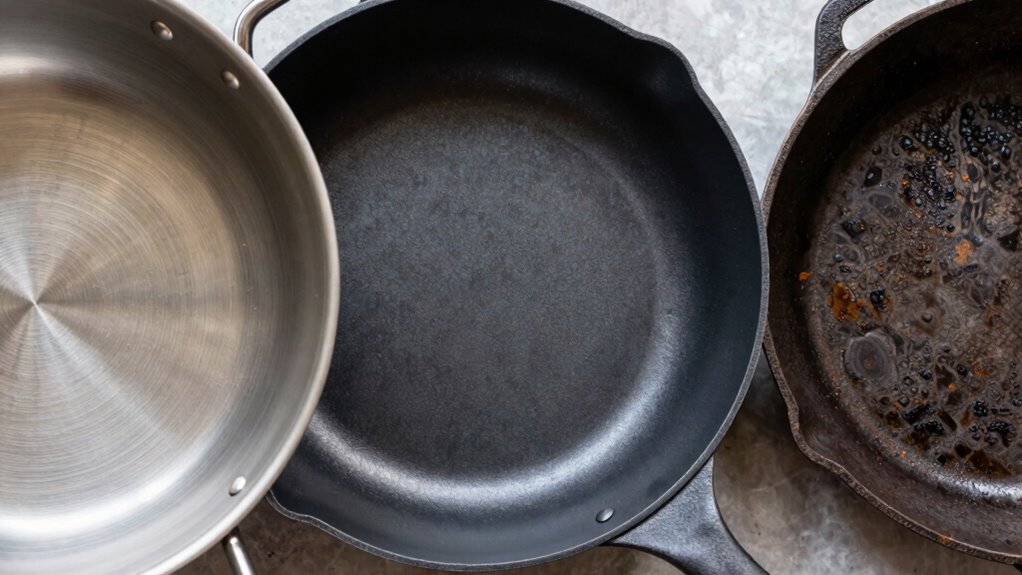
There are three main types of cookware you’ll encounter in most kitchens: stainless steel, nonstick, and cast iron. Each type influences your kitchen aesthetics, giving your space a modern, practical, or rustic look. Stainless steel cookware is known for its sleek, polished appearance and durability, often favored by reputable cookware branding for its professional vibe. Nonstick pots and pans typically feature smooth, shiny surfaces that make cooking and cleaning easier, fitting well into contemporary kitchen designs. Cast iron, with its rugged, vintage appeal, adds a touch of rustic charm and is highly durable. Choosing among these types depends on your style preferences and how you want your kitchen to look and feel, while also considering the reputation of cookware branding for quality and longevity. Additionally, understanding the benefits of curiosity can help you explore new cookware options and techniques to enhance your culinary skills. Exploring different cooking methods can also help you determine which cookware best suits your needs and cooking style. Furthermore, considering the material properties of each cookware type can influence their performance and maintenance requirements. Being aware of material durability can guide you in selecting cookware that will last over time and withstand daily use, especially when choosing among different materials and their respective piercing care and hygiene considerations to keep your cookware and kitchen safe.
Which Material Is Best for Your Cooking Style?

Choosing the right material depends on your cooking style and needs. You’ll want to contemplate how versatile each option is for different cuisines, how easy it is to maintain, and how well it retains and distributes heat. Understanding these points helps you pick the perfect cookware for your kitchen. Additionally, considering the durability of each material can ensure your investment lasts for years to come. For instance, some materials are more resistant to scratches and warping, which is crucial for long-term use in your kitchen. The heat retention properties of cast iron, for example, make it ideal for slow cooking and searing. Moreover, assessing the maintenance requirements of each material can help prevent damage and prolong the cookware’s lifespan. Being aware of the thermal properties can also guide you in selecting cookware that matches your cooking style and frequency.
Versatility for Different Cuisines
Each cookware material offers unique advantages when it comes to preparing different cuisines, making it essential to contemplate your cooking style. For instance, stainless steel excels in cuisine adaptability, allowing you to sear, deglaze, and create complex sauces, making it great for diverse dishes. Nonstick pans shine with ingredient compatibility, especially for delicate foods like eggs or pancakes, ensuring easy release and quick cleanup. Cast iron is incredibly versatile, suitable for everything from hearty stews to baking bread, thanks to its excellent heat retention. Additionally, cultural significance can influence your choice, as certain materials are preferred in specific culinary traditions. If you cook a wide range of cuisines, you might prefer cast iron or stainless steel for their adaptability. Material properties play a crucial role in determining how well a cookware material performs for different cooking techniques. Moreover, understanding the seasonal variations in cooking can help you select the most suitable material for specific dishes or climates. Recognizing the thermal conductivity of each material can further assist in choosing cookware that heats evenly and efficiently. Furthermore, considering maintenance and durability can help ensure your cookware remains in excellent condition over time. However, if your focus is on quick, easy meals with minimal fuss, nonstick offers unmatched convenience. Choosing the right material depends on your specific culinary preferences and how you like to cook.
Ease of Maintenance and Use
When considering how cookware fits into your routine, ease of maintenance and use play a significant role. Nonstick pans are the easiest—they require minimal cleaning, often just a quick wipe, and don’t need seasoning. Stainless steel needs more effort; cleaning tips include soaking and scrubbing to remove stains and burnt-on food. Cast iron may take time to maintain but rewards you with better performance over time through seasoning techniques that develop a natural nonstick surface. If you prefer low-maintenance cookware, nonstick is ideal. For those willing to invest a little extra effort, cast iron and stainless steel can be manageable with proper care routines. Your choice depends on how much time you want to spend cleaning versus how much seasoning and upkeep you’re willing to do. Additionally, understanding filtration/suction basics can help maintain your cookware’s longevity by keeping your kitchen environment clean and free of debris. Proper ventilation and air purifier maintenance can reduce airborne particles that settle on cookware, making cleaning easier and preserving their condition over time. Moreover, using appropriate cleaning techniques can extend the lifespan of your cookware and ensure safe, healthy cooking. Incorporating kitchen hygiene practices can further protect your cookware from cross-contamination and buildup, ensuring a safer cooking experience. Regularly maintaining your kitchen’s air quality can also prevent dust and grease buildup that may settle on cookware surfaces, making cleaning less frequent and more effective.
Heat Retention and Distribution
Understanding how well cookware retains and distributes heat is essential because it directly impacts your cooking results. Good heat distribution ensures your food cooks evenly, preventing hot spots and undercooked areas. Cast iron excels here with high thermal conductivity, meaning it heats slowly but maintains heat superbly, making it ideal for searing and frying. Stainless steel also offers decent heat distribution, especially when bonded with aluminum or copper cores, which improve thermal conductivity. Nonstick pans typically have lower thermal conductivity, so they heat up quickly but may not disperse heat as evenly. If you prefer precise temperature control and even cooking, cast iron or well-designed stainless steel cookware are your best options. Choosing the right material depends on your cooking style and how important consistent heat is to your dishes.
Pros and Cons of Stainless Steel Cookware
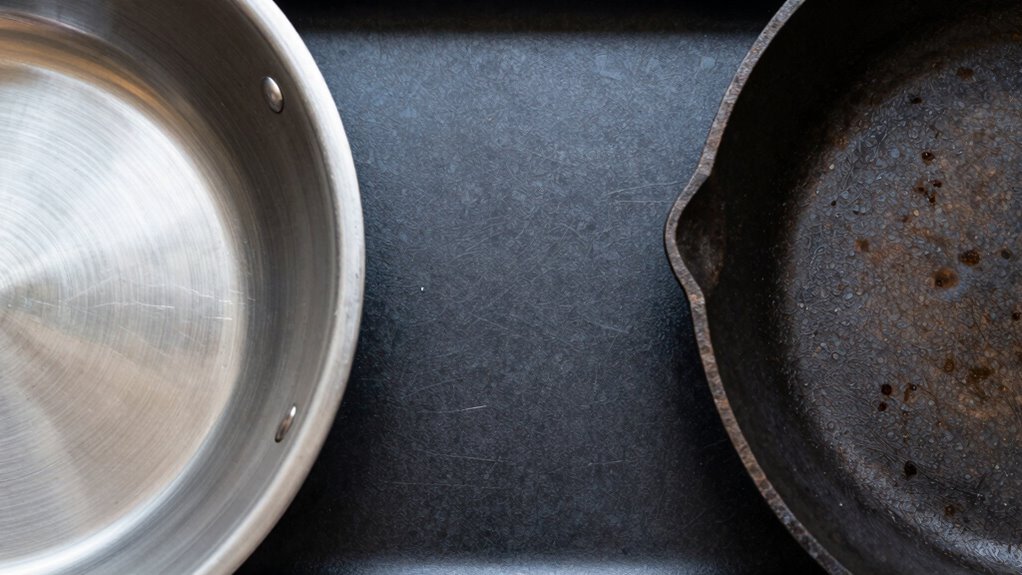
Stainless steel cookware offers a durable and versatile option for many cooks, but it also has its limitations. Its material longevity means your investment can last for years if properly cared for. However, cleaning techniques are vital to maintain its shine and performance. You might find food sticking initially, but with proper heat and oil, sticking reduces. Regular maintenance practices can help prevent buildup and preserve the surface. Proper heat management is essential to avoid sticking and maintain even cooking. Here’s a quick comparison:
| Advantage | Limitation |
|---|---|
| Long-lasting material | Can be prone to sticking without proper technique |
| Easy to clean with specific methods | Requires more effort to clean thoroughly |
| Versatile for various cooking styles | Not dishwasher safe for all brands |
| Maintains appearance over time | Needs careful handling to avoid scratches |
Mastering cleaning techniques ensures your cookware stays pristine and functional. Additionally, understanding proper maintenance can significantly extend the lifespan of your stainless steel cookware.
Are Nonstick Pans Safe and Worth It?

Nonstick pans have become a popular choice for many cooks seeking easy food release and quick cleanup, especially after learning how stainless steel requires careful technique to prevent sticking. Nonstick coatings, usually made of PTFE or ceramic, make cooking and cleaning effortless. However, some health concerns surround traditional nonstick coatings, particularly when overheated, as they can release fumes or degrade over time. Modern nonstick pans often feature safer, PFOA-free coatings, reducing these risks. Overall, nonstick pans are safe for everyday use when used properly and replaced when damaged. They’re especially worth it for delicate foods like eggs or pancakes. Still, it’s wise to avoid high heat and check the coating regularly to guarantee safety and longevity.
Cast Iron Cookware: Benefits and Drawbacks

Cast iron cookware offers durability and excellent heat retention, making it a versatile choice for many cooks. Its seasoned seasoning creates a natural nonstick surface, enhancing cooking performance over time. However, it requires regular cast iron seasoning to prevent rust and maintain its nonstick qualities. Be aware of its weight, which can be cumbersome to handle, and its susceptibility to rust if not properly dried. It also needs special care, like avoiding soap during cleaning and seasoning periodically. Despite these drawbacks, cast iron is ideal for searing, roasting, and frying. Its benefits include longevity, affordability, and the ability to improve with use. If you’re willing to maintain it properly, cast iron can become a trusty kitchen companion for years.
How Do Different Materials Perform in Heat Retention?

You’ll notice that different cookware materials vary in how well they retain heat. Thicker, denser materials store more heat and keep it steady, while lighter ones heat up and cool down faster. Understanding their heat retention capacities helps you choose the right pan for your cooking style.
Heat Retention Capacity Comparison
When it comes to heat retention, the material of your cookware plays a crucial role in how well it holds onto heat during cooking. Different materials have varying thermal conductivity and heat capacity, affecting how evenly and long they retain heat. Cast iron has high heat capacity, meaning it can store and release heat gradually, making it excellent for steady cooking. Stainless steel has moderate thermal conductivity, so it heats quickly but doesn’t hold heat as long. Nonstick pans often have layered construction, balancing quick heat response with decent retention. Keep these points in mind:
- Cast iron excels in heat capacity, providing consistent heat over time.
- Stainless steel’s thermal conductivity allows rapid heating but less heat retention.
- Nonstick pans offer balanced heat response, suitable for delicate tasks.
- Material density influences how well heat is stored and released during cooking.
Material Density and Heat Storage
Material density substantially impacts a cookware’s ability to store and release heat. Heavier materials with higher density excel at heat storage, providing steady, even warmth. Cast iron, with its high material density, holds heat longer, making it ideal for searing and slow cooking. Stainless steel has moderate density, offering decent heat retention but less than cast iron. Nonstick pans, typically with lower density, heat quickly but don’t store heat as effectively. Here’s a comparison:
| Material | Heat Storage Capability |
|---|---|
| Cast Iron | Excellent, retains heat for long periods |
| Stainless Steel | Good, moderate heat retention |
| Nonstick | Limited, heats quickly but cools fast |
Choosing based on material density impacts your cooking results dramatically.
Safety Tips for Using Various Cookware Materials
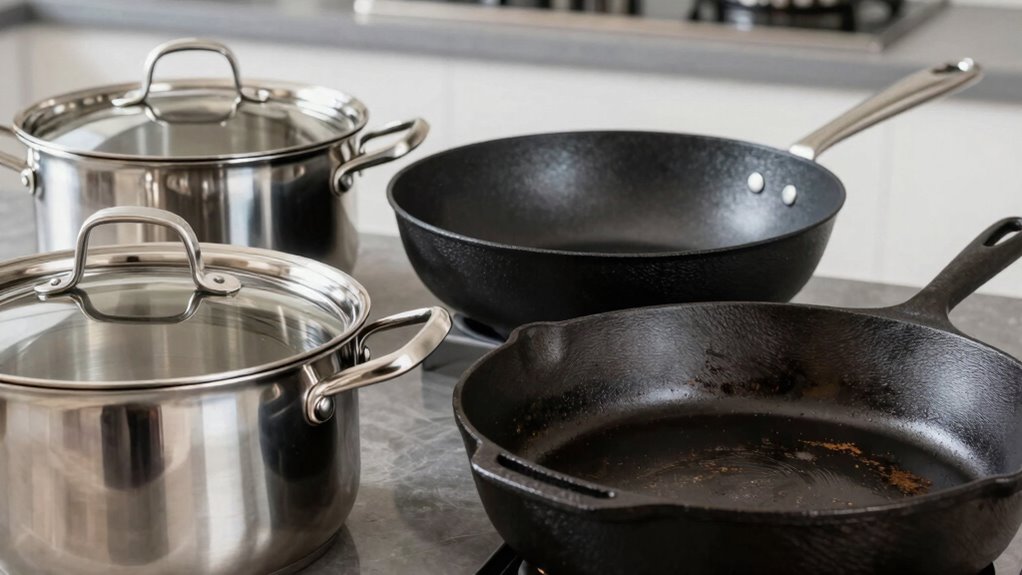
Ensuring safe use of different cookware materials is essential for preventing accidents and health hazards in the kitchen. To minimize fire hazards, always keep flammable items away from stovetops and never leave cooking unattended. When handling nonstick pans, avoid overheating, as high temperatures can release harmful fumes and damage the coating. For cast iron, use oven mitts when handling hot surfaces to prevent burns. Be mindful of chemical safety—never use scratched nonstick pots, as they may release chemicals. Additionally, clean cookware thoroughly to prevent buildup of residues that could pose health risks. Always follow manufacturer instructions for use and maintenance to ensure safety. Regularly inspect cookware for damage or deterioration, and replace when necessary to avoid potential hazards.
Durability and Maintenance of Cookware Types
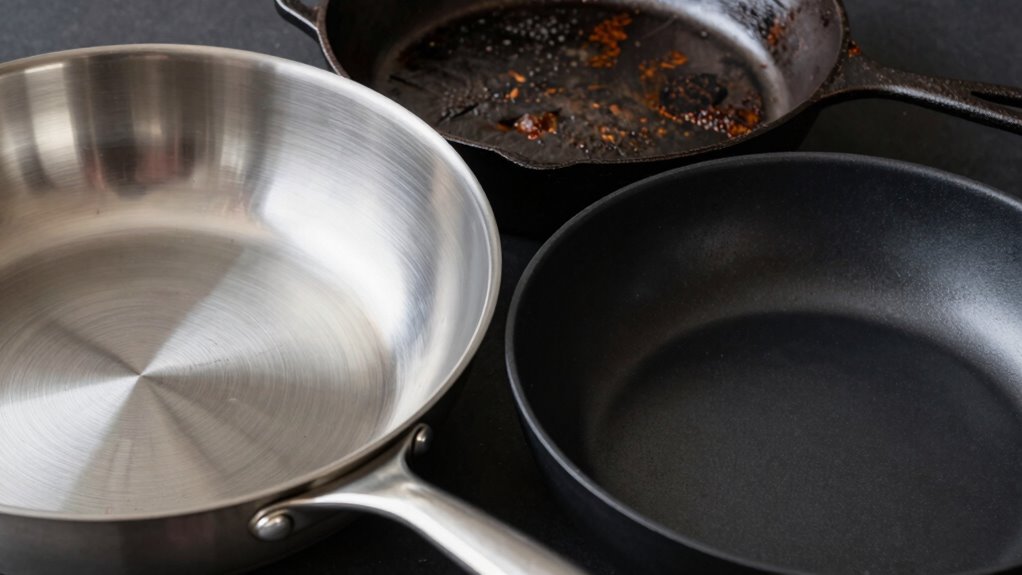
Stainless steel, nonstick, and cast iron cookware each offer different levels of durability and require specific maintenance practices to prolong their lifespan. Regular cleaning keeps them in top shape, but the frequency varies: stainless steel needs frequent cleaning to prevent material corrosion, while cast iron benefits from periodic seasoning. Nonstick surfaces need gentle cleaning and minimal scrubbing to avoid damaging the coating. Proper care guarantees your cookware lasts longer and performs well.
| Cookware Type | Cleaning Frequency | Material Durability |
|---|---|---|
| Stainless Steel | Regular after each use | Resistant but prone to scratches |
| Nonstick | After every few uses | Coating can wear over time |
| Cast Iron | After each use, season periodically | Extremely durable, prone to rust with neglect |
Cost and Value: Which Material Is Most Affordable?

When choosing cookware, cost plays a significant role alongside durability and maintenance. If you’re after affordable options, understanding the cost comparison among stainless steel, nonstick, and cast iron helps you make an informed decision.
- Cast iron tends to be the most affordable upfront and lasts forever if cared for properly.
- Nonstick pans often come with a lower initial price but may need replacement sooner.
- Stainless steel cookware usually costs more initially but offers longevity and versatility.
- Budget-conscious buyers often find cast iron offers the best value for money, especially for heavy use.
While nonstick cookware might seem cheaper initially, the ongoing costs of replacements and coatings can add up. Ultimately, your choice depends on your budget and how you value long-term investment.
Choosing the Right Cookware for Your Kitchen

Choosing the right cookware depends on your cooking style, maintenance preferences, and budget. You’ll want to contemplate how durable each material is and how easy it is to care for. By evaluating these points, you can select the best option that fits your needs and lifestyle.
Cooking Style Compatibility
Your cooking style plays a crucial role in selecting the right cookware, as different materials perform better with specific techniques. Understanding cooking style compatibility helps you choose cookware material suitability for your needs. For example, if you enjoy searing steaks, cast iron’s heat retention is ideal. For quick, easy meals, nonstick pans reduce the need for extra oil and make cleanup simpler. If you prefer elegant presentations and delicate sauces, stainless steel offers excellent control and versatility. Consider these factors:
- High-heat cooking and searing favor cast iron and stainless steel
- Nonstick cookware suits low-fat, quick-cook dishes
- Stir-frying and sautéing benefit from quick heat response of stainless steel
- Baking and broiling may require oven-safe cookware materials
Matching your cooking style with the right material ensures better results and longer-lasting cookware.
Maintenance and Durability
Selecting cookware that lasts depends on understanding how maintenance impacts durability. Proper cleaning methods prevent damage and extend lifespan, especially by protecting corrosion resistance. For stainless steel, use gentle scrubbing and avoid steel wool to prevent scratches. Nonstick pans require soft sponges and mild detergents to preserve their coating. Cast iron benefits from seasoned cleaning—avoiding soap and using minimal water helps maintain its surface. Regular care guarantees your cookware stays functional and safe. Here’s a quick comparison:
| Material | Cleaning Methods | Durability & Resistance |
|---|---|---|
| Stainless Steel | Use non-abrasive cleaners, dry thoroughly | Highly corrosion-resistant, long-lasting |
| Nonstick | Soft sponge, avoid metal scrubbers | Coating wears over time, needs gentle care |
| Cast Iron | Avoid soap, dry immediately, season regularly | Very durable, prone to rust without proper maintenance |
Budget and Cost Effectiveness
With a variety of cookware options available, balancing quality and cost is essential to get the best value for your money. When choosing, consider affordable options that fit your budget while offering durability and functionality. Investing in quality cookware can lead to long-term savings, as it reduces the need for frequent replacements. Here are some tips to maximize your budget:
- Look for versatile pieces that suit multiple cooking styles
- Prioritize durability over initial low cost for better long-term value
- Consider nonstick coatings for easy cleanup and less wear
- Explore sales or discounts on reputable brands
Ultimately, selecting cookware that balances upfront cost with durability guarantees you’re making a smart investment for your kitchen.
Frequently Asked Questions
How Do Cookware Materials Impact Energy Efficiency During Cooking?
Your cookware material considerably impacts energy efficiency because of differences in heat retention and thermal conductivity. Cast iron retains heat well, meaning you need less energy to maintain cooking temperature. Nonstick pans heat quickly but may lose heat faster, requiring more energy to keep steady. Stainless steel offers good thermal conductivity, so it heats evenly, saving energy overall. Choosing the right material helps you cook efficiently while using less energy.
Can Certain Cookware Materials Cause Chemical Leaching Into Food?
Imagine your cookware as a silent artist, but some materials can unexpectedly spill their paints. Certain cookware, like nonstick or cheaper stainless steel, may cause chemical leaching, potentially compromising your food’s safety. While high-quality options generally guarantee cookware safety, always check for non-toxic coatings and avoid damaged surfaces. Being aware of chemical leaching helps you make informed choices, protecting your health and ensuring your cooking remains pure and safe.
Which Cookware Type Is Best for Induction Cooktops?
For induction cooktops, stainless steel is your best choice because it has excellent induction compatibility due to its magnetic properties. Make sure your stainless steel cookware has a magnetic base, as non-magnetic materials won’t work. Cast iron also works well, thanks to its strong magnetic properties, but it’s heavier and can scratch glass surfaces. Nonstick cookware generally isn’t induction-compatible unless specifically designed with a magnetic layer.
How Should I Properly Store Different Types of Cookware?
When storing your cookware, think of it like organizing a busy kitchen. For example, you might stack nonstick pans with paper towels in between to prevent scratches. Proper care and maintenance mean hanging cast iron to avoid rust, while stainless steel can be stacked securely. Use storage techniques like padding delicate pieces and keeping lids separate to protect your cookware and prolong its lifespan, making your kitchen both efficient and safe.
Are There Any Health Risks Associated With Seasoned Cast Iron?
Seasoned cast iron is generally safe and unlikely to pose health concerns when properly maintained. However, if you don’t clean it well or if rust develops, it could lead to contamination. To minimize health risks, make certain your seasoned cast iron is thoroughly cleaned, dried, and re-seasoned regularly. Avoid cooking acidic foods for long periods, as they can degrade the seasoning and potentially cause iron leaching, which might concern some individuals.
Conclusion
Choosing between stainless steel, nonstick, and cast iron might seem tough, but the right choice can transform your cooking game entirely. Imagine never worrying about sticking, uneven heating, or constant maintenance again—your kitchen becomes a culinary fortress! Whether you crave quick convenience or timeless durability, the perfect cookware can elevate your meals to legendary status. So, pick wisely, and prepare to conquer the kitchen with gear that’s truly worthy of your culinary dreams!