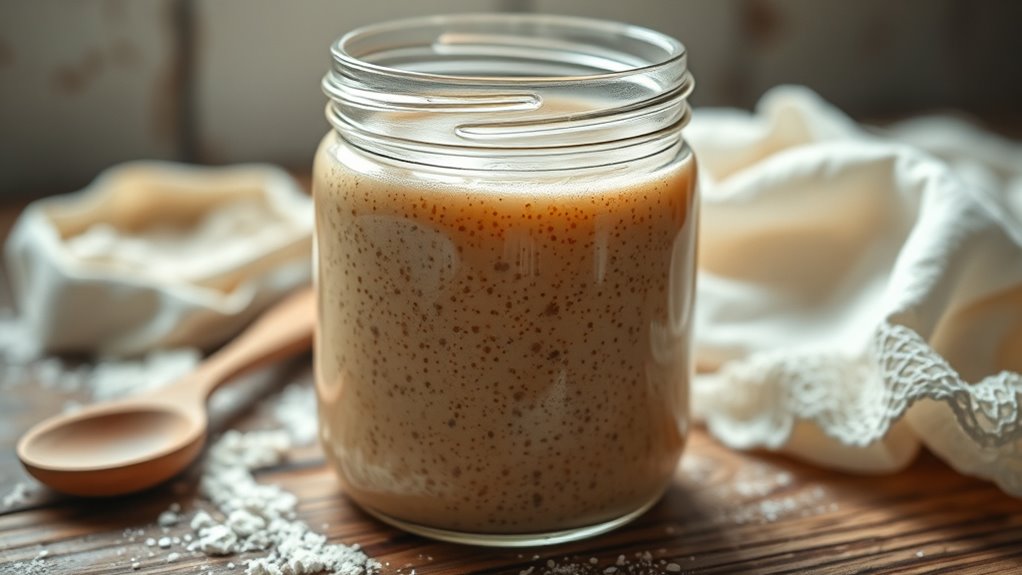

To grow your sourdough starter, mix equal parts whole wheat or all-purpose flour and filtered water in a container. Stir to form a thick paste and place it in a warm spot, covering it loosely for airflow. Over the next few days, watch for bubbles and a sour aroma, signaling fermentation. Feed it daily by discarding half and adding more flour and water. Soon, you’ll have a bubbly starter ready for baking. Let’s explore more about maintaining and using your starter!
Key Takeaways
- Combine equal parts flour and water to create a thick paste, using about 50 grams of each ingredient.
- Store the mixture in a warm spot, loosely covered for airflow, and expect initial minimal activity.
- Look for bubbling and a sour aroma as signs of fermentation, which may take a few days to develop.
- Maintain the starter by discarding half and feeding with equal parts flour and water every 24 hours.
- Refrigerate to slow fermentation if not baking daily, feeding weekly and bringing to room temperature before use.

If you’ve ever tasted the tangy goodness of sourdough bread, you know it all starts with a healthy sourdough starter. This magical mixture of flour and water is home to wild yeast and beneficial bacteria that kick off the fermentation process, transforming simple ingredients into a delicious loaf. To grow your own starter, you’ll need to embrace patience and the right techniques, ensuring your starter thrives and stays active.
First, gather your supplies. You’ll need whole wheat or all-purpose flour, filtered water, and a glass or plastic container. Start by mixing equal parts flour and water—about 50 grams of each is a good start. Stir it together until it forms a thick paste, then set it aside in a warm spot, ideally around 70°F to 75°F. Cover it loosely with a cloth or lid to allow airflow while keeping dust out.
Gather whole wheat or all-purpose flour, filtered water, and a container to start your thriving sourdough starter.
Over the next few days, you’ll want to observe your starter closely. After the first 24 hours, you might not see much happening, but don’t worry! It can take a couple of days for the wild yeast to wake up. As the fermentation process kicks in, bubbles will form, and you’ll notice a pleasant, slightly sour aroma. This is a good sign that your starter is coming to life.
To keep your starter healthy, you’ll need to practice regular starter maintenance. This involves feeding it with fresh flour and water, typically every 24 hours if kept at room temperature. Simply discard half of the starter, then add equal parts flour and water again. This feeding routine keeps the yeast and bacteria well-nourished, ensuring they remain active and ready for baking.
If you find yourself busy and can’t tend to your starter daily, you can store it in the refrigerator. This slows down the fermentation process, allowing you to feed it weekly instead. Just remember to bring it back to room temperature and feed it a couple of times before using it for baking.
Once your starter is bubbly and doubles in size within a few hours of feeding, it’s ready to use. You’ll be amazed at the depth of flavor and texture it brings to your sourdough bread. With a little patience and attention, you’ll have a thriving sourdough starter that’ll elevate your baking game to new heights. Ethical hacking involves a systematic approach to ensuring that your starter remains robust and effective. Enjoy the journey of creating your own delicious sourdough!
Frequently Asked Questions
Can I Use Whole Wheat Flour for My Sourdough Starter?
Yes, you can use whole wheat flour for your sourdough starter! Whole wheat offers several benefits, including higher nutrient content and a richer flavor. Its gluten content is also higher than all-purpose flour, which can help your starter become more vigorous. Just keep in mind that whole wheat flour might require more water due to its absorbent nature. Experimenting with it can lead to delicious results in your sourdough baking!
How Long Does It Take to Develop a Sourdough Starter?
Creating a sourdough starter is like nurturing a tiny ecosystem in your kitchen. It typically takes about 5 to 14 days for your starter to reach maturity, depending on the warmth of your environment and the flour you use. During this time, you’ll witness yeast development as bubbles form and the aroma transforms. Be patient, feed it regularly, and soon you’ll have a lively starter ready to create delicious bread!
What Should I Do if My Starter Smells Bad?
If your starter smells bad, it’s time for some troubleshooting. First, check your starter maintenance routine—are you feeding it regularly and at the right intervals? If it’s been neglected, give it a good feeding and stir thoroughly. If the foul smell persists after a few feedings, consider discarding part of it and rejuvenating with fresh flour and water. Trust your instincts; a healthy starter should smell pleasantly sour, not off-putting.
Can I Refrigerate My Sourdough Starter?
Yes, you can refrigerate your sourdough starter. When you do, it slows down fermentation, which means you won’t need to feed it as often. Just make sure to adjust your feeding schedule—feed it once a week while it’s in the fridge. When you’re ready to use it again, bring it to room temperature and feed it to restore its hydration and activity before baking. Keep an eye on its smell and texture!
How Do I Know When My Starter Is Ready to Use?
You’ll know your starter’s ready to use when it’s bubbly, has doubled in size, and smells pleasantly tangy. Some believe fermentation timing is just a guessing game, but paying attention to starter activity makes a big difference. Typically, it takes about 4 to 6 hours after feeding for ideal readiness. You can perform the “float test” too—if a spoonful floats in water, your starter’s all set for baking delicious bread!
Conclusion
Now that you’ve opened the secrets of sourdough starter, you’re ready to undertake your baking adventure. Like a gardener tending to a blossoming flower, nurture your starter with care and watch it flourish. Each bubble of yeast is a promise of delicious bread waiting to rise. So, roll up your sleeves, embrace the magic of fermentation, and let your kitchen become a symphony of aromas as you create your own sourdough masterpiece. Happy baking!