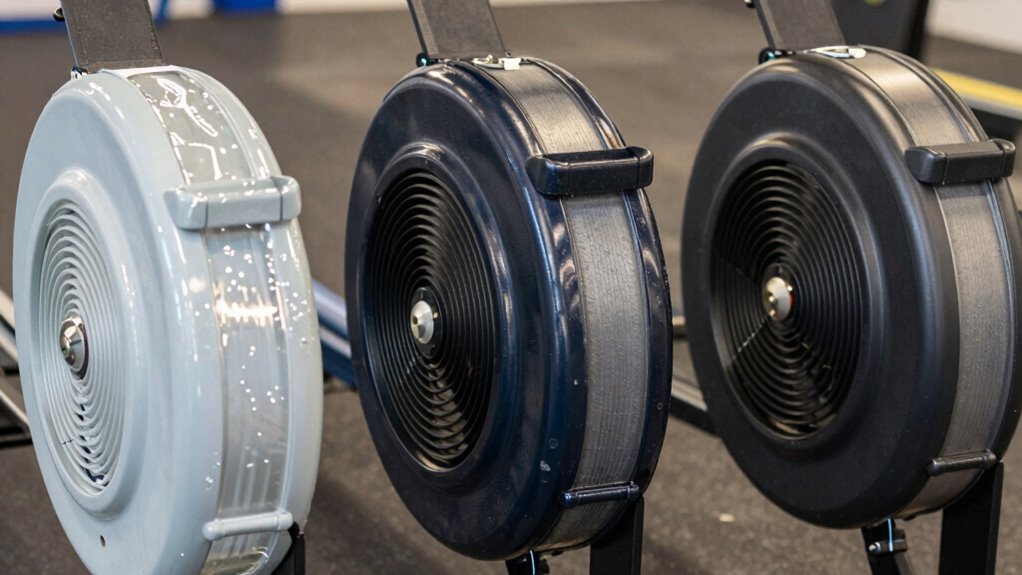

Choosing between water, air, and magnetic resistance on a rowing machine depends on your workout style and preferences. Water rowers offer a natural, smooth feel that mimics real watercraft, perfect for immersive training. Air resistance responds instantly to your effort, ideal for high-intensity sessions, while magnetic rowers operate quietly and allow precise resistance adjustments, suiting those seeking smooth, low-noise workouts. To find the best fit for your goals and space, learn more about their features and benefits.

Get business pricing on monitors, keyboards and dev gear
- Business-only prices and quantity discounts
- Tax-exempt purchasing
- Multiple users, one account, clear invoices
Key Takeaways
- Water rowers use a water tank to generate resistance, providing a natural, immersive rowing experience with adjustable effort.
- Air rowers rely on a flywheel and fan system, offering dynamic resistance that increases with effort for high-intensity training.
- Magnetic rowers utilize magnets and a flywheel for quiet, smooth, and precisely adjustable resistance levels.
- Water resistance mimics real watercraft dynamics but tends to be noisier and requires water tank maintenance.
- Air resistance responds instantly to effort, making it ideal for real-time performance feedback and varied workout intensity.
What Are the Different Types of Resistance on Rowing Machines?

When choosing a rowing machine, it’s important to understand the different resistance types because they directly affect your workout experience. The mechanics behind each type influence how smoothly and realistically you row. Magnetic resistance uses a flywheel with a magnet to create adjustable resistance, allowing you to easily modify the difficulty level with resistance adjustment controls. Air resistance employs a fan that increases resistance as you row faster, offering a dynamic and responsive feel. Water resistance features a water-filled tank that simulates real rowing, providing natural variation in resistance based on your effort. Each resistance type has unique rowing machine mechanics, which determine how the machine responds during your workout. Understanding the mechanics of resistance systems can help you better understand how each type impacts your rowing experience. Knowing these differences helps you select a machine that matches your fitness goals and preferences, especially considering how performance varies between resistance types. Additionally, maintenance requirements differ among these systems, affecting long-term usability and care. For example, water resistance systems often require periodic water treatment to prevent algae growth, which is an important maintenance consideration.
How Does Water Resistance Make Rowing Feel Realistic and Smooth?

Water resistance mimics the natural water dynamics, providing a more authentic rowing experience. As you pull, the resistance adjusts smoothly, creating a consistent flow that feels realistic. This seamless movement helps you stay focused and synchronized with your workout. Additionally, water resistance often offers a quiet operation that makes it suitable for home use. Moreover, the microplastics in dust in indoor environments are less likely to be disturbed by the gentle motion of water resistance, contributing to a healthier indoor air quality. The manufacturing materials used in water rowers are also designed to be durable and eco-friendly, supporting sustainable practices. The resistance adjustment in water rowers is inherently smooth, eliminating abrupt changes during your workout. Furthermore, the environmental impact of water resistance systems tends to be lower compared to other types, making them an eco-conscious choice.
Natural Water Dynamics
Natural water resistance creates a rowing experience that feels authentic and fluid because it dynamically adjusts to your effort. As you pull, water turbulence increases, providing immediate feedback that mimics real rowing conditions. This turbulence generates a natural wave simulation, making each stroke feel smooth and responsive. When you row harder, the resistance ramps up naturally, just like pushing through water in a boat. This real-time adjustment ensures that your workout remains challenging without sudden jumps or inconsistencies. The fluid movement created by these water dynamics helps you maintain proper technique and rhythm, enhancing the overall experience. Additionally, natural water resistance helps improve your technique by encouraging smooth and controlled strokes. The seamless resistance offered by water also minimizes disruptions, allowing for a more consistent workout. Moreover, the dynamic adjustment of water resistance can help prevent injury by promoting controlled movements throughout your exercise. Because water resistance responds instantly to your effort, it promotes consistent pacing, which is beneficial for endurance training.
Consistent Resistance Flow
The continuous flow of resistance provided by water guarantees a smooth and realistic rowing experience by adapting seamlessly to your effort. Thanks to fluid dynamics, water’s resistance remains consistent, providing a natural feel. As you row, the water’s resistance adjusts instantly, making each stroke fluid and lifelike. This resistance consistency is key to mimicking real watercraft motion. Additionally, the inclusive casting aspect of water resistance emphasizes its appeal across diverse user needs, promoting accessibility and comfort. Consider these points:
- Water’s resistance varies with your effort, creating a dynamic yet smooth experience.
- The fluid movement minimizes abrupt changes, ensuring a consistent stroke.
- The natural resistance flow reduces jarring sensations, enhancing comfort during long sessions.
Furthermore, the resistance flow is influenced by the shape and size of the water tank, which can be optimized for different user preferences. This realistic feedback makes water rowers feel more authentic, helping you stay focused and motivated.
Why Are Air Resistance Rowers Great for High-Intensity Workouts?

Air resistance rowers respond instantly to your effort, giving you immediate feedback during high-intensity workouts. You can easily adjust the intensity on the fly, matching your workout goals without hassle. This dynamic control helps you push harder and train more effectively. Additionally, their performance metrics can be monitored in real-time, allowing you to track your progress and optimize your training sessions. The resistance mechanism ensures consistent resistance levels, enhancing workout precision and effectiveness. Incorporating outdoor-inspired design elements can also boost motivation and make your indoor training feel more connected to nature. Emphasizing recovery-focused features, such as ergonomic designs and smooth operation, can further improve your overall workout quality. Moreover, choosing reliable storage and connectivity gear ensures your fitness equipment stays organized and easily connected to tracking apps, making your training experience seamless.
Instant Resistance Adjustment
Instant resistance adjustment is a key feature that makes air resistance rowers ideal for high-intensity workouts. With quick adjustment, you can seamlessly increase or decrease resistance to match your effort level. This allows for smooth transitions during interval training or when aiming for specific intensity zones.
Here’s why it’s beneficial:
- You can instantly modify resistance, maintaining workout flow without interruption.
- Adjustments respond immediately to your rowing intensity, giving you full control.
- The quick adjustment feature makes it easier to push yourself during sprints or recovery phases.
This instant resistance capability ensures your workout remains challenging and dynamic. You won’t need to pause or change settings manually; instead, you can focus solely on your performance and progress.
Dynamic Intensity Control
Have you ever wondered why air resistance rowers excel in high-intensity workouts? It’s because they provide dynamic intensity control through variable resistance that reacts instantly to your effort. As you row harder, the air pushes back more, increasing resistance naturally without needing manual adjustments. This means you can seamlessly shift from moderate to maximum effort, making them ideal for interval training or pushing your limits. Unlike other types that require manual adjustments, air rowers automatically match resistance to your power, creating a more intuitive workout experience. This real-time responsiveness helps you maintain *ideal* intensity without fuss, keeping you engaged and challenged throughout each session. If you crave flexibility and immediate feedback, air resistance rowers are your best bet for high-intensity training.
What Makes Magnetic Resistance Rowers Quiet and Easy to Adjust?

Because magnetic resistance rowers use a system of magnets and a flywheel, they operate very quietly compared to other types. This magnetic quietness makes them ideal for home gyms or shared spaces. Additionally, their resistance adjustability is smooth and precise, allowing you to change levels easily. The comparative advantage of magnetic resistance ensures optimal resource allocation for a seamless workout experience.
How Do Maintenance and Durability Vary Across Resistance Types?

Maintenance and durability vary considerably among resistance types, influencing how much effort you need to keep your rowing machine in top condition. Water rowers typically have higher maintenance costs due to water replacement and cleaning, but their durability factors include a sturdy tank that can last for years if cared for properly. Water tank durability is a key consideration for long-term use. Air resistance models are generally low-maintenance, with fewer parts prone to wear and tear, making them quite durable over time. Magnetic rowers also boast low maintenance costs since they have minimal moving parts and don’t require fluid replacement. However, their durability depends on the quality of the magnetic system and electronic components. Overall, your choice impacts long-term upkeep, with water and magnetic types offering different balances of maintenance needs and durability factors.
Which Resistance Type Is Best for Your Fitness Goals and Budget?

Choosing the right resistance type for your rowing machine depends heavily on your fitness goals and budget. If you want precise fitness tracking and a smooth, ergonomic design, magnetic resistance might suit you best, often at a higher cost. For a more natural feel and engaging workout, water resistance offers immersive experience, but usually comes with more maintenance. Air resistance provides a budget-friendly option with adjustable intensity, ideal for high-intensity training.
Consider these factors:
- Budget: Magnetic machines tend to be more expensive upfront.
- Fitness Goals: Water resistance mimics real rowing more closely; air resistance supports varied intensity.
- User Experience: Ergonomic design and accurate fitness tracking are often better integrated in magnetic models.
How Do You Choose a Rowing Machine Based on Your Space and Usage?
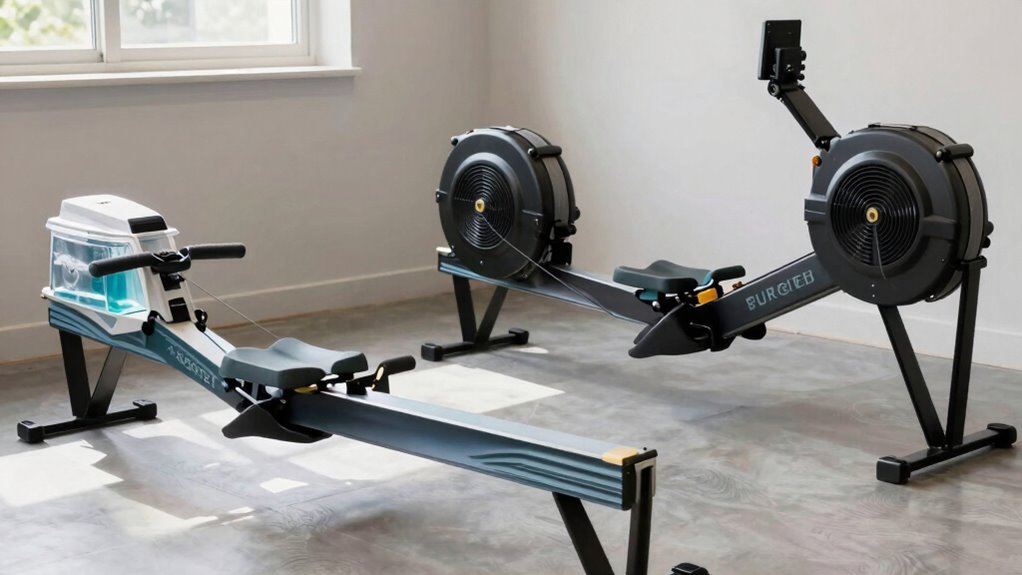
Selecting the right rowing machine for your space and usage involves evaluating both the size of your workout area and how often you’ll use it. Space considerations are vital—measure your available area to ensure the machine fits comfortably without cluttering your space. If your use is frequent, opt for a durable model with features that support regular workouts, even in a smaller area. Conversely, if you plan only occasional rowing sessions, a compact or foldable machine might suffice. Consider the machine’s footprint and storage options to prevent it from becoming an obstacle. Your usage frequency impacts the choice too—more frequent use calls for sturdier construction and more advanced features. Balancing space constraints with your workout habits helps you select a rowing machine you’ll enjoy and maintain over time.
What Are the Pros and Cons of Water, Air, and Magnetic Resistance Rowers?

Water, air, and magnetic resistance rowers each offer unique benefits and challenges, making it important to understand their differences before choosing the right machine for your workout. Water rowers provide a smooth, natural rowing experience, mimicking real watercraft and encouraging proper rowing technique. Air rowers excel at high-intensity workouts, with resistance increasing as you row faster, though their noise level can be a downside. Magnetic rowers offer quiet operation and adjustable resistance, ideal for consistent workouts and ergonomic design. Consider these factors:
- Water resistance delivers a realistic feel but can be bulky.
- Air resistance provides dynamic intensity but may be noisy.
- Magnetic resistance offers quiet, customizable workouts with ergonomic features.
Frequently Asked Questions
Can Water, Air, and Magnetic Resistance Rowing Machines Be Used for Rehabilitation?
Yes, water, air, and magnetic resistance rowing machines can be great for rehabilitation. They offer resistance customization, allowing you to adjust intensity as your recovery progresses. These machines provide low-impact workouts, reducing strain on joints while building strength and endurance. Their smooth, controlled movements support gradual rehabilitation, making them suitable for various recovery stages. Using them under guidance can maximize rehabilitation benefits and help you regain fitness safely.
Which Resistance Type Offers the Most Accurate Workout Data and Metrics?
You’ll find magnetic rowing machines offer the most accurate workout data, including heart rate monitoring and stroke efficiency metrics. They provide consistent resistance, making it easier to track progress precisely. Water and air rowers can vary slightly in resistance due to water levels or fan speed, which might affect data accuracy. For detailed metrics and reliable feedback, magnetic resistance machines give you the best insights for optimizing your workout performance.
Are There Safety Concerns Specific to Each Resistance Type?
You might worry about safety, but each resistance type has specific concerns. Water rowers pose a water spill risk and require careful electrical safety with electronic features. Air rowers have minimal electrical hazards but can be noisy and cause airflow concerns. Magnetic rowers are safest regarding electrical safety, but you should still make certain the device is properly maintained. Always follow manufacturer guidelines to prevent accidents and enjoy a safe workout.
How Does Resistance Type Influence Workout Variety and Programming Options?
You’ll find that resistance type greatly impacts your workout variety and programming options. Water resistance offers natural, variable resistance, making your workout more dynamic, while air resistance allows for high-intensity sprints and adjustable resistance through fan speed, fostering workout diversity. Magnetic resistance provides smooth, consistent resistance ideal for steady-state training and precise resistance customization. Choosing the right type depends on your goals, as it shapes how you can tailor and diversify your rowing sessions.
Can Resistance Types Be Combined or Customized on a Single Rowing Machine?
Yes, resistance types can be combined or customized on some rowing machines. Many models offer resistance customization, allowing you to switch between or blend water, air, and magnetic resistance. Multi resistance integration lets you tailor your workout to your preferences, providing a versatile experience. Check if your machine supports these features, as they enhance workout variety and help you target different fitness goals effectively.
Conclusion
Choosing between water, air, and magnetic resistance depends on your goals and preferences. While water rowers offer a realistic, soothing experience, air rowers deliver intense, dynamic workouts. Magnetic models provide quiet, customizable sessions. Each type has its strengths and trade-offs—so, whether you seek authenticity, power, or convenience, your ideal machine balances performance with your lifestyle. Ultimately, the right resistance type makes your fitness journey more enjoyable, whether you crave the roar of water or the silence of magnets.
Columbus Day / Indigenous Peoples' Day Picks
long weekend sales
As an affiliate, we earn on qualifying purchases.