
TL;DR

Get business pricing on monitors, keyboards and dev gear
- Business-only prices and quantity discounts
- Tax-exempt purchasing
- Multiple users, one account, clear invoices
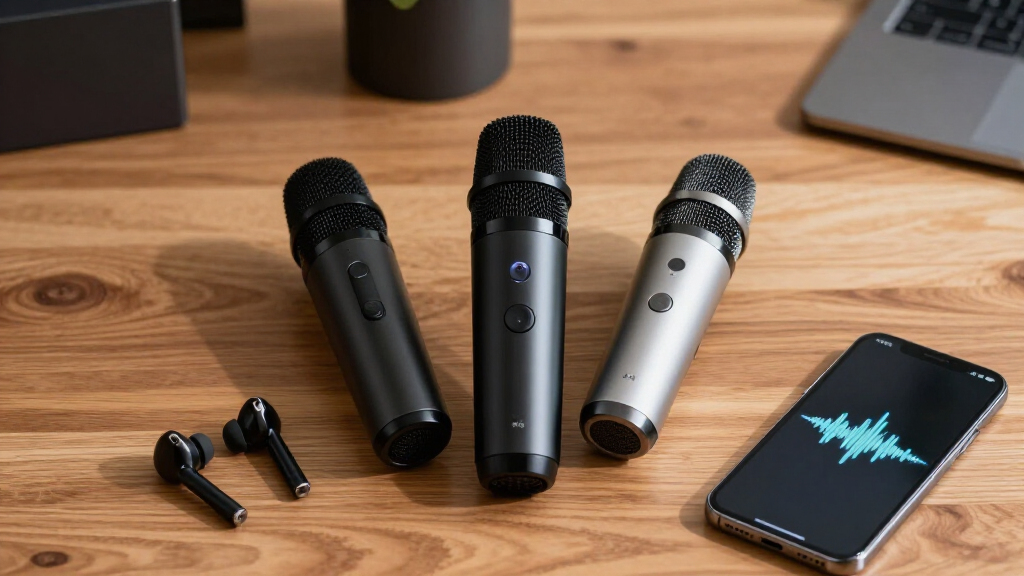
In 2026, AI microphones are emerging as a game-changer for sound recording, offering enhanced clarity, adaptive features, and seamless integration. This development is set to redefine professional and amateur audio setups, though some details about widespread adoption remain unclear.
AI-powered microphones are entering the market in 2026, offering advanced features like real-time noise cancellation, adaptive sound profiles, and seamless device integration. These innovations aim to enhance audio quality across professional studios, content creation, and consumer devices, marking a significant shift in sound technology.
Several companies have announced new AI microphones this year, with features such as automatic noise suppression, intelligent sound shaping, and compatibility with smart home and recording systems. Industry leaders like RØDE, Audio-Technica, and Shure are developing models that incorporate machine learning algorithms to optimize sound capture based on environment and use case.
While specific product details are still emerging, early demonstrations suggest these microphones can adapt to different acoustic settings, reduce background noise more effectively, and provide clearer audio with less user intervention. Some models are designed for professional studio use, while others target streamers, podcasters, and casual users.
The 8 picks
- 1
 Shure SM4 XLR Studio Condenser Microphone Kit for RecordingView on Amazon →
 - 2
 Audio-Technica AT2035 Cardioid Condenser Microphone with Shock Mount and Acce…View on Amazon →
 - 3
 RØDE NT1 Signature Series Large-Diaphragm Condenser Microphone with Shock Mou…View on Amazon →
 - 4
 Audio-Technica AT2020 Cardioid Condenser Studio XLR MicrophoneView on Amazon →
 - 5
 AKG Pro Audio P120 Condenser MicrophoneView on Amazon →
 - 6
 MAONO A04 Gen2 XLR/USB Condenser Microphone Kit for PC and Content CreationView on Amazon →
 - 7
 Mackie EM-Series Large-Diaphragm Condenser Microphone (EM-91C)View on Amazon →
 - 8
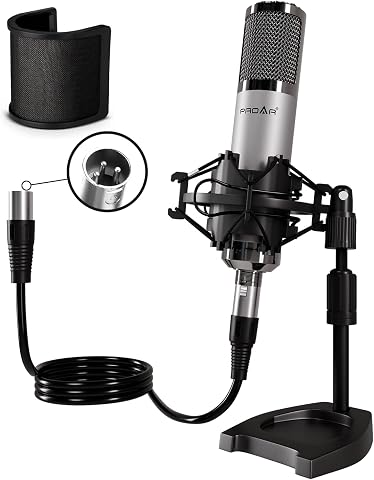 XLR Condenser Microphone with Desktop Stand for Vocals and PodcastingView on Amazon →
Implications of AI Microphones for Audio Recording in 2026
This shift toward AI-enabled microphones could significantly improve audio quality across various sectors, reducing the need for extensive sound editing and post-processing. For professionals, this means faster workflows and higher fidelity recordings; for consumers, easier setup and better sound quality in everyday devices. However, questions remain about the technology’s reliability, data privacy, and how quickly these products will become mainstream in different markets.
Evolution of Microphone Technology and AI Integration
Microphone technology has advanced from basic analog devices to sophisticated digital systems. Over the past decade, emphasis has been on improving sound fidelity, durability, and ease of use. In recent years, AI and machine learning have been integrated into audio processing, primarily for noise reduction and sound enhancement in consumer electronics. 2026 marks a notable milestone as these AI features are now embedded directly into microphones, enabling real-time, intelligent sound management without external processing.
Previous developments focused on software-based noise suppression; now, hardware-integrated AI chips are making these capabilities more accessible and efficient, opening new possibilities for both professional and casual recording environments.
Unanswered Questions About AI Microphone Adoption
It remains unclear how quickly these AI microphones will be adopted across different markets and user segments. Details about pricing, long-term reliability, data privacy concerns, and compatibility with existing equipment are still emerging. Furthermore, the extent to which AI features will be customizable or require ongoing updates is not yet confirmed.
Upcoming Releases and Industry Adoption Milestones
In the coming months, major manufacturers are expected to launch their AI microphone models, with demonstrations at industry trade shows. Market analysts predict a gradual adoption curve, with professional studios and content creators leading the way. Further technical details, user reviews, and pricing information will clarify how these devices fit into existing workflows and budgets.
Key Questions
How do AI microphones differ from traditional microphones?
AI microphones incorporate machine learning algorithms that enable real-time noise cancellation, adaptive sound shaping, and environment-specific optimization, unlike traditional microphones that rely solely on hardware and manual settings.
Are AI microphones suitable for professional studio use?
Yes, many AI microphones are designed with professional-quality sound capture in mind, offering features like high sensitivity, low self-noise, and customizable settings that meet studio standards.
Will AI microphones replace existing models entirely?
It is unlikely they will replace all traditional microphones immediately; instead, they will complement existing options, offering enhanced capabilities especially for dynamic, real-time applications.
What are potential privacy concerns with AI microphones?
Since AI microphones process audio data locally or in the cloud, there are concerns about data security and privacy, particularly if recordings are stored or transmitted without proper safeguards.
Source: ThorstenMeyerAI.com
Fall Picks
fall essentials
As an affiliate, we earn on qualifying purchases.