
📊 Full opportunity report: Revolutionize Edge Vision With LFM2.5-VL-3B AI Technology on ThorstenMeyerAI.com — validation score, market gap, and execution plan.

Get business pricing on monitors, keyboards and dev gear
- Business-only prices and quantity discounts
- Tax-exempt purchasing
- Multiple users, one account, clear invoices
TL;DR
Developers have announced LFM2.5-VL-3B, a 3.1-billion-parameter vision-language AI model optimized for on-device use. It claims improvements in screen interpretation, object grounding, and tool calling, but independent verification is pending. For more details, see the original analysis. This development could enhance real-time, privacy-conscious AI applications on edge hardware.
The developers of LFM2.5-VL-3B have unveiled a 3.1-billion-parameter vision-language model optimized for local hardware deployment, capable of processing documents, screens, and multiple images in real time. This release aims to support applications where privacy, latency, and resource constraints are critical, such as on-device assistants and industrial systems.
The LFM2.5-VL-3B model integrates a SigLIP2 400M NaFlex vision encoder with a pretrained backbone from the original analysis of this vision-language model. It has been pretrained on approximately 34 trillion tokens and uses four times more vision data than its predecessor, including image-caption datasets, optical character recognition, grounding, and instruction-following materials. The model features a 128,000-token vocabulary, doubled to improve coverage of non-Latin scripts.
According to the developers, the model underwent supervised fine-tuning, knowledge distillation, Antidoom training, and multi-reward reinforcement learning. It produces direct answers rather than explanations, aiming for faster response times. In developer evaluations, it scored an average of 69.4 on vision benchmarks, with specific scores of 91.1 on DocVQA and 87.9 on RefCOCO grounding. These results are based on internal testing using vLLM 0.26.0 in non-reasoning mode, and independent verification is not yet available.
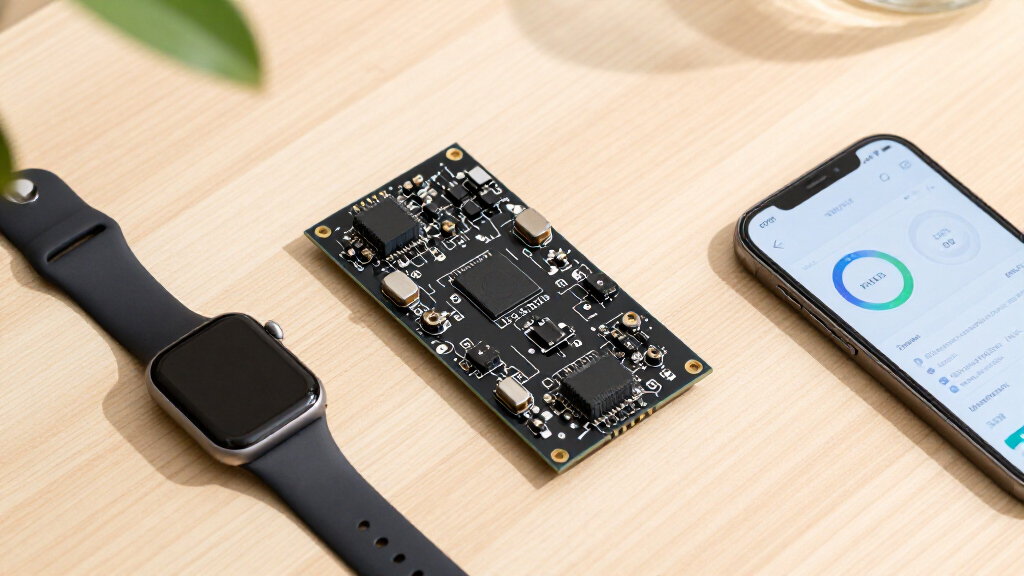
The model is designed for local deployment, fitting into about 3 GB of memory, and can process up to 228 output tokens per second on high-end hardware like the M5 Max. Its hardware performance varies with device specifications, with reported speeds of 116 tokens/sec on Ryzen AI Max+ 395 and 20 tokens/sec on Galaxy S26 Ultra, as well as approximately 11,000 tokens/sec on an H100 GPU under high concurrency. Support for deployment frameworks includes llama.cpp, MLX, vLLM, SGLang, and ONNX, with Transformers support starting at version 5.10.1. Learn more about AI deployment frameworks in the original analysis.
The model enhances capabilities in four key areas: digital screen interpretation, natural-language object grounding, multi-image analysis, and function calling, including tool use, with reported improvements over previous versions. However, the performance claims are based on developer benchmarks, and independent testing remains pending.
Potential Impact on On-Device AI Applications
The LFM2.5-VL-3B model’s ability to run fully on local hardware could significantly reduce reliance on cloud-based AI, enhancing privacy, reducing latency, and enabling real-time processing in sensitive environments. Its support for multi-modal understanding and tool calling expands possibilities for applications like document processing, interface assistance, and visual question answering, especially in industrial and accessibility contexts. However, the lack of independent verification means real-world performance and safety are yet to be confirmed.
on-device AI vision processing hardware
As an affiliate, we earn on qualifying purchases.
As an affiliate, we earn on qualifying purchases.
Advances in Vision-Language Models for Edge Devices
The development follows a trend toward smaller, more capable AI models designed for local deployment, addressing privacy concerns and latency issues associated with cloud reliance. Previous models like LFM2-VL-3B demonstrated improvements in vision and language understanding, but the new LFM2.5-VL-3B claims further advances, including multi-image analysis and function calling. The announcement aligns with broader industry efforts to enable powerful AI on resource-constrained hardware, with recent benchmarks and hardware support indicating growing feasibility.
“Our most capable vision-language model you can run on your own hardware.”
— an anonymous researcher
As an affiliate, we earn on qualifying purchases.
Unverified Performance and Deployment Details
It is not yet clear how the reported benchmark scores and throughput measurements will translate to real-world applications. The source does not provide comprehensive hardware configurations, power consumption data, or latency metrics for all devices. The safety, robustness, and accuracy of the model in handling unfamiliar or poor-quality inputs also remain unconfirmed, pending independent testing and validation.
real-time multi-image analysis devices
As an affiliate, we earn on qualifying purchases.
As an affiliate, we earn on qualifying purchases.
Upcoming Independent Evaluations and Real-World Testing
Further testing by independent researchers and organizations is expected to validate the model’s performance across various hardware and application scenarios. Developers are likely to release updated benchmarks and deployment guides, and real-world use cases in industrial, accessibility, and consumer devices will emerge over the coming months. Monitoring these developments will clarify the model’s practical capabilities and limitations.
vision-language AI development kits
As an affiliate, we earn on qualifying purchases.
As an affiliate, we earn on qualifying purchases.
Key Questions
What is LFM2.5-VL-3B?
LFM2.5-VL-3B is a 3.1-billion-parameter vision-language model designed for local hardware, capable of processing text and images, including documents, screens, and multiple-image inputs.
Can the model run without internet access?
Yes, the developers claim it can run fully on-device, fitting into about 3 GB of memory, though actual performance depends on hardware specifications.
What improvements does LFM2.5-VL-3B have over previous versions?
The new model offers enhanced screen understanding, object grounding, multi-image analysis, and better support for non-Latin scripts, along with improved tool calling capabilities.
Has the model’s performance been independently verified?
No, the reported benchmark scores are from developer tests; independent validation and real-world testing are still forthcoming.
What are potential applications for this model?
It could be used for document extraction, interface assistance, visual question answering, and on-screen object identification, particularly in privacy-sensitive or latency-critical environments.
Source: ThorstenMeyerAI.com
Fall Picks
fall essentials
As an affiliate, we earn on qualifying purchases.