
📊 Full opportunity report: Photo Value Scanner For Piles Of Loose Lego Bricks on IdeaNavigator AI — validation score, market gap, and execution plan.
Get ready for Prime Big Deal Days — try Prime free
Exclusive member deals on October 6–7, plus fast free delivery. Cancel anytime.
Start your free trialAs an affiliate, we earn on qualifying purchases.
TL;DR
Researchers are developing a photo value scanner for loose Lego brick piles, allowing collectors to estimate worth quickly. The tool could transform resale practices by providing instant value ranges from images.
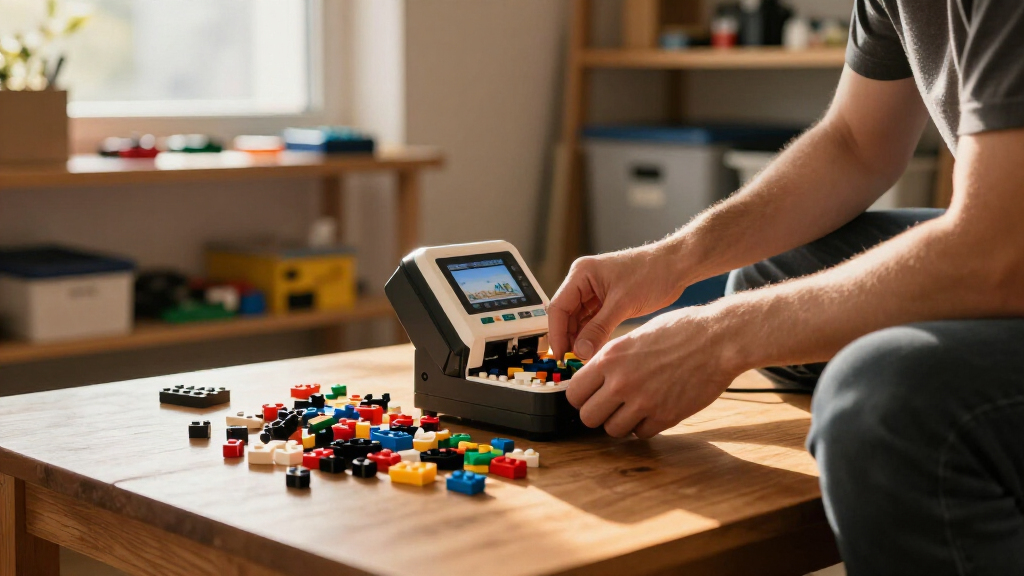
A new prototype app is being tested to estimate the value of loose, unsorted Lego brick piles using photo analysis. This development aims to provide collectors and resellers with a quick, automated way to assess the worth of their bricks, addressing a longstanding challenge in the secondhand Lego market.
The proposed tool involves collectors taking photos of a sample of their loose Lego bricks, which the app then analyzes to generate a rough value range and identify high-value parts. This approach is intended for use with tubs of unsorted bricks, offering a streamlined alternative to manual appraisal methods.
According to an anonymous researcher involved in the project, the app’s initial testing will compare its estimates against manual appraisals based on BrickLink data, a popular marketplace for Lego resale. The goal is to validate whether the app can reliably approximate the value that collectors or resellers might obtain in actual transactions.
Pricing for the service is expected to involve a subscription or per-scan fee, targeting the growing market of Lego collectors and secondhand resellers who seek more efficient valuation tools. The project is still in early stages, with no commercial release date announced.
Implications for the Lego Collecting and Resale Market
This development could significantly impact how Lego collectors and resellers evaluate their inventory, reducing the time and effort needed for manual appraisals. By enabling quick, photo-based estimates, the tool has the potential to facilitate more efficient trading and increase market liquidity. Additionally, it could help individual collectors identify valuable parts more easily, encouraging more active participation in resale markets.
Such a tool also addresses a common pain point: the difficulty of estimating the worth of large, unsorted brick piles without extensive manual sorting or referencing complex databases. If successful, it might set a precedent for similar valuation apps across other collectible markets.
As an affiliate, we earn on qualifying purchases.
Background on Lego Resale and Appraisal Challenges
The secondhand Lego market has experienced rapid growth, with dedicated online marketplaces and price guides like BrickLink providing part-level data. However, there remains no widely adopted method for quickly estimating the value of large, unsorted brick piles based on photographs alone. Collectors often rely on manual sorting, detailed inventory, or subjective judgment, which can be time-consuming and inconsistent.
This gap has motivated efforts to develop automated valuation tools, similar to apps used in other collectibles like trading cards or sneakers. The current prototype is an early step toward integrating computer vision and machine learning to streamline these processes, though it is not yet confirmed how accurate or reliable the estimates will be in practice.
“The goal is to create an easy-to-use app that provides a quick estimate of a pile’s value based on a simple photo, reducing manual effort for collectors.”
— an anonymous researcher
As an affiliate, we earn on qualifying purchases.
Accuracy and Reliability of Photo-Based Estimates
It is not yet confirmed how accurately the app can estimate the value of loose Lego piles across different types and sizes of collections. The validation process is ongoing, and initial results are still being evaluated to determine the tool’s effectiveness in real-world resale scenarios.
As an affiliate, we earn on qualifying purchases.
Next Steps in Testing and Validation
The project team plans to expand testing by involving more collectors and comparing app-generated estimates with actual sale prices on marketplaces like BrickLink. Further development will focus on refining the analysis algorithms and improving the accuracy of the value predictions. A wider beta release could follow if initial results prove promising, potentially within the next year.
As an affiliate, we earn on qualifying purchases.
Key Questions
How does the photo value scanner work?
The app analyzes a photograph of a sample of loose Lego bricks to estimate their total worth and identify high-value parts, based on data from secondary marketplaces.
When will this app be available for general use?
The app is currently in early testing stages, with no official release date announced. Further validation and refinement are needed before a wider launch.
Can this tool replace manual appraisals entirely?
It is unlikely to fully replace manual appraisals initially but aims to serve as a quick, initial estimate tool to assist collectors and resellers in decision-making.
Will the app work with all types of Lego piles?
The effectiveness of the app across different pile sizes, types, and conditions remains to be tested. Its accuracy is expected to improve with further development and data input.
How much will the service cost?
Pricing is expected to involve a subscription or per-scan fee, but specific costs have not yet been determined.
Source: IdeaNavigator AI
NFL season / tailgating Picks
team gear
As an affiliate, we earn on qualifying purchases.