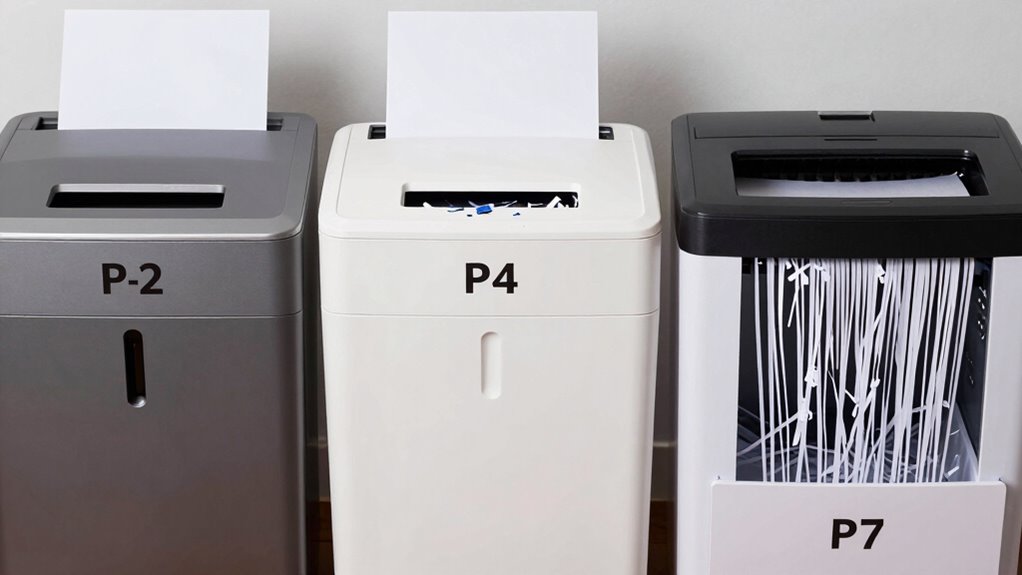
Choosing between P-2, P-4, and P-7 shredder levels depends on your sensitivity to information and how often you shred. P-2 is suitable for low-volume, non-sensitive documents, offering quick shredding but less security. P-4 is better for medium security needs and moderate use, while P-7 provides the highest security with micro-cut particles for sensitive data. To guarantee proper fit and security for your needs, knowing the details will help you select the best option.
Key Takeaways
- P-2 is suitable for low-volume, everyday shredding of non-sensitive documents quickly and cost-effectively.
- P-4 offers higher security with smaller particles, ideal for small offices handling sensitive information regularly.
- P-7 provides micro-cut particles for maximum confidentiality, best for highly sensitive or legal documents.
- Choose based on your security needs: low for general waste, high for confidential data.
- Consider shredding volume and frequency: higher levels handle larger, frequent tasks better, but cost more.
What Are Paper Shredder Security Levels (P-2, P-4, P-7) and Why Do They Matter?
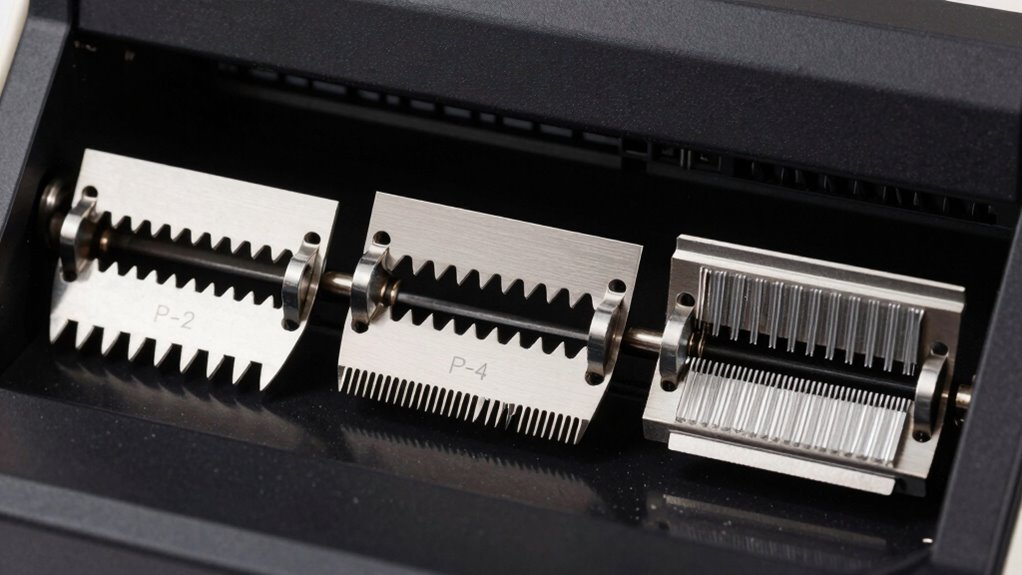
Understanding paper shredder security levels like P-2, P-4, and P-7 is essential because they determine how effectively your shredded documents protect sensitive information. These levels are based on shredding standards that specify the size and format of the shredded particles. When handling confidential data, selecting the right level guarantees your documents can’t be reconstructed or accessed by unauthorized individuals. P-2 shredders produce larger strips suitable for less sensitive materials, while P-4 and P-7 offer progressively smaller, more secure particles for highly confidential data. Recognizing these security levels helps you meet legal and organizational requirements, providing peace of mind that your shredded documents won’t compromise sensitive information. Additionally, understanding the different data storage and backup options available allows for comprehensive protection of your information beyond just shredding. This knowledge about shredding standards ensures you choose the appropriate equipment for your specific security needs, especially in environments with strict compliance regulations. Knowing what each level offers assists you in making informed decisions for your shredding needs, and being aware of equipment specifications can help you select the most effective shredder for your security requirements. Furthermore, understanding the types of shredded particles can guide you in choosing the most suitable device for your security level. For example, some particle sizes are easier to reassemble, so selecting the appropriate shredder can significantly reduce the risk of data recovery.
How Do P-2, P-4, and P-7 Shredders Differ in Security and Performance?
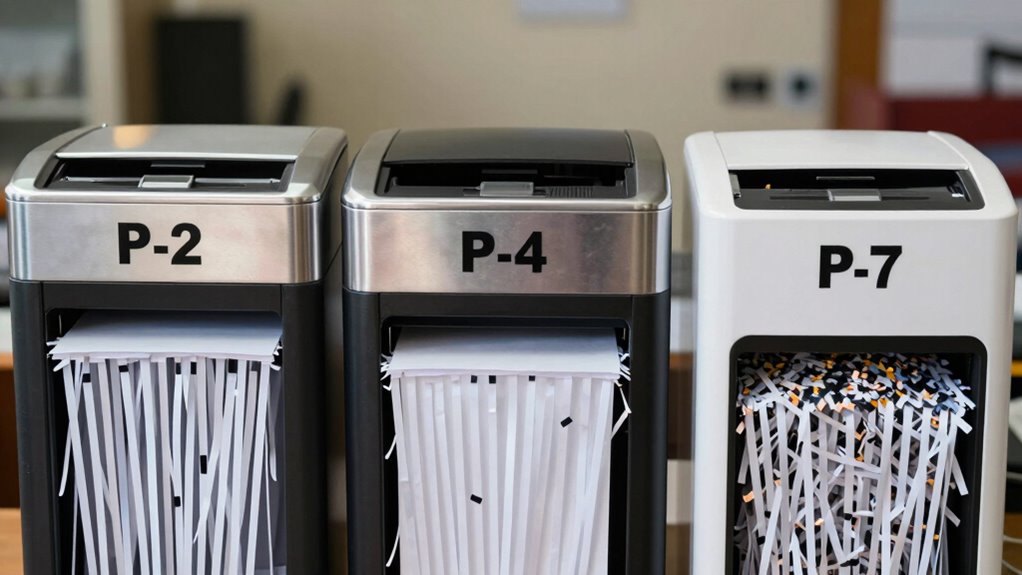
P-2, P-4, and P-7 shredders differ markedly in both security and performance, primarily based on the size of their shredded particles. P-2 shredders produce larger strips, making them suitable for less sensitive documents but less effective against confidential information. P-4 shredders use cross-cutting technology, creating smaller particles that improve security and make reassembly difficult. P-7 shredders offer even finer micro-cut particles, providing maximum protection for highly confidential data. Performance varies accordingly; higher security levels typically mean slower shredding speeds due to more complex shredding technology. If your priority is safeguarding sensitive information, opting for a P-4 or P-7 shredder ensures better security through smaller particles, but consider the trade-off in shredding speed and capacity for your specific needs. Additionally, shredding security plays a crucial role in choosing the right machine for your needs. Understanding shredding technology can help you make a more informed decision about the best level for your security requirements.
Which Shredder Level Is Best for Personal Documents?
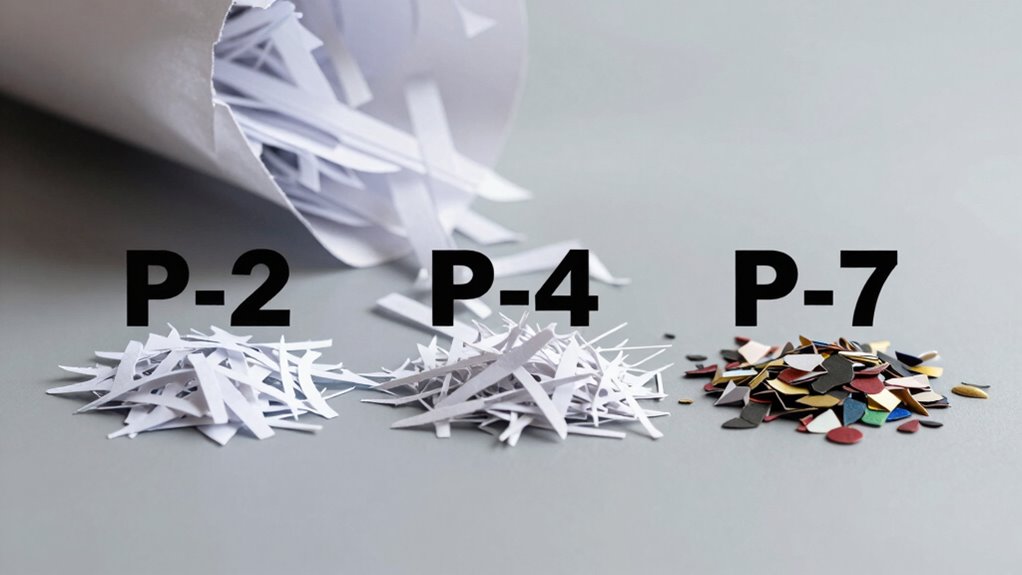
When choosing a shredder for your personal documents, you want to focus on the privacy protection level it provides. A higher security level means your information stays safer from prying eyes. Consider how effective the shredder is at destroying sensitive papers to ensure your privacy stays intact.
Privacy Protection Level
Choosing the right shredder level is essential for protecting your personal documents from identity theft and unauthorized access. The level determines how well your confidential info is obscured, especially against determined thieves. Higher levels, like P-7, provide more security by producing fine particles, but may sacrifice shredding speed. Lower levels, such as P-2, are quicker but less secure. To ensure your sensitive info stays private, consider these aspects:
- The level of detail in shredded particles
- How quickly the shredder processes documents
- The likelihood of reconstruction by malicious actors
- Frequency of shredding tasks
- The importance of safeguarding personal info
- Shredding particle size plays a significant role in determining security effectiveness. Additionally, understanding the reconstruction difficulty of shredded materials can help you choose the appropriate level for your needs. The material composition of shredded particles can also influence how easily they can be reassembled. Moreover, the security standards associated with shredder levels are designed to meet various privacy requirements and can guide your selection process.
Furthermore, considering the shredding technology used can impact the overall effectiveness and durability of the shredded particles. Matching your shredder level with your privacy needs guarantees your confidential info stays protected without unnecessary delays.
Document Security Effectiveness
Ever wondered which shredder level provides the best security for your personal documents? When it comes to confidential data, choosing the right shredder level is essential. Shredding standards, like P-4 and P-7, determine how small the shredded particles are, directly impacting security. P-2 shredders produce larger strips, which can be reconstructed or read, making them less effective for sensitive info. P-4 shreds paper into cross-cut pieces, offering a higher level of security, while P-7 provides micro-cut particles that are nearly impossible to reassemble. If you want to protect personal documents such as bank statements or healthcare info, opt for at least a P-4 or higher. This guarantees your confidential data remains secure and aligns with shredding standards designed to prevent identity theft or data breaches. Understanding document security and how different shredder levels meet these standards helps ensure you select the appropriate level for your security needs. Incorporating herbal baths and spices like turmeric and ginger can also support holistic wellness by reducing stress and promoting overall health.
Is a P-2 Shredder Enough for Small Offices or Home Use?
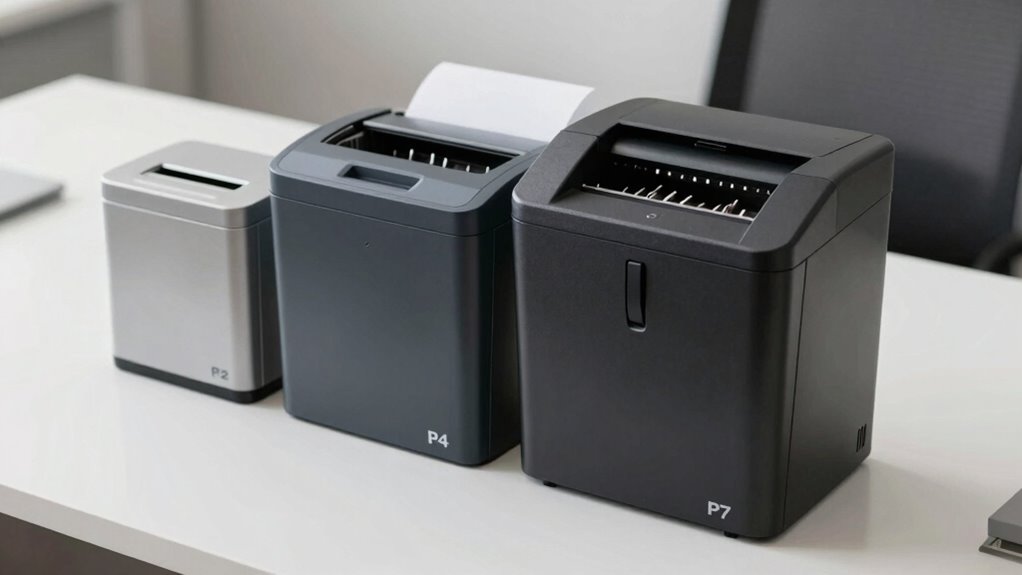
A P-2 shredder might seem suitable for small offices or home use, but you’ll want to contemplate if its security level meets your needs. Think about how much paper you’ll be shredding regularly and whether the machine can handle that volume without constant jams. Also, assess if its capacity and frequency of use align with your daily shredding requirements. For added peace of mind, consider whether the shredder incorporates traditional craftsmanship techniques, which can influence durability and performance. Additionally, evaluating the security level of the shredder can help ensure it provides adequate protection for sensitive documents. Understanding the different shredder levels, including the specific security classifications, and their intended purposes is essential to select the right device for your needs.
Security Level Adequacy
While P-2 shredders are commonly used in small offices and homes, their security level may not always be sufficient for sensitive information. If confidentiality concerns are high, relying solely on a P-2 shredder could pose risks. Shredding technology at this level produces strips that can be reconstructed, compromising data security. Consider these points:
- Basic cross-cut designs improve security over strip-cut but still offer limited protection
- Sensitive documents like financial info or personal data require higher levels
- P-2 shredders are best for non-confidential waste
- Larger organizations often need P-4 or higher for compliance
- Assess your security needs based on the type of information you handle, including document sensitivity to determine the appropriate shredder level
- The type of piercing jewelry materials used can also influence the level of aftercare and hygiene necessary to maintain safety
- Understanding shredding security levels helps in choosing the right equipment for your needs, ensuring your confidential information stays protected
- Additionally, selecting a shredder with appropriate security features can provide extra protection for sensitive data.
Paper Capacity Limits
Most small offices and home users find that a P-2 shredder’s paper capacity is sufficient for their daily needs. It can handle small batches of documents, supporting confidentiality protocols without frequent stops. For larger volumes, however, a P-2 might require more frequent shredder disposal, which can disrupt workflow. Consider this table for quick comparison:
| Shredder Level | Daily Capacity (sheets) | Ideal Use Case |
|---|---|---|
| P-2 | Up to 10 | Personal or small home use |
| P-4 | Up to 15 | Small office with moderate use |
| P-7 | Up to 20 | Larger office with higher demand |
If your shredding volume exceeds these limits regularly, upgrading guarantees smoother operations and maintains confidentiality protocols.
Frequency of Use
Considering your shredding needs is essential when choosing a shredder level. If you only shred occasionally, a P-2 shredder might suffice, especially for small offices or home use. These shredders tend to have lower shredder noise and consume less energy, making them cost-effective for infrequent use. However, if you plan to shred daily or large volumes, a higher-level shredder like P-4 or P-7 could be better, as they handle more continuous use without overheating. Keep in mind that frequent use can lead to increased energy consumption and noise levels, which may disturb your workspace.
- Less shredder noise during occasional use
- Lower energy consumption for infrequent shredding
- Reduced risk of overheating with light use
- Suitable for small batches of documents
- Not ideal for daily or heavy-duty shredding
When Should You Opt for a P-4 or P-7 Shredder for Sensitive Data?
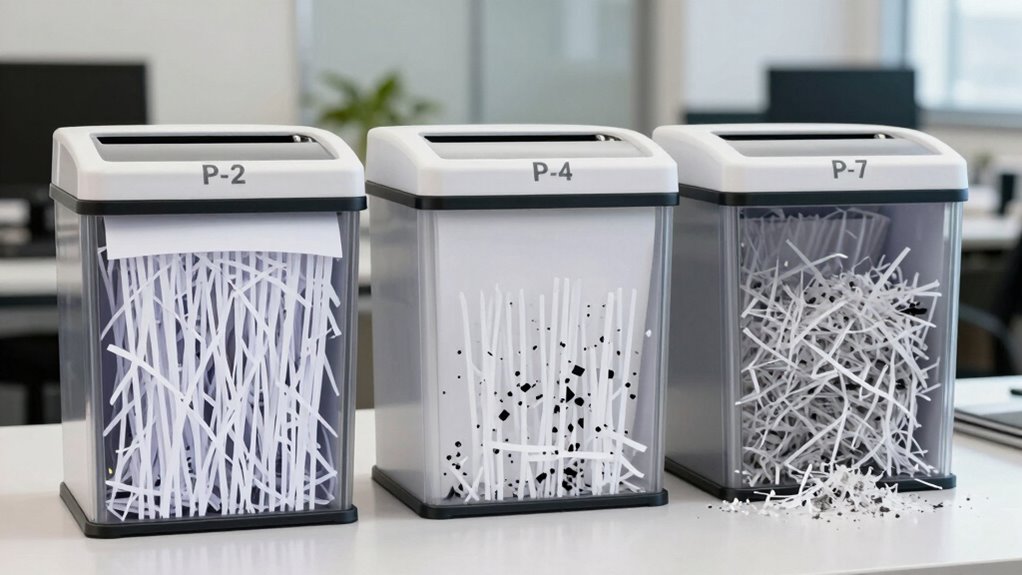
Choosing a P-4 or P-7 shredder becomes essential when you’re handling highly sensitive or confidential information. If confidentiality concerns are high, these levels provide the security needed to prevent data recovery. You should also consider shredding frequency; frequent shredding of sensitive documents warrants a higher security level. P-4 and P-7 shredders produce finer particles, making it much harder for anyone to reconstruct shredded material. If you handle sensitive client data, legal documents, or proprietary information regularly, investing in a P-4 or P-7 shredder is a smart move. These shredders are designed to meet strict security standards, ensuring your confidential data remains protected. Opting for these levels minimizes the risk of leaks and maintains your data privacy effectively.
How to Choose the Right Shredder Level for Your Privacy Needs?

To select the appropriate shredder level, consider how sensitive your documents are and what level of security you need. Think about the types of papers you’ll be shredding—confidential reports, personal information, or everyday documents. Matching the shredder’s security level to your specific privacy needs guarantees your information stays protected.
Security Level Considerations
Selecting the right security level for your paper shredder depends on how sensitive the information you handle is. If you deal with confidential data, opt for a higher level like P-4 or P-7 to ensure better protection. Lower levels, such as P-2, may suffice for less sensitive documents but offer less security. Consider shredder durability, especially if you’ll be shredding frequently—more durable shredders handle tougher tasks and last longer. Here are some key points to guide your choice:
- Higher security levels reduce the risk of data reconstruction
- Lower levels are quicker for everyday use
- Durability matters for frequent shredding needs
- Sensitive data requires more thorough destruction
- Balance security with shredder lifespan and cost
Choosing the right level depends on your need to safeguard confidential data effectively.
Intended Document Types
Ever wonder which paper shredder level is best for your specific documents? Your choice depends on the type of confidential data you handle. For sensitive financial records, legal documents, or personal information, a higher shredder level like P-4 or P-7 is ideal, producing smaller, more secure particles. If you mainly shred everyday paper with minor confidential details, a P-2 shredder might suffice. Different shredder types are designed for various document types; cross-cut models generally provide greater security than strip-cut ones. Consider what’s at stake if your documents fall into the wrong hands. Choosing the right shredder level ensures your private information remains protected, matching your document types with the appropriate shredder for maximum security.
What Are the Costs and Maintenance Requirements for Different Shredder Levels?
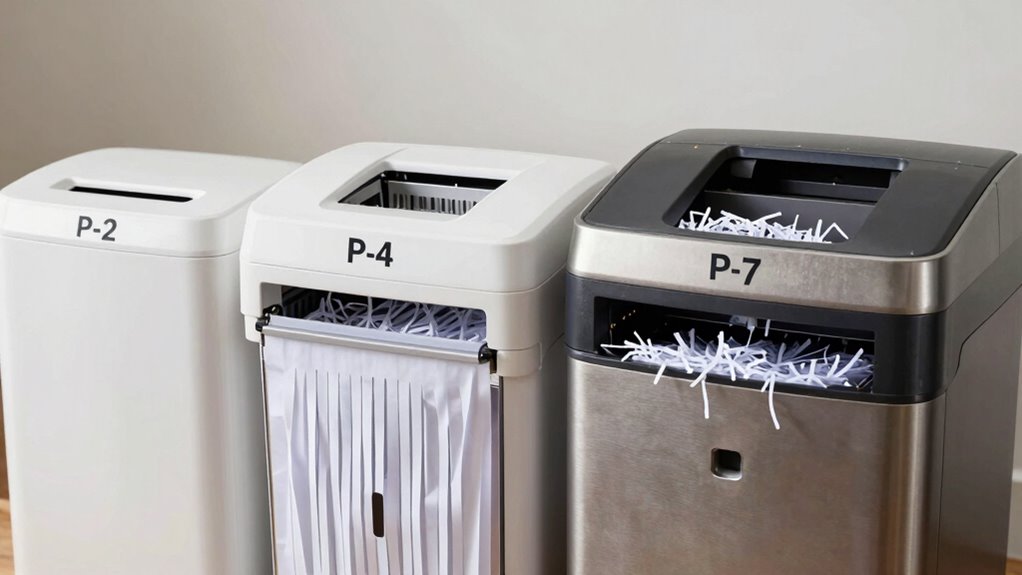
Understanding the costs and maintenance needs of different shredder levels is essential when choosing the right equipment for your needs. Higher-level shredders like P-7 tend to have a steeper cost comparison upfront, but they often require less frequent maintenance. Lower levels such as P-2 are cheaper initially but may need more regular upkeep and replacement parts. To keep your shredder running smoothly, follow these maintenance tips:
- Regularly oil blades to prevent jams
- Clear paper jams promptly
- Avoid overloading the shredder
- Replace worn parts as needed
- Schedule routine inspections
Investing in a shredder suited to your volume reduces long-term costs and downtime. By understanding these factors, you can select a shredder that balances initial investment with ongoing maintenance, ensuring efficiency and security.
Common Mistakes When Picking a Paper Shredder Level (And How to Avoid Them)?
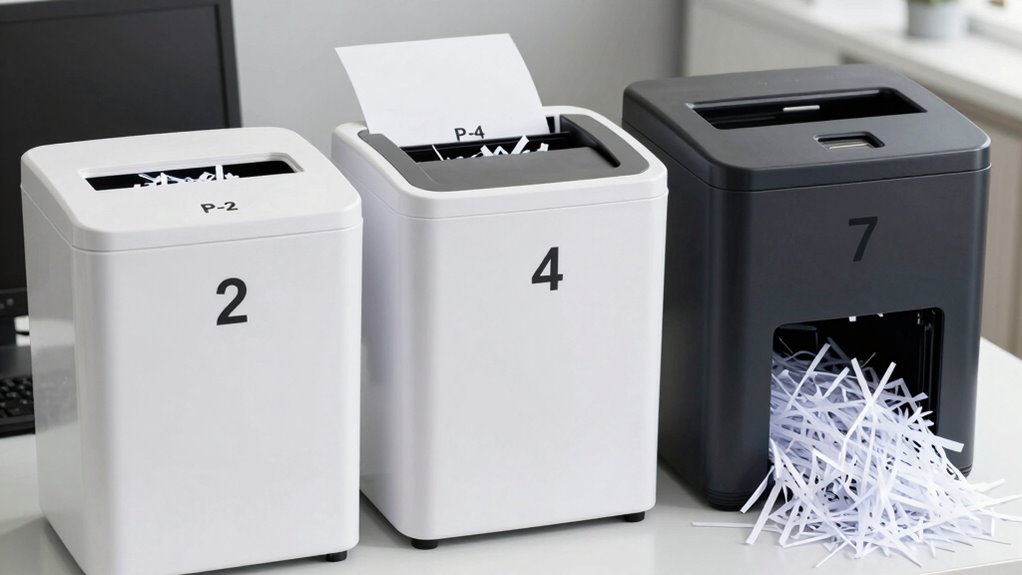
One common mistake people make when choosing a paper shredder level is focusing solely on upfront cost without considering long-term needs. This can lead to frustration if the shredder isn’t suitable for the volume or security required, impacting shredding etiquette and paper recycling efforts. For example, selecting a lower-level shredder like P-2 for frequent use may cause jams and slowdowns, while overestimating needs can result in unnecessary expenses. To avoid this, assess your typical shredding volume and security needs first. Know that higher security levels produce finer particles, which support better paper recycling, but may be overkill for casual shredding. Making an informed decision helps you balance cost, convenience, and environmental responsibility, ensuring your shredder fits your actual requirements.
Tips for Using and Maintaining Your Shredder Based on Its Security Level?

Depending on your shredder’s security level, proper use and maintenance can extend its lifespan and guarantee ideal performance. For high-security models like P-7, avoid overfeeding and shred documents in smaller batches to prevent jams. Use correct shredding techniques, such as removing staples and paperclips, especially for lower-security levels. Regularly oil your shredder to keep blades lubricated, which supports smooth operation and paper recycling. Keep the bin clean and empty it frequently to prevent paper jams and ensure efficiency. Additionally, avoid shredding non-paper materials unless specified, as this can damage the blades. By following these tips tailored to your shredder’s security level, you’ll maintain excellent performance, prolong its lifespan, and support eco-friendly paper recycling.
Do You Need a High-Security Shredder, or Will a Lower Level Do the Job?
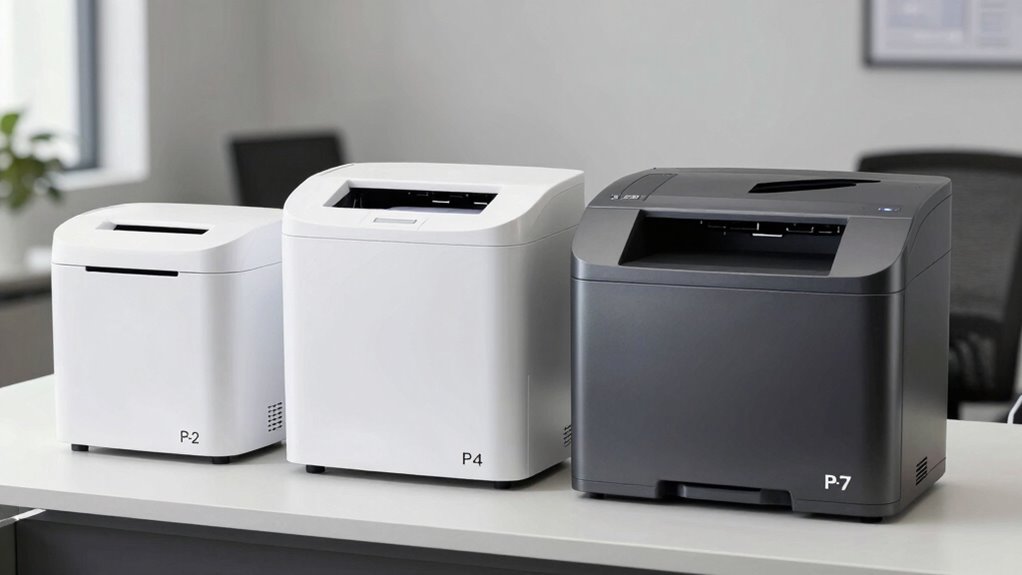
Choosing the right shredder depends on the level of security you need and the types of documents you handle. If you deal with confidential data like financial reports or legal records, a high-security shredder adhering to shredding standards such as P-7 is essential. These shredders produce very fine particles that make reconstruction nearly impossible, protecting your sensitive information. However, for less critical documents like memos or junk mail, a lower-level shredder like P-2 or P-4 may suffice. Assess your security needs carefully—using a shredder with the right security level prevents data breaches and ensures compliance with privacy regulations. To put it differently, match your shredder’s security level to the sensitivity of your documents to avoid unnecessary risk.
Frequently Asked Questions
How Long Do Different Shredder Levels Typically Last Before Maintenance?
The shredder lifespan before needing maintenance varies by level. P-2 shredders typically last around 1-2 years with regular use, while P-4 models last about 3-4 years. P-7 shredders, designed for high-volume use, may last 5 or more years before requiring maintenance. To optimize your shredder’s lifespan, follow the recommended maintenance frequency, such as oiling and emptying the bin regularly, to prevent jams and prolong performance.
Are Cross-Cut or Micro-Cut Shredders Available for Each Security Level?
Sure, cross-cut and micro-cut shredders are available for every security level, even P-2, P-4, and P-7—because who doesn’t want their secrets shredded into confetti? You’ll find cross-cut options for moderate security needs and micro-cut varieties for maximum privacy. Don’t worry, whether you’re shredding receipts or sensitive documents, there’s a shredder that matches your paranoia level. Who knew security could be so stylish?
Can Shredders With Higher Security Levels Handle Larger Volumes Efficiently?
Shredders with higher security levels generally handle smaller volumes efficiently due to their finer cross-cut or micro-cut features, which slow down the process. If you need to shred large quantities quickly, lower security levels like P-2 or P-4 are more suitable. The security level comparison shows that P-7 shredders prioritize security features over volume capacity, making them ideal for sensitive documents but less efficient for bulk shredding.
What Safety Features Are Common in High-Security Shredders?
Like a vigilant guard dog, high-security shredders are equipped with safety features to prevent accidents. You’ll find safety sensors that detect hands or fingers near the blades, stopping the machine instantly. An emergency stop button provides quick shutdown in emergencies, ensuring your safety. These features work together to make high-security shredders safer, especially when handling sensitive materials, giving you peace of mind while operating them.
Are There Environmental Impacts Associated With Different Shredder Security Levels?
Environmental impact varies with shredder security levels because higher-security shredders produce finer, more difficult-to-recycle paper particles, which can hinder shredder recycling efforts. You might find that P-2 shredders are more eco-friendly since their larger particles are easier to recycle, while P-7 shredders generate tiny fragments that complicate recycling and increase waste. To minimize your environmental footprint, choose a shredder that balances security needs with sustainable shredder recycling options.
Conclusion
So, next time you toss that confidential document into your P-2 shredder, remember—you might just be shredding more than you think. Sure, it’s fine for everyday clutter, but if privacy’s your priority, upgrading to a P-4 or P-7 might save you from unexpected surprises. Ironically, what seems like overkill today could be your best investment in peace of mind tomorrow. After all, who doesn’t love a shredder that’s actually worth the price?