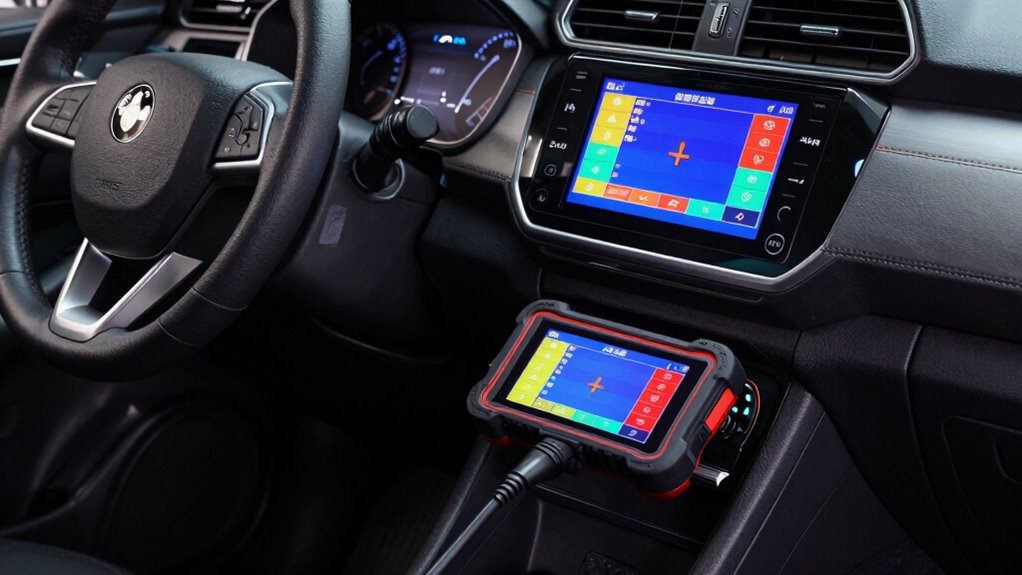
When your check engine light comes on, OBD2 codes help you understand what’s wrong with your vehicle. These codes show whether the issue is minor or serious, pointing to problems with the engine, emissions, or other systems. Different prefixes like P, B, C, and U tell you which part of the vehicle is affected. If you want to learn how to decode and address these codes effectively, keep going—you’ll find useful tips here.
Key Takeaways
- OBD2 codes identify specific vehicle issues, with prefixes indicating whether problems are related to engine, body, chassis, or network systems.
- Common codes like P0171 or P0300 point to fuel, misfire, or sensor problems, helping beginners understand check engine light causes.
- Reading codes involves connecting an OBD2 scanner, turning on the ignition, and referencing the codes to diagnose issues.
- Not all codes reveal root causes; persistent or complex problems may require professional diagnosis.
- Understanding basic OBD2 codes helps beginners prioritize repairs, save money, and maintain vehicle health effectively.
What Are OBD2 Codes and Why Do They Matter?
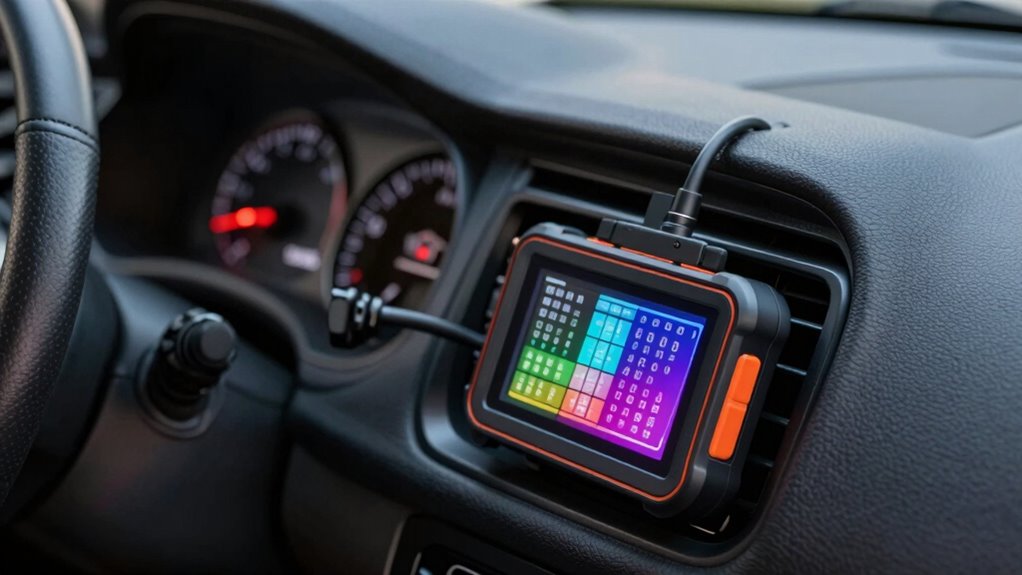
Have you ever wondered how mechanics pinpoint car issues quickly? It all starts with understanding OBD2 codes. These codes are part of a system that monitors your vehicle’s emissions and overall health. When your car detects a problem, it triggers the check engine light and stores a specific OBD2 code. Using diagnostic tools, mechanics can read these codes to identify what’s wrong efficiently. OBD2 codes are essential because they provide precise information about issues related to vehicle emissions, engine performance, and other crucial systems. Without them, troubleshooting would be a guessing game. These codes streamline repairs, saving time and money, and help ensure your vehicle remains environmentally friendly by keeping emissions in check. They’re an invaluable tool for quick, accurate diagnostics. Additionally, understanding OBD2 code definitions can help vehicle owners grasp the nature of issues before seeking professional repairs. Recognizing the importance of diagnostic trouble codes can also improve communication between vehicle owners and technicians.
How Your Car Uses OBD2 to Communicate Problems
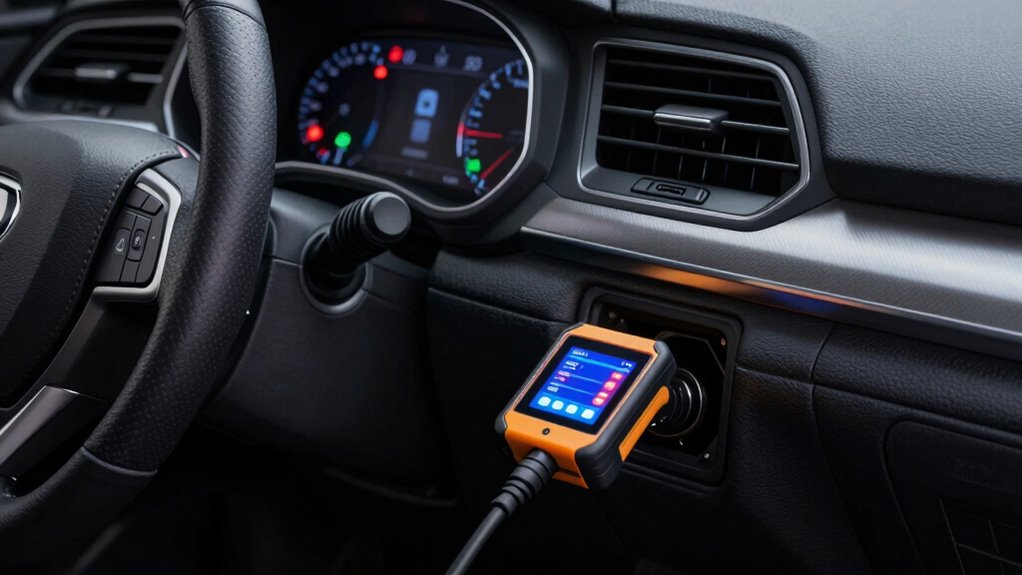
When your vehicle detects a problem, it uses the OBD2 system to communicate the issue quickly and efficiently. It does this by recording specific diagnostic trouble codes (DTCs) that pinpoint the source of the problem. These codes help technicians identify issues like sensor calibration errors or emissions system faults. During emission testing, the OBD2 system reports whether your vehicle’s sensors and systems meet regulatory standards. If a sensor isn’t calibrated correctly, it can trigger a check engine light and generate a code. The system continually monitors various components, ensuring they operate within proper parameters. Additionally, understanding the measurement tools used in diagnostics can improve the accuracy of problem detection. Modern OBD2 scanners utilize advanced data analysis techniques to interpret sensor readings more precisely. To ensure accurate diagnostics, technicians often rely on standardized codes that help interpret the data consistently across different vehicle makes and models. By using OBD2, your car effectively communicates problems without guesswork, allowing for faster diagnostics and repairs, and helping your vehicle stay compliant with emissions regulations. Vetted – Soul Sanctuaries
Decoding OBD2 Code Structures: P, B, C, U – What They Mean
Understanding the significance of the code prefixes—P, B, C, and U—helps you identify where the problem originates in your vehicle. These letters indicate whether the issue is related to the powertrain, body, chassis, or network. Recognizing common code examples within each category makes troubleshooting quicker and more straightforward. Additionally, being aware of Appliance Maintenance Plans can provide insight into proactive measures that help prevent issues, similar to how understanding diagnostic trouble codes can help secure your vehicle’s performance. Knowing diagnostic trouble codes can also assist you in interpreting the severity and urgency of repairs needed, and familiarizing yourself with vehicle diagnostic systems can enhance your ability to respond effectively. Understanding code structure can further clarify how the codes are formatted and how they relate to specific vehicle functions.
Code Prefix Significance
Ever wonder what the different letters in an OBD2 code mean? These prefixes tell you where the issue originates, helping you understand engine diagnostics and vehicle emissions better.
- P (Powertrain): Covers engine, transmission, and emissions systems. Most common codes you’ll see relate to vehicle emissions and engine performance.
- B (Body): Relates to your vehicle’s body systems, like airbags or lighting, affecting vehicle safety.
- C (Chassis): Concerns the suspension, steering, and braking systems, which influence your vehicle’s handling.
- U (Network): Involves communication networks between vehicle modules, impacting overall system diagnostics.
Knowing these prefixes helps you quickly identify the system in trouble, streamlining repairs and understanding engine diagnostics more clearly.
Common Code Examples
OBD2 codes are composed of a letter followed by four characters, each providing specific information about the issue. For example, P0300 indicates a misfire, while B1010 relates to body control issues. These codes help identify problems needing sensor calibration or adjustments to meet emission standards. Here’s a quick look at common examples:
| Code Type | Example | Meaning |
|---|---|---|
| P | P0171 | Fuel system too lean, affecting emissions |
| B | B0020 | Body control module malfunction |
| C | C1234 | Suspension sensor failure affecting handling |
Understanding these examples helps you interpret whether an issue is related to engine performance, body systems, or chassis. Recognizing code types ensures you address the right components effectively.
How to Read and Interpret Your Car’s OBD2 Codes

When your dashboard’s check engine light comes on, it’s a sign to find out what’s going on under the hood. To interpret your car’s OBD2 codes effectively: 1. Connect an OBD2 scanner to your vehicle’s port, usually under the dashboard. 2. Turn on the ignition without starting the engine, and read the codes displayed. 3. Note the codes and look them up in a reference guide to understand the issue, such as sensor calibration or vehicle emission problems. 4. Use the scanner’s live data feature to monitor sensor readings, helping you identify if a sensor is causing inaccurate emissions or misreading. Additionally, understanding common OBD2 codes can help you troubleshoot issues more efficiently. Recognizing vehicle emission problems can assist in maintaining your car’s performance and complying with environmental standards. Being familiar with diagnostic trouble codes can also speed up repairs and reduce diagnostic costs. Knowing how to interpret live sensor data allows for more precise diagnostics, saving time and money during repairs.
Common OBD2 Codes and Their Meanings for Beginners

Understanding common error codes helps you identify issues quickly. You’ll learn what engine system alerts mean and how to recognize trouble signs. With this knowledge, troubleshooting becomes simpler and less stressful. Recognizing classic arcade games can also provide nostalgic comfort during repairs. Familiarity with auto maintenance terminology can further empower you to communicate effectively with mechanics or understand repair procedures. Additionally, understanding power storage safety can help prevent electrical mishaps while working on your vehicle or tools. Being aware of psychological assessment tools like the 16PF can also offer insights into your personality traits, aiding in personal understanding and communication. Knowing about vetted products in the automotive or maintenance realm can ensure you choose reliable tools and supplies for repairs or diagnostics.
Common Error Codes
Many common error codes appear on your vehicle’s dashboard or scanner, and recognizing them can help you identify and fix issues quickly. These codes often point to specific problems, like sensor calibration issues or violations of emission standards. Here are four common error codes:
- P0171 – Fuel system too lean, often caused by vacuum leaks or faulty sensors.
- P0300 – Random/multiple cylinder misfire, which can relate to ignition or fuel delivery problems.
- P0420 – Catalyst system efficiency below threshold, indicating possible emission standards violations.
- P0442 – Small leak detected in the evaporative emission control system, often due to a loose gas cap or sensor malfunction.
Understanding these codes helps you address issues before they worsen, ensuring your vehicle remains compliant with emission standards.
Engine System Alerts
Have you ever seen a warning light or a code pop up on your dashboard? If so, it might indicate an issue with your engine system. Common OBD2 codes related to engine alerts often point to problems with the ignition system, which can cause misfires or rough idling. When these codes appear, your vehicle may run less efficiently, reducing fuel efficiency and increasing emissions. For example, a trouble code like P0300 signals random misfires, while others might relate to spark plug issues or faulty sensors. Ignoring these alerts can lead to more serious problems and higher repair costs. By understanding these codes, you can better diagnose engine system alerts early, helping you maintain ideal fuel efficiency and engine performance.
Troubleshooting Basics
When your vehicle’s dashboard lights up with a warning or you notice a strange sound or performance change, it’s often due to specific OBD2 codes that indicate underlying issues. These codes can point to problems like sensor calibration errors or fuel efficiency drops. To troubleshoot effectively: 1. Check for codes related to the oxygen sensors, which impact fuel efficiency and emissions. 2. Look for P0300 codes indicating misfires, affecting engine performance. 3. Inspect for issues with the mass airflow sensor, vital for proper air-fuel mixture. 4. Verify the status of the fuel system and sensors to guarantee accurate readings and peak operation. Recognizing these common codes helps you prioritize repairs and maintain your vehicle’s performance while preventing further damage. Additionally, understanding whole-home water systems can improve your home’s efficiency and water quality.
Choosing and Using an OBD2 Scanner to Check Your Codes
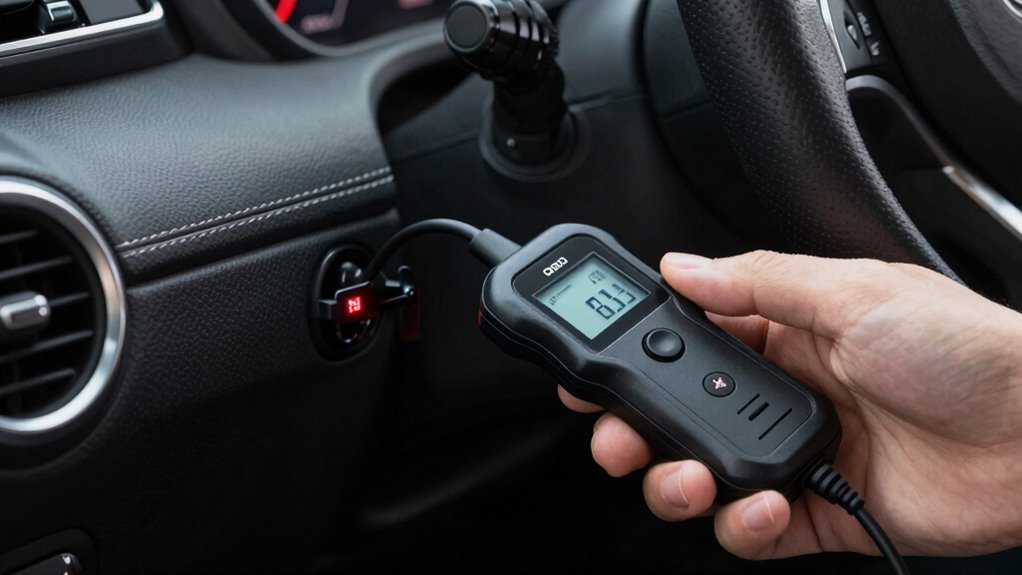
Choosing the right OBD2 scanner is essential for accurately diagnosing your vehicle’s issues. A good scanner helps you read codes, monitor sensor calibration, and perform data logging for deeper insights. When selecting one, consider compatibility with your vehicle and ease of use. For example, some scanners offer live data streaming, which can help identify underlying problems quickly. Here’s a quick comparison:
| Feature | Basic Scanner | Advanced Scanner | Smartphone App |
|---|---|---|---|
| Code reading | Yes | Yes | Yes |
| Data logging | Limited | Full | Yes (with app) |
| Sensor calibration | No | Yes | Sometimes |
Additionally, understanding vehicle diagnostics can improve your troubleshooting skills and ensure you’re making informed maintenance decisions. Familiarity with herbal and holistic wellness principles can also support a holistic approach to vehicle care by encouraging regular maintenance and natural remedies for minor issues.
Troubleshooting Your Car Based on OBD2 Codes
When your car throws an OBD2 code, you can start diagnosing common problems right away. Prioritize repairs by focusing on issues that could affect safety or cause further damage. This approach helps you fix the most critical problems efficiently and effectively.
Diagnosing Common Problems
Diagnosing common car problems using OBD2 codes can quickly pinpoint issues that might otherwise be difficult to identify. By using diagnostic tools, you can interpret the codes and understand what’s causing your check engine light to activate. Many problems stem from sensor failures or minor malfunctions that are easy to overlook. To troubleshoot effectively, consider these steps:
- Check for consistent sensor failures, which often trigger specific codes.
- Use diagnostic tools to clear codes and verify if they return after driving.
- Inspect related components like wiring and connectors for damage or corrosion.
- Focus on common trouble areas such as the oxygen sensor or mass airflow sensor.
This approach helps you target repairs efficiently, saving time and money while ensuring your vehicle runs smoothly.
Prioritizing Repairs Effectively
Prioritizing repairs based on OBD2 codes is essential to avoid unnecessary work and prevent further damage. You should use repair prioritization to determine which issues need immediate attention and which can wait. This approach helps in effective priority scheduling, saving time and costs. Start with critical codes indicating safety or engine failure, then address less urgent problems. Consider the severity and potential impact of each code. Use this table for guidance:
| Priority Level | Issue Type | Action Needed |
|---|---|---|
| High | Safety or emissions | Immediate repair to prevent damage or fines |
| Medium | Performance concerns | Schedule repairs soon |
| Low | Minor issues | Monitor and plan for repairs later |
| Urgent | Engine failure alerts | Seek professional help immediately |
| Non-urgent | Informational codes | Keep track for future repairs |
This structured approach guarantees your repairs are efficient and effective.
What OBD2 Codes Can’t Tell You and When to See a Mechanic
While OBD2 codes are helpful for identifying potential issues, they don’t provide a complete picture of what’s really wrong with your vehicle. Sensor limitations can affect code accuracy, meaning a code might point to a problem that’s not the root cause. Additionally, some issues are complex and require more diagnostics than a code alone can offer. Here are situations when you should see a mechanic:
- The code points to a sensor malfunction, but the problem persists after replacement.
- Multiple codes appear, indicating a complex or interconnected issue.
- The warning light stays on even after fixing the identified problem.
- You notice abnormal vehicle behavior that the codes don’t explain clearly.
In these cases, professional inspection is essential for accurate diagnosis and repair.
Next Steps: What to Do After Reading Your Diagnostic Codes
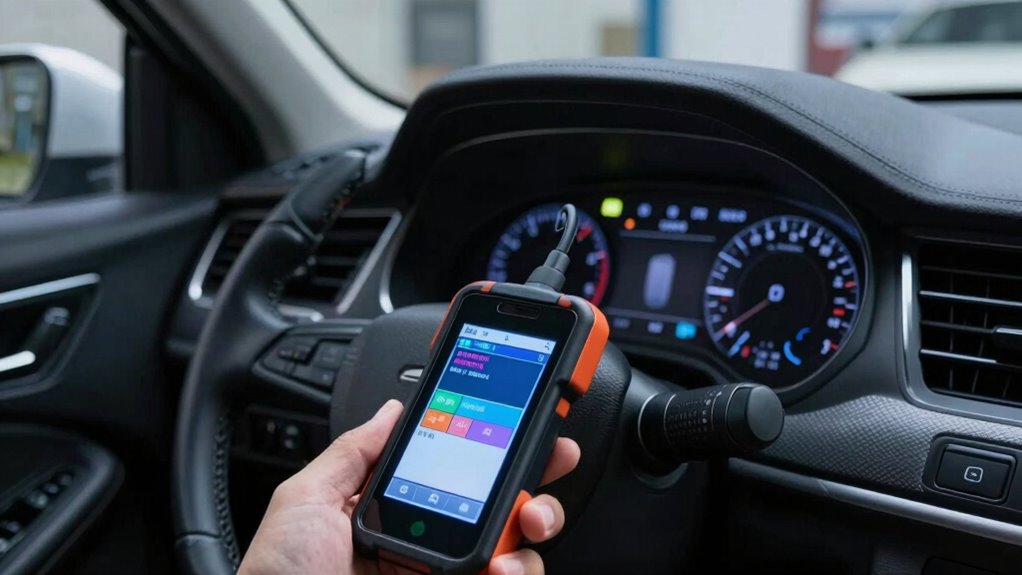
Once you’ve retrieved your OBD2 codes, the next step is to interpret what they mean for your vehicle. Use your diagnostic tools to look up the codes and understand the specific issues they indicate. This helps you decide whether the problem requires immediate vehicle maintenance or if it can wait. Don’t jump to conclusions—some codes signal minor issues, while others point to more serious problems. If you’re unsure about the codes or their severity, consult a repair manual or trusted online resources. Remember, diagnostic tools are valuable for guiding your next steps, but they don’t replace professional advice when needed. Taking informed action based on your codes can save you time and money, and help keep your vehicle running smoothly.
Tips to Maintain Your Vehicle and Prevent Check Engine Lights
Regular vehicle maintenance is key to preventing check engine lights and keeping your car running smoothly. Proper vehicle maintenance ensures all systems, especially emission control components, function correctly. To stay ahead, follow these tips:
- Regularly change your oil and replace filters to keep engine performance ideal.
- Keep your tires properly inflated to improve fuel efficiency and reduce strain on your engine.
- Schedule routine inspections for emission control systems, like the catalytic converter and oxygen sensors.
- Use quality fuel and avoid short trips that don’t allow your engine to fully warm up, which can cause emission-related issues.
Frequently Asked Questions
Can OBD2 Codes Indicate Upcoming Vehicle Failures?
Yes, OBD2 codes can indicate upcoming vehicle failures by providing diagnostic accuracy that highlights potential issues early. While some codes signal minor problems, others reveal warning severity that suggests more serious concerns. You should pay attention to these codes and address them promptly, as they help you prevent costly repairs and maintain vehicle safety. Regular diagnostics guarantee you’re aware of issues before they turn into major failures.
Are There Differences in OBD2 Codes Between Car Makes?
Imagine your car’s diagnostic system as a universal translator, yet subtle dialects remain. Yes, there are manufacturer variations in OBD2 codes, even though the core code standardization guarantees basic consistency. Different makes might assign unique codes or additional data, so while the language is similar, nuances differ. You’ll want to consult specific vehicle manuals to interpret these variations accurately, guaranteeing you understand what your car’s trying to tell you.
How Often Should I Scan My Vehicle for OBD2 Codes?
You should scan your vehicle for OBD2 codes regularly, ideally every few months or before long trips. This helps catch issues early, especially sensor calibration problems that might affect emission standards. Frequent scans ensure your vehicle remains compliant with emissions regulations and runs efficiently. If the check engine light comes on, scan immediately to identify and address problems promptly, preventing costly repairs and maintaining ideal performance.
Can I Reset the Check Engine Light Myself?
Yes, you can reset the check engine light yourself using DIY diagnostics and code clearing techniques. To do this, you’ll need an OBD2 scanner—plug it into your vehicle’s port, turn on the ignition, and follow the device’s instructions to clear the codes. Keep in mind, resetting the light won’t fix underlying issues, so it’s best to diagnose and address any problems before resetting the light to ensure your vehicle runs smoothly.
Do All OBD2 Codes Require Immediate Repair?
Not all OBD2 codes require immediate repair. Some indicate minor issues, while others point to serious problems needing urgent attention. You should use diagnostic tools for accurate code interpretation, which helps determine the urgency. If the check engine light flashes or the vehicle behaves abnormally, seek professional help right away. Otherwise, you can monitor the situation and plan repairs accordingly, ensuring safety and proper vehicle maintenance.
Conclusion
Understanding OBD2 codes helps you catch issues early and save money. Did you know that nearly 30% of car repairs are caused by engine problems that you can identify with these codes? By learning to read them, you gain confidence in maintaining your vehicle and avoiding unnecessary trips to the mechanic. Stay proactive, keep your car in top shape, and use your newfound knowledge to keep your engine running smoothly for miles to come.