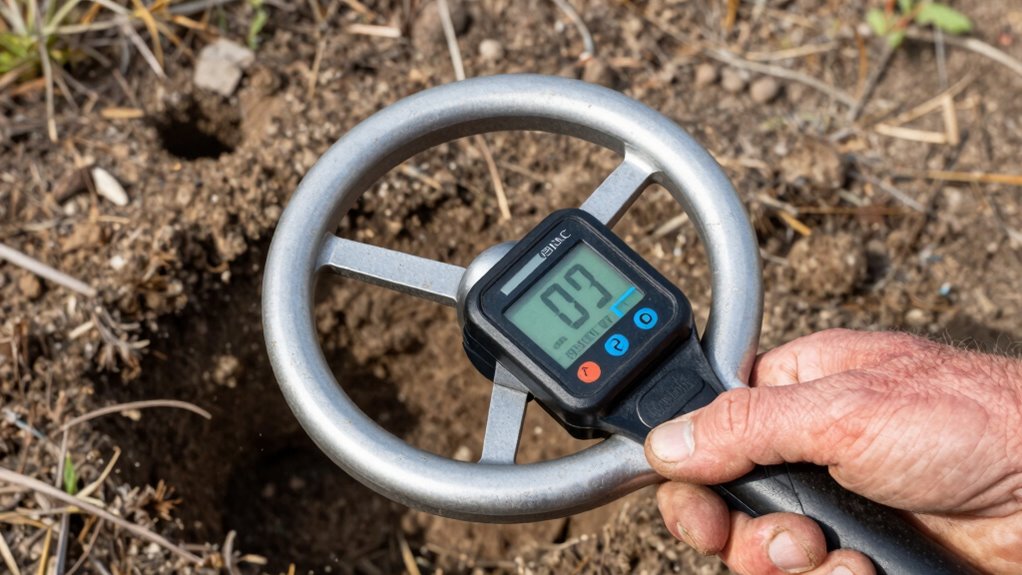

Choosing the right detector frequencies, adjusting ground balance correctly, and considering soil conditions are key to uncovering more targets. Higher frequencies help find small items like jewelry and coins, while lower frequencies excel at detecting deeper, larger objects. Proper ground balance reduces false signals caused by mineralized soil. Mastering these settings improves your chances of success. Keep exploring these tips, and you’ll discover even more ways to boost your metal detecting results.

Get business pricing on monitors, keyboards and dev gear
- Business-only prices and quantity discounts
- Tax-exempt purchasing
- Multiple users, one account, clear invoices
Key Takeaways
- Adjust frequencies: high for small, shallow targets; low for large, deep objects to optimize detection.
- Proper ground balance minimizes mineralization interference, reducing false signals and improving target accuracy.
- Coil size selection affects detection depth and detail; larger coils for depth, smaller for precision in mineralized soil.
- Regularly calibrate and test in specific soil conditions to enhance detection reliability and target recovery.
- Maintain equipment: check batteries, clean coils, and verify connections to ensure consistent, optimal performance.
How Do Metal Detector Frequencies Impact What You Find?
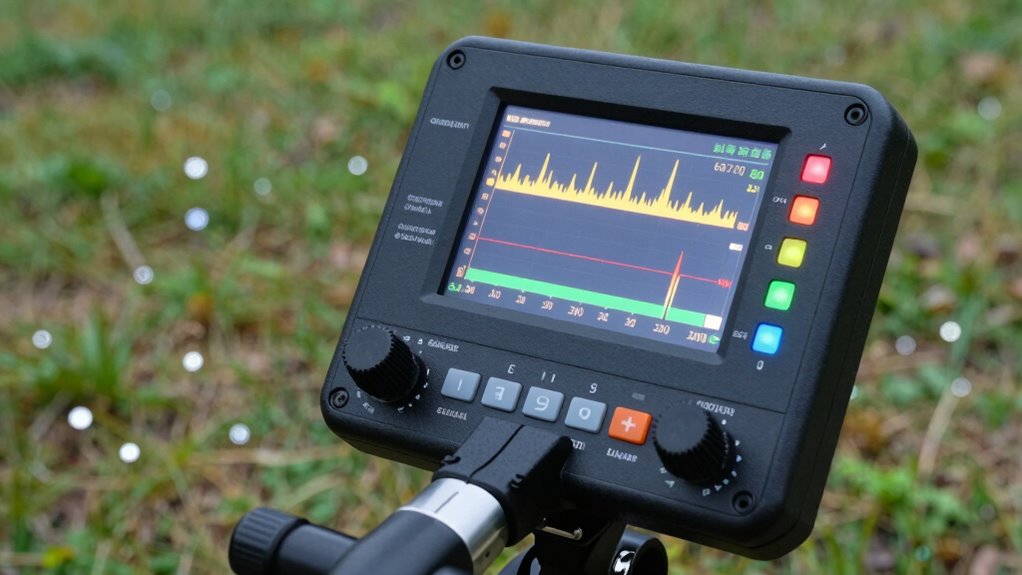
The frequency setting on your metal detector directly influences what types of objects you can find. Frequency modulation allows you to adjust the detector’s operating frequency, which impacts signal clarity and detection depth. Higher frequencies improve your chances of finding small or highly conductive items like jewelry or coins, but they may be more susceptible to interference. Lower frequencies excel at detecting larger, deeply buried objects such as relics or metal pipes, providing better signal clarity over longer distances. Choosing the right frequency depends on what you’re searching for. Frequency modulation enables detectors to adapt to different search conditions, enhancing overall effectiveness. Additionally, understanding spec verification and ensuring your device’s claims are accurate can help optimize your search results. By fine-tuning the search settings, you can optimize your detector’s performance, reduce false signals, and increase your chances of success. Understanding how frequency modulation impacts signal clarity is essential for effective metal detecting.
A ground balance setting is also crucial to minimize mineral interference and improve detection accuracy across various soil types.
Understanding Ground Balance and Why It’s Crucial for Accurate Detection
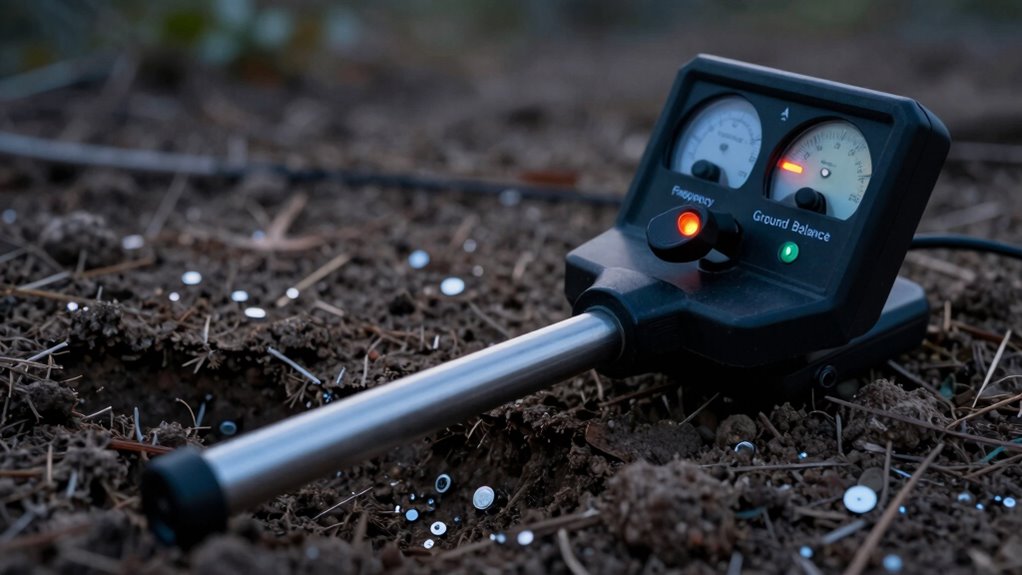
Understanding ground balance is essential because it helps your detector distinguish between mineralized soil and valuable targets. You need to adjust it based on your soil conditions to improve accuracy and reduce false signals. Proper ground balance guarantees you don’t miss out on finds or waste time chasing false alarms. Additionally, knowing the ground’s electric properties can further enhance detection performance and target identification. For example, understanding how ground mineralization affects signals can help you fine-tune your settings for better results. Recognizing the existence of authenticity in your detection process can also lead to more consistent and reliable findings. Being aware of how ground conditions influence signals is crucial for optimizing your detection strategy and avoiding missed opportunities. Regularly checking and adjusting your ground balance can also prevent signal interference, ensuring more precise target detection.
Importance of Ground Balance
Ground balance is essential because it allows your metal detector to distinguish between valuable targets and mineralization in the soil. Soil composition varies, and mineralization effects can create false signals that make it difficult to identify real targets. Without proper ground balance, your detector may interpret mineralization as metal, leading to missed opportunities or frustration. When you set the ground balance correctly, it neutralizes the mineralization effects, enabling your detector to focus on actual targets rather than soil interference. This adjustment improves detection depth and accuracy, especially in mineral-rich environments. Proper ground balance ensures you’re not chasing false signals and helps you find more valuable targets with confidence. It’s a critical step to maximize your detector’s performance and success in the field. Additionally, understanding how metal detector frequencies influence detection can help you fine-tune your settings for different environments.
Adjusting for Soil Conditions
Adjusting for soil conditions is a vital step in ensuring your metal detector performs accurately. Soil composition and moisture levels can notably affect how signals are detected and interpreted. For example, highly mineralized soil or wet conditions can cause false readings or mask targets. By adjusting your ground balance, you compensate for these variations, reducing interference and improving detection accuracy. Understanding your soil’s moisture levels helps you set the detector correctly, whether you’re in dry, damp, or waterlogged ground. Proper ground balancing allows your detector to distinguish targets from ground noise, making it easier to find valuable items. Regularly testing your settings in the specific soil conditions where you’re searching can further enhance performance, especially in areas with microplastic contamination that may interfere with signals. Additionally, being aware of the spiritual significance of your surroundings can help you connect more intuitively with potential finds and enhance your overall detecting experience. Incorporating soil mineralization levels into your adjustments can further optimize your detection results. Recognizing the importance of ground mineral content helps in fine-tuning your detector for different terrains. Always test your settings in the specific soil conditions where you’re searching, and make adjustments as needed for consistent, reliable performance.
How to Pick the Right Frequency for Different Metals
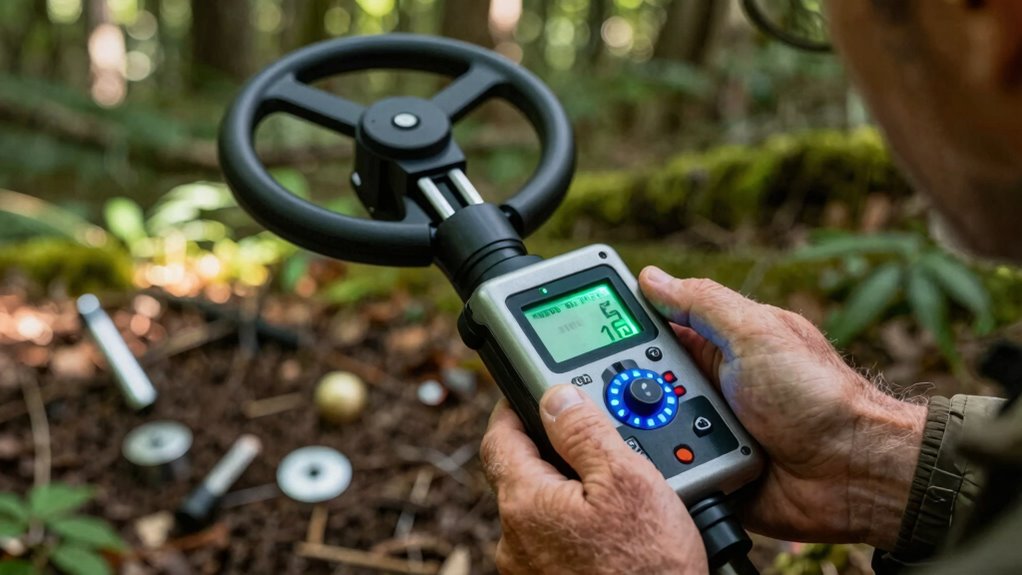
Choosing the right frequency depends on a metal’s conductivity and the signals it produces. Higher frequencies work better for small or shallow targets, while lower frequencies are suited for larger, deeper objects. Consider target size and depth to select the most suitable frequency for your search.
Metal Conductivity and Signals
Selecting the right frequency for metal detection is essential because different metals respond best to specific signals based on their conductivity. Metals with high conductivity, like silver or copper, produce strong signals at higher frequencies, making them easier to detect. Conversely, low-conductivity metals, such as gold or iron, generate weaker signals that often require lower frequencies for better detection. Your choice of frequency directly impacts signal strength, which determines how clearly you can identify and locate targets. By understanding metal conductivity, you can fine-tune your detector to maximize signal response for the type of metal you’re after. This tailored approach improves your chances of finding valuable or difficult targets, ensuring your metal detecting experience is more effective and rewarding.
Frequency Range Selection
To find the best metal targets, you need to pick the right frequency range for your detector, as different metals respond best to specific frequencies. Higher frequencies (around 10-20 kHz) excel at detecting small, conductive targets like jewelry and gold nuggets, especially with smaller coil sizes. Lower frequencies (around 5-10 kHz) are better for larger, deeper targets such as silver coins or relics. If your detector has waterproof features, you can explore more versatile environments, but remember that water can affect signal clarity, so selecting the proper frequency is essential. Your coil size also influences the frequency choice; larger coils work well over wide areas at lower frequencies, while smaller coils are effective in pinpointing targets with higher frequencies. Additionally, understanding how heat and fumes impact cable safety can help in setting up your detector and accessories in secure environments. Being aware of ground conditions is also crucial, as soil mineralization can influence the effectiveness of your chosen frequency and improve target detection accuracy. Moreover, considering soil mineralization levels can further optimize your detection strategy and help you avoid false signals. Paying attention to detector settings and how they interact with ground mineralization can make your searches more efficient and successful. Adjusting your detector’s settings based on environmental factors can also enhance the accuracy of your target identification.
Target Size and Depth
The size and depth of your target play a crucial role in determining the appropriate frequency for your metal detector. Larger targets generally produce stronger signals at higher frequencies, but deeper targets may require lower frequencies to penetrate the ground effectively. Small target size, like tiny jewelry or coins, often needs a higher frequency to detect subtle signals. In contrast, larger or deeper targets, such as buried relics or large coins, respond better to lower frequencies that can reach greater depths. Balancing target size and depth helps you choose the right frequency, maximizing your chances of detection. By understanding how target size and depth influence signal strength, you can optimize your detector settings for more accurate and efficient finds.
How to Adjust Ground Balance for Better Target Identification
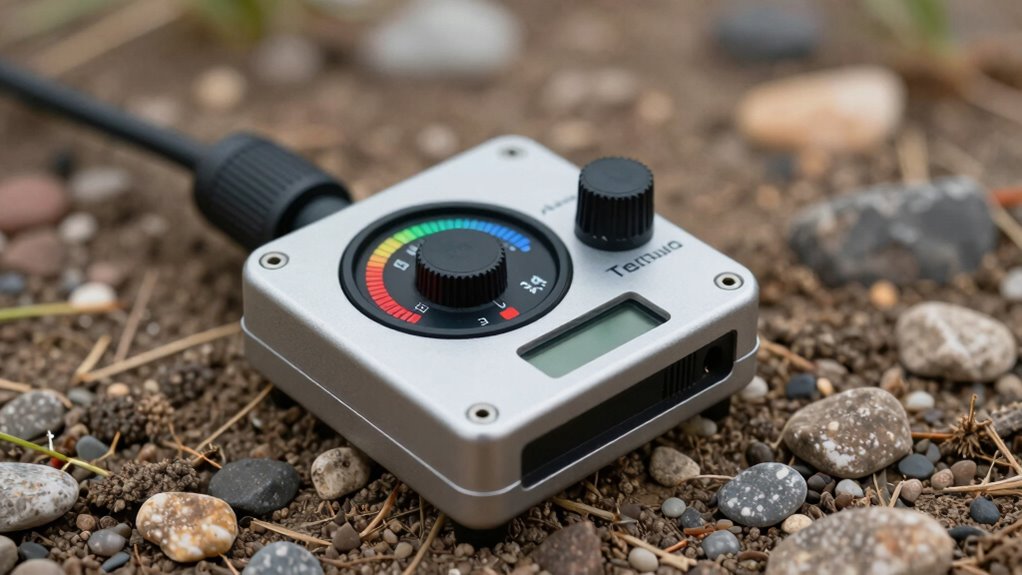
Adjusting ground balance is essential for distinguishing targets from mineralization effects in the soil or saltwater interference. Proper ground balance guarantees your detector is correctly calibrated to the mineral content of the ground, reducing false signals. To do this, start by switching your detector to the ground balance mode. Slowly adjust the control until the detector’s threshold sound stabilizes and no longer fluctuates when passing over mineralized areas. This calibration minimizes the mineralization effects that can mask or mimic targets, making it easier to identify real finds. Understanding the ground mineralization levels can significantly enhance your ability to choose the correct settings and improve detection success. Additionally, taking note of soil composition can help you adapt your ground balance for different environments, further increasing your chances of finding valuable targets. Recognizing mineralization levels helps in fine-tuning your detector settings for optimal performance. A well-calibrated detector improves accuracy and helps you find more valuable targets, especially when you consider detector calibration as an ongoing process.
Top Tips to Maximize Your Metal Detecting Success
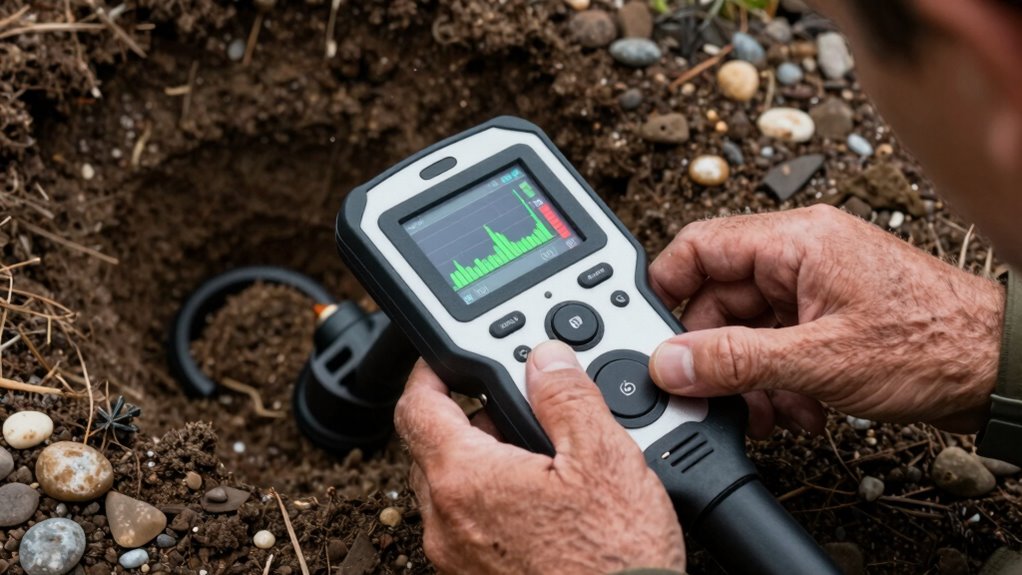
Maximizing your metal detecting success often comes down to applying simple, effective strategies. One key tip is understanding mineralization challenges; highly mineralized soil can cause false signals or mask targets. To counter this, choose your coil wisely—smaller coils offer better sensitivity in tough conditions, while larger coils cover more ground efficiently. Proper coil selection helps you navigate mineralization and find more targets with less frustration. Additionally, adjusting your detector’s settings based on soil conditions can improve detection depth and accuracy. Always test different settings and coils to find what works best in your environment. Staying patient, staying persistent, and adapting your approach to mineralization challenges will considerably boost your success. With the right techniques, you’ll uncover more treasures and improve your overall detecting experience.
Common Metal Detector Problems and How to Fix Them
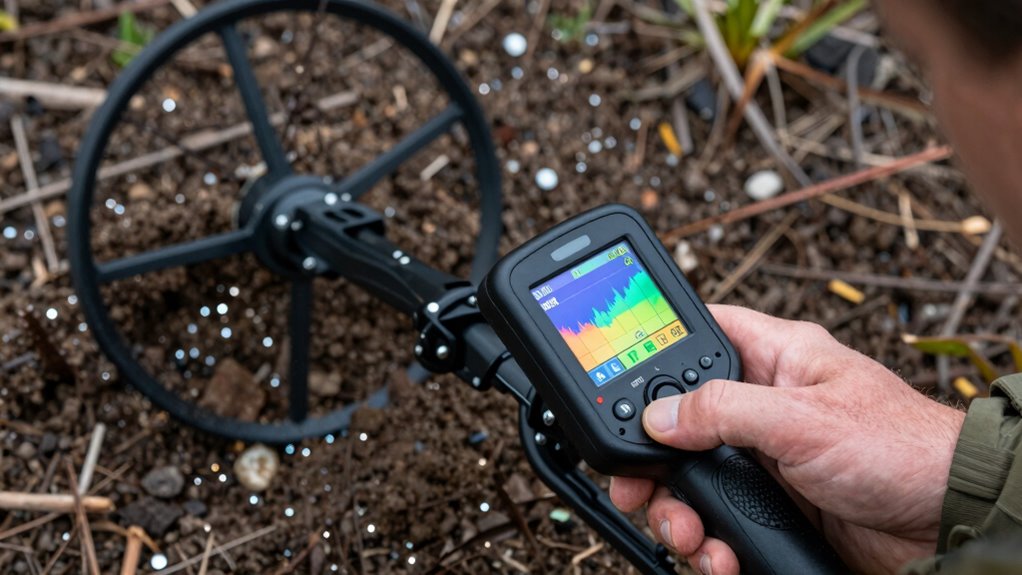
While fine-tuning your detector’s settings and choosing the right coil can boost your success, encountering common problems is inevitable. Battery issues are a frequent culprit; if your detector isn’t powering on or losing power quickly, check and replace the batteries. Ensure contacts are clean and batteries are fresh. Coil malfunctions also cause trouble—if your detector isn’t detecting targets or gives inconsistent readings, inspect the coil for damage or loose connections. Sometimes, dirt or debris can cause false signals, so clean the coil thoroughly. Additionally, verify that the coil cable is securely attached. Regular maintenance, including checking batteries and inspecting the coil, helps prevent these issues and keeps your detector working reliably.
Frequently Asked Questions
Can Metal Detector Settings Affect Battery Life?
Yes, metal detector settings can affect battery life. Adjusting sensitivity and discrimination levels can optimize battery usage by reducing unnecessary power consumption. Using lower frequencies may also conserve power, while high sensitivity settings tend to drain batteries faster. To maximize battery life, you should regularly optimize your detector’s settings for your environment, focusing on power consumption and battery optimization, so you can hunt longer without needing a recharge or new batteries.
Are There Legal Restrictions on Metal Detecting in Parks?
You can’t just dig up treasures in parks; legal restrictions and park regulations often prohibit metal detecting. Before you start, check local laws to avoid fines or confiscation. While some parks welcome hobbyists with permits, others ban metal detecting altogether. Respect private property and protected areas, and always follow posted rules. Being aware of legal restrictions helps you enjoy your hobby responsibly without risking trouble or damaging natural or cultural resources.
How Weather Conditions Influence Metal Detector Performance?
Weather impact can markedly affect your metal detector’s performance. Rain and high humidity increase moisture in the ground, making targets harder to detect and possibly causing false signals. Extreme temperatures can also alter the detector’s electronics. Environmental factors like wind or dust can interfere with your sensitivity. To get the best results, avoid using your detector during heavy rain or very windy conditions, and always consider how weather impacts the terrain.
What’s the Best Way to Prevent False Signals?
A stitch in time saves nine, so to prevent false signals, you need to stay ahead. Regularly check for signal interference and verify your detector calibration is accurate. Keep your coil away from electronic devices and other metal objects. Adjust your settings accordingly, and test in a clean area before digging. These steps help you avoid false signals and improve your chances of finding real targets efficiently.
Do Different Terrains Require Different Detector Configurations?
Different terrains definitely require different detector configurations. You should focus on terrain adaptation by adjusting settings like ground balance and sensitivity to match soil conditions. Detector customization allows you to optimize performance, whether you’re searching in rocky, mineralized, or sandy areas. By tailoring your detector to each terrain, you improve target detection and reduce false signals, making your metal detecting more effective and enjoyable.
Conclusion
Don’t let technical details overwhelm you—mastering frequencies and ground balance can dramatically boost your finds. Even if it seems complicated at first, practice makes perfect, and every adjustment gets you closer to discovering hidden treasures. Remember, persistence beats frustration. With patience and a little trial and error, you’ll improve your skills and enjoy more rewarding hunts. Keep exploring, stay curious, and you’ll find that the right settings truly unbolt more targets than you ever imagined.
Halloween Picks
halloween
As an affiliate, we earn on qualifying purchases.