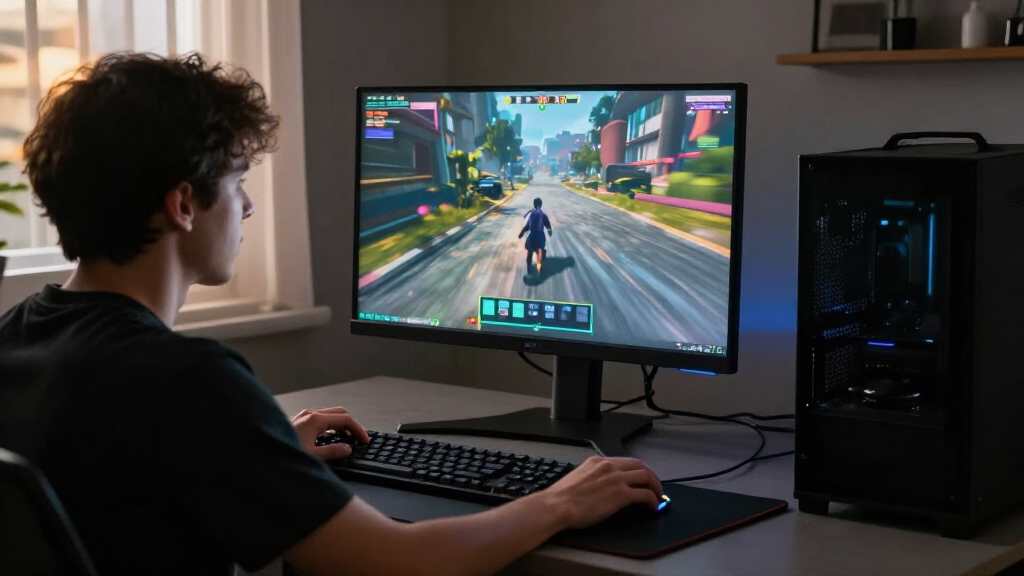

🔍 Read the full analysis: Make Gaming More Responsive With These 10 High Refresh Monitors on ThorstenMeyerAI.com

Get business pricing on monitors, keyboards and dev gear
- Business-only prices and quantity discounts
- Tax-exempt purchasing
- Multiple users, one account, clear invoices
TL;DR
A ThorstenMeyerAI.com roundup compares 10 gaming monitors with refresh rates from 144Hz to 240Hz, spanning QHD and Full HD screens, curved models and an ultrawide. It names the Acer Nitro XV272U W2bmiiprx its top all-around pick, while stressing that the right choice depends on resolution, PC performance and desk setup.
ThorstenMeyerAI.com has published its roundup of 10 gaming monitors spanning refresh rates from 144Hz to 240Hz, including QHD, Full HD, curved and ultrawide options. The guide names the 27-inch Acer Nitro XV272U W2bmiiprx its best overall pick, but says buyers should match a monitor’s resolution and refresh rate to their PC’s frame-rate performance and their desk setup.
The roundup’s leading selection, the Acer Nitro XV272U W2bmiiprx, combines a 27-inch QHD IPS panel and 240Hz. The AOC Q27G41ZE also pairs QHD, IPS and 240Hz. The source presents them as closely matched in those headline specifications and says refresh rate alone is not enough to decide between them, a consideration also covered in this guide to high-refresh gaming monitors.
For players prioritizing high frame rates at lower resolution, the guide lists the Dell SE2426HG and ASUS TUF Gaming VG259QM5A, both described as 240Hz Full HD options. The Acer Nitro KG271U and Samsung Odyssey G5 are identified as 180Hz QHD alternatives. Other formats include curved SANSUI models, a 34-inch Sceptre ultrawide, and the 22-inch Sceptre E225W-FW144G, which is listed at 144Hz.
The source says its ranking weighs refresh rate, resolution, panel type where specified, screen size and format. It advises buyers to check the specifications of the exact model before purchase, including connectivity, stand adjustments and adaptive-sync support, because those details are not supplied for every monitor in the material; comparing ultrawide monitors for gaming can also help clarify which screen format suits a setup.
The 10 picks
- 1
 SANSUI 32-Inch Curved 240Hz FHD Gaming MonitorView on Amazon →
- 2
 New! Sceptre Curved 34-inch Prime Gaming Monitor 3440 x 1440 up to 240Hz 1500…View on Amazon →
- 3
 SANSUI 27-Inch Curved FHD 240Hz Gaming MonitorView on Amazon →
- 4
 Samsung 32-inch Odyssey G5 QHD 180Hz Gaming MonitorView on Amazon →
- 5
 Acer Nitro XV272U W2bmiiprx 27-Inch QHD 240Hz IPS Gaming MonitorView on Amazon →
- 6
 AOC 27" Gaming Monitor QHD 240Hz Overclocked IPS NVIDIA G‑Sync Q27G41ZEView on Amazon →
- 7
 ASUS TUF Gaming VG259QM5A 24.5-Inch 1080p 240Hz Gaming MonitorView on Amazon →
- 8
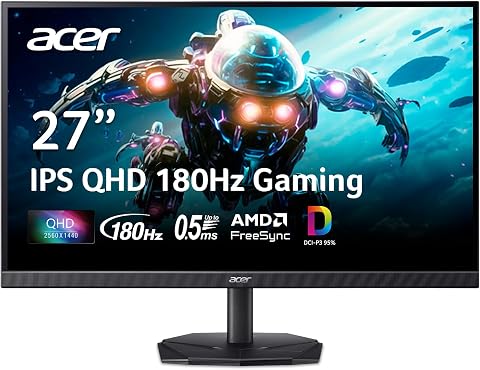 Acer Nitro KG271U 27-Inch QHD IPS Gaming Monitor, 180HzView on Amazon →
- 9
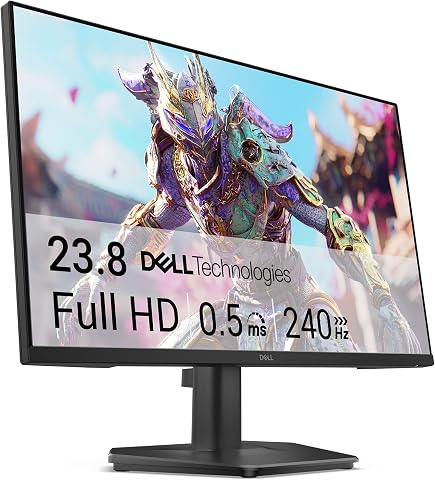 Dell 24 240Hz Gaming Monitor – SE2426HG – 23.8-inch FHD (1920×1080) 240Hz Dis…View on Amazon →
- 10
 Sceptre E225W-FW144 22-Inch FHD 144Hz Gaming MonitorView on Amazon →
Choosing Speed Without Sacrificing Detail
The list matters to buyers because a monitor’s maximum refresh rate is only useful when the game and computer can produce enough frames to take advantage of it. A 240Hz display does not automatically mean a better fit than a 180Hz or 144Hz model if the buyer’s system cannot sustain high frame rates.
Resolution also affects both image detail and graphics workload. The roundup frames QHD as a sharper option for many 27-inch setups, while Full HD can suit players who favor high frame rates or have hardware less suited to driving QHD at speed. That tradeoff can shape the buying decision as much as the refresh-rate number.
Screen shape and size bring separate practical considerations. A curved display or ultrawide may suit a player seeking a wider, more enveloping view, but requires suitable desk space and may not be supported equally by every game. These are buying considerations, not measured performance findings: the supplied source offers a specification-based comparison, not independent test results.
Products Worth Considering

LG UltraGear 27-inch QHD OLED Gaming Monitor, 240Hz

Samsung 49-Inch Odyssey OLED G9 (G91SD) Dual QHD Curved Gaming Monitor

LG UltraGear 32GX850A-B 32-inch 4K UHD OLED Gaming Monitor
As an affiliate, we earn on qualifying purchases.
How the Ten Picks Compare
The roundup organizes the monitors around different combinations of speed, resolution and screen format, rather than treating the highest refresh rate as the sole measure of value. Its top-rated Acer pairs QHD and IPS with 240Hz, while the AOC Q27G41ZE has the same core combination as described in the source.
The Dell and ASUS choices trade QHD resolution for Full HD at 240Hz. The two named 180Hz QHD models offer a middle ground in the list. Curved SANSUI displays and the Sceptre ultrawide emphasize shape or width, while the smaller Sceptre E225W-FW144G is the lower-refresh compact option. The source does not provide full model-by-model pricing, test data or a complete specification table in the material supplied here.
Its selection advice is to begin with the games being played, the computer’s likely frame rates, resolution needs and available desk space. It also cautions readers to verify each model’s supported refresh rate at the intended resolution and connection, as advertised maximums can depend on the setup.
“The Acer Nitro XV272U W2bmiiprx stands out as the strongest all-around balance in this group: QHD detail, an IPS panel, and 240Hz in a 27-inch format.”
— ThorstenMeyerAI.com roundup
Specifications Still Need Checking
The material supplied does not give a publication date, prices, links to product listings or independent test measurements. It also does not provide complete specifications for each monitor, such as ports, stand ergonomics or adaptive-sync support. Those features should not be assumed from the model names or from the general descriptions in the roundup.
The source does not explain how each monitor performs in measured response time, motion clarity, brightness or color accuracy. Its labels such as “best overall” are editorial judgments based on listed characteristics, not claims backed by test results included here. Buyers should also verify whether a monitor reaches its advertised maximum refresh rate at their chosen resolution and with their particular device and connection.
Verify Fit Before Buying
The source offers no announced follow-up, product test schedule or upcoming event. For readers comparing the listed models, the next step is to check current manufacturer specifications and retailer listings for the exact model and region, then confirm supported resolution and refresh rate with the intended PC or console.
Buyers can narrow the choices by setting a target resolution and frame rate, checking available desk space, and comparing the complete feature list and current price. The roundup’s recommendations may help frame that comparison, but the material provided does not establish which monitor is best for every player or budget.
Key Questions
Which monitor does the roundup recommend overall?
It names the Acer Nitro XV272U W2bmiiprx, citing its 27-inch QHD IPS screen and 240Hz refresh rate. This is the source’s editorial pick, not a conclusion from independent test data included in the supplied material.
What is the difference between the Acer and AOC 240Hz QHD picks?
The source lists both the Acer Nitro XV272U W2bmiiprx and AOC Q27G41ZE with QHD, IPS and 240Hz. It does not supply enough detail here to settle the choice on other features, so buyers should compare the full specifications, price and stand or connectivity options.
Is a 240Hz monitor always better than a 180Hz option?
No. A 240Hz display is most useful when the system can deliver high frame rates in the games being played. The roundup says buyers should weigh frame-rate capability against resolution and other needs rather than treat the largest refresh-rate number as an automatic upgrade.
Why choose Full HD over QHD?
In this roundup, Full HD is paired with 240Hz on the Dell SE2426HG and ASUS TUF Gaming VG259QM5A. It may suit players prioritizing high frame rates or working with hardware that has difficulty driving QHD at their desired speed, while QHD offers more pixel detail.
What should buyers verify before purchasing?
Check the exact model’s supported refresh rate at the intended resolution and connection, plus ports, stand adjustments and adaptive-sync support. The supplied material does not give complete specifications or independent measurements for all 10 monitors.
Source: ThorstenMeyerAI.com