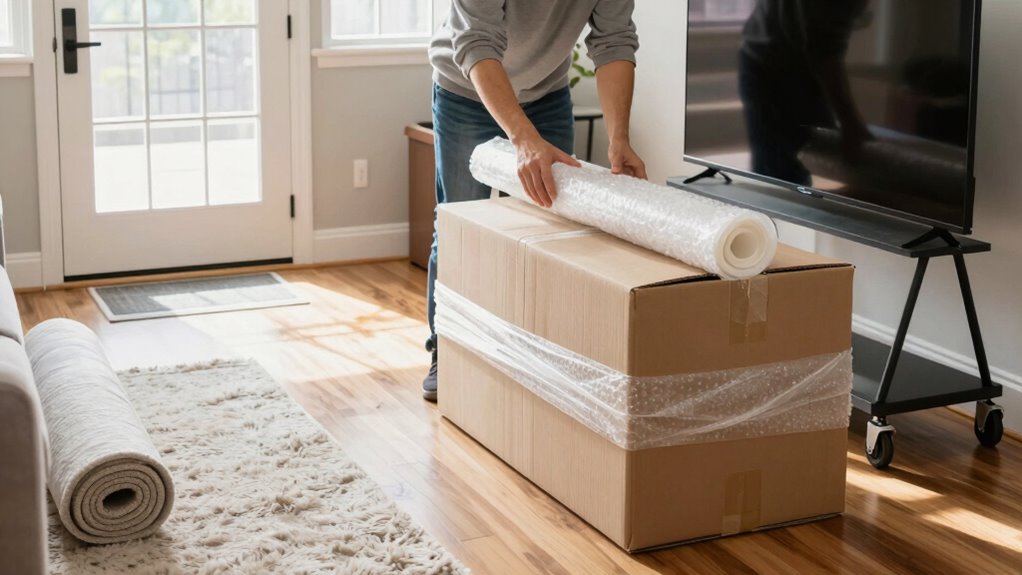

Before your large item arrives, clear a path by removing furniture, rugs, and decorations to prevent damage and make space for easy movement. Measure doorways, hallways, and the item itself to guarantee it fits through safely. Protect floors and doorways with padding or blankets, and secure loose cords or obstacles. Communicate any special handling instructions or preferred placement. Thinking through these steps now can save you stress when delivery day comes—discover more tips to prepare effectively.
Key Takeaways
- Clear pathways by removing furniture, rugs, and obstacles to ensure safe and easy delivery access.
- Measure doorways, hallways, and large items to confirm they fit without forcing during movement.
- Protect floors and doorframes with padding or blankets to prevent damage during delivery.
- Communicate delivery instructions clearly, including placement preferences and handling needs.
- Use proper lifting techniques and equipment like dollies or straps to ensure safe and efficient unloading.
Assess Your Space and Clear a Path for Delivery

Before your large item arrives, it’s essential to assess your space and clear a path for delivery. Start by examining your room’s furniture arrangement and identify potential obstacles. Move furniture, rugs, or decorations that could hinder the delivery process. Optimizing your space ensures the delivery team has enough room to maneuver the large item safely and efficiently. Clear pathways from entry points to the intended placement area, removing any clutter or narrow hallways. Consider the size of your furniture and the dimensions of your doorways and hallways. Proper space optimization reduces the risk of damage and makes the entire process smoother. Additionally, understanding space planning principles can help you create a more functional and accessible layout. Planning ahead and considering delivery safety measures can further prevent accidents during the process. Taking these steps ahead of time helps ensure a hassle-free delivery day, saving you time and preventing unnecessary stress.
Measure Your Items and Confirm Delivery Dimensions
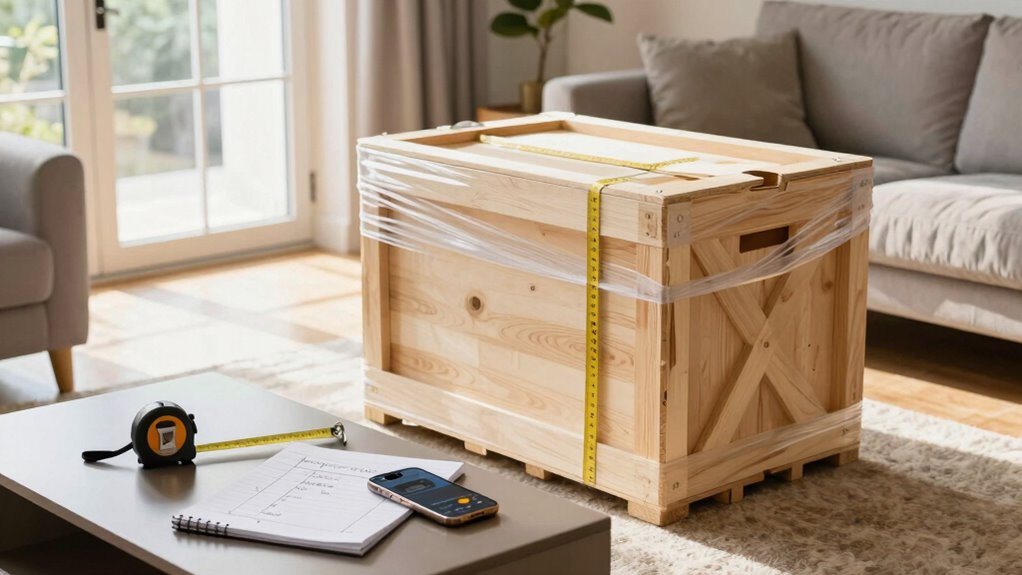
Before arranging shipping, it’s essential to measure your items accurately. Double-check the dimensions and weight to guarantee they match the carrier’s requirements. Confirm these details with your shipping provider to avoid surprises or delays. Incorporating connected equipment into your home gym setup can also influence how you package and prepare larger items for delivery, especially considering sound design and other multimedia components that may require special handling. Additionally, understanding digital content formats can help in planning how to document or visualize your items for shipping instructions or insurance purposes. Being aware of dog breeds and their specific needs might also be helpful if you are shipping pet-related items or ensuring safe transport for your furry friends. Being familiar with California’s diverse regions can further aid in understanding regional shipping considerations and delivery expectations.
Measure Carefully Beforehand
To guarantee your large items arrive safely and fit through the intended spaces, you need to measure them accurately and verify the delivery dimensions with your shipping provider. Use precise measurements for height, width, and depth, avoiding estimates that can lead to issues during delivery. This step is essential for planning proper packing tips and choosing suitable storage solutions, especially if your items require disassembly or special handling. Double-check measurements with a tape measure, and consider any packaging materials that might add to the overall size. Accurate measurements prevent surprises on delivery day, helping you avoid delays or damage. Taking these precautions ensures your large items will arrive intact and fit comfortably in your designated space. Understanding delivery dimensions is crucial for coordinating with your shipping provider and ensuring a smooth arrival process. Additionally, being aware of shipment weight limits can help prevent unexpected costs or refusal of your package upon arrival. Properly assessing delivery logistics can also streamline the entire process and reduce stress on delivery day. For example, understanding the size restrictions of your chosen courier ensures your shipment complies with their policies. Also, considering storage solutions in advance can assist in planning the placement of your large items once delivered.
Confirm Shipping Dimensions
Once you’ve measured your items carefully, the next step is to verify those measurements with your shipping provider. Accurate dimensions are vital for creating correct shipping labels and ensuring the freight carriers can handle your large items properly. Contact your freight carrier and provide them with the exact length, width, height, and weight. Double-check your measurements against their size limits and requirements to avoid delays or additional fees. Confirm with the carrier if any special handling or packaging is needed based on the dimensions. Properly documenting these measurements helps prevent misunderstandings and ensures smooth delivery on delivery day. Always keep a record of the confirmed dimensions for reference, especially when coordinating pickup and delivery times. Additionally, understanding projector specifications can help you communicate more effectively with your carrier about the nature of your large items. Being aware of industry standards for large shipments can also streamline the process and prevent complications. For example, knowing the typical electric dirt bike sizes and weights can assist in planning the appropriate transportation method. Paying attention to dimensional weight calculations can further optimize your shipping costs and arrangements. Being familiar with shipping regulations related to large items ensures compliance and avoids potential legal issues.
Protect Floors and Doorways to Prevent Damage

To prevent damage during delivery, start by covering your floors with protective materials. Use doorway protectors to shield doorframes and create a clear path for moving large items. Keeping the area organized minimizes the risk of accidents and damage to your home.
Protect Floors With Coverings
Have you considered how moving large items can damage your floors or doorways? To prevent this, use floor coverings like protective mats or thick blankets. These coverings act as a barrier, absorbing the weight and preventing scratches or dents on your flooring. Lay down protective mats in high-traffic areas or where you’ll be maneuvering heavy furniture. Make sure the mats are secure to avoid slipping during the move. If you’re working near doorways, add extra padding to avoid scuffing or chipping the thresholds. Covering your floors with appropriate protection minimizes the risk of costly repairs after delivery day. It’s a simple step that saves you time and money, ensuring your home stays in top shape throughout the moving process. Considering proper handling techniques can also help safeguard your belongings during the move, especially when dealing with delicate or valuable items. Additionally, understanding the environmental impact of tissue paper can inspire more sustainable packing choices and reduce waste during your move. Being mindful of piercing aftercare can also help maintain the integrity of your piercings and prevent complications during the moving process.
Use Doorway Protectors Effectively
Using doorway protectors effectively is essential to prevent damage to both your floors and doorframes during moving. Carefully position doorway protectors to cover sharp edges and narrow openings, ensuring furniture safeguards are in place. These protectors act as a barrier, reducing friction and preventing scratches or dents on your walls and doorframes as large items pass through. Secure the protectors firmly to avoid slipping or shifting during the move. Choose the right size and material—soft foam or padded strips work best for cushioning. Before moving your furniture, double-check that all protectors are properly installed. Proper use of protective equipment makes moving large items safer and more efficient. This simple step minimizes the risk of costly repairs and keeps your home looking pristine during delivery. Proper use of doorway protectors makes moving large items safer and more efficient.
Clear Pathways for Delivery
Ensuring your pathways are clear before moving large items is crucial to prevent damage to floors and doorways. Obstacles in your pathway can complicate delivery logistics and increase the risk of scratches or dents. To prepare effectively:
- Remove any furniture, rugs, or clutter that could block the route.
- Secure or shift loose cables or cords that may cause stumbling or damage.
- Protect door thresholds with padding or cardboard to prevent scuffs.
- Measure doorways and hallways to confirm the item fits without forcing or scraping surfaces.
Clear Pathways and Remove Furniture for Easy Access

To make large item shipping smoother, you should clear pathways and remove furniture that might block access. Start with furniture rearrangement to create a direct route from the entry point to the designated delivery area. Move bulky furniture away from hallways, doorways, and stairs to prevent accidents or damage. Consider your decoration planning—temporarily relocate decorative items or wall hangings that could obstruct movement or get damaged during delivery. Keep the pathway well-lit and free of clutter, like rugs or cords, to ensure easy navigation for movers. Communicating these adjustments ahead of time helps avoid last-minute surprises. A clear, obstacle-free route not only facilitates a smoother delivery but also minimizes the risk of damage to your home or belongings.
Communicate Special Instructions and Delivery Preferences
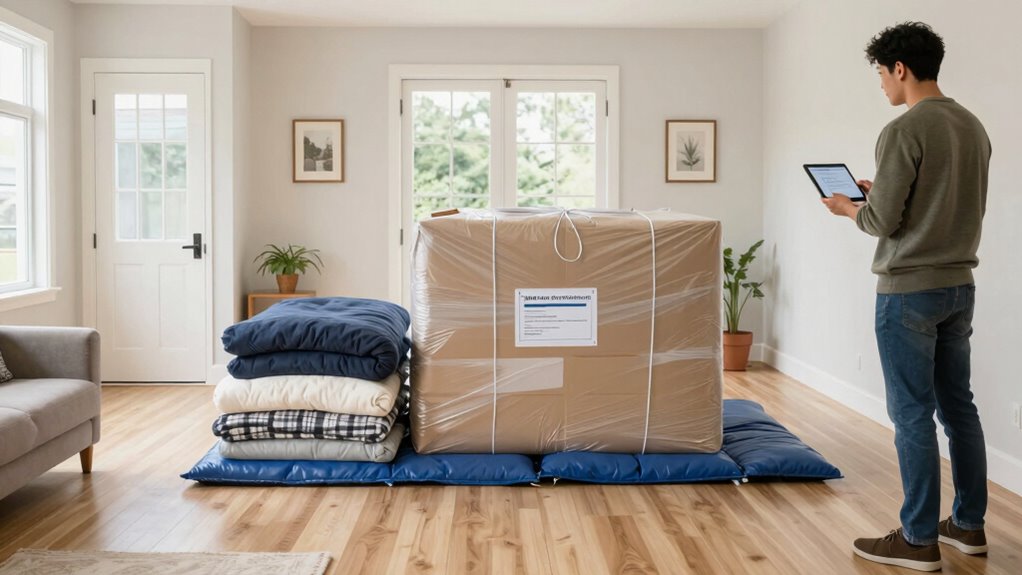
Once you’ve cleared the pathway and moved obstacles out of the way, it’s important to communicate any specific instructions or preferences to the delivery team. Clear communication guarantees your large item is handled properly and arrives without damage. When providing delivery instructions, consider these key points:
- Specify if the item requires special handling, like extra padding or gentle lifting.
- Indicate the preferred delivery time window for your convenience.
- Highlight any tight spaces or delicate areas the team should avoid.
- Mention if you want the delivery team to place the item in a particular room or position.
Plan How to Unload and Move Large Items Inside

Before you start unloading your large item, plan how you’ll move it inside to prevent damage or injury. First, make sure you have a secure grip on the item, using both hands and proper lifting techniques. Keep your back straight and bend at your knees, not your waist, to avoid strain. Decide on a clear path, removing obstacles along the way, and consider using dollies or straps if available. Communicate with others helping you to coordinate lifts and movement. Take your time, lifting slowly and steadily. Use your legs to power the lift, not your back, and avoid twisting your body while carrying. Having a solid plan reduces the risk of damage to your home and injury to yourself.
Use Safety Gear and Prepare Your Space for Safe Delivery

Using the right safety gear is essential to protect yourself during the delivery process. Proper protective gear minimizes injury risks and guarantees safety precautions are met. Before the delivery, gather:
- Heavy-duty gloves to protect your hands from sharp edges and rough surfaces.
- Steel-toed boots to safeguard your feet from falling objects.
- A hard hat if there’s a risk of overhead hazards.
- Eye protection in case debris or dust become airborne.
These items help prevent accidents and injuries. Clear the delivery area of obstacles, ensuring plenty of space for safe movement. Keep pathways free of clutter and secure loose rugs or cords. By using safety gear and preparing your space, you create a safer environment for everyone involved, making the delivery smoother and injury-free.
Inspect Your Items After Delivery and Troubleshoot Issues
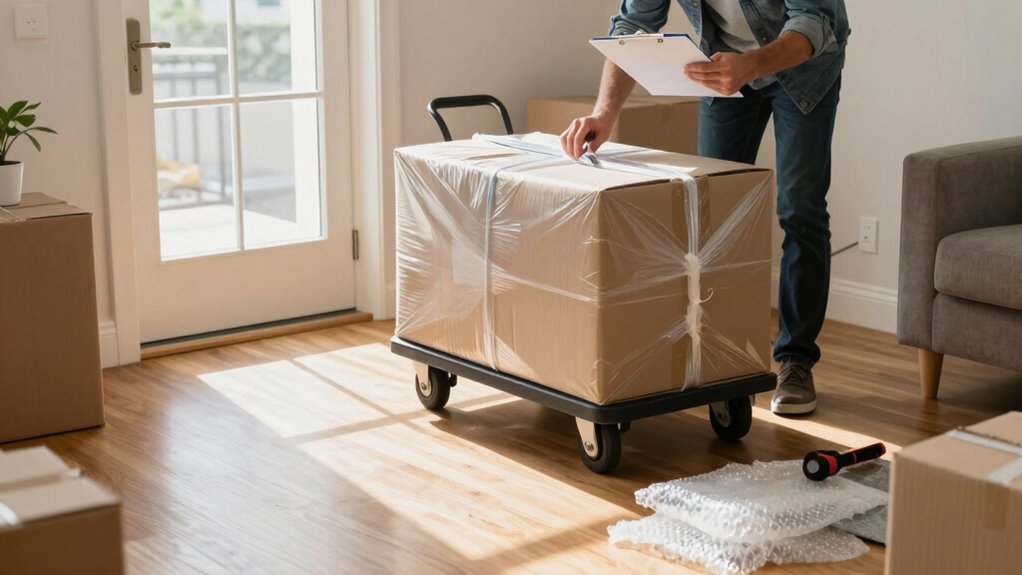
After your delivery is complete, it’s important to carefully examine your items for any damage or defects. Follow a thorough inspection process to identify issues early. Look for scratches, dents, or missing parts, and compare items to your original order. Use this troubleshooting tips table for guidance:
| Issue | Possible Cause | Solution |
|---|---|---|
| Visible Damage | Transit mishandling | Document and file a claim |
| Missing Parts | Packaging error | Contact seller for replacements |
| Functionality Issue | Installation mistake | Review setup instructions |
| Scratches or Dents | Handling during transit | Request repairs or replacements |
| Unclear Damage | Insufficient inspection | Re-inspect and document thoroughly |
Being diligent during the inspection process ensures you address issues promptly, saving time and avoiding future frustrations.
Frequently Asked Questions
How Early Should I Schedule My Delivery to Ensure Timely Arrival?
You should schedule your delivery early in the delivery window, ideally a few days ahead, to guarantee timely arrival. Use scheduling tips like confirming your availability and providing clear access instructions. Booking early helps prevent delays and gives the delivery service ample time to coordinate. Keep an eye on your notification for updates, and stay flexible if adjustments are needed to ensure your large item arrives smoothly.
What Should I Do if My Item Arrives Damaged or Defective?
Imagine unwrapping a gift only to find it damaged; you should immediately assess the damage. Take photos for proof and contact the seller or delivery service. For defective items, review the warranty claims process, which helps you get repairs, replacements, or refunds. Act quickly to document the issue and follow the steps for damage assessment and warranty claims to ensure you’re protected and compensated efficiently.
Can Delivery Personnel Assist With Assembly or Installation?
Delivery personnel generally can’t provide assembly assistance or installation help due to company policies and safety concerns. However, you can ask if they offer any guidance or if they can leave detailed instructions. To guarantee smooth setup, consider hiring professional assembly services or checking if the manufacturer provides helpful installation videos. Preparing your tools and space beforehand will make the process easier when you’re ready to assemble or install your new item.
How Do I Handle Unexpected Delivery Delays or Rescheduling?
If your delivery gets delayed or needs rescheduling, contact the delivery company promptly to discuss your options. You should ask about their rescheduling procedures and whether they offer delivery window flexibility. Keep your contact information handy, and be prepared to suggest alternative delivery dates. Staying proactive helps guarantee a smooth process, minimizes inconvenience, and allows you to coordinate your schedule around the new delivery timeframe effectively.
Are There Specific Permits or Permissions Needed for Large Item Deliveries?
Think of permits and permissions as the keys to a smooth delivery. You’ll need to check permit requirements and delivery permissions with your local authorities or building management before the scheduled day. This guarantees your large item can be delivered without surprises. Contact your city or HOA to confirm if special permits are needed, and inform your delivery company of any restrictions. Being prepared helps your delivery go seamlessly, like a well-rehearsed performance.
Conclusion
Think of your home as a grand stage, and delivery day as the opening night. By preparing your space, you’re setting the scene for a smooth performance. When everything is in place—pathways clear, furniture moved, and safety gear ready—you’ll welcome your new large items with ease. Proper preparation guarantees the delivery process unfolds seamlessly, leaving your home shining like a well-lit stage, ready to showcase your new treasures without a hitch.