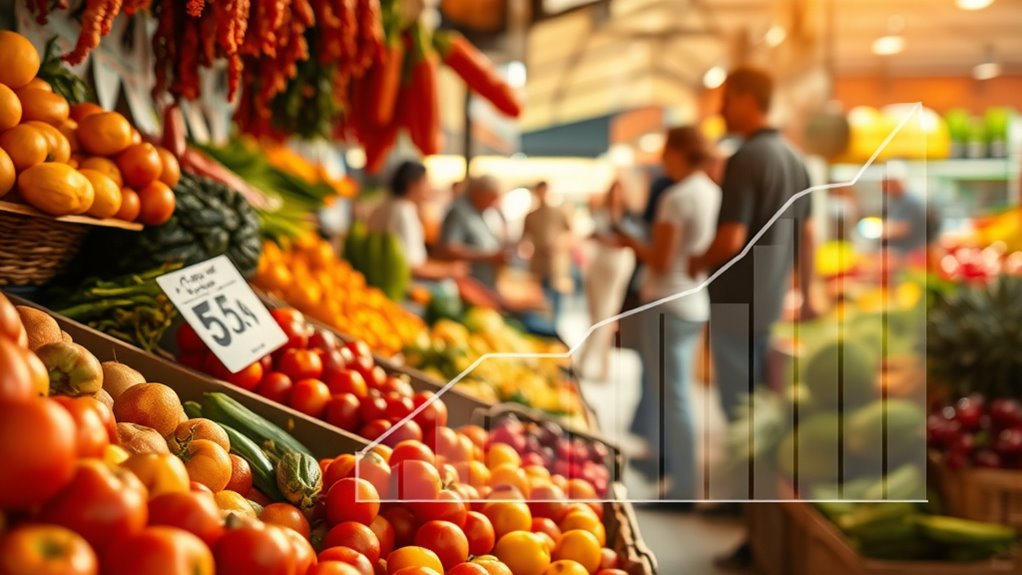

Inflation happens when prices for goods and services rise over time, reducing your purchasing power. It’s influenced by factors like monetary policy, wage growth, and external disruptions like supply chain issues or geopolitical tensions. When the money supply increases or wages don’t keep pace with rising prices, your real income dips. This can affect your standard of living. Curious about how various industries adjust to these changes? There’s more to explore on this topic.
Key Takeaways
- Inflation represents a general increase in prices, reducing purchasing power over time.
- Central banks use monetary policy, like interest rate adjustments, to control inflation.
- Wage growth is crucial; if it lags behind inflation, real income and purchasing power decline.
- External factors, such as supply chain disruptions and geopolitical tensions, can drive up prices.
- Industries adjust pricing based on consumer demand and economic conditions, influencing overall inflation trends.
Have you ever wondered why prices seem to rise every year? It’s a question that often crosses your mind as you notice your favorite coffee shop’s menu prices creeping up or when your monthly grocery bill keeps getting higher. The answer lies in a complex interplay of various factors, but at the core, you’ll find the concept of inflation. Inflation refers to the general increase in prices over time, and it can markedly affect your purchasing power.
One of the primary drivers of inflation is monetary policy. Central banks, like the Federal Reserve in the United States, use monetary policy to manage economic stability, aiming to control inflation and maintain employment levels. When the economy is sluggish, they might lower interest rates or increase the money supply, encouraging spending and investment. While this can stimulate economic growth, it can also lead to inflation if too much money chases too few goods. So, when you hear about changes in interest rates, know that they’re directly affecting how much you’ll pay for goods and services in the future.
Another important factor to think about is wage growth. Your income plays a crucial role in how inflation impacts your life. If wages aren’t keeping pace with inflation, you’ll feel the pinch—what you could afford last year may no longer be within your reach. When businesses face rising costs, they often pass those costs onto you, the consumer, through higher prices. If wage growth doesn’t match price increases, your real income—the amount of money you have after adjusting for inflation—declines, making it harder to maintain your standard of living.
Additionally, external factors like supply chain disruptions, global events, or changes in demand can also impact inflation. For instance, if a natural disaster disrupts production, the resulting scarcity can drive prices up. You may notice this when gas prices spike due to geopolitical tensions affecting oil supplies. Furthermore, just as theme parks like SeaWorld adjust their operating hours to account for seasonal demand, other industries may also fluctuate their pricing based on consumer behavior and economic conditions.
Frequently Asked Questions
How Does Inflation Affect Savings Accounts?
Inflation erodes your savings’ purchasing power, meaning that even if your savings account earns interest accrual, it might not keep pace with rising prices. If the interest rate on your account is lower than the inflation rate, your savings growth could stagnate or diminish in value over time. To protect your money, consider exploring high-yield savings options or investments that outpace inflation, ensuring your savings retain their value.
What Role Do Central Banks Play in Inflation?
Central banks play a pivotal role in controlling inflation through monetary policy. They adjust interest rates and manage the money supply to achieve inflation targeting, aiming for a stable economic environment. When inflation rises too quickly, they might raise interest rates to cool spending. Conversely, if inflation is too low, they could lower rates to encourage borrowing and investment. By doing this, they help maintain a balance in the economy that benefits everyone.
Can Inflation Ever Be Beneficial to the Economy?
Sure, inflation can be beneficial—if you enjoy seeing your money lose value! In reality, it can boost consumer spending as people rush to buy now rather than later. When wages grow alongside inflation, it can lead to increased purchasing power, driving economic growth. So, while it might seem counterintuitive, a moderate level of inflation can stimulate activity, encourage investment, and ultimately help the economy thrive. Isn’t that ironic?
How Do Inflation Rates Vary by Country?
Inflation rates vary by country due to factors like currency fluctuations and economic stability. When a country’s economy is stable, inflation tends to be lower and more predictable. In contrast, countries facing economic challenges may experience higher inflation rates. You’ll notice that emerging markets often have more volatile inflation compared to developed nations. Keeping an eye on these differences helps you understand how local economies are performing and how they might affect your finances.
What Are the Long-Term Effects of Hyperinflation?
Hyperinflation consequences can be severe, leading to significant economic instability. You might see your savings evaporate as prices skyrocket, making everyday goods unaffordable. Businesses struggle to operate, often closing down, which results in widespread unemployment. Trust in currency erodes, prompting people to barter instead. In the long run, it can take years for an economy to recover, as rebuilding confidence and stability becomes a formidable challenge for both citizens and governments.
Conclusion
In the garden of the economy, inflation acts like the rising sun, gradually lifting prices as it nurtures growth. Just as flowers bloom and fade, so too do our purchasing power and financial choices shift over time. By understanding inflation, you can cultivate your financial garden, making informed decisions that help you thrive in changing conditions. Embrace this knowledge, and you’ll not only weather the storms of rising prices but also plant seeds for a prosperous future.