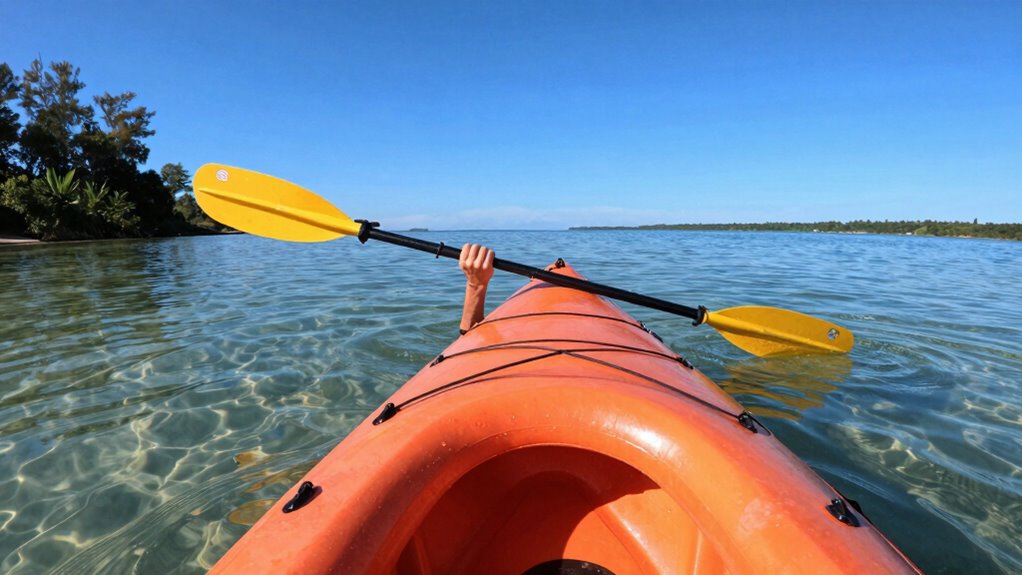

Feeling tippy in an inflatable kayak often comes down to its design, such as narrow width or hull shape that affects stability. The materials and how well it’s inflated also matter—rigid, properly inflated kayaks feel steadier. Your technique, weight distribution, and gear load impact how balanced you feel. Choosing a wider model with features like stability aids can boost confidence. Keep exploring to discover how all these factors work together for a more stable paddling experience.
Key Takeaways
- Narrower kayaks with pointed hulls tend to feel more tippy due to less stability surface.
- Longer, narrower designs increase maneuverability but can reduce balance, making them feel more unstable.
- Higher inflation pressure and flexible materials can cause hull flexing, reducing overall stability.
- Improper weight distribution and high center of gravity make a kayak feel more prone to tipping.
- Rough water conditions, strong winds, and user inexperience heighten the sensation of tipping.
What Factors Affect Inflatable Kayak Stability?

Several key factors influence the stability of an inflatable kayak, and understanding them can help you choose the right model for your needs. Your paddle techniques play a significant role; smooth, controlled strokes help maintain balance, especially in choppy waters. Aggressive or uneven paddling can cause instability and make the kayak feel “tippy.” Weather conditions also impact stability—wind, waves, and currents can challenge your balance, so it’s essential to take into account the typical conditions you’ll face. Smaller or narrower kayaks tend to be less stable in rough weather, while wider models offer more steadiness. Being mindful of how you paddle and the weather will help you stay balanced and confident, reducing the chances of tipping over during your outing.
How Kayak Design and Width Impact Your Balance?
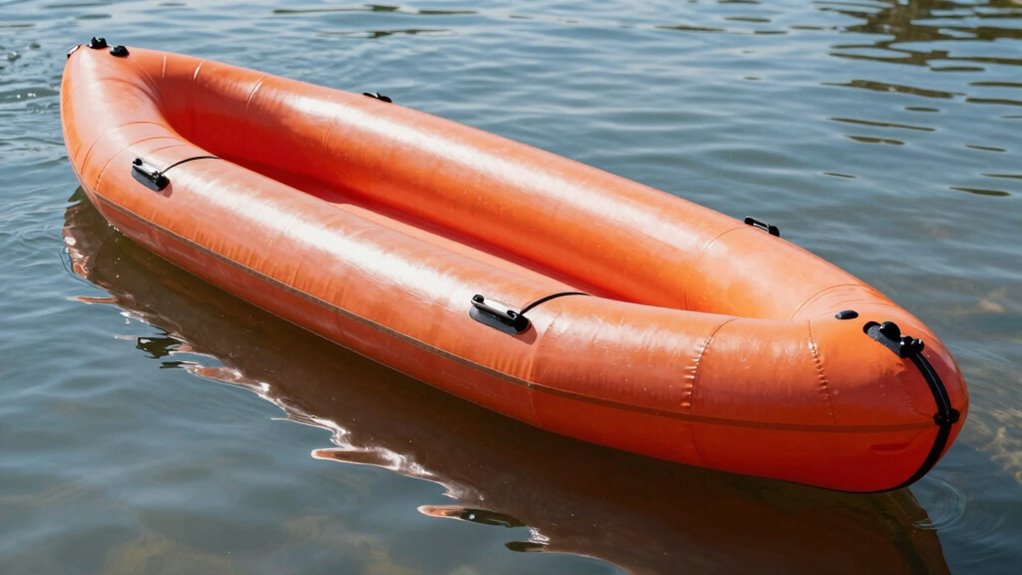
The width of your kayak directly affects your stability, with wider boats offering better balance on the water. Hull design also plays a key role, influencing how easily you can stay upright during paddling. Additionally, longer kayaks tend to be more stable but may carry a higher tipping risk in rough conditions. Being aware of kayak design features can help improve your overall endurance and strength, making paddling easier and more enjoyable. Understanding how battery capacity impacts your gear performance can further enhance your outdoor experience. Recognizing emerging trends in digital publishing can also help you stay informed about new innovations and techniques in the field.
Width’s Effect on Stability
A kayak’s width considerably influences its stability on the water, affecting how confidently you can paddle without wobbling or tipping. Wider kayaks provide a broader base, making them more stable in various water conditions, especially when steering through choppy or turbulent waters. Conversely, narrower models are quicker and more maneuverable but tend to feel less stable. Think of the kayak like a table: a wider top offers better balance, while a narrow one is more prone to tipping. Here’s a visual to help you imagine:
| Width (in inches) | Stability Level | Ideal For |
|---|---|---|
| 30-34 | High | Calm lakes, beginners |
| 25-29 | Moderate | Mixed water conditions |
| 20-24 | Less stable | Smooth rivers, experienced paddlers |
Choosing the right width depends on your inflatable features and water conditions. Additionally, understanding projector contrast ratio can help you better select equipment suited for your home cinema setup. When considering stability, it’s also important to evaluate the kayak’s hull shape, which plays a crucial role in overall balance and performance. Moreover, selecting a kayak with appropriate material durability can ensure safety and longevity in various environments. Being aware of stability factors can help you make a more informed decision tailored to your experience level and typical water conditions. Recognizing the influence of kayak design on stability can further assist you in making an optimal choice.
Hull Design and Balance
Hull design plays a significant role in how your kayak balances on the water, directly influencing stability alongside width. The shape and structure determine how weight is distributed and how the kayak reacts to movement. For example:
- Broader hulls offer more stability but can feel less nimble, especially if the inflation pressure isn’t ideal.
- Narrower designs increase maneuverability but may feel tippier, especially if the hull isn’t shaped for extra balance.
- Color options can also impact visibility, helping you stay aware of your surroundings and maintaining confidence on the water.
- Proper inflation pressure is essential because it affects the hull’s rigidity and overall stability during use.
Choosing the right hull shape and ensuring proper inflation pressure maximizes stability. Remember, your kayak’s design influences how it responds to your weight shifts and how balanced you feel during each paddle stroke.
Length Versus Tipping Risk
While the length of your inflatable kayak influences its overall stability, wider models generally offer a lower tipping risk, especially for beginners. Shorter kayaks tend to be more maneuverable but can feel less stable, increasing the chance of tipping if you’re unsteady. Conversely, longer kayaks provide better tracking but might feel more tippy if they’re narrow. Your paddle length also plays a role—longer paddles help with balance, particularly on wider boats. Additionally, consider color options, as bright hues can enhance visibility and confidence on the water. Remember, a wider kayak with a shorter length usually minimizes tipping risk, making it easier to stay upright, especially if you’re still mastering your balance skills. Design and Width are key factors that significantly influence your stability and tipping potential. For beginners, boat width and overall stability features are often the most critical factors to consider. Incorporating stability features such as non-slip decks or tracking fins can further improve your confidence and control on the water. Furthermore, understanding the influence of kayak shape can help you choose equipment that aligns with your skill level and comfort preferences. Additionally, incorporating sound-based relaxation techniques during your paddling sessions can improve your focus and reduce anxiety, aiding in better balance and confidence.
How Material and Construction Influence Feelings of Tippiness?
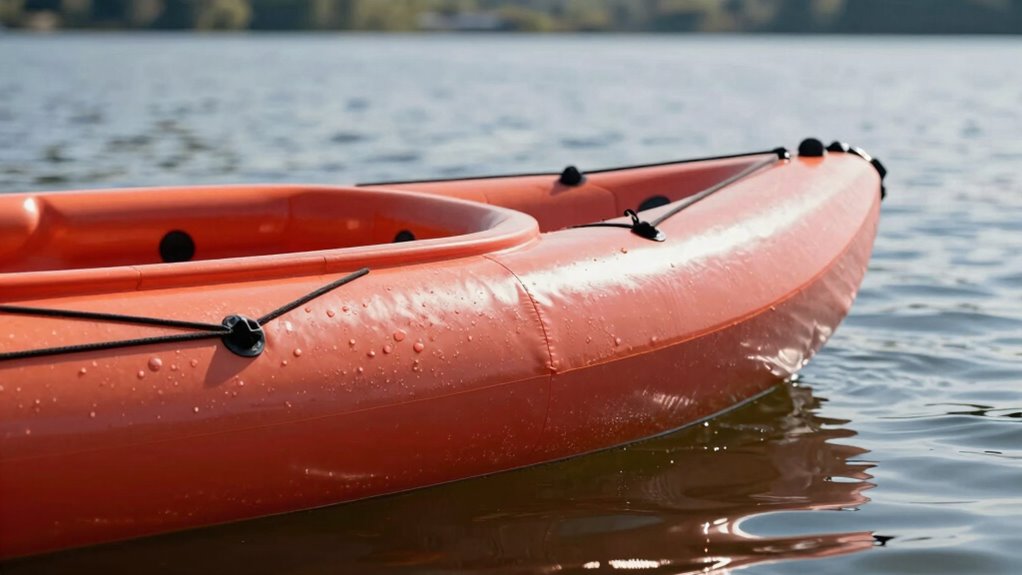
The materials and construction methods of an inflatable kayak considerably influence how stable and tippy it feels on the water. Material properties like stiffness, weight, and flexibility affect your kayak’s response to movement. Material properties such as stiffness and flexibility can significantly alter the kayak’s stability and tippiness. Construction techniques, such as seam design and layer composition, also play a role. Using high-quality materials can improve overall stability and durability. Thicker, more rigid materials tend to reduce tippiness by providing better support. Reinforced seams prevent flexing, offering a more stable ride. Layered construction enhances durability and overall stability. Additionally, advanced construction methods contribute to a more predictable and confidence-inspiring ride. A well-constructed kayak with suitable material properties will feel less tippy, giving you confidence on the water. Proper fabric reinforcement ensures the kayak maintains its shape and stability over time, even with frequent use. Employing rigid material layers helps maintain consistent performance and prevents deformation under stress.
How Your Weight, Skill Level, and Load Affect Stability?
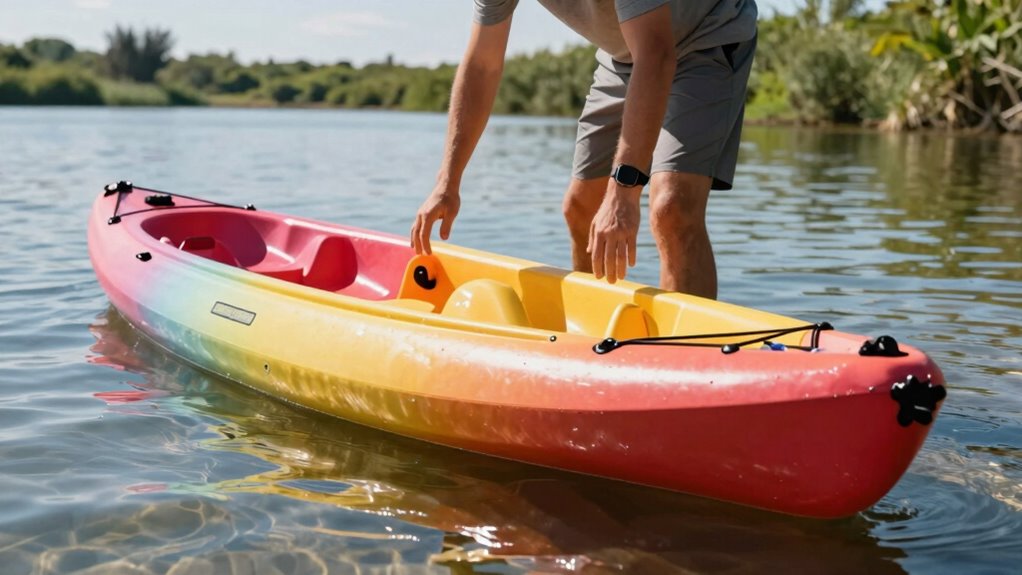
Your weight, skill level, and the amount of gear you carry directly influence how stable an inflatable kayak feels on the water. Proper weight distribution helps keep the kayak balanced, reducing the chances of tipping. If you’re heavier or carry a heavy load, it can make the kayak sit lower in the water, potentially increasing its tippiness. Additionally, your paddling technique plays a crucial role—smooth, controlled strokes help maintain balance and prevent sudden shifts that could upset stability. As you gain experience, you’ll learn to adjust your movements and weight placement to improve stability. Understanding kayak stability can help you make informed decisions about your paddling approach and equipment. Keep in mind that a well-balanced load and refined paddling technique work together to make your kayak feel more secure, regardless of your weight or skill level. Portable restroom innovations and design features can also influence overall comfort and confidence during your paddling experience.
Tips for Choosing a Stable Inflatable Kayak for Beginners?
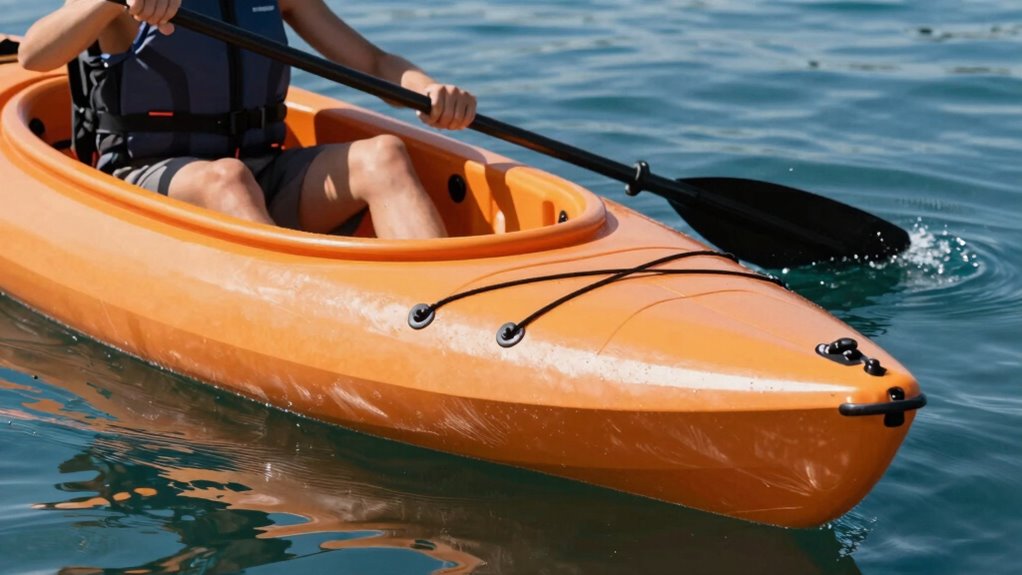
Choosing a stable inflatable kayak for beginners starts with focusing on design features that enhance balance and control. Look for models with wide beams and flat hulls, which naturally increase stability. When evaluating inflatable kayak features, consider these tips:
Focus on wide beams and flat hulls for better beginner stability.
- Width and Shape: A wider, flatter hull provides better stability, reducing the feeling of tippiness.
- Chambers and Material: Multiple air chambers add safety, preventing sudden deflation, and durable materials resist punctures.
- Weight and Load Capacity: Choose a kayak with a suitable weight limit to maintain balance, especially when carrying gear.
These beginner safety tips help ensure confidence on the water. Prioritize stability-focused features to make your first kayaking experiences enjoyable and safe.
How Accessories and Setup Can Improve Your Kayak’s Stability?
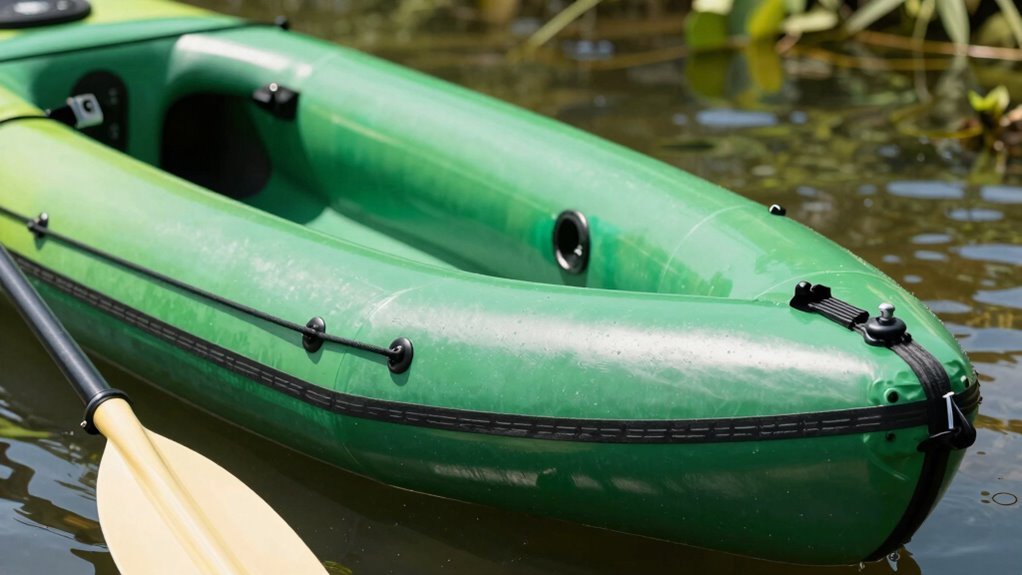
Adding the right accessories and setting up your kayak properly can considerably boost its stability on the water. Deck accessories, like inflatable pontoons or stability aids, can make a noticeable difference by widening your kayak’s footprint, reducing the feeling of tipping. Properly securing these accessories guarantees they function effectively. Additionally, your paddle techniques play a vital role; using smooth, controlled strokes helps maintain balance and prevents unnecessary wobbling. Focus on keeping your paddle strokes steady and centered, especially in choppy conditions. Adjusting your seating position to lower your center of gravity also adds stability. Combining thoughtful setup with the right deck accessories and refined paddle techniques makes a significant difference in how stable you feel, giving you more confidence during your paddling adventures.
Frequently Asked Questions
How Does Paddle Technique Influence a Kayak’s Perceived Stability?
Your paddle technique considerably influences your kayak’s perceived stability. Using controlled paddle strokes helps you maintain steady balance, while aggressive or uneven strokes can cause instability. Proper body positioning, like keeping your weight centered and engaging your core, enhances stability. When you focus on smooth paddle strokes and stay balanced, you’ll feel more confident and less “tippy,” even in rougher waters. Practice these techniques to improve your overall kayak control and comfort.
Can Weather Conditions Make an Inflatable Kayak Feel More Tippy?
Yes, weather effects and environmental factors can make your inflatable kayak feel more tippy. Wind, choppy water, or strong currents can destabilize you and make paddling more challenging. Cold temperatures can stiffen your muscles, affecting balance, while waves or surface turbulence increase the sensation of instability. Always check weather conditions before heading out, as these environmental factors directly influence your kayak’s stability and your overall safety on the water.
Do Different Water Types Affect Kayak Stability and Tippiness?
Different water types definitely impact your kayak’s stability and tippiness. Fast-moving water currents can make you feel more unsteady, especially if you’re new to kayaking. Sun exposure can cause the kayak’s material to expand slightly, affecting balance. You might worry about durability, but modern inflatable kayaks are designed to handle various water conditions. Staying alert and choosing the right kayak for specific water types will boost your confidence and safety on the water.
How Does Solo vs. Tandem Kayak Design Impact Balance?
Solo kayaks are usually more balanced because you control the weight distribution and seat positioning directly, making it easier to maintain stability. Tandem kayaks, however, require you to coordinate with a partner and manage two sets of weight distribution, which can affect balance. Proper seat positioning in both types is vital; center seats help keep your kayak stable, reducing tippiness and making paddling smoother.
What Role Does Paddle Length Play in Preventing Tipping?
A longer paddle offers better leverage, helping you stay stable and preventing tipping, especially in rough waters. Conversely, a shorter paddle feels more manageable and reduces fatigue. Your paddle grip should be comfortable, allowing precise control over paddle length adjustments. Picture yourself balancing effortlessly; the right paddle length and grip make this possible, as they work together to enhance your stability and confidence on the water.
Conclusion
Choosing the right inflatable kayak boosts your confidence on the water, especially since studies show that wider kayaks are 30% less likely to tip. By considering design, material, and your personal skill level, you can find a stable, enjoyable vessel. Remember, adding accessories like stabilizers can make a big difference. With the right setup, you’ll feel more secure, making every paddle stroke more fun and less intimidating—so take your time and pick what’s best for you.