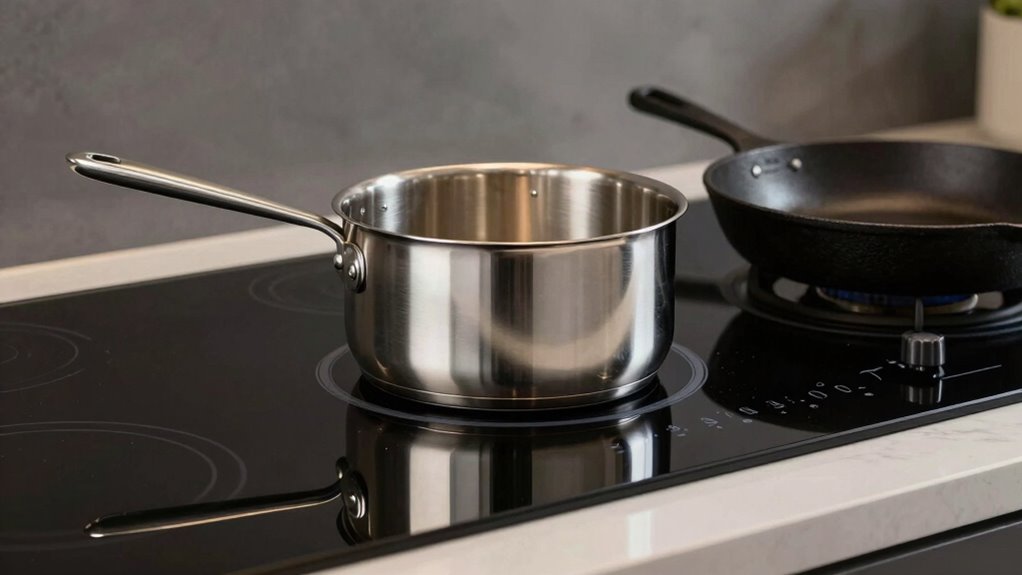

If you’re new to induction cooking, you’ll need cookware made of ferromagnetic materials like cast iron or magnetic stainless steel, which can conduct the magnetic field efficiently. To check if your pots and pans work, simply test with a magnet—if it sticks, it’s compatible. Ensuring your cookware has a flat, smooth bottom also helps. Keep exploring to discover tips on choosing, testing, and maintaining induction-ready cookware for the best results.
Key Takeaways
- Induction cookware must contain ferromagnetic materials like cast iron or magnetic stainless steel for magnetic field interaction.
- Test with a magnet: if it sticks firmly, the cookware is induction-compatible.
- Flat, smooth-bottomed pots and pans ensure optimal contact and efficient heating on induction stoves.
- Durable materials like stainless steel resist warping and scratching, maintaining performance over time.
- Avoid using non-magnetic metals like aluminum or copper unless coated with ferromagnetic layers.
How Does Induction Cooking Work and What Makes It Different?
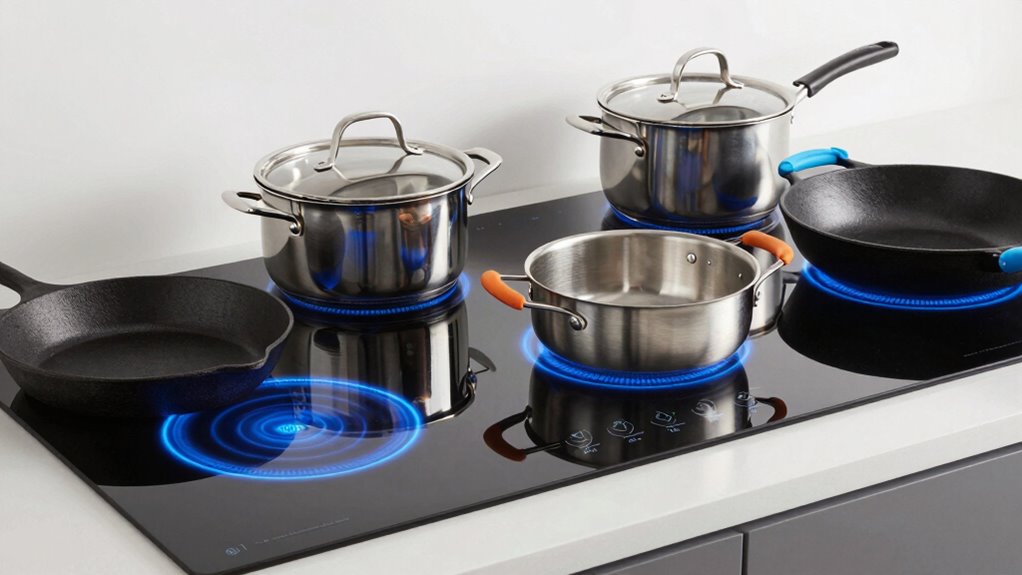
Ever wondered what sets induction cooking apart from traditional methods? It all comes down to how it uses a magnetic field to generate heat directly in your cookware. When you turn on an induction stove, an electric current flows through a coil beneath the cooktop, creating a magnetic field. This magnetic field then induces an electric current in the ferromagnetic cookware placed on it. As a result, energy transfer occurs directly within the pot or pan, heating it efficiently and quickly. Unlike gas or electric stovetops that heat indirectly, induction transfers energy straight into the cookware, making cooking faster and more precise. This method reduces wasted heat, increases safety, and offers better control over cooking temperatures.
Which Materials Are Compatible With Induction Cookware?

To work with induction cooktops, your cookware must be made from or contain ferromagnetic materials that can interact with the magnetic field. Magnetic properties are essential for material compatibility; only certain metals respond effectively. Common compatible materials include cast iron and magnetic stainless steel. Non-magnetic metals like aluminum or copper won’t work unless coated with a ferromagnetic layer. Here’s a quick overview:
| Material | Magnetic Properties | Material Compatibility |
|---|---|---|
| Cast Iron | Strong ferromagnetic | Highly compatible |
| Magnetic Stainless Steel | Ferromagnetic | Compatible |
| Aluminum & Copper | Non-magnetic | Not compatible without a layer |
Material properties play a crucial role in determining whether cookware will work efficiently on induction cooktops. Ensuring proper cookware selection can significantly improve cooking performance and safety. Additionally, material compatibility is crucial for efficient and safe cooking performance. Being aware of magnetic responsiveness can help prevent frustration and ensure optimal heating. It’s also helpful to test your cookware with a simple magnet to verify its magnetic response, ensuring compatibility before use.
How Can You Test If Your Pots and Pans Work on an Induction Stove?
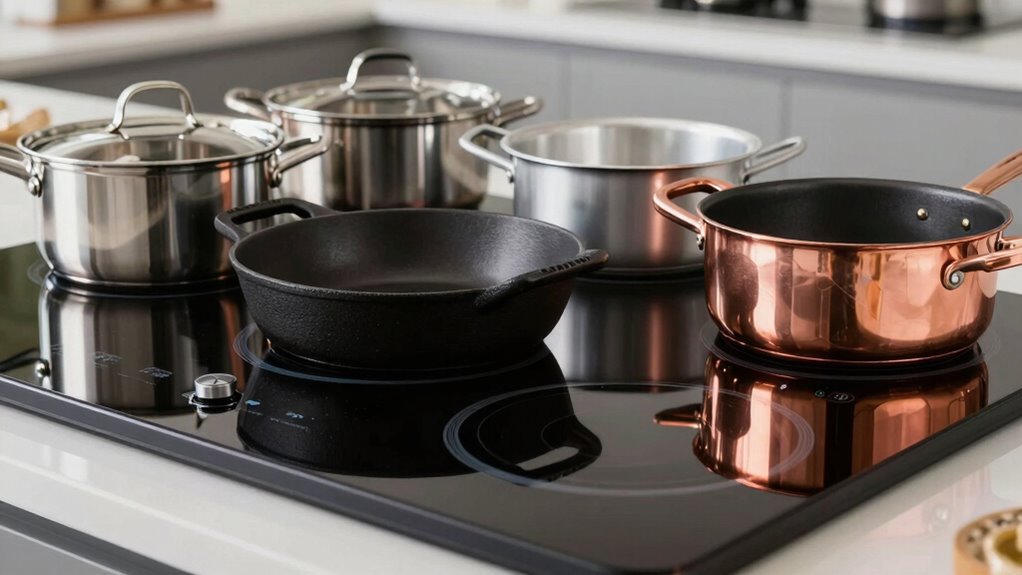
You can quickly determine if your pots and pans are compatible with an induction stove by performing a simple test. The magnetic test is the most straightforward way to check cookware compatibility. Take a magnet and place it on the bottom of your pot or pan. If the magnet sticks firmly, your cookware is induction-compatible. If it doesn’t, it won’t work on an induction cooktop. This simple test saves you time and prevents frustration during cooking. Remember, not all pots and pans with a metallic finish are suitable, so always verify with the magnetic test first. Ensuring your cookware passes this test guarantees efficient heating and safe operation on your induction stove. It’s a quick, easy way to confirm compatibility before cooking. Additionally, induction-compatible materials can influence the cookware’s performance, especially if the cookware has specific base requirements for optimal heat conduction. Being aware of a magnetic test is an essential step in selecting the right cookware for your stove type. Moreover, choosing cookware with a flat, smooth base can improve contact with the induction surface, enhancing heat transfer and cooking efficiency.
What Features Make Induction Cookware Easy to Use and Maintain?
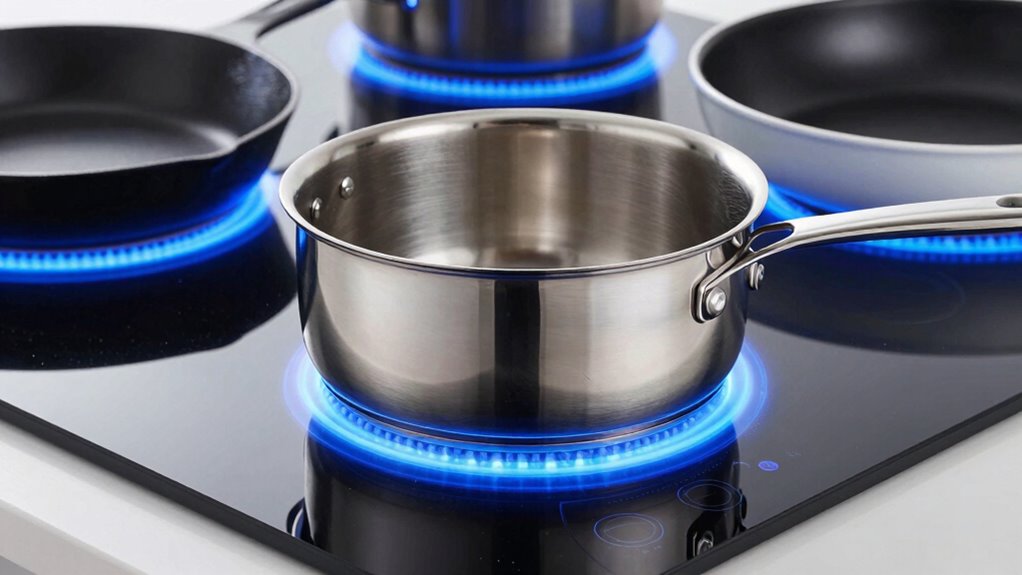
The key features that make induction cookware easy to use and maintain include a flat, smooth bottom that guarantees maximum contact with the cooktop surface, leading to even heating and simple cleaning. Durability factors also play a crucial role; look for materials like stainless steel or cast iron, which resist warping and scratching over time. An ergonomic design enhances usability by offering comfortable grips and balanced weight, making handling safer and more convenient. These features ensure your cookware not only performs efficiently but also stays in good condition with minimal effort. Easy-to-clean surfaces, combined with sturdy construction, reduce maintenance time and prolong the lifespan of your pots and pans. Additionally, choosing cookware with high-quality materials helps resist damage and maintains performance over years of use. Properly maintained, high-quality induction-compatible cookware can also improve energy efficiency in your kitchen. To ensure long-term performance, selecting cookware with resistance to warping and scratching is essential. Understanding thermal conductivity helps in selecting the most efficient cookware for your needs. Incorporating non-stick coatings can further simplify cleaning and prevent food from sticking, making your cooking experience even more effortless. Overall, selecting cookware with these features simplifies your cooking experience and keeps your kitchen organized.
Common Mistakes When Choosing Induction Cookware: and How to Avoid Them
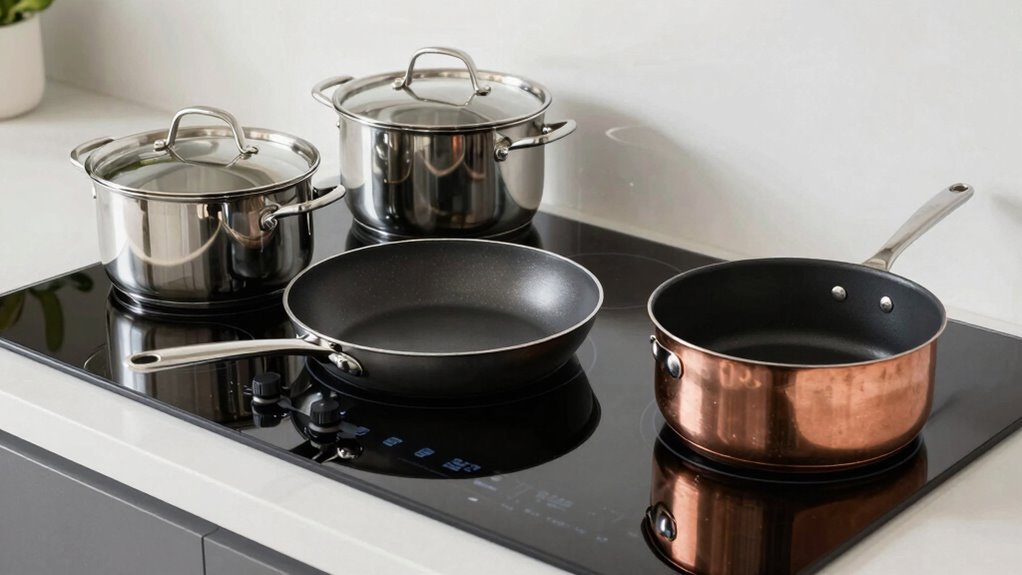
Choosing the right induction cookware involves more than just picking stylish or popular options; it requires careful consideration to avoid common pitfalls. One mistake is ignoring cookware safety; verify your pots and pans are compatible with induction cooktops, usually marked by a magnetic base. Overlooking this can lead to ineffective heating or damage. Additionally, many buyers focus solely on price considerations, but cheap cookware may lack durability or proper heat conduction. Don’t compromise on quality just to save money, as subpar materials can pose safety risks and reduce cooking efficiency. To avoid these mistakes, research cookware labels, check for magnetic compatibility, and balance cost with durability and safety features. Being aware of material compatibility ensures your cookware will perform safely and efficiently on your induction stove. Furthermore, understanding the significance of manufacturing standards helps you select products that meet safety and quality benchmarks. Investing in cookware that adheres to recognized quality certifications can provide additional assurance of safety and performance. Additionally, considering user reviews can offer practical insights into the real-world performance and longevity of the cookware. Incorporating professional safety guidelines can further help you select the best options for your kitchen. Making informed choices helps you enjoy safe, efficient, and long-lasting induction cooking.
Frequently Asked Questions
Can I Use Non-Stick Pans on Induction Stoves?
Yes, you can use non-stick pans on induction stoves if they’re made with a magnetic base, ensuring cookware compatibility. Always check for induction safety by looking for a symbol or testing with a magnet. Non-stick pans work well, but avoid dragging them across the surface to prevent scratches. Proper cookware compatibility guarantees efficient heat transfer, keeps your stove safe, and prolongs the life of your cookware and appliance.
What Is the Best Way to Clean Induction Cookware?
To clean your induction cookware effectively, use gentle cleaning techniques like hand washing with warm soapy water and a soft sponge to prevent scratches. Avoid abrasive pads, as they can damage the surface. Regular maintenance tips include drying thoroughly to prevent water spots and avoiding harsh chemicals. For stubborn stains, simmer a mixture of baking soda and water, then wipe clean. Keep your cookware in good shape with these simple cleaning routines.
Are There Size Restrictions for Induction-Compatible Pots?
Yes, there are size restrictions for induction-compatible pots. You need to make certain your cookware’s dimensions match your induction cooktop’s size compatibility. Usually, the bottom of your pots and pans should directly contact the cooktop’s surface, so check the diameter to match or slightly exceed the designated size range. Using cookware with proper size compatibility ensures efficient heating and prevents damage to your induction stove.
Do All Stainless Steel Pans Work With Induction?
Not all stainless steel pans work on induction; it’s like trying to dance with the wrong partner. You need high-quality stainless steel with strong magnetic properties. Look for pans labeled “induction-compatible” or test with a magnet—if it sticks, you’re good. Cheaper or lower-grade stainless steel may lack the magnetic qualities needed to generate heat efficiently. Select wisely to guarantee your cookware performs seamlessly on induction cooktops.
How Long Does Induction Cookware Typically Last?
Induction cookware typically lasts 5 to 10 years, depending on durability and lifespan. You can extend its life with proper maintenance tips, like avoiding metal utensils that scratch the surface and hand washing instead of dishwashers. Regularly check the magnetic base for warping or damage, and store it carefully. With good care, your cookware remains efficient and safe, ensuring you get the most out of your investment.
Conclusion
Now that you know which cookware works best for induction cooking, it’s almost like fate brought you here. Maybe you found that perfect, shiny pot during your last garage sale or discovered a magnetic skillet in your cupboard. With the right tools, cooking becomes easier and more enjoyable — and who knows, maybe your next great meal is just a pan away. Embrace these tips, and let your kitchen adventures unfold naturally.