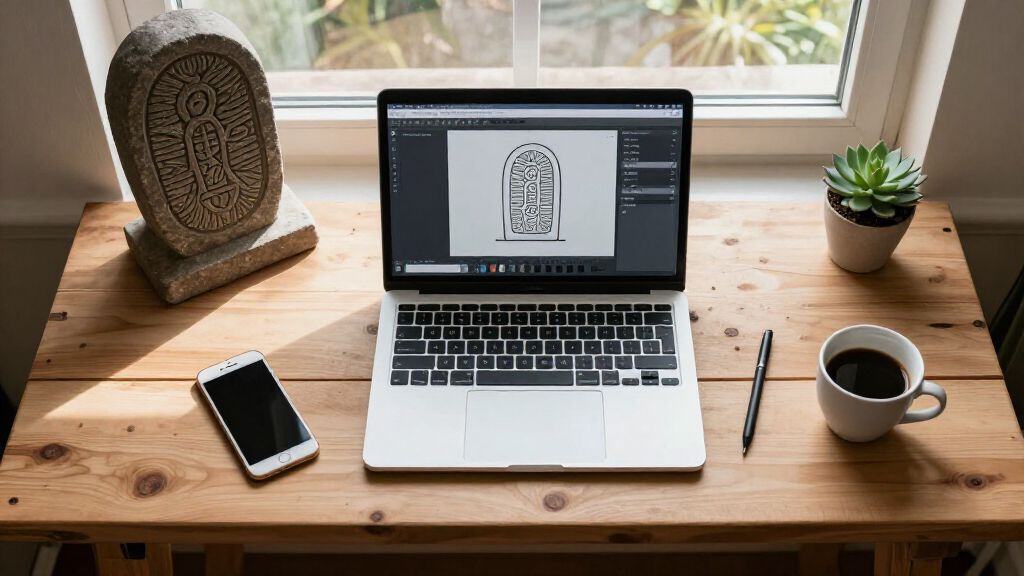

🔍 Read the full analysis: How AI Is Reshaping SVG Carving Animations: 'The Runestone Field' Overview on ThorstenMeyerAI.com

Get business pricing on monitors, keyboards and dev gear
- Business-only prices and quantity discounts
- Tax-exempt purchasing
- Multiple users, one account, clear invoices
TL;DR
Artificial intelligence is revolutionizing SVG carving animations, as demonstrated in ‘The Runestone Field’ project. This innovative approach combines traditional runic art with automated digital techniques, creating dynamic storytelling experiences. The development highlights how AI enhances visual design and storytelling, though some technical details remain under development.
Artificial intelligence has been integrated into SVG carving animations for the first time in a project called ‘The Runestone Field,’ transforming static runic visuals into immersive, animated narratives. This development, led by a digital artist and technologist, demonstrates how automation can elevate the art of storytelling through visual design. The project aims to bridge history and modern technology, offering a new way for audiences to engage with ancient symbols and stories.
The project, developed by a digital artist utilizing AI-enhanced SVG techniques, features animated runestone carvings that appear to speak and move, creating an engaging experience for viewers. For more on AI-driven digital art, see the original analysis at Glimpse: The Runestone Field — Carve Words Into Winter. Using precise SVG carving methods combined with fluid animations, the team crafted a digital landscape where ancient symbols are brought to life through automation. The process involved integrating AI algorithms to automate the carving and animation steps, reducing manual effort and enabling complex, detailed visuals. This project exemplifies how AI can serve as a digital chisel, as detailed in the original analysis.
According to the creator, the project showcases how AI can serve as a digital chisel, enabling artists to produce intricate animations that would be labor-intensive otherwise. The animation process was guided by custom AI scripts that interpreted design inputs into detailed SVG paths, allowing for dynamic modifications and real-time adjustments. The result is a seamless blend of craftsmanship and automation, producing visual narratives that are both historically respectful and technologically innovative.
While the project demonstrates promising results, some technical aspects are still being refined. The AI algorithms currently require manual oversight to ensure historical accuracy and visual coherence. Additionally, the team is exploring ways to make the automation more accessible for broader artistic use, with ongoing development aimed at simplifying the workflow and expanding creative possibilities.
How AI Is Reshaping SVG Carving Animations: ‘The Runestone Field’
Artificial intelligence has been woven into SVG carving animations for the first time in ‘The Runestone Field’ — transforming static runic visuals into immersive, animated narratives. Ancient symbols now speak, move, and tell stories through automated vector craft.
AI’s Impact on Digital Storytelling & Visual Art
‘The Runestone Field’ exemplifies how traditional craftsmanship can be augmented by modern automation — preserving cultural symbols while reimagining their presentation, and opening new creative avenues for education and entertainment.
Less Manual Effort
AI-driven automation allows artists to produce highly detailed, dynamic visual narratives more efficiently than labor-intensive manual carving.
New Avenues of Exploration
Complex animations that were previously too technically challenging become achievable, expanding what digital artists can express.
Immersive Experiences
Viewers engage with ancient symbols through animated runestones that appear to speak and move — history, art, and technology blended seamlessly.
The AI Carving Pipeline
Custom AI scripts interpret design inputs into detailed SVG paths, automating the carving and animation steps while allowing dynamic modification and real-time adjustments.
Design Input
Artist defines runic concepts, historical motifs, and narrative intent.
AI Interpretation
Algorithms translate concepts into precise, detailed SVG carving paths.
Automated Carving
Vector carvings generated automatically, with fluid animation applied.
Oversight & Refine
Manual review ensures historical accuracy and visual coherence.
Animated Narrative
Runestones come alive — speaking, moving, telling their stories.
Historical Roots & Technological Innovation in SVG Art
SVG has long been valued for resolution independence, yet complex carvings demanded painstaking manual work. Recent AI integration marks a departure from purely manual design — a convergence of traditional art forms with cutting-edge technology.
| Aspect | Traditional Manual SVG | Scripted Automation | AI-Driven (‘Runestone Field’) |
|---|---|---|---|
| Detailed carving paths | ✗ Extremely labor-intensive | ~ Partially automated | ✓ Auto-generated |
| Real-time adjustments | ✗ Slow redraws | ~ Limited | ✓ Dynamic modification |
| Complex animation | ✗ Technically challenging | ~ Template-bound | ✓ Fluid & intricate |
| Historical fidelity | ✓ Artisan-controlled | ✓ Artist-verified | ~ Requires manual oversight |
| Accessibility | ✗ Expert-only | ~ Technical skill needed | ~ Tools in development |
Limitations & the Road Ahead
The creator plans more autonomous algorithms, real-time editing, expanded customization, and community-facing tools — aiming to make AI-assisted SVG carving accessible to digital artists and educators.
Frequently Asked
How does AI improve SVG carving animations?
AI automates the creation of detailed SVG paths and animations, enabling more intricate and dynamic visuals with less manual effort.
Will AI replace human artists?
AI is currently viewed as a tool to augment human creativity — the artist remains essential for guiding and refining the output.
What are the main technical challenges?
Ensuring accuracy and fidelity of automated carvings, reducing manual oversight, and building user-friendly tools for broader adoption.
Can this apply to other digital art forms?
Yes — potential applications include animations, interactive visualizations, and educational content across digital art.
How does it impact cultural preservation?
Digitally automating traditional carving techniques offers a new way to preserve and reinterpret cultural symbols, while discussions on authenticity continue.
What comes next?
Refined algorithms, real-time editing, expanded customization, and released tools for a broader community — plus collaborations across education, culture, and entertainment.
From Ancient Stone to Living Vector
Impact of AI on Digital Storytelling and Visual Art
This development signifies a major shift in digital storytelling, where AI-driven automation allows artists to produce highly detailed and dynamic visual narratives more efficiently. The use of AI in SVG carving not only reduces manual effort but also opens new avenues for creative exploration, enabling complex animations that were previously too labor-intensive or technically challenging. For audiences, this means more immersive and engaging experiences that blend history, art, and technology seamlessly.
Furthermore, ‘The Runestone Field’ exemplifies how traditional craftsmanship can be augmented by modern automation, preserving cultural symbols while reimagining their presentation. This approach could influence various fields, from educational content to entertainment, by making historical and artistic content more vivid and accessible through automation.
However, the integration of AI into artistic workflows raises questions about authenticity, artistic control, and the potential for over-reliance on automation. As the technology matures, ongoing discussions about the role of AI in creative processes are expected to shape future developments in digital art and storytelling.
As an affiliate, we earn on qualifying purchases.
Historical Roots and Technological Innovation in SVG Art
SVG (Scalable Vector Graphics) has long been a staple in digital design, valued for its resolution independence and flexibility. Traditionally, creating complex SVG animations required significant manual effort, especially for detailed carvings like runestones or ancient inscriptions. Over recent years, advances in automation and scripting have eased some of these challenges, but manual craftsmanship remained essential for high-quality results.
In recent months, the integration of AI into SVG workflows has gained attention, driven by the desire to automate intricate tasks and expand creative possibilities. ‘The Runestone Field’ project builds on this momentum, employing AI algorithms to interpret design concepts and generate detailed SVG paths automatically. This approach marks a departure from purely manual design, representing a convergence of traditional art forms with cutting-edge technology.
The project also follows a broader trend of using AI for generative art, where algorithms produce visual content based on predefined parameters or learned styles. In this context, AI acts as both a tool and a collaborator, enabling artists to push the boundaries of digital craftsmanship while maintaining control over the creative process.
As an affiliate, we earn on qualifying purchases.
Technical Limitations and Future Improvements
While the project demonstrates promising results, several technical challenges remain. The current AI algorithms require manual oversight to ensure accuracy and historical fidelity, and the automation process is not yet fully streamlined for widespread use. It is also unclear how scalable or adaptable the approach will be for different artistic styles or complex narratives.
Furthermore, the long-term impact of AI on artistic control and authenticity is still debated. Some critics question whether automation might diminish the artisan’s role or compromise cultural integrity, though proponents argue it enhances creative possibilities.
As an affiliate, we earn on qualifying purchases.
Upcoming Developments and Broader Adoption of AI in SVG Art
Moving forward, the creator plans to refine the AI algorithms to enable more autonomous operation, reducing the need for manual adjustments. Additional features under development include real-time editing capabilities and expanded customization options for artists. The team also aims to release tools that make AI-assisted SVG carving accessible to a broader community of digital artists and educators.
Expect further demonstrations of AI-driven animation projects inspired by ‘The Runestone Field,’ with potential collaborations across educational, cultural, and entertainment sectors. As the technology matures, broader adoption is anticipated, potentially transforming how digital storytelling and visual art are created and experienced.
As an affiliate, we earn on qualifying purchases.
Key Questions
How does AI improve SVG carving animations?
AI automates the complex process of creating detailed SVG paths and animations, allowing for more intricate and dynamic visuals with less manual effort.
Will AI replace human artists in SVG animation?
While AI can automate certain tasks, it is currently viewed as a tool to augment human creativity rather than replace artists. The role of the artist remains essential for guiding and refining the output.
What are the main technical challenges remaining?
Current challenges include ensuring accuracy and fidelity of automated carvings, reducing manual oversight, and developing user-friendly tools for broader adoption.
Can this technology be used for other types of digital art?
Yes, AI-driven SVG automation has potential applications across various digital art forms, including animations, interactive visualizations, and educational content.
How does this project impact cultural preservation?
By automating traditional carving techniques digitally, the project offers a new way to preserve and reinterpret cultural symbols, though ongoing discussions about authenticity and artistic control continue.
Source: ThorstenMeyerAI.com
Halloween Picks
halloween
As an affiliate, we earn on qualifying purchases.

![Isar Aerospace Launch Into Orbit [Video]](https://featurebuddies.com/wp-content/uploads/2026/09/isar-aerospace-launch-into-orbit-video-featured-560x300.jpg)