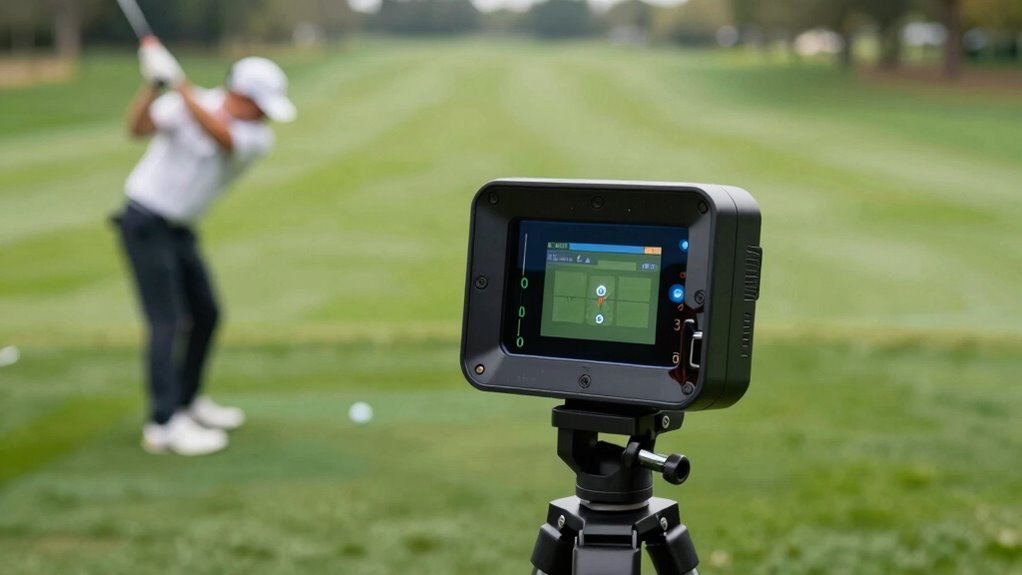
Golf launch monitors track your club and ball using sensors like high-speed cameras, radar, and infrared devices. They directly measure ball speed, club speed, and smash factor, while estimating launch angle and spin rate through algorithms. Distance and carry are calculated based on this data. Keep in mind, some measurements rely on assumptions, so accuracy can vary. To get the most from your data, understanding how these tools work will give you better insight into your game.
Key Takeaways
- Launch monitors directly measure ball speed, club speed, and smash factor, while estimating launch angle and spin rate.
- They use sensors like high-speed cameras, radar, and infrared to capture swing and ball flight data.
- Data processing algorithms convert raw signals into key metrics, applying filters and environmental adjustments.
- Measurement accuracy depends on proper calibration, sensor quality, and environmental conditions.
- Data should be viewed as estimates, complemented by golfer feel and experience for optimal decision-making.
How Do Launch Monitors Track Ball and Club Data?
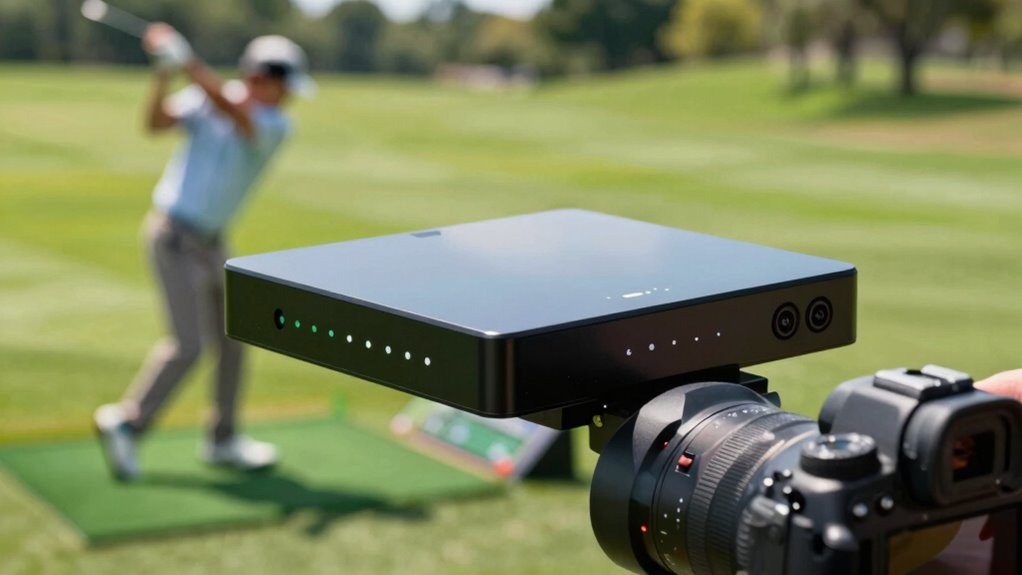
Launch monitors track ball and club data using a combination of advanced sensors and imaging technology. When you swing, these devices analyze your swing path by capturing the motion of the club through high-speed cameras or radar systems. They also measure the clubface angle at impact to determine how open or closed your face is relative to your swing path. By tracking the club’s movement in real-time, the monitor creates a detailed picture of your swing dynamics. This information helps you understand how your swing path influences ball flight and accuracy. The sensors detect the club’s orientation and movement, allowing the device to record precise angles and trajectories. Additionally, they utilize digital signal processing to interpret the sensor data accurately. Modern launch monitors also incorporate energy efficiency features to ensure longer device operation during extended practice sessions. Overall, this technology provides valuable insights into your swing mechanics, enabling you to make targeted improvements.
Which Launch Monitor Metrics Are Measured Directly, and Which Are Estimated?
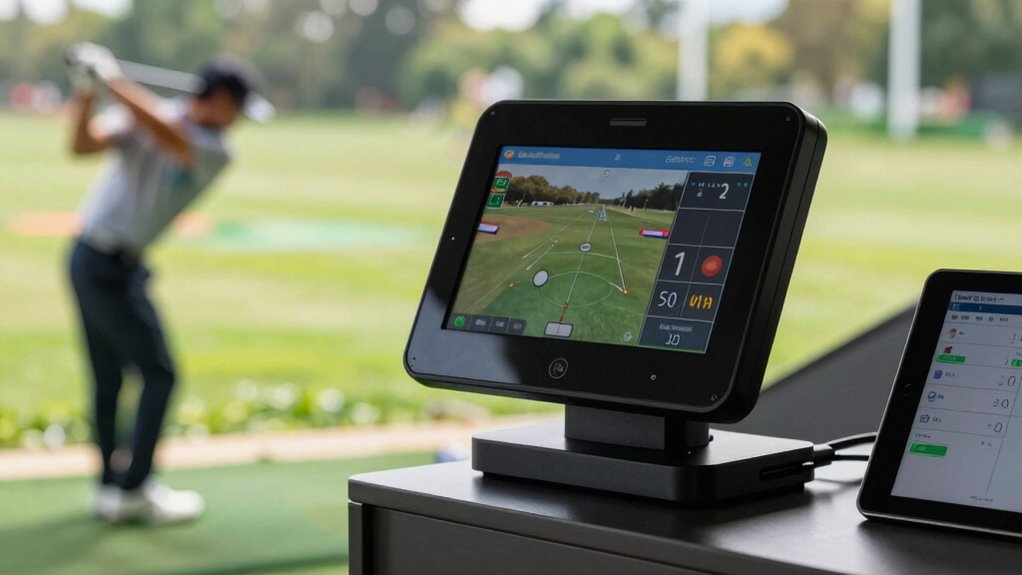
Many of the key metrics that launch monitors provide are measured directly through their sensors and imaging systems, while others are estimated based on these measurements combined with algorithms. Direct measurements like ball speed, club speed, and smash factor are highly accurate when the equipment is properly calibrated. However, calibration can drift if not maintained, affecting measurement reliability. Metrics such as launch angle and spin rate are often estimated, relying on algorithms that interpret sensor data. Your user skill also impacts accuracy; consistent setup and proper data collection help ensure reliable results. While advanced equipment offers precise measurements, understanding which metrics are directly measured versus estimated helps you interpret data more effectively, making adjustments based on the confidence level of each metric. Proper piercing care and hygiene, including regular cleaning and monitoring for infection, is essential for maintaining healthy body piercings. Additionally, understanding the measurement techniques used by different launch monitors can help users select the most suitable device for their needs. Being aware of the sensor technology behind these devices can further enhance your understanding of their accuracy and limitations.
How Do Launch Monitors Measure Launch Angle, Spin Rate, and Ball Speed?
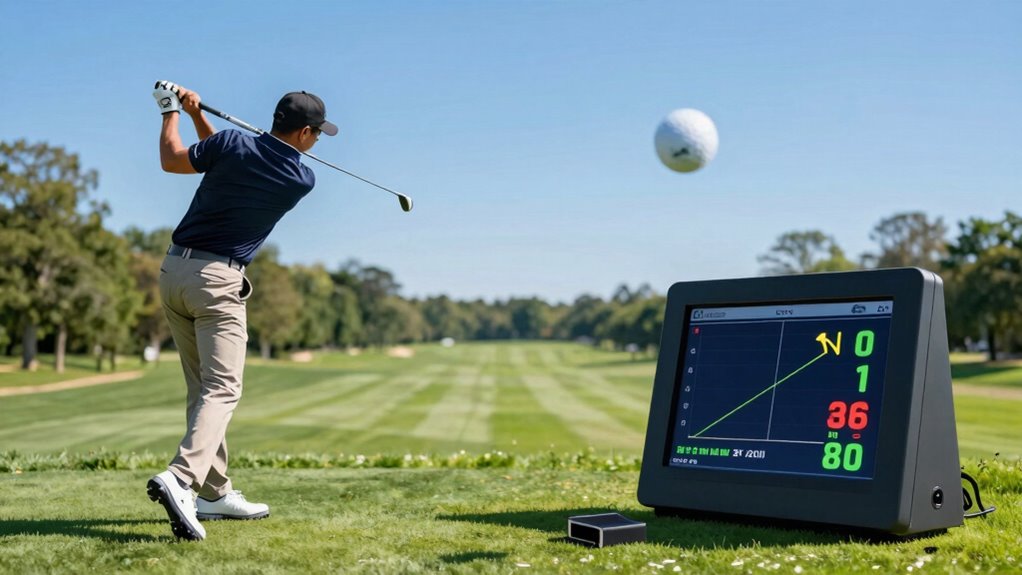
Launch monitors use advanced measurement technologies like high-speed cameras, radar, and infrared sensors to track the ball’s flight. They interpret the data through sophisticated algorithms that convert raw signals into meaningful metrics such as launch angle, spin rate, and ball speed. Understanding these methods helps you see how accuracy and precision are achieved in modern golf technology. Additionally, these devices often incorporate golf history principles to improve measurement reliability and reflect the evolution of golf analysis tools. Incorporating knowledge of dog breeds and training techniques can also inform the development of more sophisticated measurement criteria in future golf devices to better match real-world conditions. Furthermore, advancements in measurement accuracy continue to refine how these devices analyze complex ball flight data to provide more reliable insights. The integration of technological innovations ensures these tools remain at the forefront of golf performance analysis. These innovations often draw from high-tech innovations in related fields to enhance data collection and interpretation capabilities.
Measurement Technologies Employed
Measurement technologies in golf launch monitors rely on advanced sensors and imaging methods to accurately capture key ball and club data. To guarantee precise readings, sensor calibration is essential, maintaining accuracy over time and across different devices. These monitors often use high-speed cameras, Doppler radar, or infrared sensors to track ball motion immediately after impact. Environmental factors like lighting, temperature, and humidity can influence sensor performance, so professional calibration helps mitigate these effects. Some systems incorporate multiple sensors to cross-verify data, improving reliability. sensor calibration is vital to ensure data accuracy and consistency across different conditions and devices. Proper calibration and consideration of sensor technology are crucial for trustworthy and consistent results. By combining these technologies, launch monitors effectively measure launch angle, spin rate, and ball speed, providing golfers with detailed feedback to improve their game.
Data Interpretation Methods
To determine launch angle, spin rate, and ball speed, golf launch monitors analyze data captured by their sensors using sophisticated algorithms. Proper sensor calibration guarantees accurate measurements by aligning sensor outputs with known reference standards, reducing errors. Once calibrated, the monitor processes raw data through mathematical models that interpret reflections, Doppler shifts, or imaging signals to calculate key metrics. Data visualization then transforms these complex calculations into clear, visual formats like graphs and charts, helping you understand your ball’s behavior instantly. This combination of precise sensor calibration and effective data visualization allows you to see how your shots perform, providing actionable insights. Additionally, understanding the importance of sensor calibration can significantly impact measurement accuracy. Implementing real-time data processing enhances the immediacy of feedback, enabling quick adjustments during practice sessions. Ultimately, these data interpretation methods enable accurate, real-time feedback that can improve your game efficiently.
How Do Launch Monitors Calculate Distance and Carry?
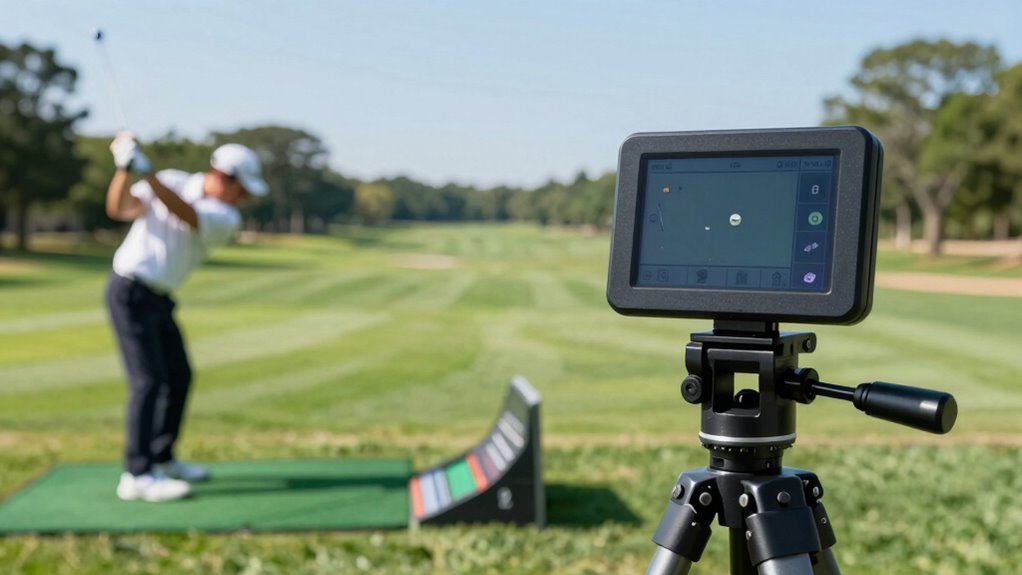
Launch monitors use ball speed, spin, launch angle, and velocity data to determine how far your shot travels. Their sophisticated algorithms process this information quickly to estimate distance and carry accurately. Understanding these points helps you see how your swing influences your shot’s performance. Additionally, factors like Rhythm Failure can impact the consistency of your shots, which the monitors attempt to account for in their calculations. Incorporating smart home automation principles can also help optimize your practice environment for better consistency and results. Recognizing the role of data analysis in these devices can further enhance your understanding of their measurements and estimations, especially when considering measurement accuracy and how it affects your feedback. Moreover, understanding the cryptid mysteries behind some unconventional data patterns can help golfers distinguish between real and spurious readings.
Ball Speed and Spin
Understanding how launch monitors calculate distance and carry starts with ball speed and spin. Your ball speed, influenced by club fitting and swing effort, directly affects how far the ball travels. Spin rate determines whether the ball stays in the air longer or drops quickly, impacting carry distance. Launch monitors measure these factors using high-speed cameras and radar technology, providing precise data. Weather influence, like wind or humidity, can alter spin and speed readings, so many monitors adjust calculations accordingly. Accurate measurements of ball speed and spin help you optimize your club selection and swing, leading to better distance control. Additionally, sensor accuracy plays a crucial role in ensuring reliable data collection. By understanding these core metrics, you gain insights into your game’s mechanics and can make data-driven improvements.
Launch Angle and Velocity
Launch angle and velocity are key factors that launch monitors analyze to determine how far your ball will travel. These measurements help predict the total distance and carry, factoring in the spin axis and launch window. Your launch angle influences how high the ball rises, while velocity affects its initial speed. Together, they determine the ideal trajectory for maximum carry. The spin axis impacts the ball’s stability and height, which in turn affects the launch window—the perfect angle range for maximum distance. Launch monitors use high-speed cameras and Doppler radar to accurately capture these metrics, translating them into distance estimates. By understanding your launch angle, velocity, and spin axis, you gain insights into how your swing influences your shots’ potential, helping you refine your game.
Data Processing Algorithms
Data processing algorithms are the core technology behind how launch monitors convert raw sensor data into meaningful distance predictions. They analyze measurements like speed, angle, and spin using sophisticated methods such as machine learning to improve accuracy. These algorithms filter out noise and correct errors, ensuring reliable results. They also leverage data visualization techniques to interpret complex data patterns, making it easier to understand how different factors influence shot distance and carry. Machine learning models learn from vast amounts of past data, refining their predictions over time. This continuous improvement helps you get more precise distance estimates, giving you better insights into your swing and shot performance. Additionally, diversity of data sources enhances the robustness of these models, ensuring consistent performance across different playing conditions. Moreover, incorporating environmental factors such as wind and humidity can further optimize the accuracy of distance calculations. Understanding sensor calibration is also crucial for maintaining measurement accuracy over time. Ultimately, these algorithms translate raw data into actionable information, enhancing your practice and game.
What Are the Limitations of Using Algorithms and Assumptions?
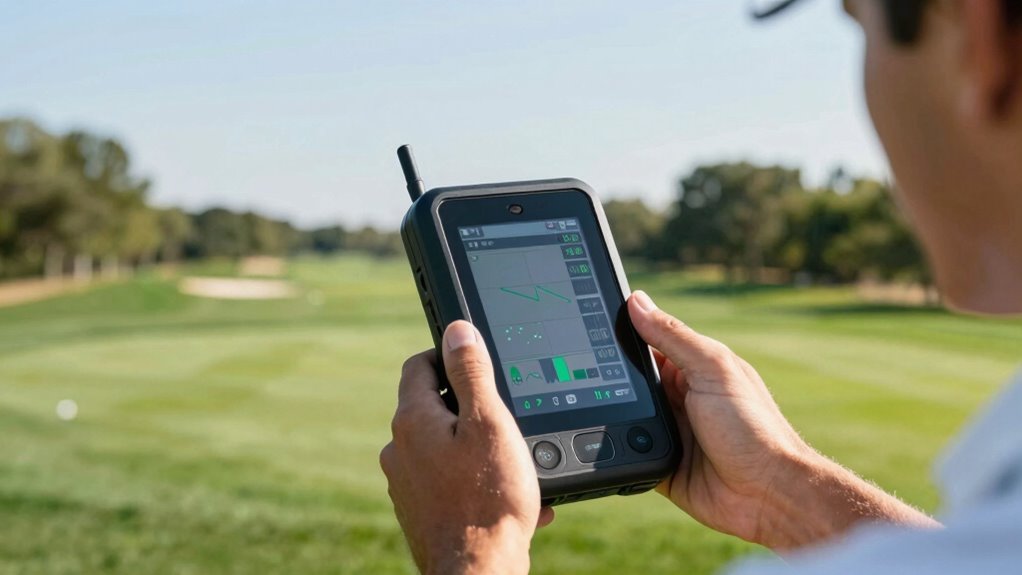
While algorithms power the core of golf launch monitors, they come with inherent limitations that can impact accuracy. These limitations often stem from the assumptions built into their models, which may not account for every variation in swing or ball conditions. For example, assumptions about ball spin, launch angle, or clubhead speed can lead to discrepancies between estimated and actual data. Additionally, algorithms rely on generalized patterns that may not suit every golfer’s unique swing. Environmental factors like lighting or weather can further skew measurements, especially if the device’s assumptions don’t adapt accordingly. As a result, relying solely on these assumptions can produce inaccuracies, reminding you that launch monitor data should be viewed as estimates rather than definitive measurements.
How Accurate Are Launch Monitors for Swing and Impact Data?
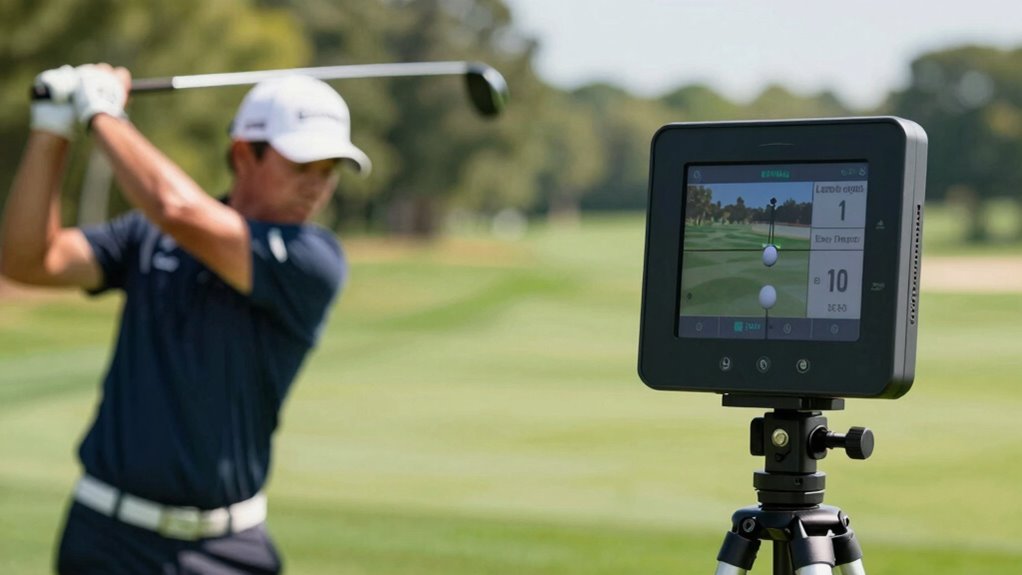
You might wonder just how precise launch monitors are when it comes to measuring your swing and impact. Their accuracy depends heavily on sensor calibration; if sensors aren’t properly calibrated, data can be off. Even small misalignments or calibration errors can lead to inaccurate readings of ball speed, launch angle, or spin rate. Additionally, user error plays a significant role—improper setup, inconsistent ball placement, or incorrect swing execution can distort results. While high-quality launch monitors are generally reliable, they aren’t infallible. They do a good job capturing most essential data, but inaccuracies can occur, especially if calibration isn’t maintained or if you’re not consistent with your setup. Ultimately, understanding their limitations helps you interpret the data more effectively.
Tips for Interpreting Launch Monitor Data Effectively
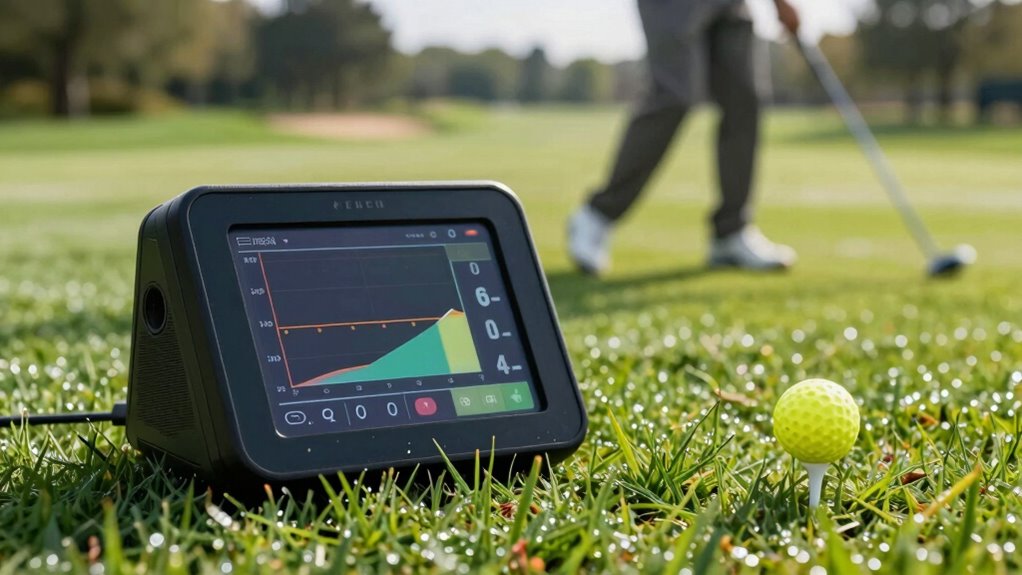
Interpreting launch monitor data accurately requires understanding what each metric truly represents and how it relates to your overall performance. Focus on the context of your golf game, considering factors like golf course design, which influences shot selection and strategy. When analyzing data, avoid jumping to conclusions based solely on numbers; instead, look for patterns over multiple sessions. Keep your equipment well-maintained, as dirty or damaged clubs can skew results. Use launch monitor insights to identify areas for improvement, but remember they’re tools, not absolute truths. Combine data with your feel and experience on the course. This balanced approach helps you make better decisions, refine your swing, and ultimately improve your game more effectively.
Frequently Asked Questions
Can Launch Monitors Measure Shot Consistency Over Different Playing Conditions?
Yes, launch monitors can measure your shot consistency across different playing conditions. They track key metrics like ball speed, launch angle, and spin, helping you see how environmental influences like wind, temperature, or humidity affect your shots. By comparing data from various conditions, you can identify patterns and improve your game. Just remember, while they’re accurate, environmental factors can still introduce some variability in your measurements.
Do Launch Monitors Require Calibration Before Each Use?
Your launch monitor doesn’t require calibration before every shot, but it’s wise to follow proper setup procedures each time. Typically, calibration frequency depends on the model; some need it daily, others less often. Ensuring correct placement and settings keeps your data accurate. Think of calibration like tuning a fine instrument—skip it, and your performance could be drastically off. So, always check your device’s instructions for best accuracy.
How Do Environmental Factors Affect Launch Monitor Accuracy?
Environmental factors like weather effects and altitude influence launch monitor accuracy. For instance, wind, temperature, and humidity can cause slight measurement deviations, while high altitude reduces air resistance, affecting ball flight data. You should verify the monitor is properly calibrated for your environment and consider these factors when analyzing your data. By doing so, you’ll get more precise readings and better understand your swing and shot outcomes under varying conditions.
Are There Differences in Data Quality Between Portable and Fixed Models?
Imagine comparing a Swiss Army knife to a desktop computer—both can get the job done, but one’s built for precision and portability. Portable launch monitors often sacrifice some data accuracy for ease of use and mobility, making them perfect for on-the-go swings. Fixed models, however, deliver more consistent, reliable data but lack device portability. Your choice depends on whether you prioritize accuracy or convenience.
Can Launch Monitors Analyze Spin on Shots From Various Clubs?
Yes, launch monitors can analyze spin on shots from various clubs. They provide detailed spin measurement data for each club you use, helping you understand how different clubs impact your ball’s spin rate. This club analysis allows you to compare spin characteristics across your bag, optimize your club selection, and improve your overall game. With accurate spin measurement, you can make better adjustments and enhance your shot consistency.
Conclusion
Understanding launch monitors helps you see your swing clearly, interpret data accurately, and improve your game confidently. By knowing what they measure, estimate, and sometimes guess, you can make smarter decisions on the course. Embrace the insights they provide—trust the data, question the assumptions, and visualize your progress. With clear eyes and an open mind, you can turn numbers into knowledge, and knowledge into better shots, ultimately transforming your game shot after shot.