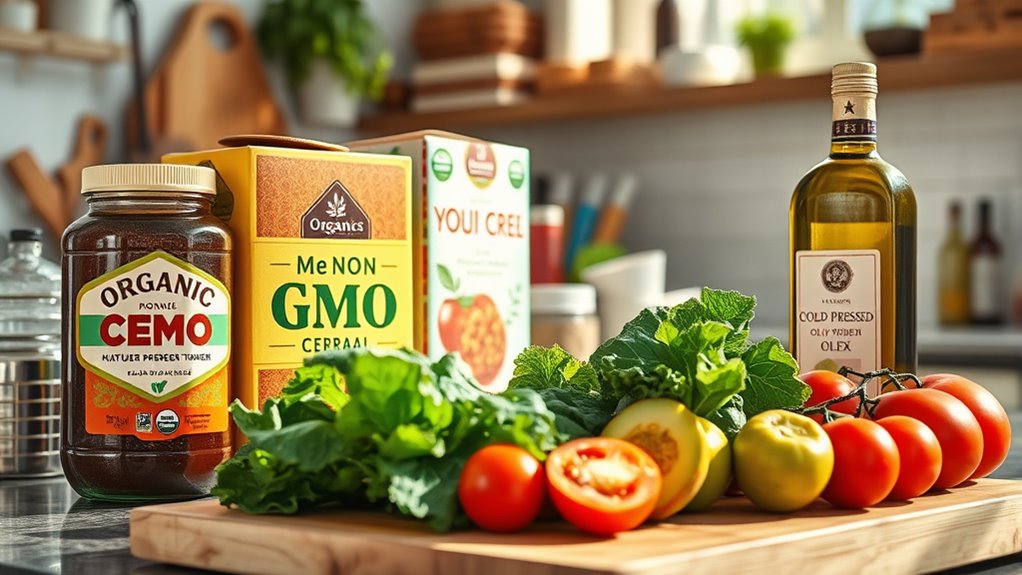

Understanding food labels like organic and non-GMO helps you make choices that fit your values and health goals. Organic foods are grown without synthetic chemicals, while non-GMO labels assure you that the product hasn’t been genetically modified. Terms like “grass-fed” relate to animal welfare and sustainable practices, although they may not be strictly regulated. Being aware of these labels empowers you in the grocery store. Discover the nuances of these terms and their implications for your food choices.
Key Takeaways
- Organic labels indicate food produced without synthetic fertilizers, pesticides, or GMOs, adhering to strict USDA guidelines.
- Non-GMO labels ensure food has not been genetically modified, providing safety and regulatory oversight.
- Terms like “grass-fed” or “pasture-raised” reflect animal welfare and sustainable practices, though they may lack strict regulation.
- Understanding these labels helps consumers align their choices with personal values and health goals, promoting informed food decisions.
- Reading food labels fosters awareness of sustainability, food safety, and industry trends, empowering conscious purchasing.
When you pick up a food product, understanding its label can feel overwhelming, but it doesn’t have to be. You’ve probably seen terms like “organic,” “non-GMO,” and “sustainable farming” thrown around, and you might wonder what they really mean. By breaking down these terms, you can make informed choices that align with your values and health goals.
Firstly, let’s talk about organic. When a product is labeled organic, it means it’s been produced without synthetic fertilizers, pesticides, or genetically modified organisms (GMOs). This method of farming adheres to strict guidelines set by the USDA, which ensures that the food you’re consuming is grown in a way that promotes ecological balance and biodiversity. If you’re looking to support sustainable farming practices, choosing organic products is a great way to do that. These practices help maintain soil health, reduce pollution, and ultimately contribute to a healthier environment.
Next up is the term “non-GMO.” This label indicates that the food hasn’t been genetically modified. While GMOs have been a source of debate regarding their impact on health and the environment, many consumers prefer non-GMO options as a precaution. Understanding food safety regulations can also help you feel more confident in your choices. The USDA and FDA oversee these regulations, ensuring that food products are safe for consumption and that labeling is accurate. This oversight means that when you see a non-GMO label, it’s backed by regulatory standards.
You might also come across terms like “grass-fed” or “pasture-raised,” which suggest that animals were raised in conditions that allow for natural behaviors. These terms often reflect a commitment to animal welfare and sustainable farming practices. While these labels may not be strictly regulated like organic or non-GMO, they still provide insight into how the food was produced.
Finally, remember that understanding food labels isn’t just about deciphering terms; it’s about making choices that resonate with your lifestyle. Whether you prioritize organic, non-GMO, or sustainable practices, each label tells you something about the food’s journey from farm to table. The next time you’re at the store, take a moment to read the labels. You’ll not only feel more empowered about your food choices, but you’ll also contribute to a more sustainable food system. Additionally, embracing digital revolutions in the food industry can further enhance your understanding and accessibility to these labels.
Frequently Asked Questions
Are Organic Foods Always Healthier Than Conventional Foods?
Organic foods aren’t always healthier than conventional ones. While organic farming typically uses fewer synthetic pesticides, it doesn’t guarantee better nutrition. Some studies show little difference in vitamins or minerals between the two. It’s essential to contemplate factors like freshness and preparation. If you prefer organic for reduced pesticide use, that’s a valid choice, but don’t overlook conventionally grown options that may be just as nutritious and sometimes more affordable.
What Does “Natural” Mean on Food Labels?
“Natural” on food labels is like a warm hug in a world of uncertainty; it suggests ingredient honesty. However, it’s not as regulated as you might think. The term often implies that the product contains no artificial ingredients or preservatives, but it doesn’t guarantee organic or non-GMO status. Always check the details, because “natural” can mean different things to different brands, and you deserve to know what you’re eating.
How Do I Know if a Product Is Truly Non-Gmo?
To know if a product is truly non-GMO, check for clear labeling that meets specific labeling requirements. Look for certifications from reputable organizations, like the Non-GMO Project Verified seal. This indicates the product hasn’t been genetically modified. Also, read the ingredient list carefully; if it contains ingredients derived from corn or soy, make sure they’re labeled as non-GMO. Trusting brands with transparent practices can also help you make informed choices.
Are There Any Regulations for “Grass-Fed” Labeling?
When it comes to “grass-fed” labeling, think of it as a puzzle missing some pieces. There are minimal regulation standards, so not all products labeled as grass-fed are the same. Some brands may follow strict guidelines, while others might just meet basic requirements. You’ve got to look for labeling transparency, like third-party certifications, to verify you’re getting what you expect. Always read the fine print to make informed choices!
Do Organic Labels Guarantee No Pesticides Were Used?
No, organic labels don’t guarantee zero pesticide residues. While organic certification requires farmers to use natural pesticides and avoid synthetic ones, some pesticide residues can still be present due to environmental factors or cross-contamination. It’s important to remember that “organic” signifies a commitment to sustainable practices rather than a complete absence of all pesticides. So, if you’re concerned, consider washing produce thoroughly or buying from trusted local sources.
Conclusion
Steering food labels can feel like wandering a labyrinth, but you hold the map. By understanding terms like organic and non-GMO, you’re not just making choices; you’re nurturing your body and supporting sustainable practices. Each label is a key, opening the door to healthier habits and a more informed lifestyle. So, the next time you shop, remember that every bite is a step toward a brighter, greener future—one that tastes as good as it feels.