
The art of fermentation turns basic ingredients into delicious, probiotic-rich foods like kimchi and kombucha. To make kimchi, you mix vegetables like napa cabbage with a spicy paste and let them ferment, creating beneficial bacteria. Kombucha, on the other hand, is brewed by fermenting sweetened tea with a SCOBY, producing tangy flavors and health benefits. Both foods boost gut health and nutritional value, connecting you to ancient culinary traditions. There’s so much more to explore about their fascinating processes!
Key Takeaways
- Kimchi is made by mixing napa cabbage and radishes with a spicy paste, followed by fermentation using beneficial bacteria like lactobacillus.
- Kombucha involves fermenting sweetened tea with a SCOBY, which consumes sugar and produces acetic acid and various healthful compounds.
- The fermentation process for both foods creates a probiotic-rich environment, enhancing gut health and overall wellness.
- Live cultures in kimchi and kombucha improve nutrient absorption and balance the microbiome, promoting digestive health.
- Engaging in the fermentation process connects individuals to culinary traditions and supports modern health-conscious diets through natural preservation.
If you’ve ever marveled at the tangy depth of kimchi or the effervescent charm of kombucha, you’re not alone. These beloved foods aren’t just tasty; they’re steeped in rich historical origins and packed with health benefits that might surprise you. When you plunge into the world of fermentation, you’re not just exploring a culinary technique; you’re connecting with traditions that have thrived for centuries.
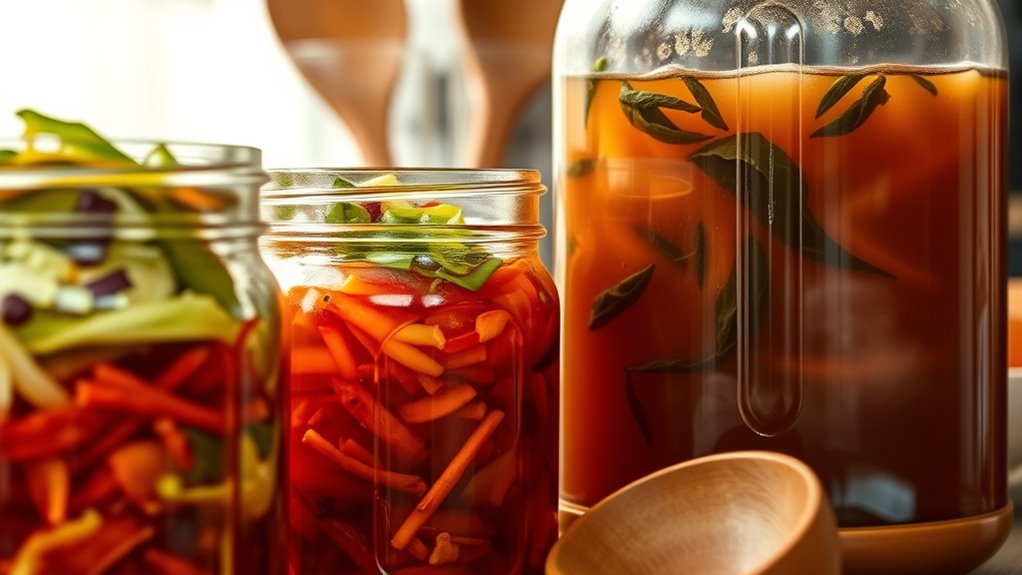
Kimchi has roots that trace back thousands of years in Korea, where it’s been a staple dish, beloved for its unique flavor and preservation methods. You might enjoy it as a side dish or even as a main ingredient, but its true essence lies in the fermentation process. This involves mixing vegetables, typically napa cabbage and radishes, with a spicy paste made from ingredients like garlic, ginger, and red pepper. As it ferments, beneficial bacteria, particularly lactobacillus, thrive, transforming the ingredients into a probiotic powerhouse. The result? A dish that’s not only delicious but also beneficial for your gut health.
Kimchi, a Korean treasure, transforms simple vegetables into a probiotic delight through its rich fermentation process.
On the other hand, kombucha’s journey begins in ancient China, where it’s believed to have been consumed for its supposed health benefits. This fizzy drink is made by fermenting sweetened tea with a symbiotic culture of bacteria and yeast, commonly known as SCOBY. As you brew it, the SCOBY consumes the sugar, producing acetic acid, vitamins, and other compounds that give kombucha its distinctive tang and slight fizziness. Drinking kombucha can aid digestion, boost your immune system, and even enhance mental clarity thanks to its probiotic content.
Both kimchi and kombucha demonstrate how fermentation can preserve food while enhancing its nutritional profile. The live cultures in these foods can improve gut health, leading to better digestion and absorption of nutrients. You might find that incorporating these fermented delights into your diet can help balance your microbiome, improving overall wellness. Additionally, engaging with educational toys that promote creativity and problem-solving can enhance your cooking skills and enjoyment of food preparation.
As you explore making kimchi or brewing your own kombucha, you’re tapping into a practice that’s been cherished across cultures. It’s about more than just creating flavorful foods; it’s a celebration of tradition, health, and the art of preserving nature’s bounty. So go ahead, embark on the fermenting process, and discover how these ancient practices can enrich your modern culinary adventures.
Frequently Asked Questions
Can Fermentation Improve the Nutritional Value of Foods?
Yes, fermentation can definitely improve the nutritional value of foods. It enhances flavor, making dishes more enjoyable, while also promoting probiotic development, which supports gut health. When you ferment foods, beneficial bacteria break down nutrients, making them easier for your body to absorb. This process not only boosts vitamins and minerals but also creates new compounds that can aid digestion. So, embracing fermentation can lead to tastier and healthier meals for you!
What Are the Health Benefits of Consuming Fermented Foods?
You might think fermented foods are just a trend, but they offer real health benefits. Consuming these foods enhances your gut health by promoting probiotic diversity, which can improve digestion and boost your immune system. They’re packed with vitamins and can even help reduce inflammation. So, incorporating fermented foods into your diet isn’t just delicious; it’s a smart choice for your overall well-being. Give your gut a treat and enjoy the benefits!
How Long Does the Fermentation Process Typically Take?
Fermentation duration can vary markedly based on the food and desired flavor. Typically, it takes anywhere from a few days to several weeks. During this time, microbial development occurs, transforming the ingredients into something new and flavorful. For instance, sauerkraut might take about one to four weeks, while kombucha usually ferments for one to two weeks. So, keep an eye on your food, and adjust the time to achieve your perfect taste!
Are There Any Risks Associated With Eating Fermented Foods?
Yes, there are some risks associated with eating fermented foods. You should always consider food safety, as improper fermentation can lead to contamination risks. Consuming poorly fermented products might expose you to harmful bacteria or toxins. It’s essential to follow proper methods and guidelines to guarantee that your fermented foods are safe to eat. If you experience any adverse reactions, it’s best to consult a healthcare professional. Enjoy your ferments, but stay informed!
How Can I Tell if My Fermented Food Has Gone Bad?
Imagine opening a jar of your homemade ferment, only to be greeted by an unpleasant smell. To tell if your fermented food’s gone bad, check for spoilage indicators like off-odors, unusual colors, or fuzzy mold. If it’s slimy or tastes sour in an unexpected way, toss it. Remember, fermentation safety’s key—trust your senses. It’s better to be safe than sorry when it comes to your health and delicious creations!
Conclusion
In the delightful dance of fermentation, you’ve discovered the delicious dynamics of kimchi and kombucha. By embracing this ancient art, you’re not just enhancing flavors but also boosting health. So, why not immerse yourself in this delightful domain? With just a few simple steps, you can create your own tangy treasures at home. Remember, fermentation’s a flavorful friendship between food and time, waiting for you to explore its wonders. Get started, and savor the sensational symphony of tastes!