

You probably use algebra in everyday life without even realizing it. Whether you’re budgeting your monthly expenses, adjusting a recipe for a dinner party, or comparing grocery prices, algebra helps streamline your decision-making. For instance, calculating savings for future goals or determining portions for ingredients involves simple equations. Even your daily choices can benefit from mathematical analysis. There’s so much more to explore about how math plays a role in your routine tasks.
Key Takeaways
- Budget planning involves using equations to track income and allocate funds across various expense categories effectively.
- Recipe adjustments require basic algebra to scale ingredient quantities while maintaining proper proportions for desired outcomes.
- Grocery shopping often includes calculating unit prices and comparing deals to make informed purchasing decisions that maximize budget efficiency.
- Everyday decision-making utilizes mathematical reasoning to analyze costs and benefits, helping optimize time and resource allocation.
- Recognizing the role of math in daily tasks enhances confidence and organization, showcasing its importance as a fundamental life skill.
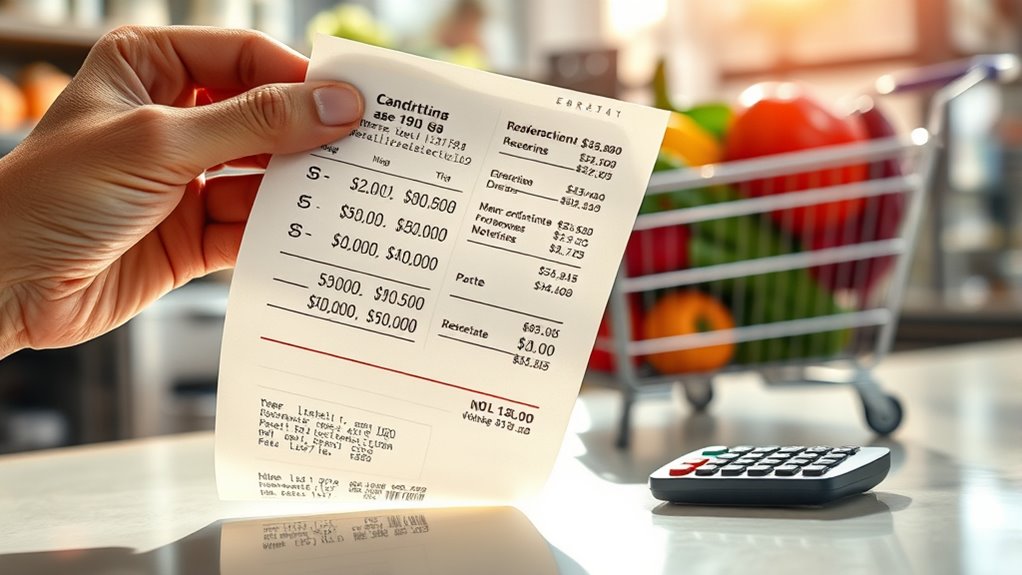
Have you ever noticed how math sneaks into your daily routine? Whether you’re budgeting your expenses or adjusting a recipe, you’re likely using algebra without even realizing it. Many people think of math as something confined to a classroom, but it’s actually a fundamental part of everyday life. From the moment you wake up to the time you go to bed, math quietly helps you make decisions and solve problems.
Let’s start with budget planning. You probably keep track of your income and expenses on a monthly basis, and that’s where math steps in. When you sit down to create a budget, you’re essentially using equations to determine how much you can spend on various categories like groceries, utilities, and entertainment. You might calculate how much you need to save each month for a vacation or how much you can afford to set aside for emergencies. By analyzing your spending patterns, you make essential decisions that directly impact your financial health.
Now, think about recipe adjustments. When you want to try a new dish but find that it serves more people than you have, you need to make calculations to adjust the ingredients. For example, if a recipe calls for three cups of flour to serve six people but you’re only cooking for two, you’ll need to divide the ingredients. This is where algebra comes into play. You might find yourself multiplying or dividing fractions to figure out how much of each ingredient you need. It’s a simple equation, but it’s fundamentally important for ensuring your dish turns out just right.
Even while grocery shopping, you’re likely using math to compare prices. You might check the unit price of different products to get the best deal, calculating cost per ounce or per serving. This small act reflects a deeper understanding of value, helping you make informed choices. You’re not just picking items randomly; you’re actively engaging in mathematical reasoning to maximize your budget. Additionally, understanding energy-efficient appliances can help you save money on your utility bills over time.
While grocery shopping, you use math to compare prices, empowering your choices and maximizing your budget effectively.
Math isn’t just about numbers and equations; it’s a tool you use to navigate daily challenges. Each time you plan a budget or adjust a recipe, you’re engaging in real-world algebra. So next time you find yourself crunching numbers, remember that you’re not just doing math; you’re applying skills that are essential for making your life a bit more organized and enjoyable. Embracing this everyday math can empower you to tackle challenges with confidence.
Frequently Asked Questions
How Can I Improve My Algebra Skills for Daily Use?
To improve your algebra skills for daily use, practice word problem strategies regularly. Try breaking down problems into smaller parts and translating them into equations. You can also apply algebra in cooking by adjusting recipes. For instance, if you want to double a recipe, use equations to scale ingredients proportionally. This hands-on approach not only makes learning fun but also reinforces your understanding of algebra in practical situations. Keep practicing, and you’ll see improvement!
Are There Apps for Practicing Everyday Algebra Problems?
Yes, there are several apps that can help you practice everyday algebra problems! You’ll find apps like Photomath and Khan Academy particularly useful. They turn real-world scenarios into engaging exercises, allowing you to improve your mental math skills effortlessly. Just snap a picture of a problem or explore various lessons, and watch your confidence grow. With consistent practice through these apps, you’ll notice how quickly algebra becomes a part of your daily life.
What Are Some Common Misconceptions About Algebra in Daily Life?
You might think algebra’s only for classrooms, but that’s a misconception. Many believe word problem solving is too complex, when in reality, it’s just a matter of breaking down the scenario. You often use mental calculations in daily situations, like budgeting or planning trips, without realizing it involves algebraic thinking. Don’t underestimate your skills; you’re solving equations every day, even if it doesn’t feel like traditional math!
Can You Recommend Resources for Learning Algebra Effectively?
You’ll find that visual learning resources, like Khan Academy and Algebra Tiles, make understanding algebra a breeze. Immerse yourself in algebra puzzles on websites like Brilliant or Mathisfun, where you can challenge yourself while having fun. Try to visualize problems, turning equations into pictures in your mind. With these engaging tools, you won’t just learn algebra; you’ll truly enjoy the process and see its beauty in solving everyday challenges.
How Does Algebra Relate to Personal Finance Management?
Algebra plays a vital role in personal finance management by helping you with investment planning and budgeting strategies. You use algebraic equations to calculate expenses, savings, and potential returns on your investments. When setting a budget, you can create equations to allocate funds for various categories, ensuring you meet your financial goals. Understanding these concepts allows you to make informed decisions and optimize your financial health, ultimately leading to better financial outcomes.
Conclusion
So, next time you’re calculating your grocery budget or figuring out how many friends can fit in your car, remember you’re basically a math wizard without even realizing it! You’re wielding algebra like a superhero, saving the day one equation at a time. Whether you’re splitting the bill or planning a road trip, you’re using math in ways that could put Einstein to shame. Embrace your inner mathematician—you’re conquering the world, one calculation at a time!