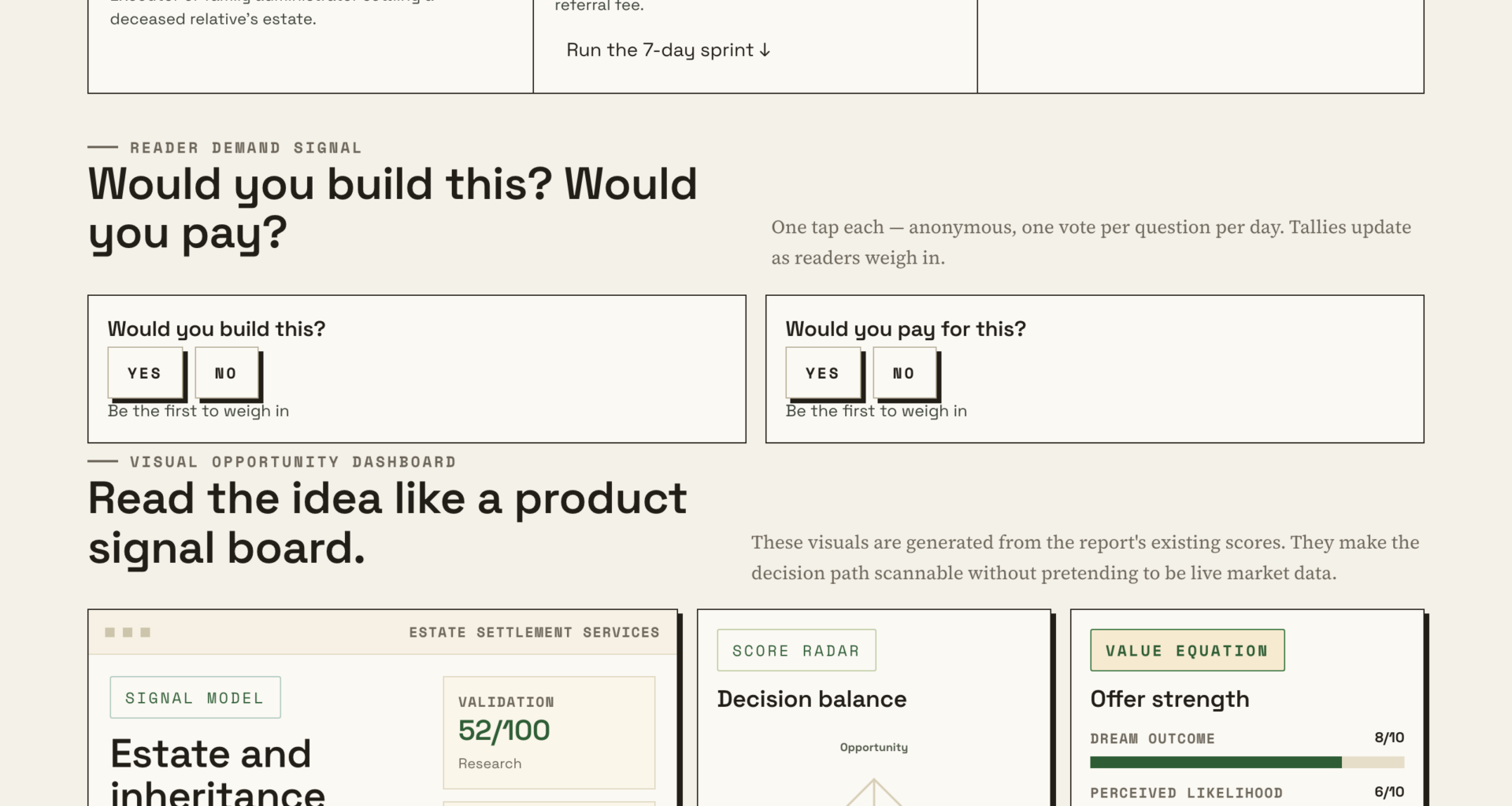

📊 Full opportunity report: Estate And Inheritance Facilitator Marketplace on IdeaNavigator AI — validation score, market gap, and execution plan.

Get business pricing on monitors, keyboards and dev gear
- Business-only prices and quantity discounts
- Tax-exempt purchasing
- Multiple users, one account, clear invoices
TL;DR
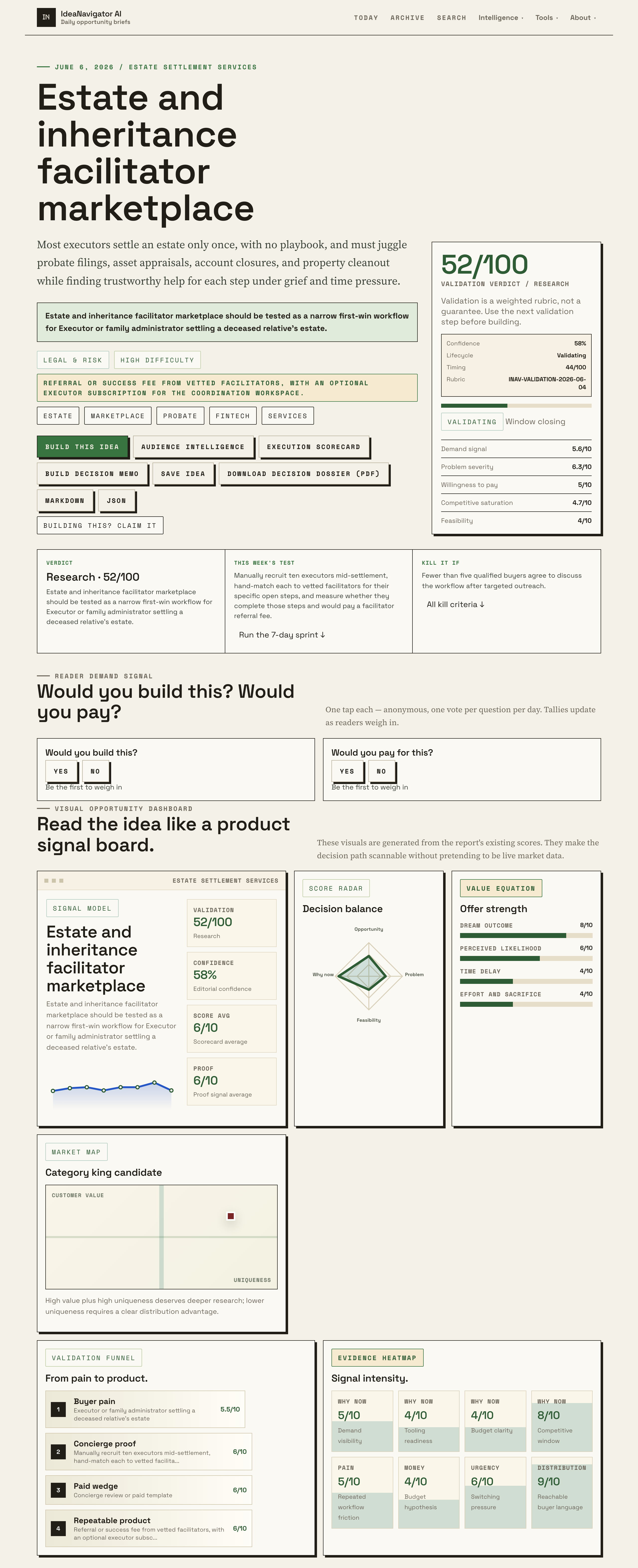
A new marketplace for estate facilitation is in testing, aiming to simplify estate settlement for executors by matching vetted facilitators to specific tasks. This approach targets the ongoing large-scale wealth transfer.
A new estate and inheritance facilitator marketplace is currently in a testing phase, focusing on providing a guided workflow for executors and family administrators to settle estates more efficiently. This development aims to address the complex, often fragmented process of estate settlement, which has become more urgent amid the largest generational wealth transfer in history.
The marketplace under development is designed to serve executors and family administrators who are responsible for settling estates after a loved one’s death. Currently, most executors handle estate tasks only once and lack a standardized process, often juggling probate filings, asset appraisals, account closures, and property cleanouts under significant emotional and time pressures.
The initiative proposes a guided intake system that diagnoses the specific settlement steps needed for each estate. It then hand-matches these steps to vetted facilitators, such as appraisers, attorneys, or property cleaners, and tracks their completion. This concierge-style process aims to streamline estate settlement without requiring a full self-serve marketplace initially.
According to an anonymous researcher involved in the project, the primary goal is to manually recruit ten executors mid-settlement, assign facilitators to their specific needs, and measure whether these steps are completed and if the executors are willing to pay a referral fee. The platform intends to generate revenue through referral or success fees from facilitators and possibly offer a subscription for the executor’s coordination workspace.
Why a Guided Facilitator Marketplace Matters Now
This development addresses a significant market need, as the ongoing large-scale transfer of wealth is increasing the number of estates requiring settlement. The process is often scattered across multiple directories and lacks coordination, leading to delays, errors, and stress for executors. A guided marketplace offers a structured approach that could reduce settlement times, improve trust, and create a scalable model for estate services.
By focusing on vetting facilitators and providing a clear workflow, the platform could also improve transparency and accountability in estate settlement, which is increasingly complex due to multi-state assets and digital accounts. If successful, this model could reshape how estate services are delivered in a fragmented market, benefiting both executors and service providers.
Products Worth Considering

Bose Smart Dolby Atmos Soundbar with Alexa, A.I. Dialogue Mode, and Bluetooth, Black

Apple Watch SE (2nd Generation) GPS 40mm Smartwatch with Starlight Aluminum Case and Starlight Sport Band (S/M)

Apple Watch Series 8 GPS 41mm Smartwatch with Midnight Aluminum Case and Midnight Sport Band (S/M)
As an affiliate, we earn on qualifying purchases.
Background on Estate Settlement Challenges and Market Growth
Estate settlement services are traditionally fragmented, with no centralized platform to coordinate the various steps involved. Executors often rely on scattered directories or personal networks to find help, which can lead to delays and inefficiencies. The current process is further complicated by the rise of digital assets and multi-state probate requirements.
The timing of this initiative coincides with the largest generational wealth transfer in history, estimated to reach hundreds of trillions of dollars over the next decade. This surge is expected to increase demand for estate settlement services, highlighting the need for scalable, reliable solutions. Previous efforts to create self-serve marketplaces have struggled with trust and vetting issues, prompting a focus on guided, concierge-style approaches as an initial step.
“The goal is to manually test this workflow with real executors to see if it can reduce the complexity and time involved in estate settlement.”
— an anonymous researcher
Uncertainties Around Platform Adoption and Effectiveness
It is not yet clear whether this guided, concierge-style marketplace will gain sufficient adoption among executors or if facilitators will find the referral model financially sustainable. The project is still in early testing, with limited data on user satisfaction, completion rates, or willingness to pay.
Additionally, questions remain about how to scale this model beyond initial manual recruitment and whether it can effectively handle the diversity of estate complexities and regional regulations.
Next Steps for Validating the Estate Facilitation Model
The project team plans to recruit ten executors in the current testing phase, assign vetted facilitators, and track the completion of estate settlement steps. Success will be measured by the completion rate and whether participating executors are willing to pay referral fees.
Based on these results, the team may refine the workflow, expand the pilot, or explore automation options. A broader rollout and potential platform launch could occur if early validation proves promising, with further investment in vetting and onboarding facilitators.
Key Questions
How does this estate facilitator marketplace differ from existing directories?
This marketplace aims to provide a guided workflow that diagnoses specific estate needs and hand-matches vetted facilitators, rather than relying solely on broad directories or personal networks.
What types of facilitators will be included in the platform?
Facilitators are expected to include estate attorneys, appraisers, property cleaners, and other service providers involved in estate settlement tasks.
Is this a fully automated platform?
No, the current focus is on a concierge-style, manual process for initial testing. Automation and self-service features may be developed later based on pilot results.
When might this platform be available to the public?
If early testing is successful, a broader rollout could occur within the next 12-18 months, but timelines depend on pilot outcomes.
Will this service be available nationwide?
Initially, the focus will be on regions with high estate transfer volumes, with potential expansion as the model proves effective and scalable.
Source: IdeaNavigator AI