Burr size plays a crucial role in achieving consistent, high-quality espresso because larger burrs create more uniform grounds, leading to better extraction and flavor. Smaller or worn burrs can cause uneven grinds, resulting in off-flavors and inconsistent shots. Choosing the right size depends on your setup and goals, but bigger burrs generally offer better results if maintained properly. Curious how to optimize your grinder for perfect espresso? Keep exploring for essential tips and insights.
Key Takeaways
- Larger burrs produce more uniform grind size, leading to better extraction and richer espresso flavor.
- Burr size influences grind consistency over time; bigger burrs wear slower and maintain quality longer.
- Proper maintenance and calibration are crucial regardless of burr size to ensure optimal extraction.
- Smaller burrs may save space and cost but can compromise grind uniformity and flavor consistency.
- Selecting the right burr size balances machine capabilities, desired grind quality, and maintenance needs.
Why Burr Size Is the Foundation of Consistent Espresso Grinds

The size of the burrs in your espresso grinder directly impacts the consistency of your grounds. Larger burrs typically produce more grind uniformity because they remove less material per rotation, reducing particle size variation. This consistency is essential for ideal extraction and flavor. Additionally, burr size influences machine compatibility; bigger burrs are often found in commercial grinders, which are built to handle larger quantities and maintain uniformity over time. When selecting a grinder, consider your machine’s requirements and how burr size will affect your ability to achieve uniform grounds. Recognizing the importance of grind uniformity can lead to a more satisfying espresso experience. Moreover, proper maintenance of your burrs ensures that their size and sharpness contribute to optimal performance over the grinder’s lifespan. Regular cleaning and sharpening help preserve the burr integrity, ensuring consistent results.
How Burr Size Affects Espresso Extraction and Flavor
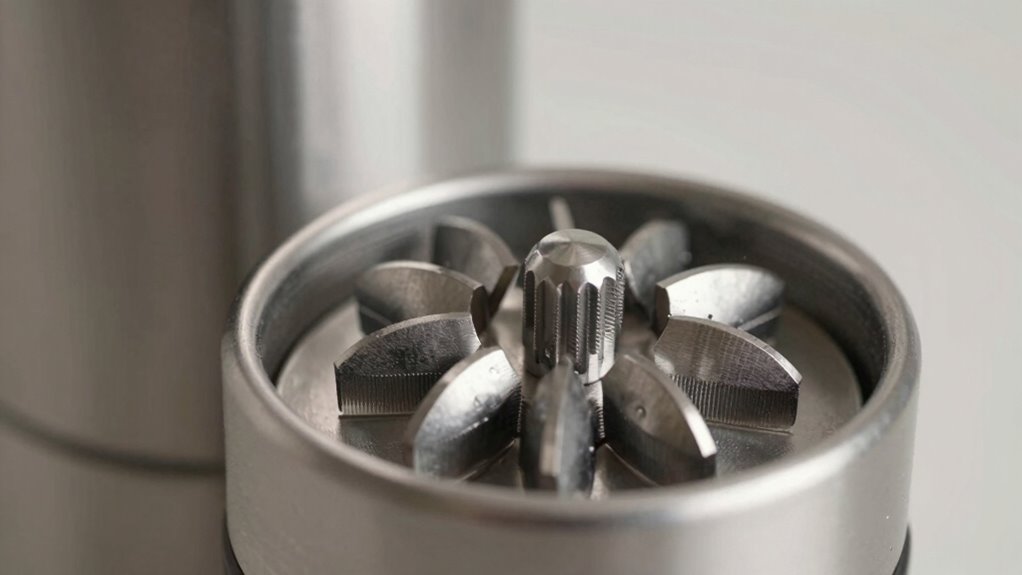
Since burr size influences the consistency of grind particles, it directly impacts how evenly water interacts with coffee grounds during extraction. Larger burrs produce a more uniform grind size, which helps water flow smoothly through the coffee, extracting more flavor evenly. Conversely, smaller burrs tend to wear faster, leading to inconsistent grind sizes over time, causing uneven extraction and off-flavors. As burr wear occurs, you might notice a shift in grind size, resulting in over- or under-extraction that affects the espresso’s flavor profile. A consistent grind size from larger burrs minimizes these issues, ensuring a balanced, rich extraction. Additionally, burr maintenance is crucial to preserving grind consistency and flavor quality over time. Proper burr alignment can also improve overall grinding performance and consistency. Regularly monitoring and adjusting burrs helps maintain optimal grind quality, which is essential for achieving the best espresso flavor. Ultimately, burr size plays a vital role in maintaining ideal flavor and avoiding the bitter or sour notes caused by uneven water contact during brewing.
Which Burr Size Is Best for Your Home Espresso Setup?
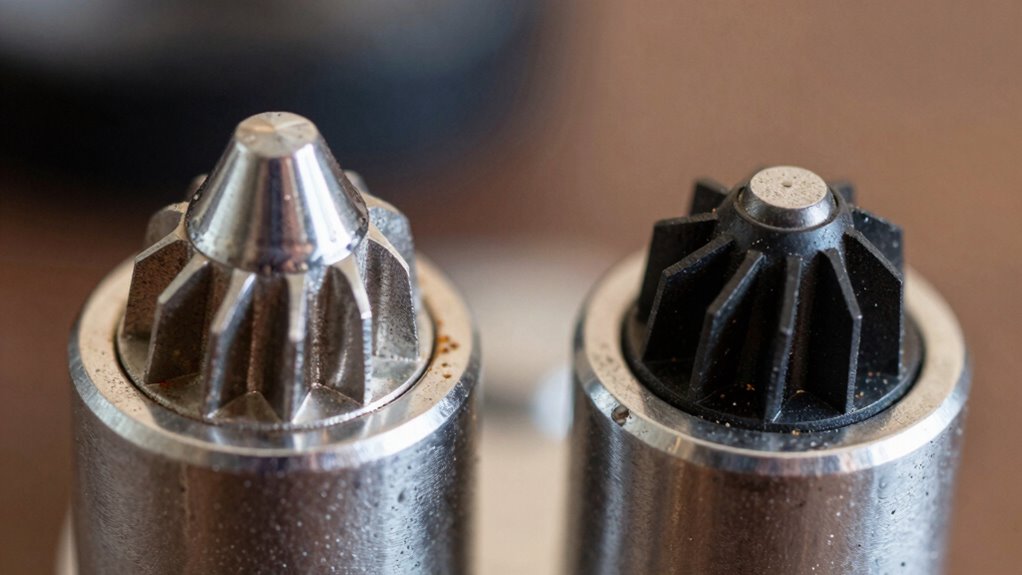
Choosing the right burr size for your home espresso setup depends on your brewing goals, available space, and maintenance preferences. Larger burrs, typically 58mm or more, deliver better grind consistency and faster grinding times, ideal for serious enthusiasts who prioritize flavor and efficiency. Smaller burrs, like 38mm or 54mm, save space and are easier to maintain but may sacrifice some consistency. The burr material also matters; ceramic burrs tend to stay sharper longer, maintaining grind quality, while stainless steel burrs are more durable and less brittle. Additionally, understanding the dog breeds overview can help you select equipment suited for different usage needs. For example, burr size considerations play a crucial role in balancing your desired grind uniformity with practical setup constraints. When selecting your grinder, considering grind retention is important because it affects how much residual coffee remains after grinding, influencing flavor and cleanliness. Ultimately, selecting a burr size balances your desire for uniform extraction with your practical setup constraints. When choosing, consider how burr design impacts ease of cleaning and longevity, which are important for consistent performance. For the best results, opt for a burr size that complements your brewing style and guarantees consistent grind performance.
Myths About Burr Size in Espresso Grinding Debunked
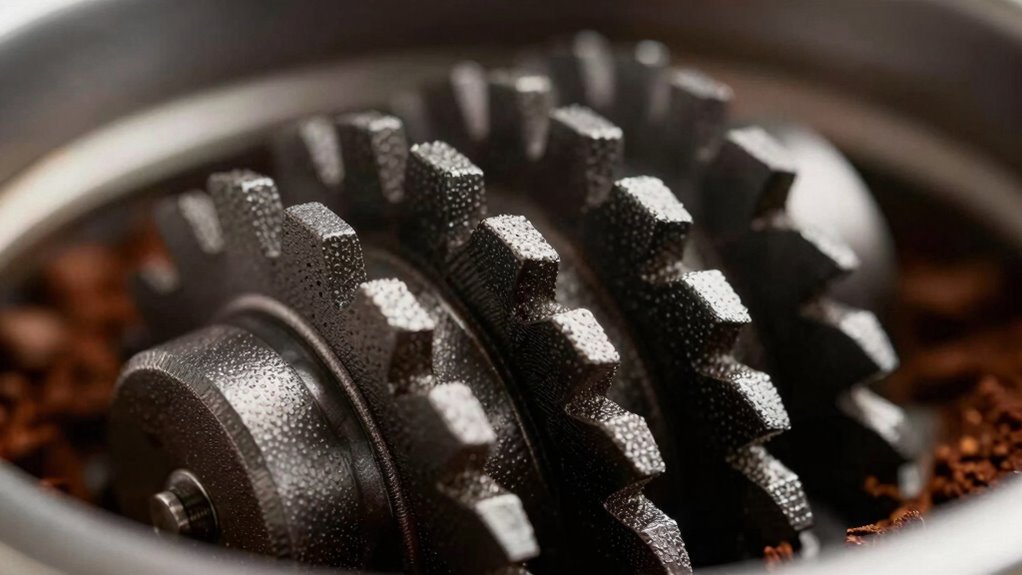
Many people believe that larger burrs automatically produce better espresso grinds, but this isn’t always true. While bigger burrs can offer more consistent particle size, they also require proper burr maintenance to perform at their best. Neglecting this can lead to uneven grind quality, no matter the burr size. Additionally, larger burrs often generate more grinder noise, which might be bothersome during daily use. It’s a myth that bigger is always better; the quality of your grind depends on maintenance, calibration, and your specific setup. Instead of focusing solely on burr size, pay attention to how well your grinder is maintained and how efficiently it operates. Proper burr maintenance is essential to achieving optimal espresso results, regardless of the burr size. Regular calibration ensures your grinder produces consistent results and prevents issues caused by wear or misalignment. Taking into account grinder calibration and operational efficiency can significantly impact your coffee quality and overall experience. Additionally, understanding the environmental impact of your equipment and choosing eco-friendly practices can contribute to a more sustainable brewing routine. Moreover, considering the long-term durability of your grinder can help you make smarter investments and reduce waste over time.
Tips to Optimize Burr Size for Better Espresso Results
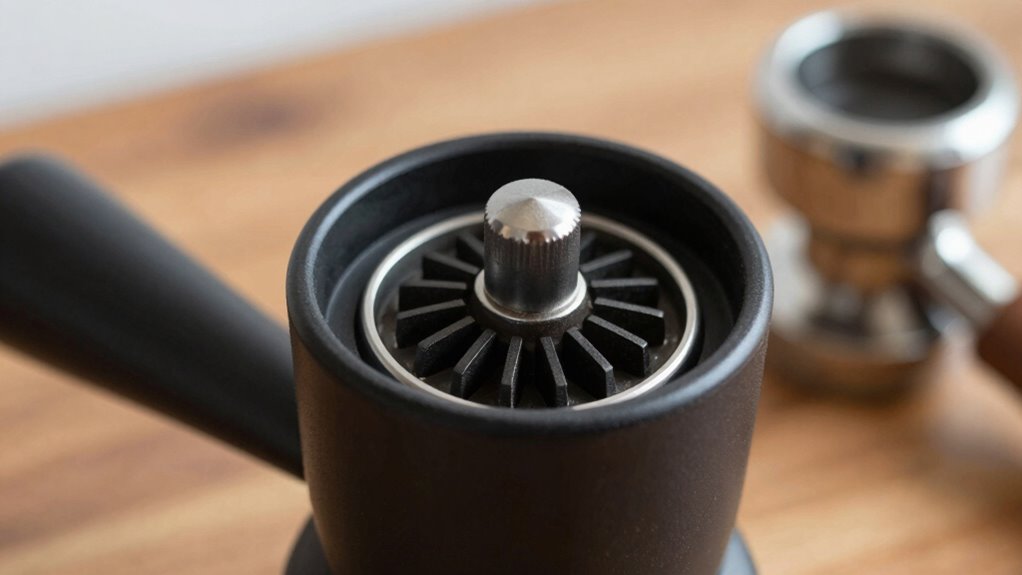
Optimizing burr size for better espresso results involves more than just selecting the largest option available. To improve grind consistency, choose a burr size that balances particle uniformity with your machine’s capabilities. Larger burrs generally produce more consistent grounds, which helps preserve flavor by reducing uneven extraction. Adjust your grinder’s settings carefully to avoid over- or under-grinding, and regularly clean your burrs to prevent buildup that can affect grind size. Keep in mind that a well-maintained burr system maintains flavor preservation by ensuring each shot extracts evenly. Additionally, understanding how burr size impacts heat generation can help prevent overheating that might alter the grind consistency. Being aware of grind consistency also contributes to more predictable extraction and flavor profiles. Moreover, selecting the appropriate burr material can influence both durability and heat dissipation during grinding. Proper burr alignment is also crucial for achieving uniform particle size and optimal performance. Consistent adjustments lead to better control and more satisfying results. Burr maintenance is essential for maintaining the quality and longevity of your grinder, ensuring optimal performance over time.
Frequently Asked Questions
How Does Burr Material Impact Espresso Grind Quality?
Burr material substantially impacts espresso grind quality because it affects durability and heat transfer. You’ll notice that ceramic burrs generally produce a cleaner grind and better flavor retention compared to metal, which can add unwanted heat and alter grind consistency. Choosing the right burr material guarantees consistent grind size, leading to more balanced flavor in your espresso. So, when selecting your grinder, consider how burr material influences your overall grind flavor and quality.
Can Changing Burr Size Improve Existing Espresso Machine Performance?
Yes, changing burr size can improve your espresso machine’s performance. Larger burrs tend to offer better grind size consistency, reducing variability, and can enhance flavor extraction. While they might be a bit more expensive, the improved grind quality often justifies the cost. Upgrading burr size is a smart move if you want more uniform espresso shots and better control, making your brewing experience more satisfying without breaking the bank.
Is There a Universal Burr Size Suitable for All Coffee Beans?
There isn’t a universal burr size perfect for all coffee beans because grind size and flavor extraction vary with bean type. You should adjust your burr size based on the beans you’re using, aiming for a consistent grind that maximizes flavor extraction. Smaller burrs produce finer grinds ideal for espresso, while larger burrs suit coarser grinds for other brewing methods. Experimenting guarantees you get the best flavor from each coffee type.
How Does Burr Alignment Influence Grind Consistency?
Burr alignment directly impacts grind consistency because properly aligned burrs ensure uniform particle size. When your burrs are misaligned, you’ll notice uneven grinds, which can lead to inconsistent extraction and flavor. Regularly check and adjust the burr alignment to maintain precision. Keeping the burrs perfectly aligned guarantees a smoother, more consistent grind, helping you brew better espresso every time. Proper alignment is key to achieving ideal flavor and performance.
What Maintenance Practices Best Preserve Burr Size Effectiveness?
To preserve your burr size’s effectiveness, regularly perform grinder calibration to guarantee consistent grind quality. Keep an eye on burr replacement intervals, replacing them when they show signs of wear to maintain ideal performance. Clean your grinder frequently to prevent buildup that can diminish burr function. Proper maintenance not only extends burr life but also guarantees your espresso stays flavorful and precise, making every shot perfect.
Conclusion
Think of your espresso grinder like a musical instrument; the size of the burrs sets the tone for everything. Bigger burrs are like a deep bass, delivering richer flavor and more consistency. Don’t overlook this essential detail—burr size truly shapes your espresso experience. When you choose the right size, you’re tuning your setup for harmony, ensuring every shot hits the high notes of perfect flavor. Make this small change, and watch your espresso sing.