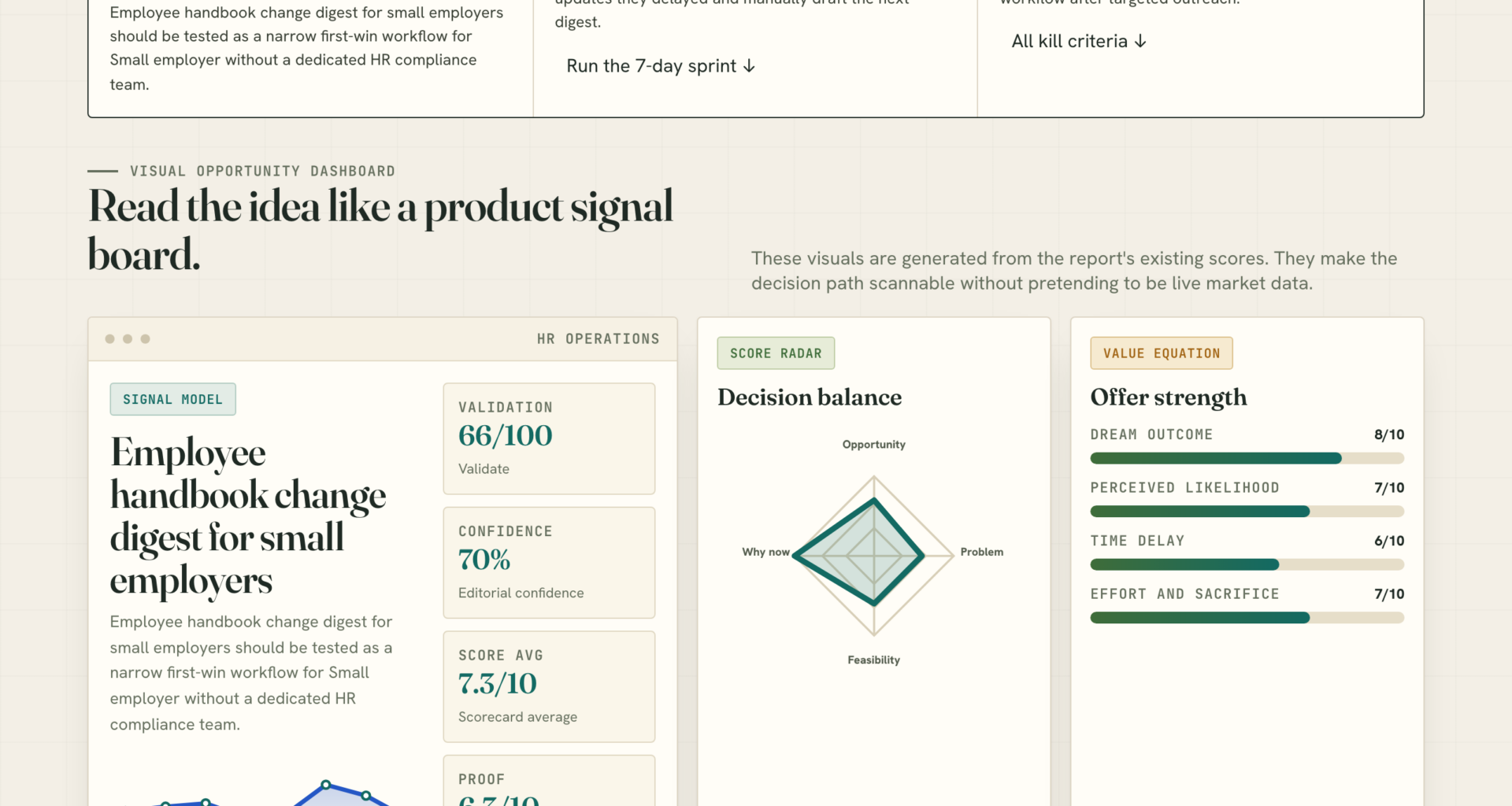
📊 Full opportunity report: Employee handbook change digest for small employers on IdeaNavigator AI — validation score, market gap, and execution plan.

Get business pricing on monitors, keyboards and dev gear
- Business-only prices and quantity discounts
- Tax-exempt purchasing
- Multiple users, one account, clear invoices
TL;DR
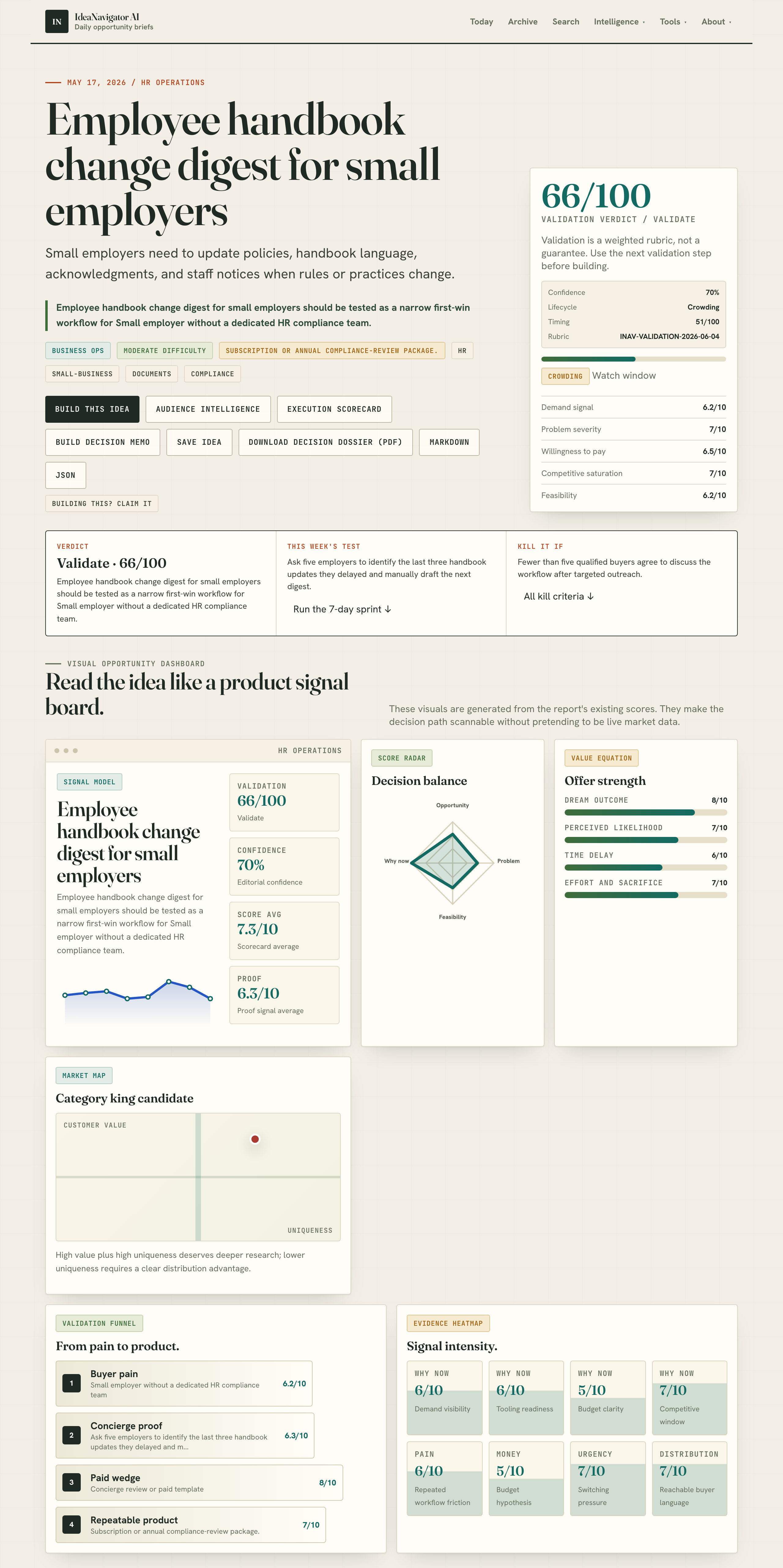
A new employee handbook digest workflow is being tested for small employers lacking dedicated HR staff. It aims to simplify policy updates amid remote work and legal changes. The initiative is in early testing, with potential to improve compliance management.
Small employers without dedicated HR compliance teams are testing a new workflow designed to simplify employee handbook updates, addressing increasing policy drift caused by remote work, AI tools, and evolving legal requirements.
The proposed employee handbook change digest workflow logs policy topics, drafts change notes, and tracks employee acknowledgment status, aiming to reduce administrative burden for small businesses. This approach is being trialed with a handful of employers, with plans to validate its effectiveness through feedback on delayed updates and manual drafting of next digests, as suggested by IdeaNavigator AI.
The initiative targets small businesses that struggle to keep policies current due to limited resources and rapidly changing legal and operational environments. It offers a subscription-based or annual compliance review package as a potential revenue model, focusing on HR operations within small employer markets.
Why Small Employers Need Streamlined Policy Management
This development could significantly ease compliance burdens for small employers, reducing legal risks and ensuring policies stay current without requiring dedicated HR staff. It responds to the growing complexity of employment laws and workplace practices, especially in remote work settings, and could set a new standard for small business HR operations, improving overall compliance and staff communication.Products Worth Considering

Apple AirPods Pro 3 Wireless Earbuds with Active Noise Cancellation

Amazon Kindle Scribe (16GB) with Premium Pen, Tungsten

Apple MacBook Air 15-inch Laptop with M5 Chip, 24GB Memory, 1TB SSD, Midnight
As an affiliate, we earn on qualifying purchases.
Policy Updates in a Rapidly Changing Employment Landscape
Small employers often delay or overlook handbook updates due to resource constraints, despite legal and operational changes. The rise of remote work, AI tools, and state-level employment law updates has increased the frequency of necessary policy revisions, creating a need for more efficient management solutions. Currently, there are few tools tailored specifically for small businesses to handle these updates systematically, making this new workflow a potentially valuable innovation.“Small employers need a simple, effective way to keep policies up-to-date without the overhead of dedicated HR teams.”
— an anonymous researcher
Unclear Effectiveness and Adoption Timeline
It is not yet clear how widely this workflow will be adopted or how effective it will be in reducing delays in policy updates. The testing phase is still underway, and feedback from participating employers will determine its future viability and potential for broader deployment.Next Steps in Validating the Handbook Digest Workflow
The next phase involves collecting feedback from participating small employers about the workflow’s ease of use and impact on update timeliness. Based on this data, developers will refine the tool and consider broader rollout. Further validation will involve measuring the reduction in delayed updates and employee acknowledgment rates over time.Key Questions
Who is this new workflow designed for?
The workflow targets small employers without dedicated HR compliance teams who need a streamlined way to manage employee handbook updates.
What does the workflow do?
It logs policy topics, drafts change notes, and tracks employee acknowledgment statuses to ensure policies are current and acknowledged.
Is this tool available now?
It is currently in early testing with a few employers; a broader release will depend on the validation results.
How will this impact small employers’ compliance?
If successful, it could reduce delays in updating policies, helping small businesses stay compliant with evolving laws and workplace standards.
What are the costs involved?
The proposed model includes a subscription or annual compliance review package, but pricing details are not yet finalized.
Source: IdeaNavigator AI