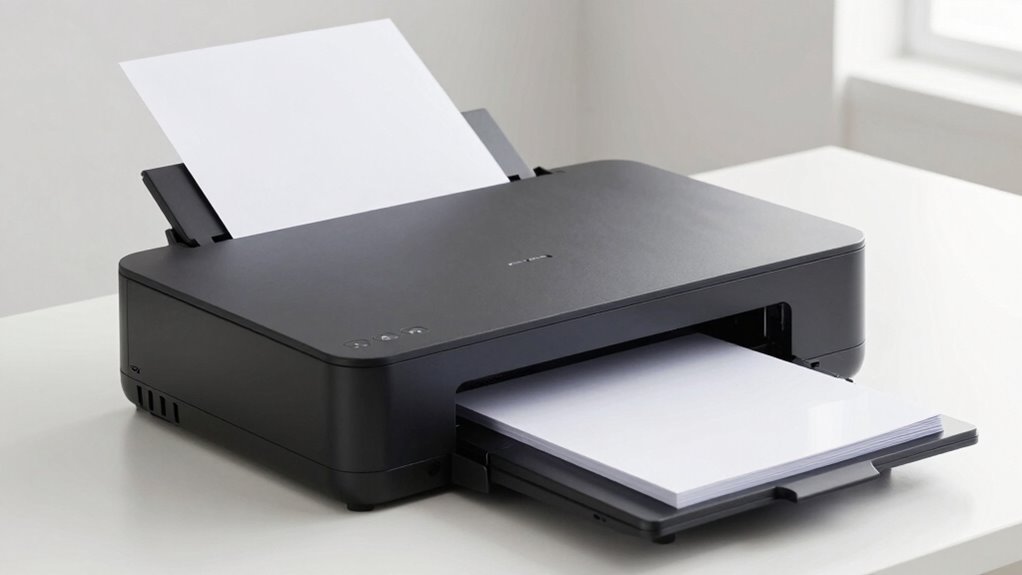
A document scanner helps you digitize paper files quickly and efficiently. Duplex scanning allows you to scan both sides of a page in one pass, saving time and paper. An ADF automatically feeds multiple pages, making large scans easier. OCR transforms your scanned images into editable, searchable text, boosting productivity. If you want to learn how these features work together to streamline your workflow, keep exploring for more details.

Get business pricing on monitors, keyboards and dev gear
- Business-only prices and quantity discounts
- Tax-exempt purchasing
- Multiple users, one account, clear invoices
Key Takeaways
- Duplex scanning allows both sides of a page to be scanned in a single pass, saving time.
- ADF (Automatic Document Feed) automatically loads multiple pages for batch scanning and reduces manual handling.
- OCR technology converts scanned images into editable, searchable digital text for easier editing and archiving.
- Combining duplex, ADF, and OCR features enhances efficiency in large volume document processing.
- Choosing the right scanner depends on resolution, connectivity, and OCR capabilities to meet specific workflow needs.
duplex document scanner with OCR
As an affiliate, we earn on qualifying purchases.
As an affiliate, we earn on qualifying purchases.
What Are Document Scanners and Why Are They Important?
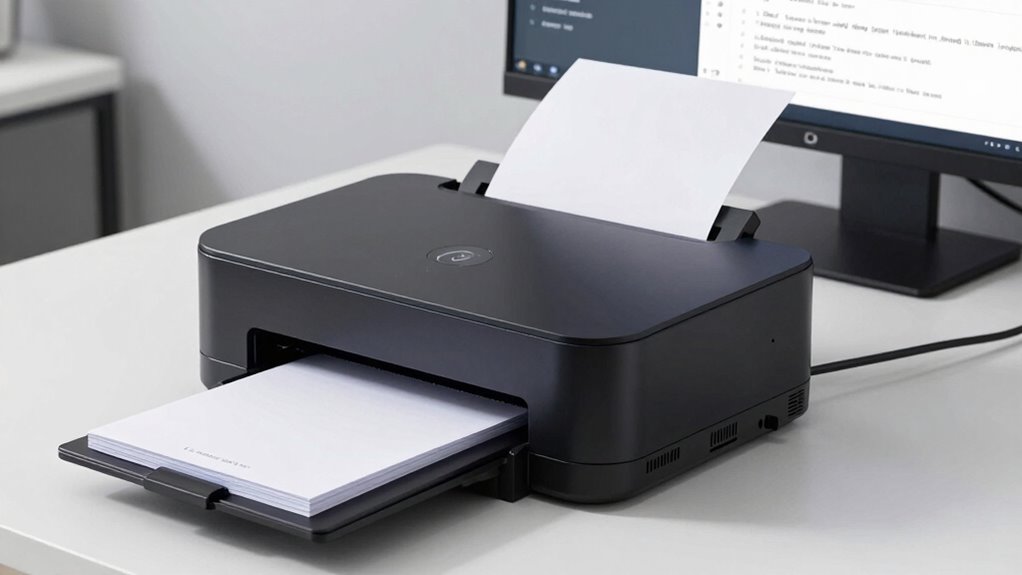
Have you ever needed to quickly digitize a paper document? Document scanners are essential tools that convert physical files into digital formats, making your workflow more efficient. They play a crucial role in document management by enabling easy storage, retrieval, and sharing of files. The quality of the scan, determined by scanning resolution, affects how clear and detailed your digital copies are. High-resolution scans preserve fine details, which is vital for legal, medical, or technical documents. Without a scanner, managing large volumes of paper can become cumbersome and prone to errors. Using a document scanner streamlines organization and reduces clutter, ensuring your important information is accessible and protected. In today’s digital age, they’re indispensable for maintaining an effective, paperless workspace. Understanding scanning resolution helps you choose the right device for your specific needs.
automatic document feeder scanner
As an affiliate, we earn on qualifying purchases.
As an affiliate, we earn on qualifying purchases.
How Do Document Scanners Work? (Basics of Scanning Technology)

When you scan a document, the scanner uses light to capture the image. This light reflects off the document and is converted into electronic signals. These signals are then processed and transformed into a digital file you can save and edit. The quality of the scan can also be affected by the scanner’s resolution, which determines the level of detail captured during the process. Additionally, factors like software algorithms play a role in enhancing image clarity and accuracy.
Light and Image Capture
Document scanners rely on light to capture images of physical documents accurately. The scanner’s light source illuminates the document, allowing the sensor to detect the reflected light. Light sensitivity plays a key role here, as it determines how well the scanner captures details in both bright and dim areas. Higher light sensitivity ensures clearer images with less noise. The scanner’s sensors then convert this reflected light into electrical signals, forming a digital image. Image resolution, measured in dots per inch (DPI), affects the clarity and detail of the scanned document. A higher resolution produces sharper images, which is especially important for detailed text and graphics. By controlling light and sensor sensitivity, scanners produce precise, high-quality digital copies of your physical documents.
Conversion to Digital Format
Ever wonder how a physical document becomes a digital file? When you scan, the scanner’s sensors capture the image, converting light into electrical signals. These signals are processed into a digital format, allowing easy storage and sharing. This process supports digital preservation by maintaining high-quality copies that last longer than paper. Proper file organization helps you locate documents quickly later. Here’s a quick overview:
| Step | Description | Result |
|---|---|---|
| Light Capture | Scanner detects reflected light | Image data collected |
| Signal Conversion | Sensors turn light into digital signals | Digital image created |
| Processing | Software adjusts and enhances image | Clear, readable file |
| Storage | Files saved with organized naming | Easy retrieval and access |
This process transforms physical documents into manageable, preserved digital files. Additionally, understanding scanning technology helps optimize image quality and workflow efficiency.
As an affiliate, we earn on qualifying purchases.
How Does Duplex Scanning Save You Time and Paper?
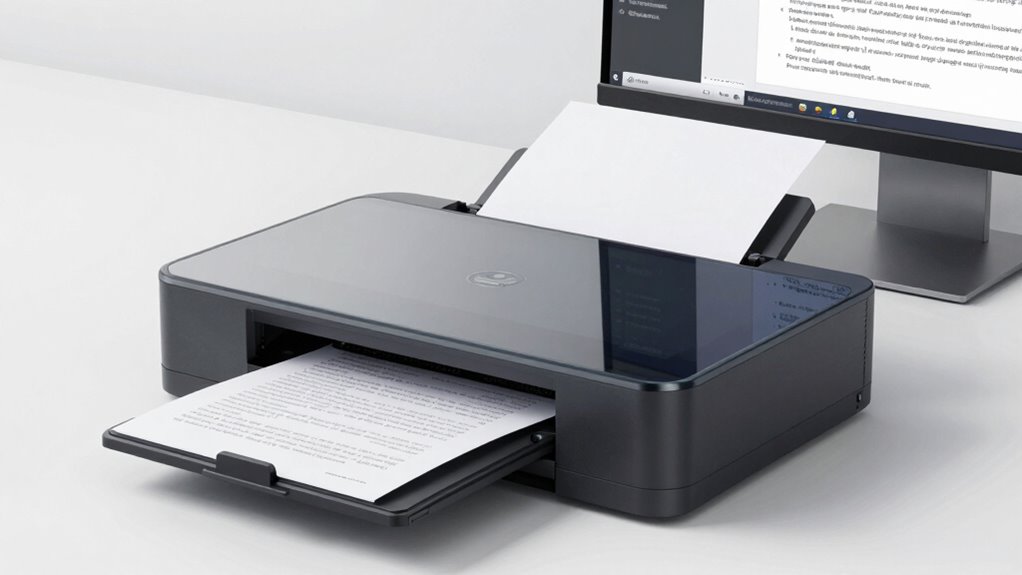
Duplex scanning streamlines your workflow by allowing both sides of a page to be scanned in a single pass, saving you valuable time. This feature reduces the need to manually flip pages, accelerating document processing and enhancing workflow automation. By scanning both sides simultaneously, you cut down on the number of sheets used, supporting paper conservation efforts. This not only helps the environment but also lowers your supplies cost. Duplex scanning makes it easier to manage large volumes of documents efficiently, minimizing delays and manual handling. As a result, you can complete scanning tasks faster, with less effort, and contribute to sustainable practices. Incorporating inclusive casting and considering diverse standards in technology adoption can foster a more equitable and accessible environment for all users. Additionally, understanding technological accessibility ensures that scanners meet the needs of users with different abilities. Recognizing the importance of universal design can help manufacturers develop products that are more intuitive and easier to use for everyone. Furthermore, adopting adaptive technologies can improve usability for individuals with specific requirements. Embracing accessible features can also enhance overall user experience and broaden the technology’s reach. Overall, duplex scanning optimizes your document management, saving time and conserving paper simultaneously.
As an affiliate, we earn on qualifying purchases.
What Is an Automatic Document Feed (ADF) and How Does It Help?
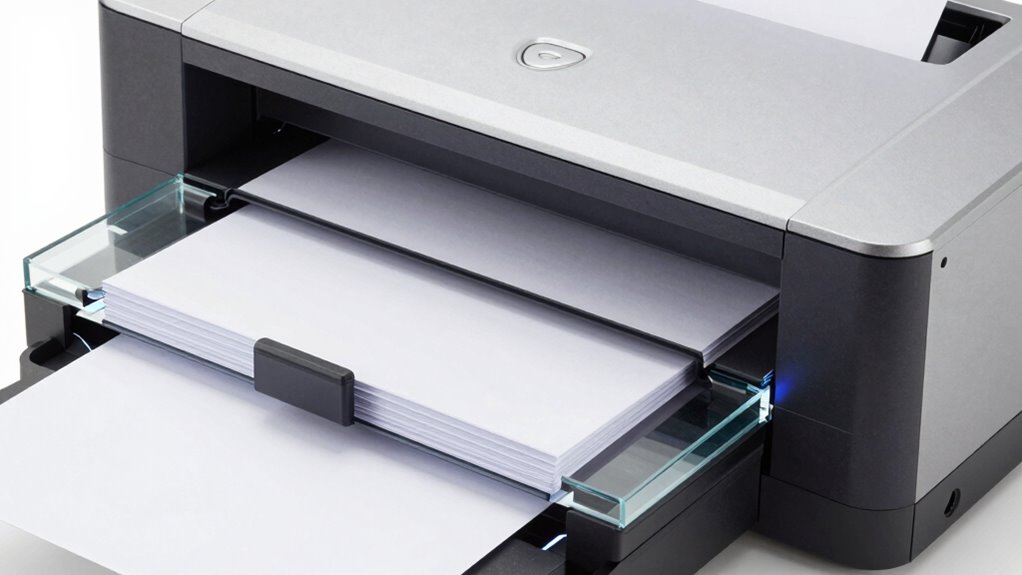
An Automatic Document Feed (ADF) is a convenient feature that allows your scanner to load and process multiple pages automatically, without manual intervention. This automated feeding simplifies paper handling, saving you time and effort during large scanning tasks. Imagine stacking your pages neatly, and the ADF takes over, smoothly pulling each sheet through the scanner. Here’s a visual to help:
| Stack of papers | Scanner pulls | Process completes | Ready for next |
|---|---|---|---|
| Multiple sheets | One-by-one | Pages are scanned | Batch finished |
This setup minimizes jams and speeds up your workflow. With automated feeding, you can scan large volumes effortlessly, making your document management more efficient and less tedious.
What Is OCR and How Can It Make Your Scanned Text Editable?
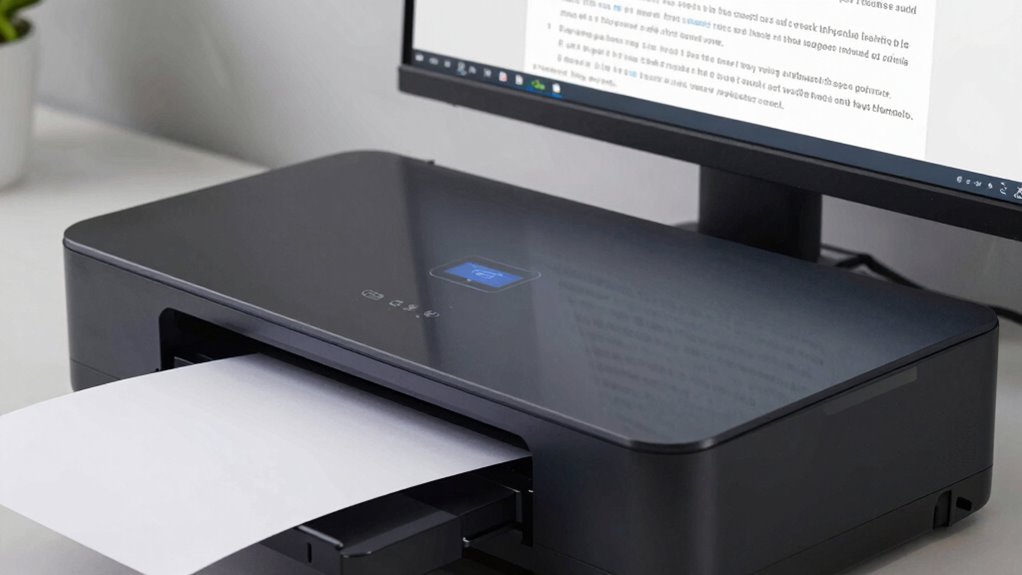
Optical Character Recognition (OCR) transforms scanned images of text into editable digital files, making your documents more versatile. It works by analyzing the shapes of characters and converting them into searchable, editable text. Using OCR can save you time and improve productivity with applications like digitizing records, editing documents, and automating data entry.
How OCR Works
Ever wonder how scanned documents become editable text? OCR, or optical character recognition, is the technology that makes this possible. It works by analyzing the scanned image, detecting the shapes of letters and numbers, and then converting them into digital text. Advanced OCR systems include handwriting recognition, which can interpret cursive and messy handwriting, making handwritten notes editable too. OCR also assists in language translation, allowing you to convert text from one language to another seamlessly. The process involves several steps: scanning, image preprocessing, character recognition, and text output. Modern OCR software uses machine learning algorithms to improve accuracy over time. This technology often leverages artificial intelligence to enhance recognition capabilities and adapt to different fonts and handwriting styles. Additionally, understanding privacy policies associated with OCR applications can help you manage your data securely. Recognizing the importance of data security, many OCR tools implement encryption and other protective measures. Spirituality Read can inspire new ways to approach technology and personal growth.
Benefits of OCR Technology
Have you ever wished you could instantly edit or search through scanned documents? OCR technology makes that possible by converting images of text into editable, searchable files. This benefits your digital archiving efforts and helps create a paperless office environment. With OCR, you can:
- Save time locating specific information
- Reduce paper clutter and storage needs
- Improve document accuracy and accessibility
- Streamline workflows and collaboration
- Easily update or correct scanned content
- Proper maintenance of OCR tools ensures consistent accuracy and performance.
Practical OCR Applications
Curious about how OCR technology transforms your scanned documents into editable files? OCR enables you to convert physical or digital scans into searchable, editable text, making tasks like editing, sharing, and archiving much easier. It’s especially useful for digital archiving, allowing you to organize and preserve large volumes of documents efficiently. Plus, many OCR solutions come with security features that protect sensitive information during the conversion process, ensuring your data stays private. With OCR, you can digitize contracts, invoices, or handwritten notes, reducing paper clutter and improving workflow. Whether you’re updating old records or creating searchable archives, OCR makes your scanned documents functional and accessible, saving you time and effort while maintaining security.
How to Compare Scanner Features to Find the Best Fit for Your Needs
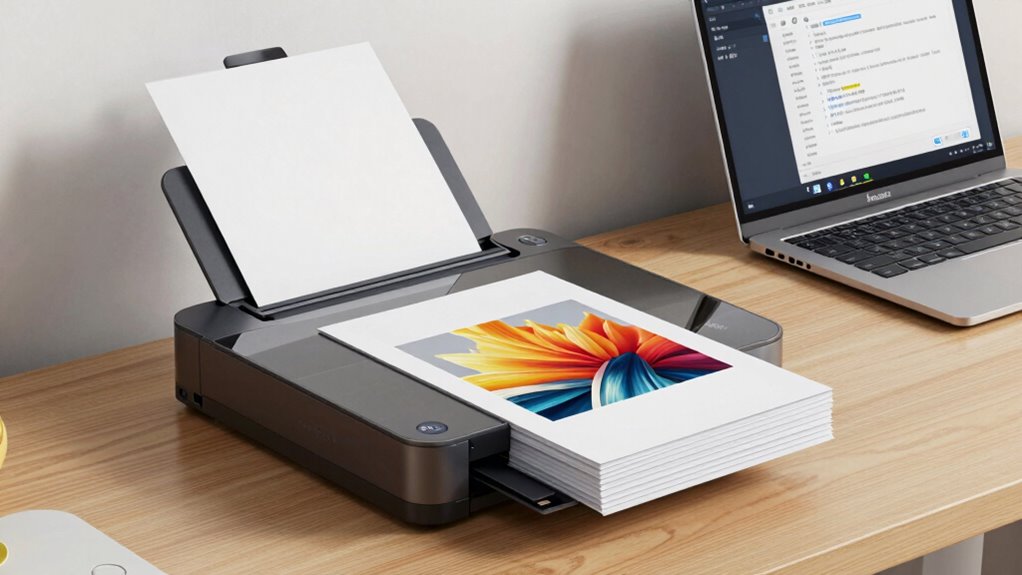
When comparing scanner features, it’s vital to identify which specifications align with your specific needs. Focus on key aspects like scan resolution, which affects image quality, and connectivity options, which determine how easily you can integrate the scanner into your workflow. To find the best fit, consider these factors:
- Higher scan resolution for detailed images or archival purposes
- Wireless connectivity for flexibility and shared use
- Compatibility with your operating system and software
- Duplex scanning capabilities for efficiency
- Automatic Document Feeder (ADF) size and speed for bulk scanning
Exploring Content and Online Concepts for Long-Term Growth
Tips for Choosing the Right Document Scanner for Your Office
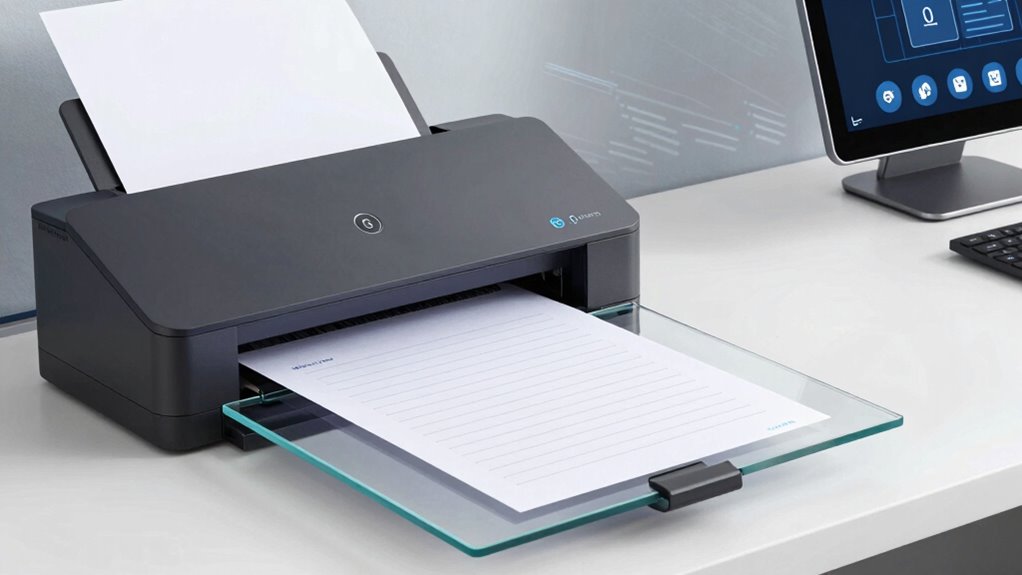
Choosing the right document scanner for your office involves evaluating your workflow and specific needs. Consider scanning accessories like extra trays or document feeders that can boost efficiency, especially if you handle high volumes. An ergonomic design is also essential; a scanner with a comfortable, user-friendly layout reduces strain during prolonged use. Think about your typical tasks—do you need duplex scanning for double-sided documents or a compact model for limited space? Balance features with durability and ease of maintenance. Prioritize models that support your required formats and offer reliable OCR capabilities if you need editable text. Additionally, understanding the scanning technology behind different models can help you select a device that meets your accuracy and speed requirements. Evaluating the compatibility of your scanner with existing office systems ensures seamless integration. Considering the regional flavor of your documents can also improve scanning results, especially when dealing with diverse font styles and layouts. Being aware of the device’s durability and maintenance needs ensures long-term efficiency. Choosing a scanner with robust construction can contribute to its longevity and consistent performance. By appraising these factors, you’ll select a scanner that fits seamlessly into your office environment, streamlines document handling, and boosts productivity.
Troubleshooting Common Scanner Issues and How to Maximize Efficiency
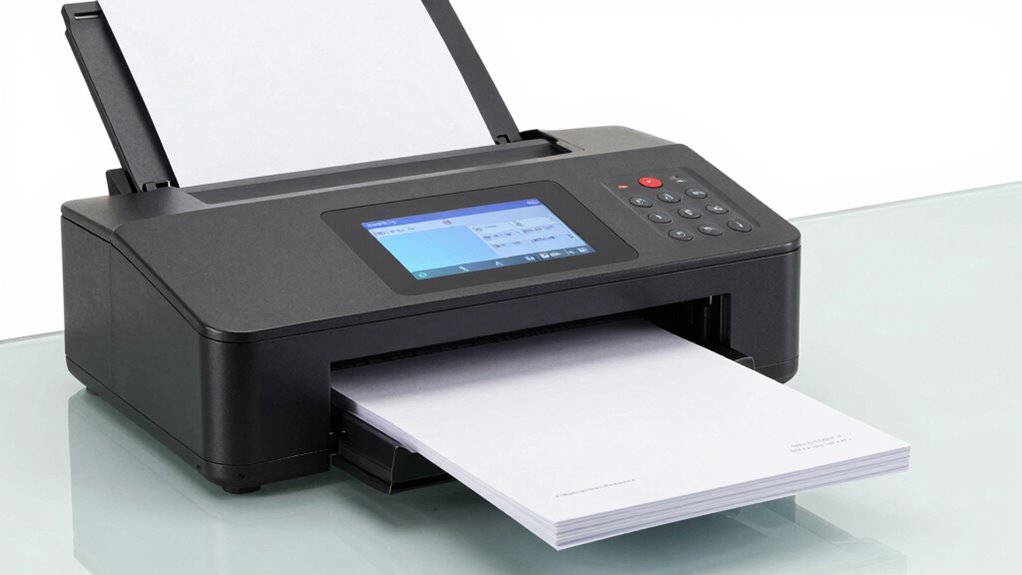
Even the most reliable scanners can encounter issues that disrupt your workflow, but many common problems have straightforward solutions. To troubleshoot effectively, start with regular maintenance tips like cleaning rollers and checking for jammed pages. Connectivity issues are frequent; ensure cables are secure and update drivers if needed. If scanning slows down, close unnecessary programs or restart your device. For persistent errors, reboot your scanner and check for software updates. To maximize efficiency, set up custom profiles for different document types and use batch scanning when possible. Remember, staying proactive with maintenance and troubleshooting keeps your scanner running smoothly. Additionally, referring to manufacturer-specific maintenance guidelines can help identify unique issues and solutions. Incorporating diagnostic tools provided by manufacturers can further streamline troubleshooting processes. Regularly inspecting your device’s hardware components can also prevent unexpected breakdowns and extend its lifespan.
Frequently Asked Questions
Can a Document Scanner Handle Fragile or Damaged Documents Safely?
Your document scanner can handle fragile or damaged documents safely if it’s designed for fragile document handling. Look for features like gentle feed mechanisms and specialized settings to prevent scanner damage. Always test a small section first, and avoid forcing damaged papers through the scanner. Proper handling and choosing the right scanner help prevent damage, ensuring your fragile documents are scanned without harm.
What Are the Energy Consumption Differences Among Various Scanner Models?
You’ll find that energy-efficient scanner models use up to 50% less power than older, less efficient ones. This means lower electricity bills and a smaller environmental footprint. Modern scanners prioritize power consumption, with some automatically entering sleep mode when idle. Choosing a model with better energy efficiency can save you money long-term, making it a smart investment for your office or home setup.
How Secure Are Scanned Documents Stored Digitally on Different Devices?
Digital scanned documents’ security varies depending on your device and storage method. If you use digital encryption, your files stay protected from unauthorized access. Cloud storage security adds an extra layer of safety, especially when providers implement strong encryption and access controls. Always verify your device has up-to-date security measures. By doing so, you minimize risks and keep your scanned documents secure, whether stored locally or in the cloud.
Are There Portable Scanners Suitable for On-The-Go Document Capturing?
Yes, there are portable scanners perfect for your on-the-go needs. These mobile solutions are compact, lightweight, and easy to carry, making mobile scanning a breeze wherever you are. They offer quick, efficient document capturing and connect seamlessly to your devices. Whether you’re traveling, attending meetings, or working remotely, these portable scanners streamline your workflow, ensuring you can scan, save, and share documents anytime, anywhere.
What Maintenance Is Required to Keep a Scanner Functioning Optimally?
To keep your scanner working smoothly, you should follow regular cleaning routines, like wiping the glass and rollers to prevent dust buildup. Additionally, make sure you install software updates promptly, as they often include performance improvements and bug fixes. Avoid using harsh chemicals, and handle your scanner gently to prevent damage. Consistent maintenance helps extend your scanner’s lifespan and guarantees ideal image quality every time you use it.
Conclusion
In the world of scanning, mastering duplex, ADF, and OCR isn’t just helpful—it’s transformational. With these features, you’ll turn chaos into clarity, paper piles into digital perfection, and hours of tedious work into moments of effortless efficiency. Embrace the right scanner, and you’ll unleash a new level of productivity so astonishing, it’s almost like having a virtual assistant working tirelessly behind the scenes—making your office smarter, faster, and undeniably more impressive.
Halloween Picks
halloween
As an affiliate, we earn on qualifying purchases.