
Climate change causes extreme weather by trapping heat in the atmosphere due to rising greenhouse gas levels. This warming leads to disrupted weather patterns, resulting in heavier rainfall and increased evaporation. As a result, storms become more intense, and events like floods and droughts occur more frequently. Heatwaves are also more common and severe. Understanding these connections can help you see the broader impact of climate change on our daily lives. There’s more to discover about how this all unfolds.
Key Takeaways
- Climate change increases greenhouse gas levels, leading to more heat retention in the atmosphere and rising global temperatures.
- Warmer temperatures enhance evaporation, resulting in increased moisture and altered precipitation patterns, which contribute to extreme weather events.
- Intense storms and hurricanes are more frequent due to rising temperatures and energy levels in the atmosphere, causing severe weather impacts.
- Heavy rainfall leads to more flooding, while prolonged droughts occur in certain regions, disrupting ecosystems and agricultural practices.
- The combination of these changes causes heatwaves, intense storms, and extreme weather events, which disrupt daily life and natural systems.
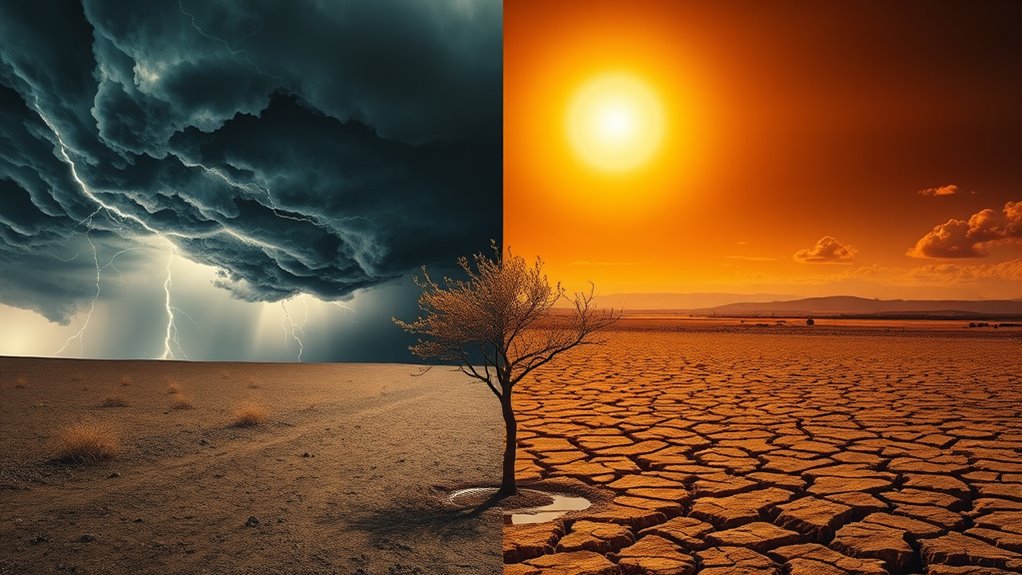
As climate change continues to escalate, you may notice the increasing frequency and intensity of extreme weather events around the globe. Heatwaves, hurricanes, floods, and droughts are becoming more common, and scientists link these occurrences to the rising levels of greenhouse gases in the atmosphere. When you consider your own carbon footprint, it’s clear that every action counts. Each time you drive a gas-powered car or use energy from fossil fuels, you contribute to the problem. But the good news is that you can also make choices that help combat climate change.
The connection between climate change and extreme weather primarily comes down to the atmosphere’s ability to hold heat. As carbon emissions increase, they trap more heat in the atmosphere, leading to a warming climate. This warming affects weather patterns, causing more evaporation and altering precipitation. You might notice that storms are more intense, with increased rainfall leading to flooding in some areas while others experience prolonged droughts. These shifts can disrupt ecosystems, agriculture, and even your daily life.
The rise in carbon emissions traps heat, intensifying storms and altering weather patterns, leading to disruptions in ecosystems and daily life.
Using renewable energy sources is one of the most effective ways to reduce your carbon footprint. By opting for solar, wind, or hydropower, you can help decrease reliance on fossil fuels, which are major contributors to greenhouse gas emissions. Imagine powering your home with solar panels or supporting local wind farms. Each kilowatt of renewable energy you use is a step toward a more stable climate. You can also encourage your community to invest in renewable solutions, creating a ripple effect that amplifies your impact. The art of Italian espresso can provide inspiration for creating a cozy environment in which to enjoy your coffee while making eco-friendly choices.
It’s not just about energy, though. You can also make small, everyday changes that collectively lead to significant reductions in carbon emissions. Walking or biking instead of driving reduces your carbon footprint while boosting your health. Eating more plant-based meals lessens the demand for livestock farming, which is a major source of methane emissions. These simple choices can help mitigate climate change and its associated extreme weather.
Frequently Asked Questions
How Does Climate Change Affect Local Weather Patterns?
Climate change impacts local weather patterns by altering temperatures and precipitation levels. You’ll notice rising sea levels can lead to increased flooding in coastal areas, while urban heat islands cause cities to heat up more than surrounding areas. These changes intensify heatwaves, disrupt rainfall patterns, and can make storms more severe. As a result, you might experience more unpredictable weather and extreme conditions in your local environment, affecting daily life and ecosystems.
Can Climate Change Increase the Frequency of Hurricanes?
Yes, climate change can increase the frequency of hurricanes. As ocean heat rises, it fuels storms, providing them with more energy. This warmer water enhances atmospheric instability, creating conditions ripe for hurricane formation. You might notice more intense storms and increased frequency during hurricane season. By understanding these changes, you can better prepare for potential impacts and advocate for measures to mitigate climate change’s influence on our weather patterns.
What Role Does Human Activity Play in Extreme Weather?
Human activity plays a significant role in extreme weather. Industrial pollution releases greenhouse gases, trapping heat in the atmosphere and intensifying weather patterns. Deforestation impacts this further by reducing the planet’s ability to absorb CO2, leading to increased temperatures and erratic weather. You’re contributing to a cycle that fuels hurricanes, floods, and droughts, making it essential to recognize your impact and advocate for sustainable practices to mitigate these effects.
Are There Any Regions Less Affected by Extreme Weather?
Yes, some regions experience less extreme weather due to their geographic resilience and regional stability. Areas with stable climates, like certain parts of Scandinavia or northern Europe, often see milder conditions. These regions benefit from natural barriers and consistent weather patterns, which buffer them against severe storms and temperature fluctuations. So, while no place is entirely immune, you might find more temperate climates in these areas, making them relatively safer from extreme events.
How Can Communities Prepare for Climate-Induced Extreme Weather?
To prepare for climate-induced extreme weather, you should focus on community resilience and emergency preparedness. Start by organizing local workshops to educate everyone on disaster response. Develop an emergency plan that includes evacuation routes and communication strategies. Encourage neighbors to form support networks, ensuring everyone has access to resources during crises. Regularly conduct drills to keep skills sharp, and advocate for infrastructure improvements that can withstand severe weather events.
Conclusion
In summary, climate change considerably intensifies extreme weather events, making them more frequent and severe. Did you know that scientists estimate that over 1.5 billion people could experience heatwaves by 2050? This staggering statistic highlights the urgent need for action. By understanding the link between climate change and extreme weather, you can appreciate the importance of addressing this global challenge. Together, we can work towards a sustainable future and mitigate the impacts of a changing climate.