
Check scanners usually process deposits faster than mobile deposits, often within hours, because they rely on specialized hardware to quickly capture and verify check images. Mobile deposits, while convenient, typically take one to two business days due to factors like image quality and security reviews. Your deposit speed can also depend on timing, check amount, and how well you handle the checks. Want to find out how to speed up your deposits? Keep exploring to learn more.

Get business pricing on monitors, keyboards and dev gear
- Business-only prices and quantity discounts
- Tax-exempt purchasing
- Multiple users, one account, clear invoices
Key Takeaways
- Check scanners typically process deposits within hours, offering faster access to funds than mobile deposits.
- Mobile deposits usually take 1-2 business days due to image processing and security checks.
- High-quality images and early deposits can speed up processing time for both methods.
- Check scanners provide immediate verification with physical checks, reducing delays related to image quality.
- Mobile deposits are more convenient but generally slower, making check scanners the faster option for quick deposits.
As an affiliate, we earn on qualifying purchases.
How Do Check Scanners and Mobile Deposits Work?
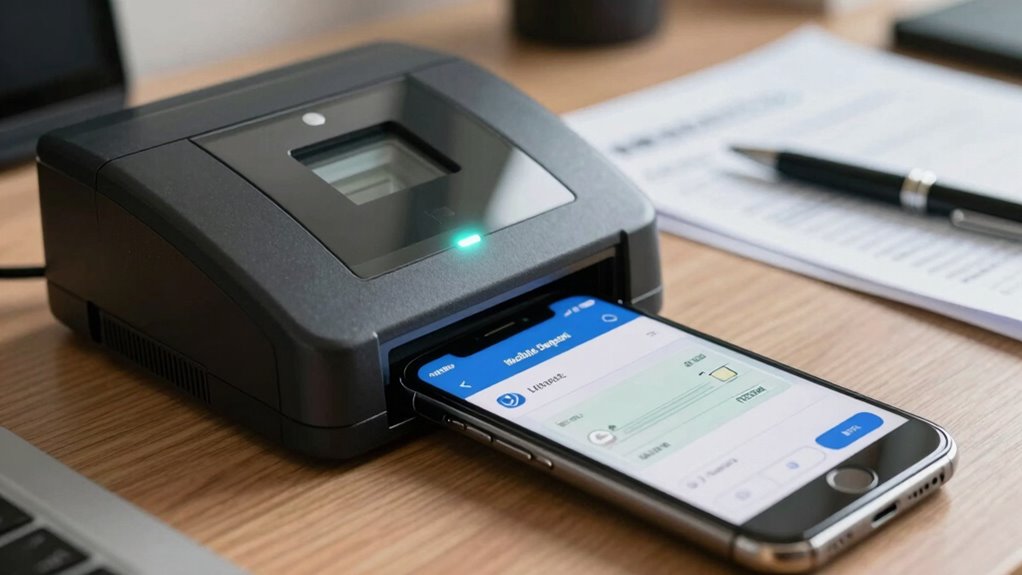
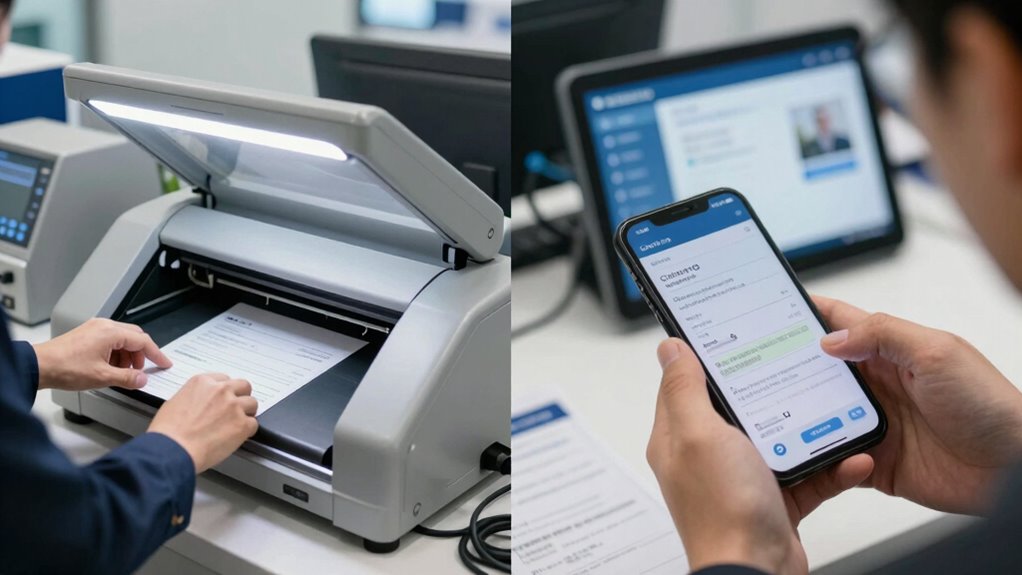
Ever wonder how check scanners and mobile deposits process your checks so quickly? When you use a check scanner, the device captures an image of your check, then quickly transmits it for check processing. It’s efficient and reduces manual handling. For mobile deposits, you open your bank’s mobile app interface, take pictures of the front and back of your check, and submit. The app uses OCR (optical character recognition) technology to read your check details. Both methods rely on digital imaging, but check scanners often involve specialized hardware in branches or ATMs, while mobile deposits are convenient from anywhere. The key is that your bank’s system quickly verifies your check images and processes the payment, making the entire experience fast and seamless. Additionally, the digital imaging technology used ensures high-quality images that facilitate faster processing times.
As an affiliate, we earn on qualifying purchases.
Which Deposit Method Is Faster: Check Scanner or Mobile Deposit?
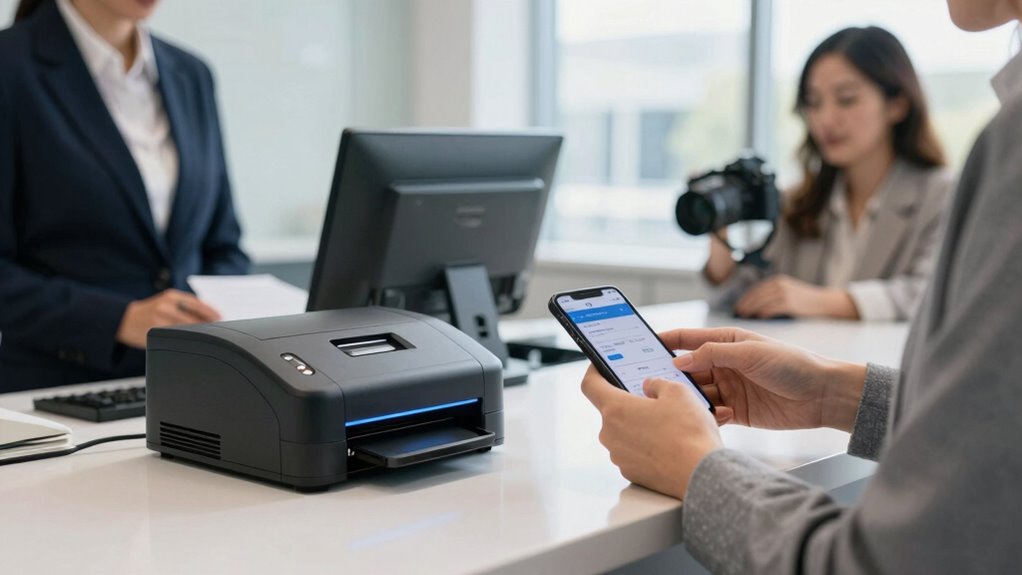
Which deposit method is faster—check scanner or mobile deposit? Generally, check scanners process deposits faster, often within hours, especially when your bank has high deposit limits. Mobile deposits can take longer, sometimes 1-2 business days, due to image quality and security checks. If you’re concerned about check fraud, check scanners provide added security by verifying checks physically, reducing risks. Additionally, the processing speed of each method can vary depending on your bank’s infrastructure and policies. It’s also important to consider traditional banking practices, which may influence deposit times beyond the technology used. Factors like bank processing policies can further impact how quickly your deposits are credited to your account.
As an affiliate, we earn on qualifying purchases.
What Factors Affect How Quickly Your Deposit Clears?
Several factors influence how quickly your deposit clears, regardless of whether you use a check scanner or mobile deposit. Check processing times vary based on the bank’s policies and the time of day you submit your deposit. If you deposit on a weekend or holiday, expect delays because banks don’t process checks during non-business days. The amount of the check can also impact clearance speed; larger deposits might be subject to additional review. Additionally, the quality of your check’s image affects processing; blurry or incomplete images can cause deposit delays. Banks may flag certain deposits for manual review if they suspect fraud or inconsistencies. Early deposit processing can sometimes expedite clearance, but it depends on the bank’s procedures. Ensuring you use proper safety tips when handling checks and deposits can help avoid issues and delays. Using check scanner technology may also influence how quickly your deposit is processed, especially when combined with proper image capture practices. Moreover, understanding deposit policies can help you better anticipate processing times and avoid unnecessary delays. All these factors combine to determine how swiftly your funds become available, making understanding them key to managing your expectations. U.S. tax law updates can also influence banking procedures and deposit handling times.
As an affiliate, we earn on qualifying purchases.
Speed Comparison: Pros and Cons of Check Scanners vs Mobile Deposits
When comparing check scanners and mobile deposits, speed is a key factor that influences your choice. Check scanners process deposits quickly, often within hours, giving you rapid access to funds. They also reduce security concerns since the physical check is directly scanned at your bank, ensuring secure handling. Mobile deposits, while convenient, may take longer—sometimes a day or more—due to image processing and verification. Imagine:
- Holding a check up to a scanner, watching it glide effortlessly through
- Using your phone, snapping a quick photo in a few seconds
- Waiting for email confirmation or app notifications
- Balancing security concerns with the ease of one-touch deposits
Both methods offer user convenience, but check scanners tend to be faster for immediate access, while mobile deposits prioritize flexibility over speed.
How to Make Your Deposit Clear Faster, Regardless of Method
To guarantee your deposit clears faster, start by verifying that your check images are clear and properly aligned, whether you’re using a scanner or a mobile app. Clear images help prevent delays in check processing and ensure smoother deposit timing. Avoid shadows, blurriness, or crooked scans, as these can cause rejections or additional review time. Make sure all four corners are visible and the check is well-lit. Double-check that the amount, date, and signature are legible. Using high-quality scans or photos speeds up check processing, reducing the risk of deposit holds. Additionally, deposit early in the day when banking hours are still open, and follow your bank’s guidelines for image quality to ensure prompt processing. Proper Aero Guardians maintenance of your scanning device can also ensure consistently clear images, further speeding up your deposit process. These simple steps help guarantee your deposit clears faster, no matter which method you choose.
Frequently Asked Questions
Are There Any Fees Associated With Check Scanners or Mobile Deposits?
You might encounter fees with check scanners or mobile deposits, but the costs vary. Check scanners often have upfront costs and maintenance fees, while mobile deposits usually don’t charge directly but may have small fees for certain transactions or limits. For cost effectiveness, mobile deposits tend to be cheaper overall, especially if you rarely deposit checks. Comparing fees helps you choose the most affordable option that fits your banking needs.
How Secure Are Check Scanner Deposits Compared to Mobile Deposits?
Check scanner deposits are generally more secure than mobile deposits because they often use advanced encryption standards, reducing the risk of data breaches. However, you should still stay vigilant against check fraud, which can target both methods. Mobile deposits can be vulnerable if your device isn’t protected, but both options rely on secure encryption to safeguard your information during transmission. Always follow your bank’s security guidelines for maximum safety.
Can Both Methods Be Used for International or Only Domestic Checks?
You can usually only use check scanners and mobile deposits for domestic checks, not international transactions. Banks often restrict these methods to local checks because of cross border fees and varying regulations. For international checks, you’d need to visit your bank in person or use specialized international deposit services. This limits the convenience for international transactions, making domestic check deposits much more straightforward and faster through these methods.
Are There Deposit Size Limits for Check Scanners or Mobile Deposits?
Deposit limits vary, and they’re like guardrails on a winding road—keeping you safe while allowing flexibility. For check scanners and mobile deposits, limits depend on your bank’s policies, often set to balance convenience and security considerations. Typically, mobile deposits have lower daily or monthly caps, but check scanners may handle larger deposits. Always check your bank’s specific deposit limits to avoid surprises and make certain your funds are secure.
What Are the Best Practices to Avoid Deposit Rejections or Delays?
To avoid deposit rejections or delays, you should guarantee check processing speed and deposit accuracy by carefully endorsing each check, capturing clear images, and verifying all details. Use proper lighting and hold your device steady during mobile deposits. Double-check the check amount and account info before submitting. Staying updated on bank guidelines and deposit limits also helps prevent delays, ensuring your deposits are processed smoothly and quickly.
Conclusion
Whether you’re using a check scanner or mobile deposit, speed depends on how smoothly your bank’s system sails through the waves of processing. Think of it as choosing a swift river or a calm stream—each has its own pace. By understanding your options and following simple tips, you can turn your deposit into a speedy boat, gliding effortlessly to your account. Ultimately, knowing your tools helps your money move faster than a racehorse on the track.
Halloween Picks
halloween
As an affiliate, we earn on qualifying purchases.