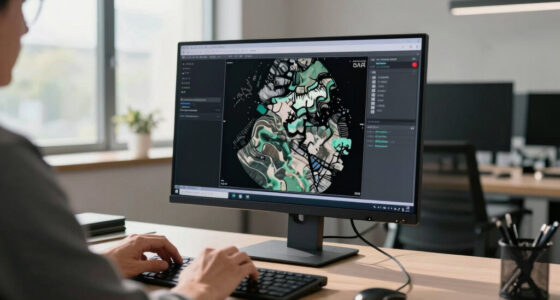
Transforming Academic Research: AI Tools That Speed Up Discovery
OpenAI announced ChatGPT for Academic Researchers, providing free access to advanced AI models for up to 100,000 scientists and engineers starting summer 2026.
OpenAI’s Latest Talent Acquisition: What The Fields Medalist Means For AI
OpenAI reportedly hires the latest Fields Medal winner, signaling a focus on advanced mathematical reasoning. Details remain unconfirmed, but the move highlights a talent race.
SpaceX launched a new satellite payload today, marking a significant step in its commercial launch schedule. Details confirmed and ongoing developments explained.
How Strategic Investment In AI4S Could Save STEM Careers
ByteDance’s new program aims to recruit around 100 scientists for AI-assisted research in a six-month pilot in Beijing, seeking to bolster STEM research efforts.
Pushing Software Engineering Limits With “Napkin Math”
Tech developers are using simple calculations, dubbed ‘napkin math,’ to push boundaries in software engineering, sparking debate on its effectiveness and risks.
CORVUS ISR Cuts Tracker ID Switches By 42% In Public Test
Corvus ISR’s latest public benchmark shows a 42% reduction in identity switches with its new tracking model, highlighting advancements in synthetic motion tracking.
Radar That Never Blinks: What SAR Actually Does — for Companies, Institutions, and Governments
Explore how Synthetic Aperture Radar (SAR) works, its applications for companies, institutions, and governments, and why it’s transforming remote sensing in 2026.
Jack Clark Says It Out Loud — Reading the Co-Founder’s 60%/2028 Estimate on Automated AI R&D
Anthropic co-founder Jack Clark states there is a 60%+ probability that fully autonomous AI R&D without human involvement could occur by 2028, signaling a major policy stance.